Euro Bus Expo 2026 overview: BYD unveils electric coach, Custom Denning enters UK market, Higer launches diesel city bus (and more)
Electric coaches moving closer to commercial deployment, new manufacturers targeting the British market and established players updating their vehicle portfolios: these were the main developments at Euro Bus Expo 2026, held at the NEC Birmingham from 3 to 5 November. The exhibition also marked the return of some major manufacturers that had been absent from […]
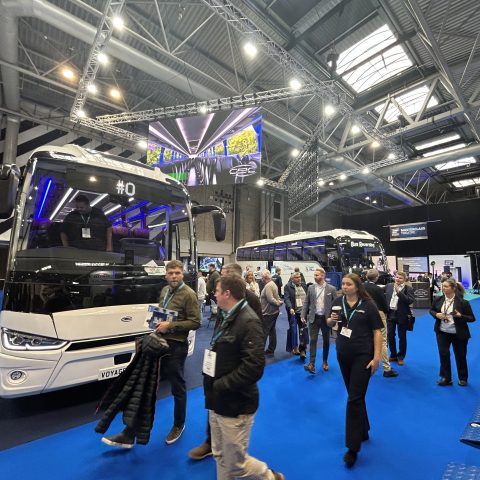
Electric coaches moving closer to commercial deployment, new manufacturers targeting the British market and established players updating their vehicle portfolios: these were the main developments at Euro Bus Expo 2026, held at the NEC Birmingham from 3 to 5 November. The exhibition also marked the return of some major manufacturers that had been absent from the 2024 edition, including Volvo Buses, Wrightbus and Daimler Buses.
The exhibition brought together more than 80 buses, coaches and minibuses, covering a broad range of applications and powertrain technologies. Among the main announcements was the world premiere of the BYD C12 DUO battery-electric coach, alongside the UK presentation of the next-generation Scania Touring, including a battery-electric configuration (following its launch in mid-October), and the Scania Irizar i6S Efficient plug-in hybrid coach, winner of the Sustainable Bus Award 2027.
The show also highlighted the arrival of additional manufacturers in the British market. Australian manufacturer Custom Denning presented its Element 2.2 battery-electric city bus, while Higer introduced the right-hand-drive Azure 9 diesel midibus. Zhongtong and CBC also brought new vehicles to Birmingham, including the latter’s Voyage E14 electric coach, manufactured in China. Meanwhile, returning manufacturers contributed further developments, including Volvo’s new cooperation with Spanish bodybuilder UNVI and Wrightbus’s latest electric double-decker and repowering activities.
The state of the market in the UK
According to the latest figures from the Society of Motor Manufacturers and Traders (SMMT), UK bus and coach registrations fell by 32.1% in the first nine months of 2026, reaching 5,162 units compared with 7,605 in the same period of 2025. Zero-emission vehicle registrations declined by 16.3% to 1,606 units, although their market share increased from 25.2% to 31.1%, reflecting a sharper contraction in diesel and other alternatively fuelled vehicles (-37.5%).
Wrightbus led the manufacturer ranking with 922 registrations (+32.1%) and a 17.9% market share, followed by Alexander Dennis (707 units, +0.4%), Mercedes-Benz (688, -35.7%), Ford (627, -64%) and Peugeot (543, -30.3%), with the latter two of course focusing on mini vehicles. Among other major manufacturers, Yutong registered 359 vehicles (-48.8%), Volvo 339 (-24%) and BYD 267 (+1.1%).
Euro Bus Expo 2026: the vehicles on display, manufacturer by manufacturer
Alexander Dennis
Alexander Dennis showcased its next-generation Enviro200EV electric single-decker at Euro Bus Expo 2026, marking the model’s first appearance at the exhibition following its market introduction in 2025. The vehicle is available in lengths from 9.9 to 11.7 metres, with a 400 kWh battery, seating for up to 43 passengers and total capacity of up to 77.
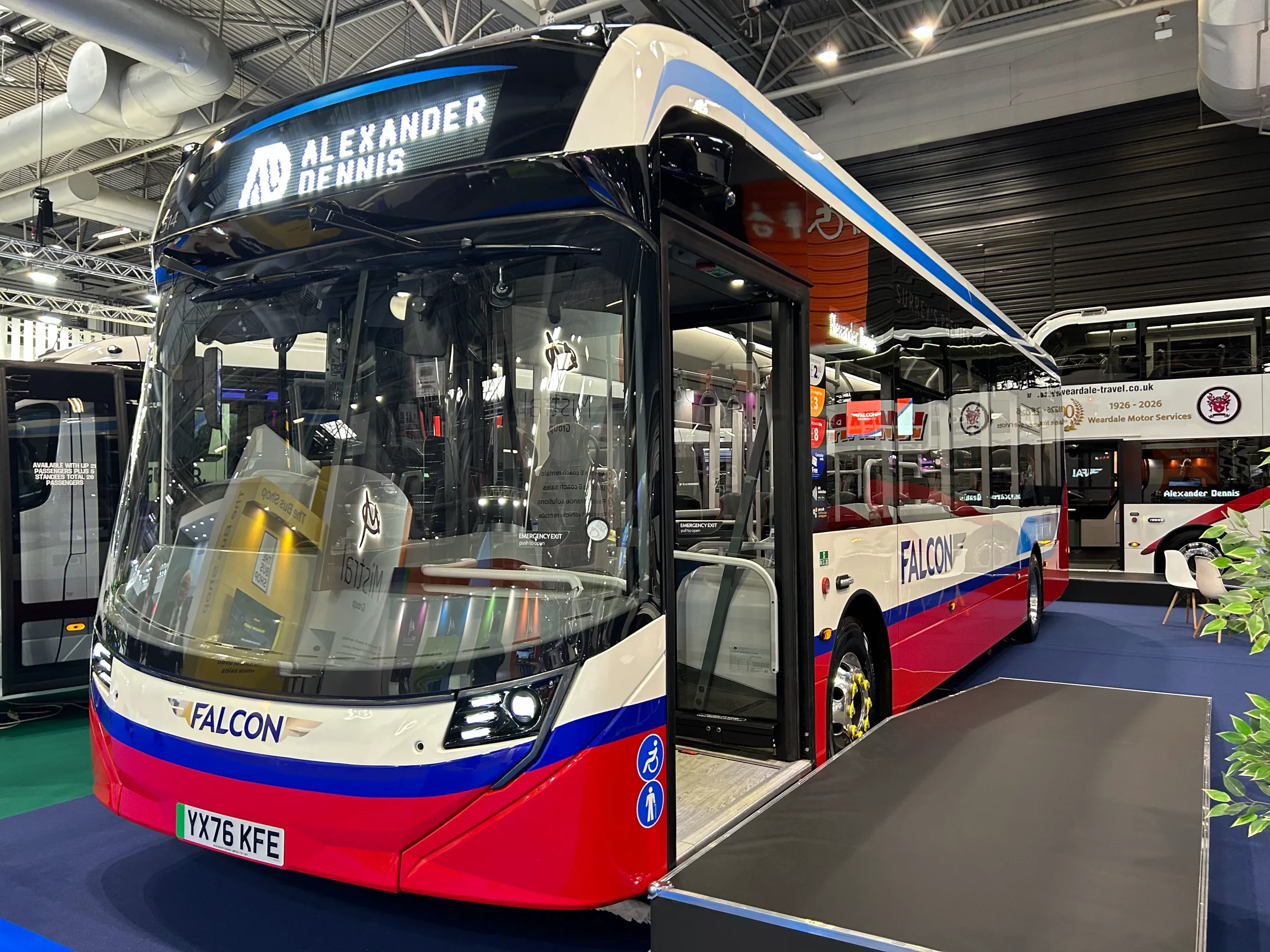
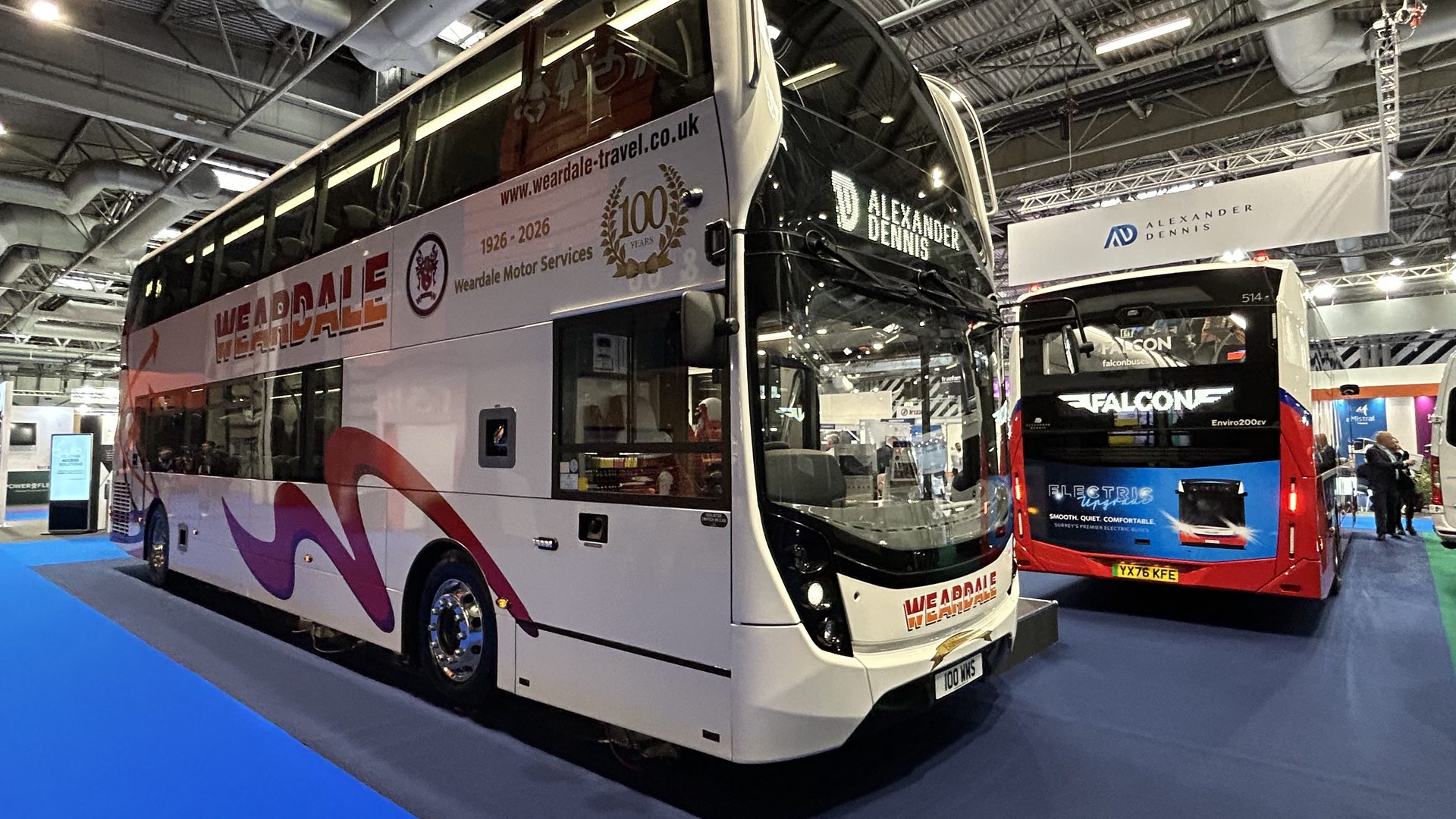
The manufacturer also displayed an Enviro400 double-decker operated by Weardale Motor Services, celebrating the operator’s centenary, alongside an Enviro200EV in Falcon Coaches livery. According to information presented at the show, the Enviro200EV has achieved an energy consumption figure of 0.594 kWh/km, while the first order from a Transport for London operator has been secured.
Beyond the vehicles, Alexander Dennis introduced new AD24 fixed-fee parts, service and maintenance contracts, replacing its previous pence-per-mile model. Available for five, seven, 10 or 15 years, the packages offer fixed monthly payments and cover both diesel and electric buses, including vehicles up to 10 years old subject to inspection.
BYD
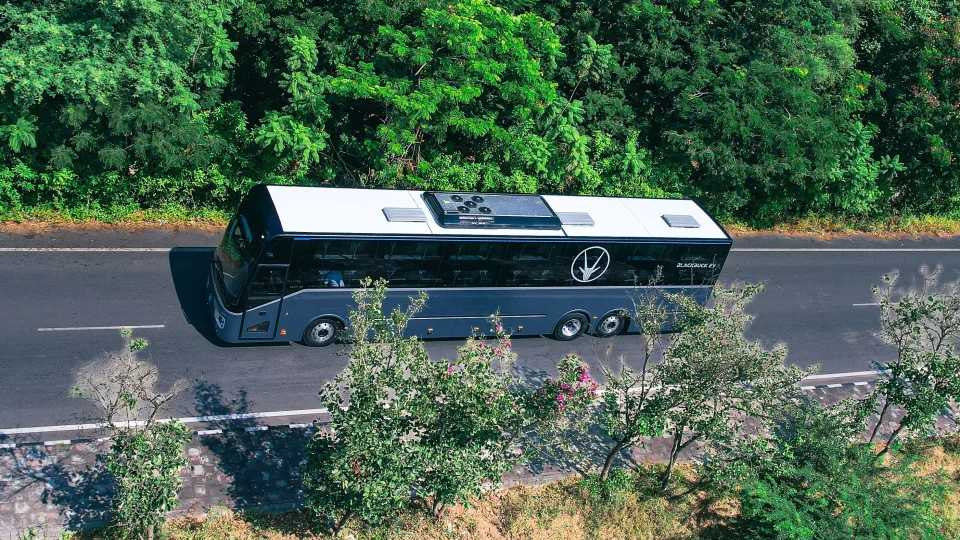
BYD chose Euro Bus Expo for the world premiere of the C12 DUO, a battery-electric coach developed for the UK market. The two-axle, approximately 12-metre vehicle offers seating for up to 57 passengers and is available with LFP Blade battery configurations of 429 or 495 kWh.
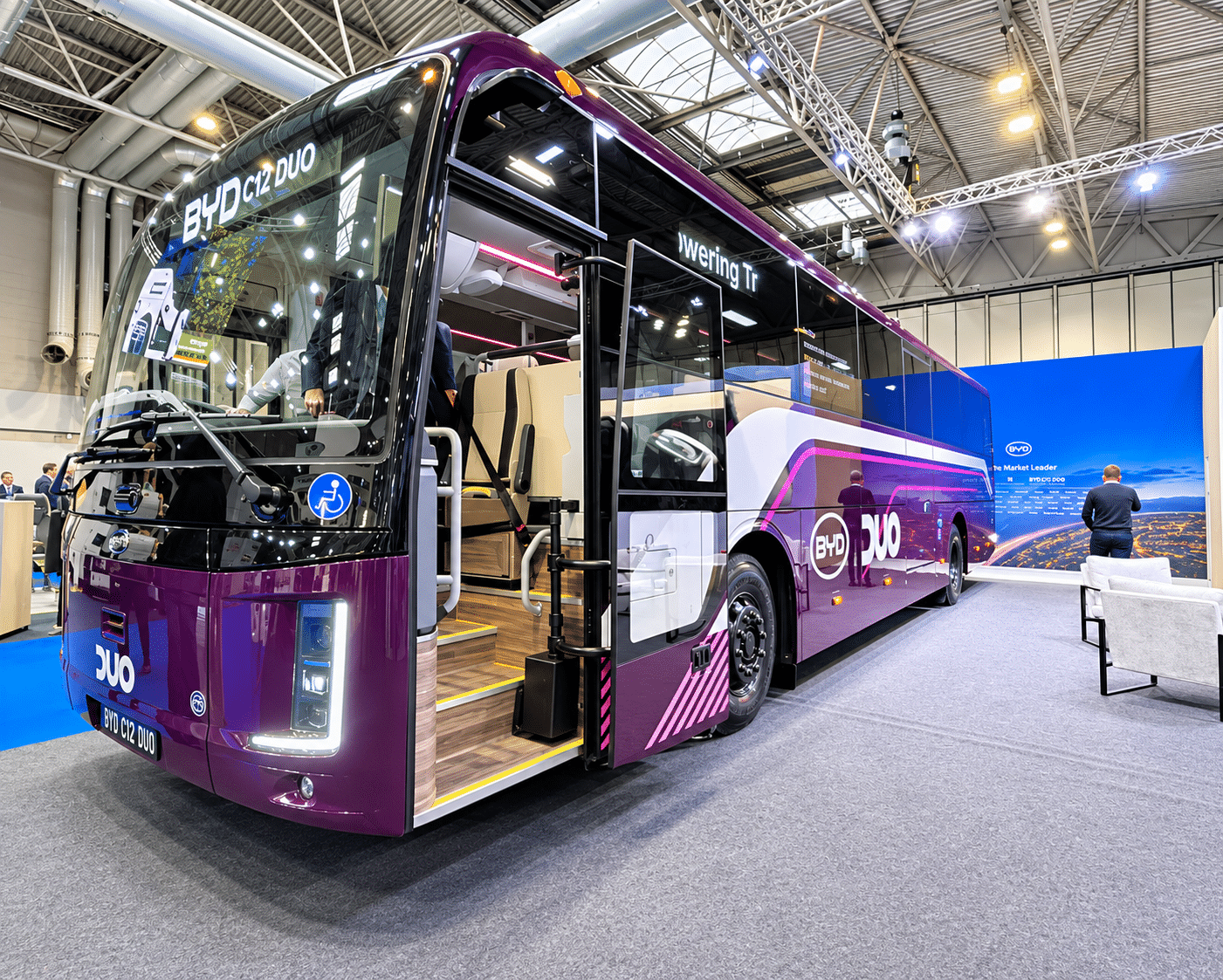
The manufacturer quotes a maximum range of up to 340 miles (547 kilometres), depending on configuration and operating conditions. The coach provides approximately 4 cubic metres of luggage capacity, addressing one of the practical requirements of longer-distance passenger transport.
The C12 DUO represents an extension of BYD’s UK offering beyond urban buses, a segment in which the manufacturer has already established a substantial presence. Its Birmingham display also included the B11 single-decker and BD11 double-decker electric bus range.
CBC
CBC (Cogent Bus and Coach) presented its new Voyage coach range at Euro Bus Expo 2026 for the first time, comprising the HD12 diesel touring coach and the E14 battery-electric model. The HD12 measures 12.36 metres and accommodates 51 passengers plus driver and courier. It is powered by a Cummins X11 diesel engine, delivering 294 kW (400 hp) and 1,900 Nm, coupled with a six-speed ZF automatic transmission.
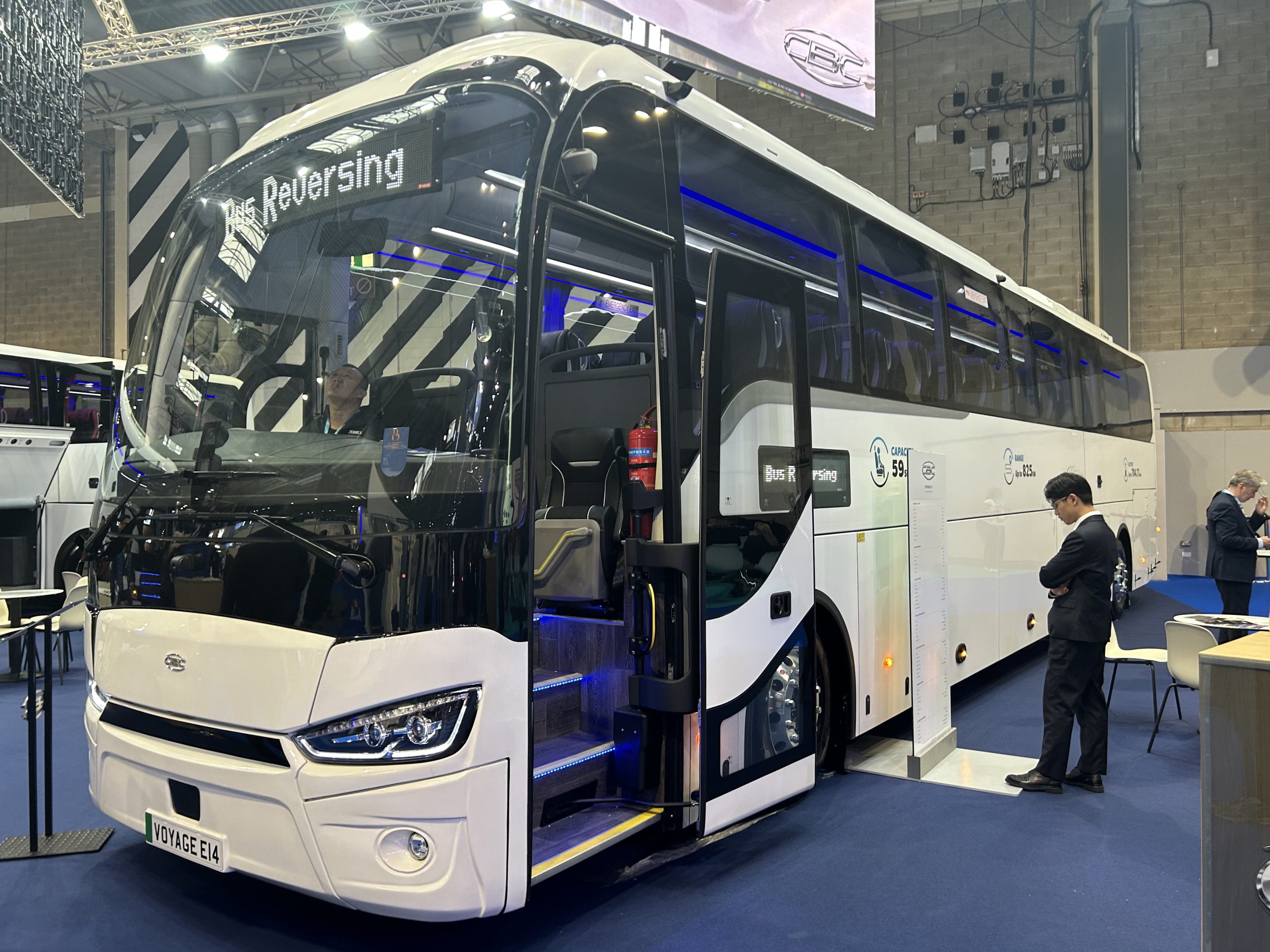
The larger Voyage E14, described as an all-electric grand touring coach, measures 13.9 metres and offers 59 passenger seats plus driver and courier. According to the specifications displayed in Birmingham, it features CATL LFP batteries with a capacity of 714.7 kWh, a 320 kW electric motor and CCS2 charging at up to 300 kW.
The Voyage range is manufactured in partnership with FTBCI, based in Xiamen, China, while CBC handles UK-specific vehicle specifications, homologation, engineering and aftersales support. The company emphasises its engineering and regulatory compliance expertise, including VCA Conformity of Production approval and access to DVSA, VCA and TÜV-approved testing facilities.
Custom Denning
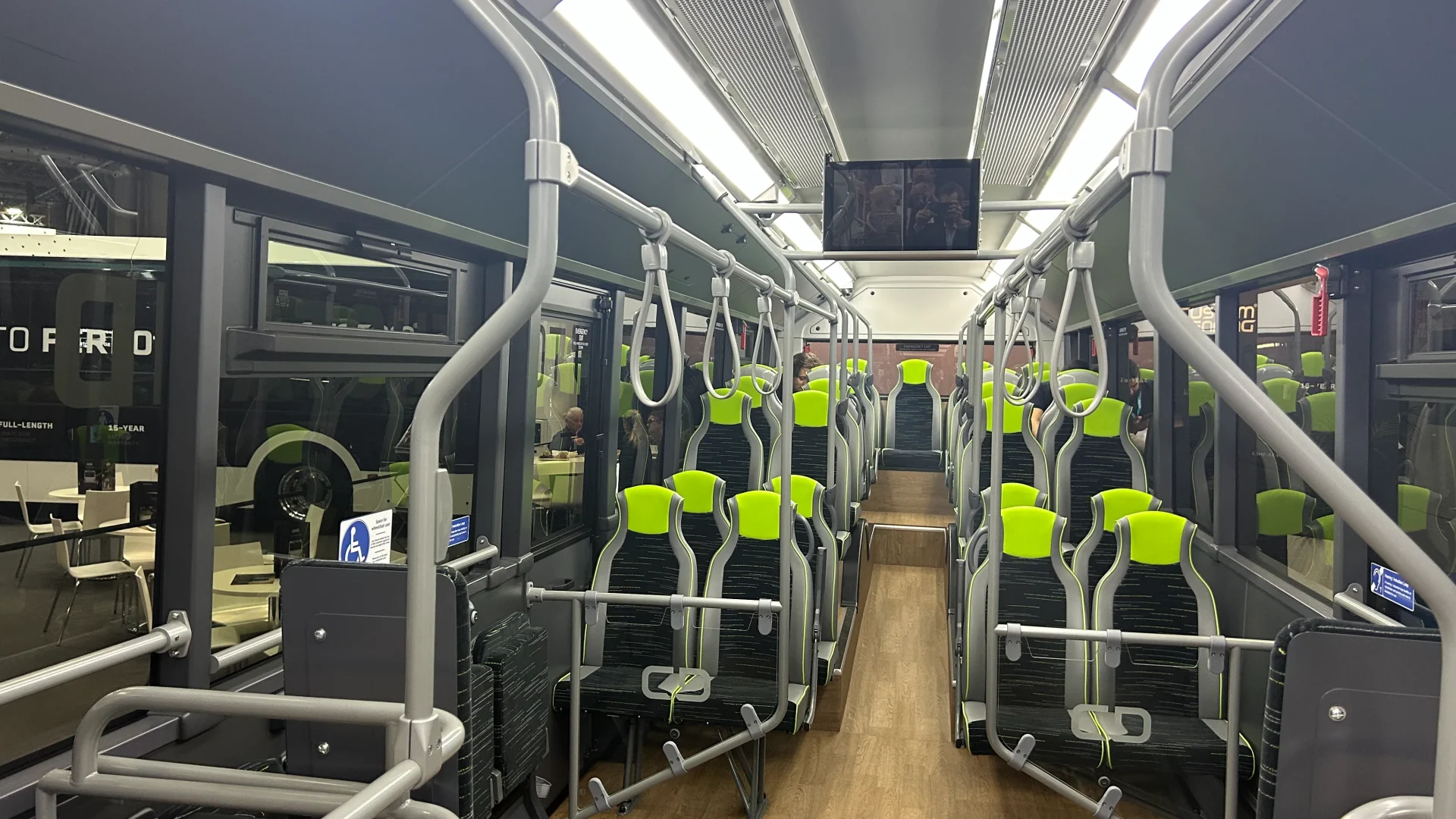
Australian manufacturer Custom Denning made its first UK exhibition appearance with the Element 2.2, a battery-electric single-deck city bus presented in two configurations.
The vehicle is available in lengths of approximately 10.9 and 12.1 metres and uses a stainless-steel monocoque structure. Its electric powertrain combines a 411.51 kWh CATL LFP battery with a Driventic propulsion system delivering 320 kW continuously and up to 390 kW at peak output.
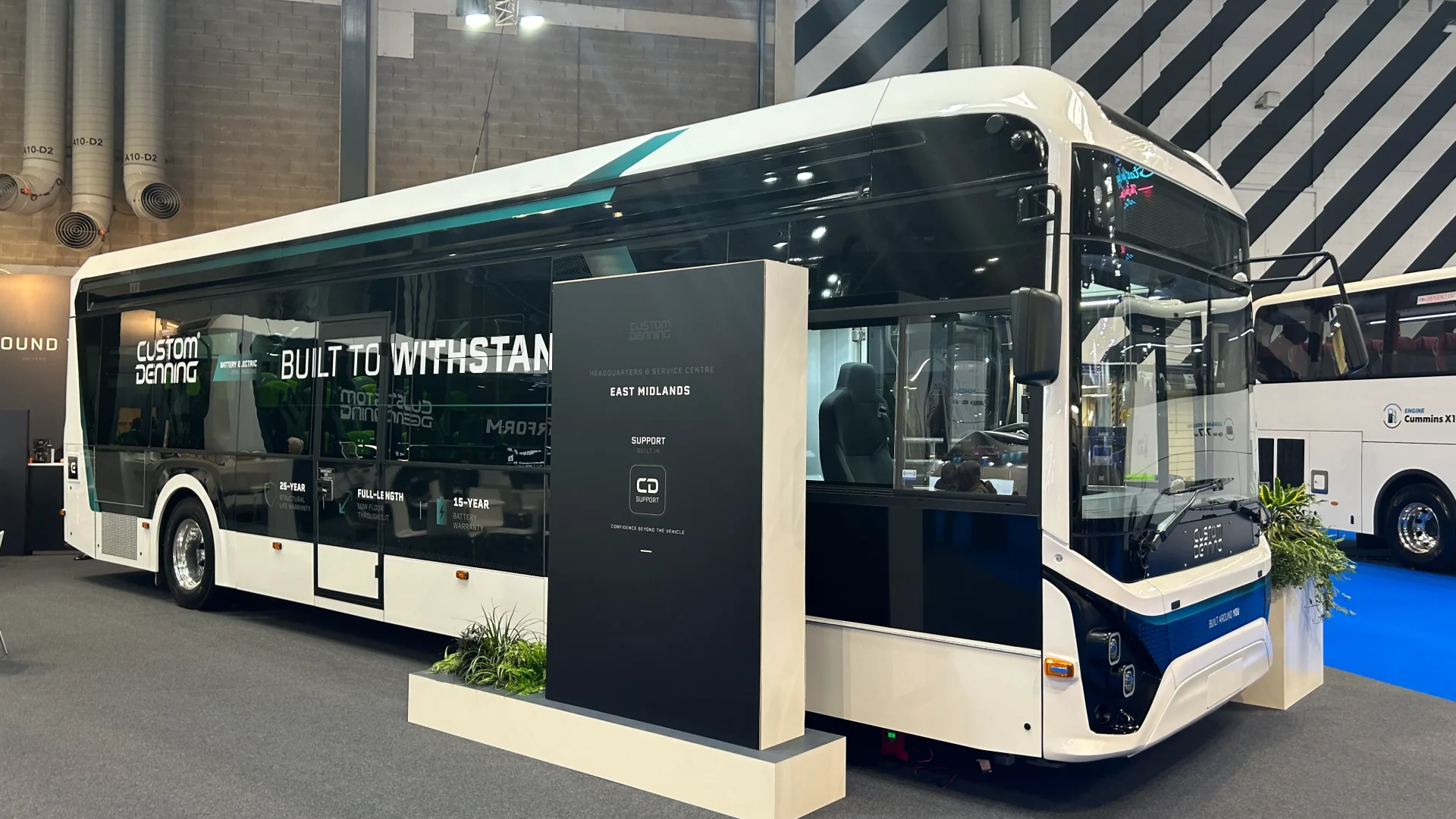
DC charging is supported at up to 300 kW through a CCS2 connection. Custom Denning quotes a range of 571 kilometres under SORT 3 conditions, with an energy consumption figure of 0.72 kWh/km. Passenger capacity varies between approximately 60 and 69, depending on vehicle length and configuration.
The Australian manufacturer also announced a partnership with TSUK, already the UK distributor of Temsa coaches, which will market the Element 2.2 to private and independent operators across England, Scotland and Wales. Demonstration vehicles are expected to become available in early 2027, with customer deliveries scheduled from March–April 2027. The commercial agreement includes vehicle part-exchange options, financing and charging packages, while aftersales support will be provided through Custom Denning’s new European headquarters and nine-bay service centre in Ilkeston, Derbyshire.
Daimler Buses
Daimler Buses UK returned to Euro Bus Expo in 2026, with the Mercedes-Benz Tourismo M/3 diesel coach among its exhibits. On the technology front, the manufacturer also highlighted the introduction of fourth-generation NMC4 batteries for its eCitaro battery-electric city bus range, designed to increase energy density and extend battery service life.
Compared with the preceding NMC3 generation, energy density rises by almost 13%, with individual battery pack capacity increasing from 98 to 111 kWh without changing the installation space.
The new battery generation allows the solo eCitaro to accommodate up to 666 kWh, while the articulated eCitaro G can reach 777 kWh. Mercedes-Benz quotes a range of up to 600 kilometres for the solo model in its maximum battery configuration, depending on operating conditions. The improvements are also intended to support longer battery life and lower operating costs over the vehicle’s service life.
For the Tourismo, the emphasis was on the continued rollout of advanced driver assistance and safety systems. Technologies available across the range include Active Brake Assist 6, Sideguard Assist 2, Frontguard Assist, Traffic Sign Assist and Attention Assist 2, alongside systems supporting vehicle manoeuvring and driver visibility.
The two developments reflect different priorities within Daimler Buses’ portfolio: improving the operational capabilities of electric city buses through battery technology while continuing to advance active safety systems in long-distance coaches.
Irizar
Irizar presented an 18.7-metre articulated ie tram battery-electric bus developed for airport operations, alongside two i6S Efficient integral coaches.
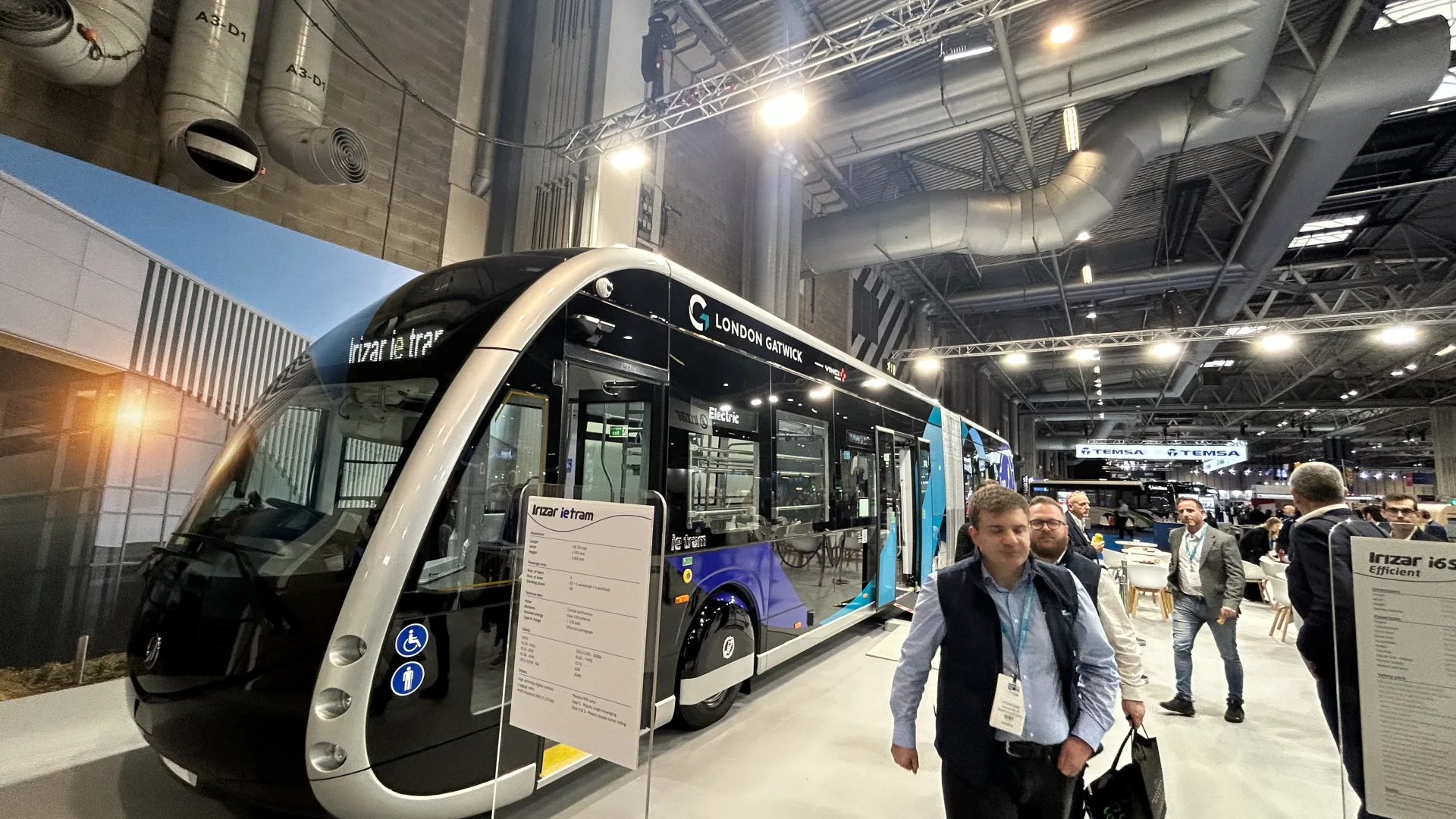
The airport configuration illustrates how battery-electric bus technology is being adapted to passenger transport applications beyond conventional scheduled services. Such operations have specific requirements in terms of passenger capacity, accessibility, frequent boarding and alighting, and operation within restricted areas.
Higer
Through Harris Bus & Coach, Higer introduced the Azure 9 in right-hand-drive specification for the British market.
The 8.99-metre diesel midibus is equipped with a Cummins B4.5 engine and Voith automatic transmission. Its passenger layout includes 23 fixed seats, five tip-up seats and space for up to 32 standing passengers, with a gross vehicle weight of 13.5 tonnes.
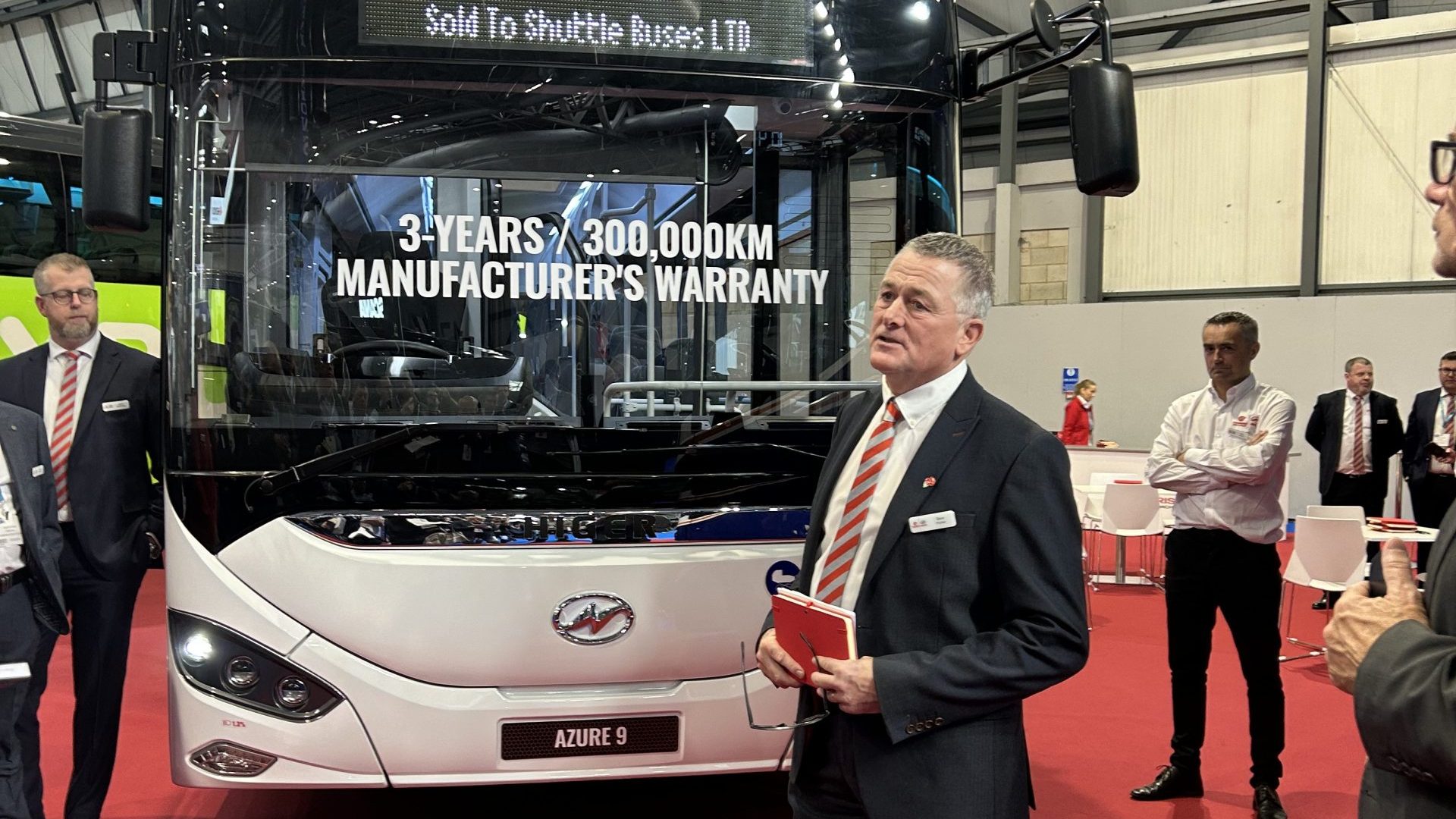
The vehicle is intended for urban and local services requiring a smaller bus than a conventional 12-metre single-decker. Its introduction is noteworthy in a market increasingly focused on electrification, demonstrating that manufacturers continue to develop diesel offerings for particular operating segments.
Higer also displayed the V10 midicoach, measuring approximately 10 metres, and the V12 coach, measuring around 12.4 metres, extending the range offered through its UK distributor.
Meanwhile, Harris Bus & Coach has strengthened its UK team with four appointments: Jamie MacIntosh as UK Sales Manager, Robert White as Sales Manager for the Midlands and South, Karl Hutchison as Group Aftersales Manager and Andrew McKeiver as Operations Supervisor. The distributor is also expanding its support network towards 50 dealer locations across the UK and Ireland, alongside a five-year/500,000-km warranty for the Higer V-Series Euro 6 coach range.
Neoplan
MAN Truck & Bus presented the Neoplan Tourliner P10, a diesel-powered coach configured for the UK market and compliant with the Public Service Vehicles Accessibility Regulations (PSVAR).
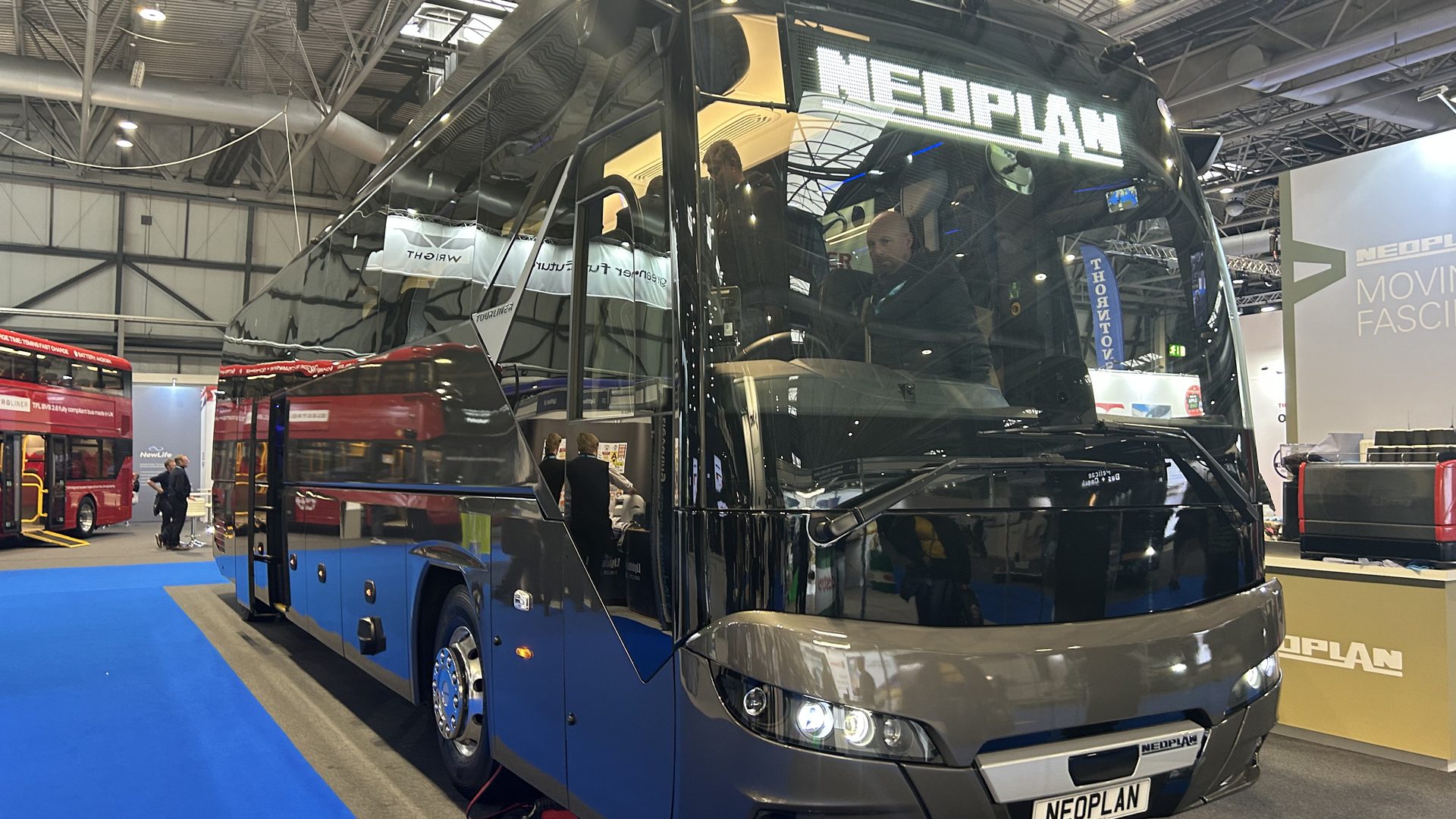
The vehicle measures approximately 13.1 metres and is powered by a 12.4-litre MAN diesel engine producing 353 kW (480 hp) and 2,450 Nm of torque.
The exhibited specification offers 53 passenger seats, plus driver and courier accommodation. Its presence highlights the continuing role of conventional coach products alongside the increasing number of electrified models entering the segment.
Scania
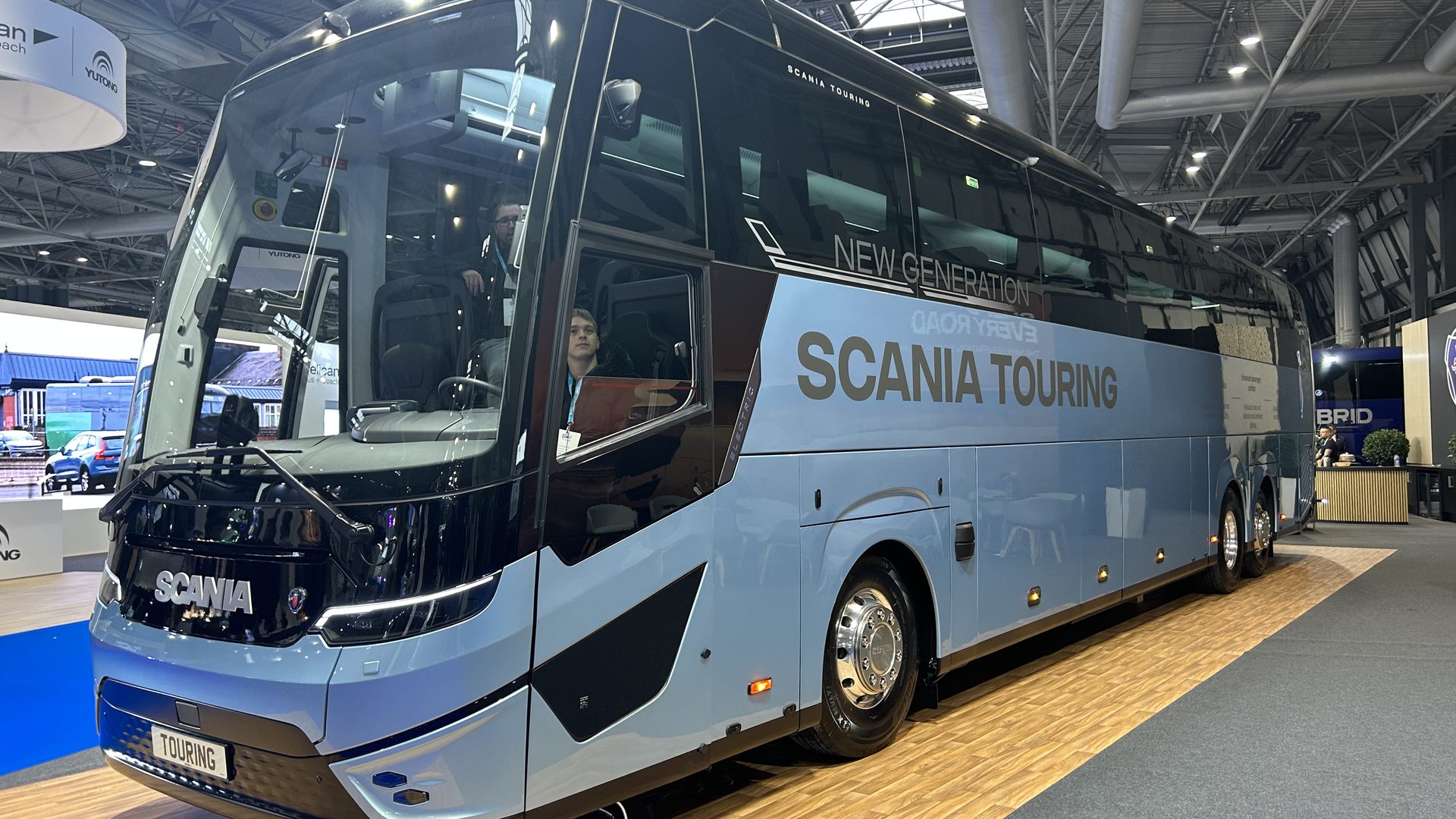
Scania’s stand brought together two different approaches to coach electrification: the next-generation Touring HD and the Scania Irizar i6S Efficient plug-in hybrid.
The battery-electric Touring HD presented at Birmingham measures approximately 14.85 metres and has three axles and 59 passenger seats. Its electric powertrain uses a 534 kWh battery and a 330 kW motor combined with a four-speed Opticruise transmission. CCS2 charging is supported at up to 325 kW.
The second vehicle, the Scania Irizar i6S Efficient plug-in hybrid, combines a 13-litre diesel engine rated at 338 kW (460 hp) with an electric machine delivering 230 kW, rising to 290 kW at peak output. Its 89 kWh battery enables a manufacturer-quoted electric driving range of up to 70 kilometres, with DC charging at up to 130 kW.
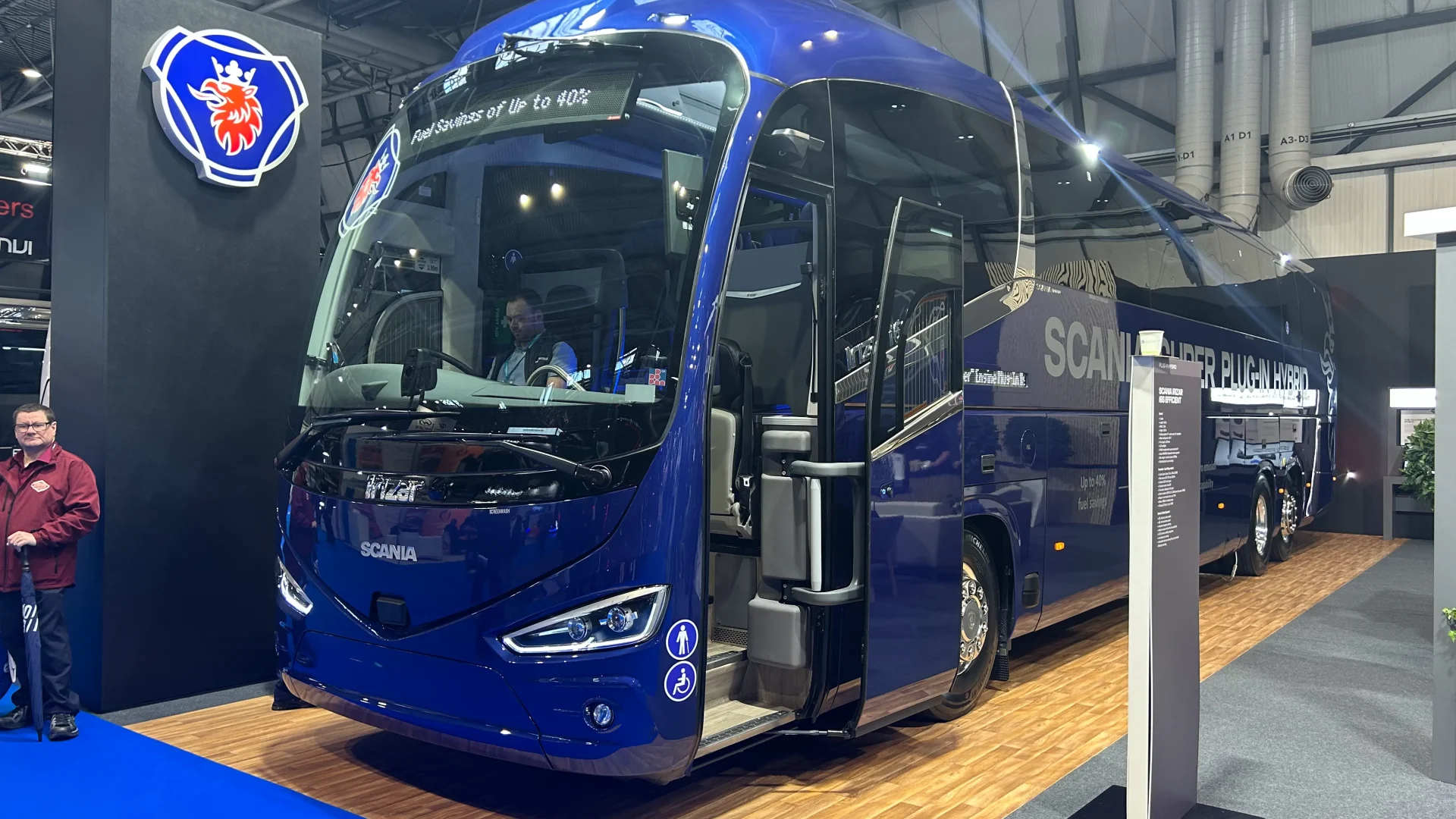
The three-axle coach measures 14.07 metres in length, 2.55 metres in width and 3.97 metres in height, with seating capacity for 57 passengers plus a courier seat, or 53 passengers in the wheelchair-accessible configuration. The diesel engine delivers 2,500 Nm of torque between 900 and 1,290 rpm and is coupled with a six-speed GE281 gearbox. The vehicle features a 500-litre fuel tank, independent front suspension and an electrohydraulically steered tag axle. Its safety equipment includes advanced emergency braking, adaptive cruise control with active prediction, lane departure warning and blind spot monitoring.
Temsa
Temsa exhibited its HD coach, available in lengths of approximately 12.3 and 13.1 metres. The model uses a DAF MX-11 diesel engine rated at 300 kW (408 hp), paired with a six-speed ZF EcoLife automatic transmission. Depending on length and configuration, the coach accommodates up to 53 or 57 passengers, with luggage capacity of approximately 9 or 11 cubic metres.
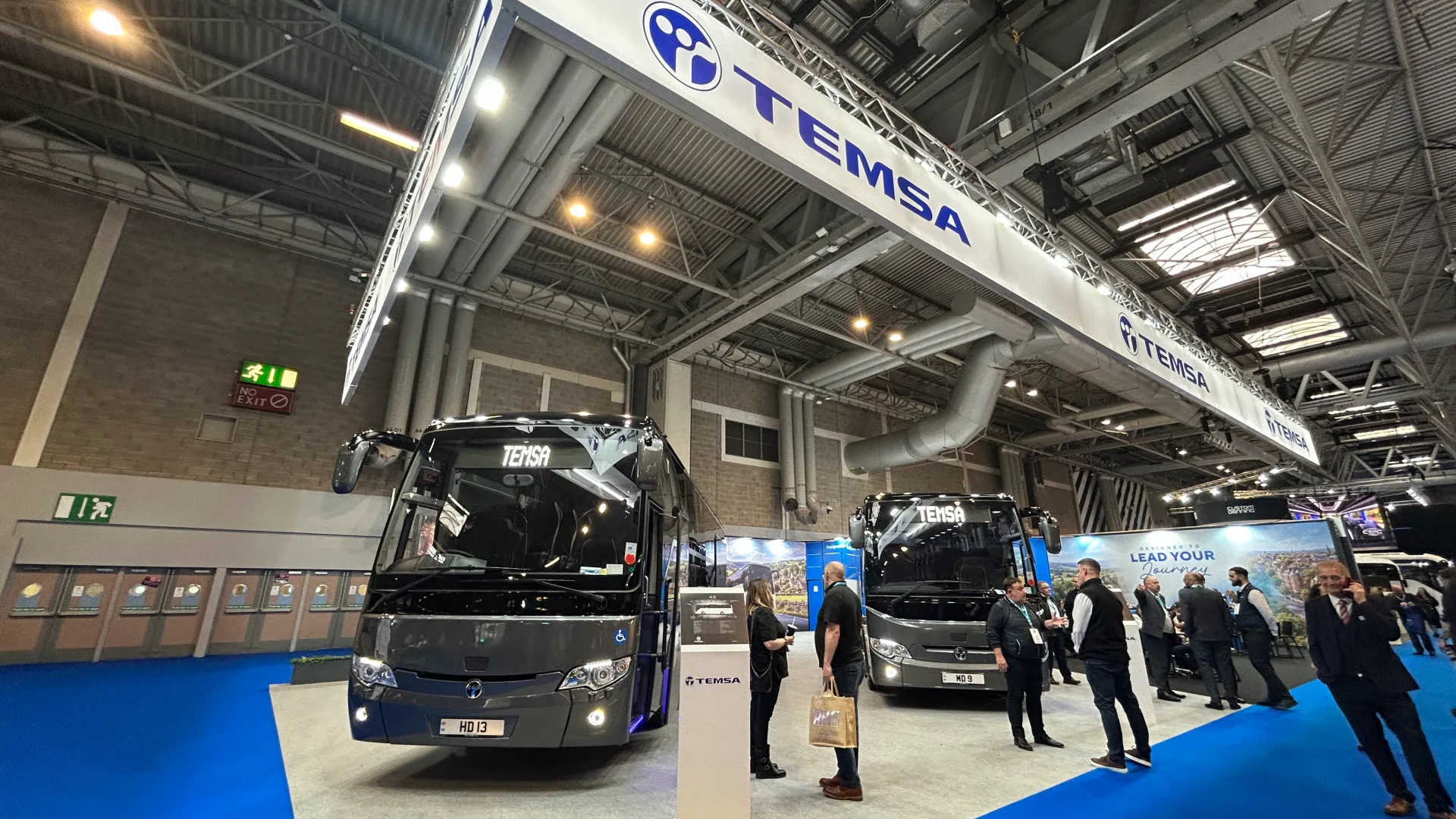
According to Temsa, the HD RHD is available in configurations addressing PSVAR accessibility requirements, with updates to the driver’s working environment, passenger seating and safety equipment.
The manufacturer also presented the MD9 midicoach, extending its offering for operators requiring smaller-capacity vehicles. The right-hand-drive model features an integral chassis, seating for up to 39 passengers and configurations addressing PSVAR requirements. The MD9 was named Midicoach of the Year 2026 in Ireland, while recent updates include modifications to seating and interior layout based on operator feedback.
Temsa states that more than 600 of its coaches and midibuses are currently operating in the UK, where the manufacturer claims a market share exceeding 10% in the coach segment.
VDL Bus Group
VDL Bus Group introduced the right-hand-drive VDL Futura 3 to the UK market, following the launch of the new-generation coach in continental Europe in 2025. The 12.9-metre Futura 3 displayed in Birmingham features 57 passenger seats, wheelchair accessibility, a camera-based mirror replacement system and advanced driver assistance technologies, including Blind Spot Information, Intelligent Speed Assistance and Driver Drowsiness Warning.
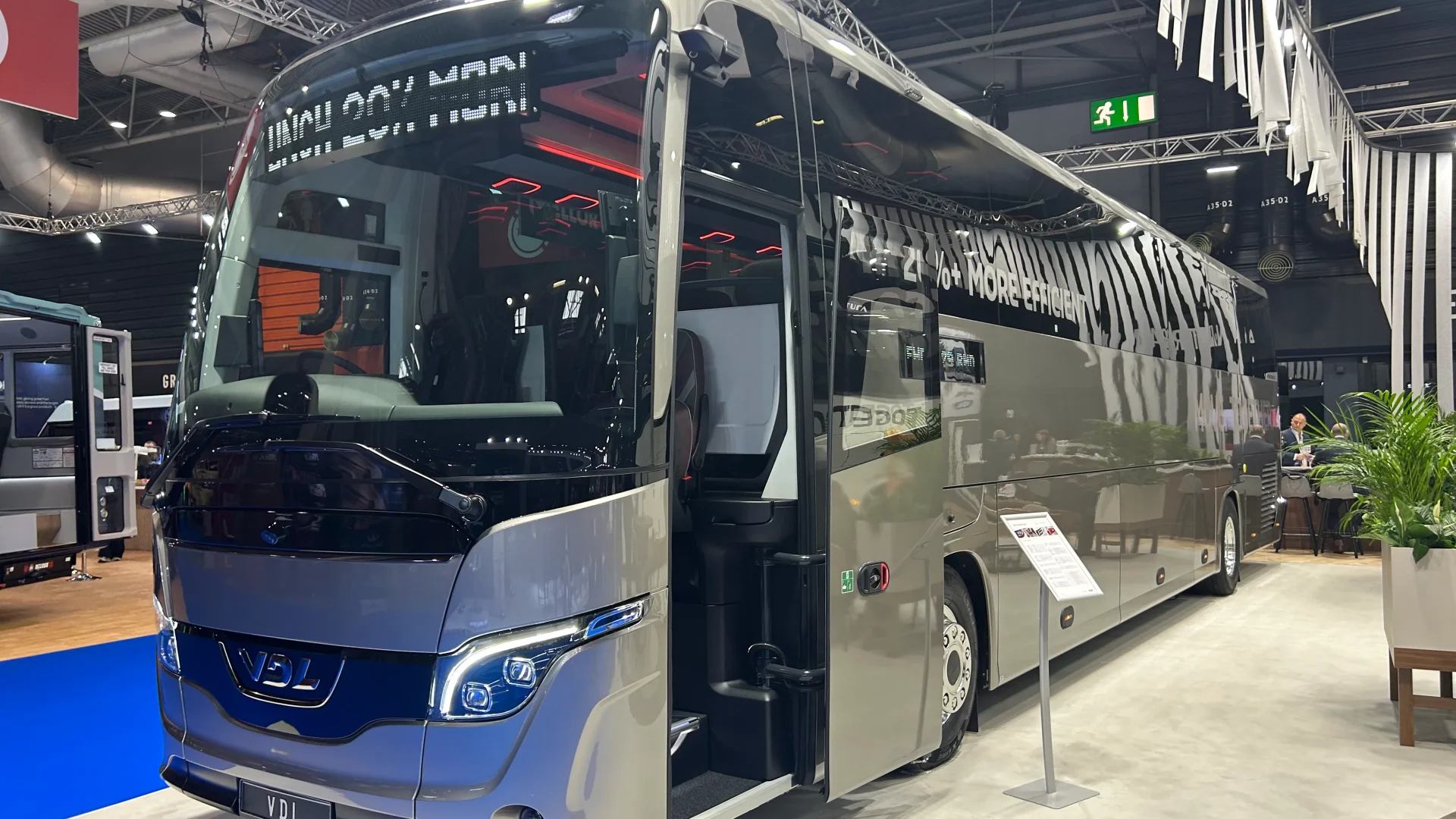
According to the manufacturer, the new generation achieves fuel efficiency improvements of more than 20%, supported by aerodynamic optimisation, weight reduction and drivetrain developments. VDL also highlights a redesigned driver cockpit, improved passenger comfort and a modular approach intended to reduce maintenance costs. The vehicle has been developed to accommodate future technological updates, including alternative powertrains.
The group’s second exhibit was the 13.4-metre Van Hool Astron, a right-hand-drive coach equipped with a DAF MX-13 diesel engine and configured with 55 passenger seats. Its equipment includes a panoramic central glass roof, camera monitor system, Bosch Coach Infotainment System, toilet and onboard catering facilities.
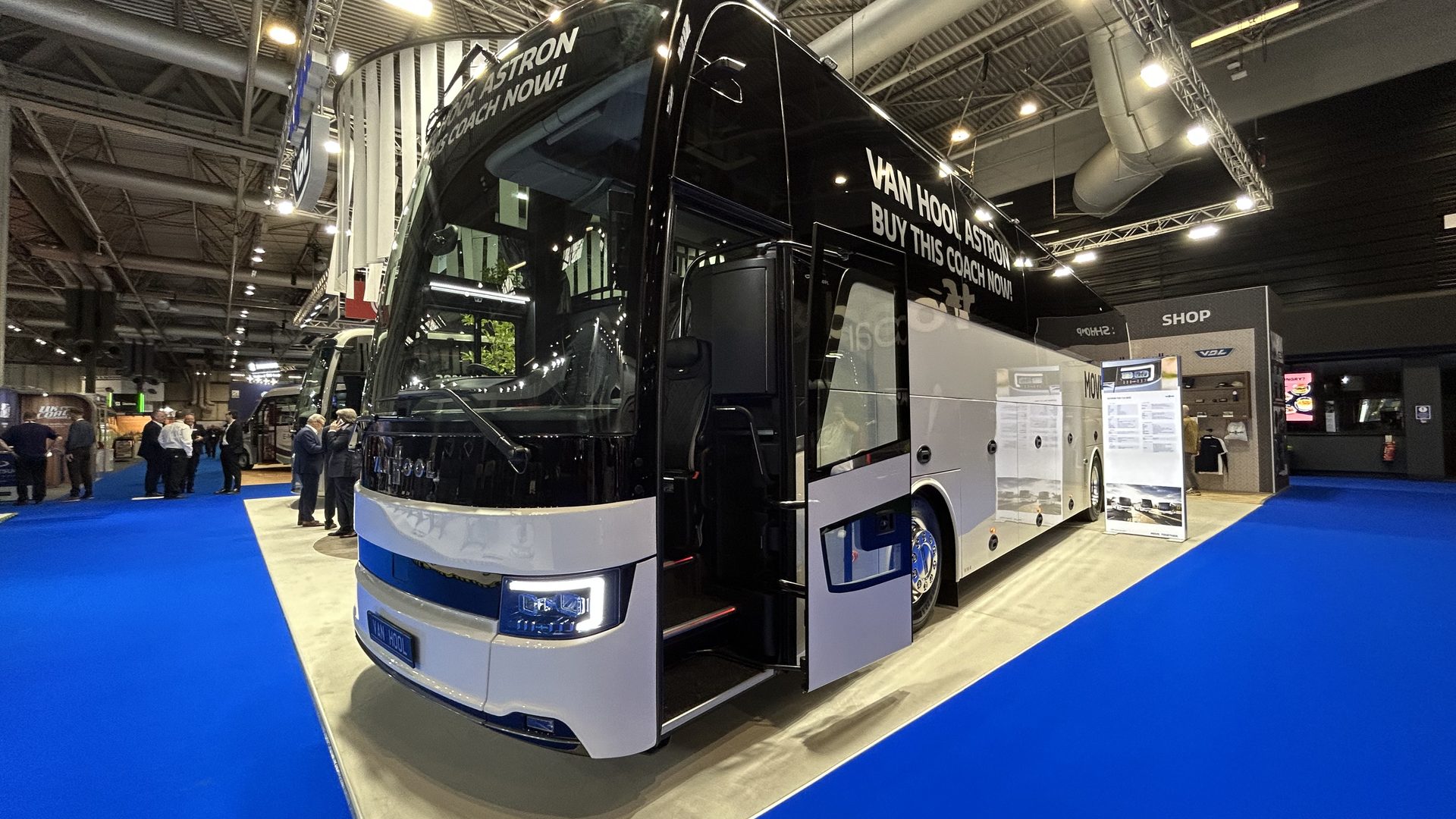
The joint display reflects the integration of VDL Bus & Coach and VDL Van Hool into VDL Bus Group, which now operates the two brands within a common corporate structure while maintaining their respective product identities. It’s worth noticing that the first expo’s appearance of the two brands under a joint stand happened, oddly enough, at Euro Bus Expo 2024 two years ago.
Volvo Buses
Volvo Buses and Spanish bodybuilder UNVI presented the Volvo B13R – UNVI XL at Euro Bus Expo 2026, marking the first cooperation between the two companies for the UK coach market. The 12.8-metre, two-axle coach combines Volvo’s B13R chassis with UNVI bodywork and is powered by a 13-litre Volvo D13K Euro 6 diesel engine delivering 500 hp and 2,500 Nm of torque, compatible with HVO and B100 biodiesel.
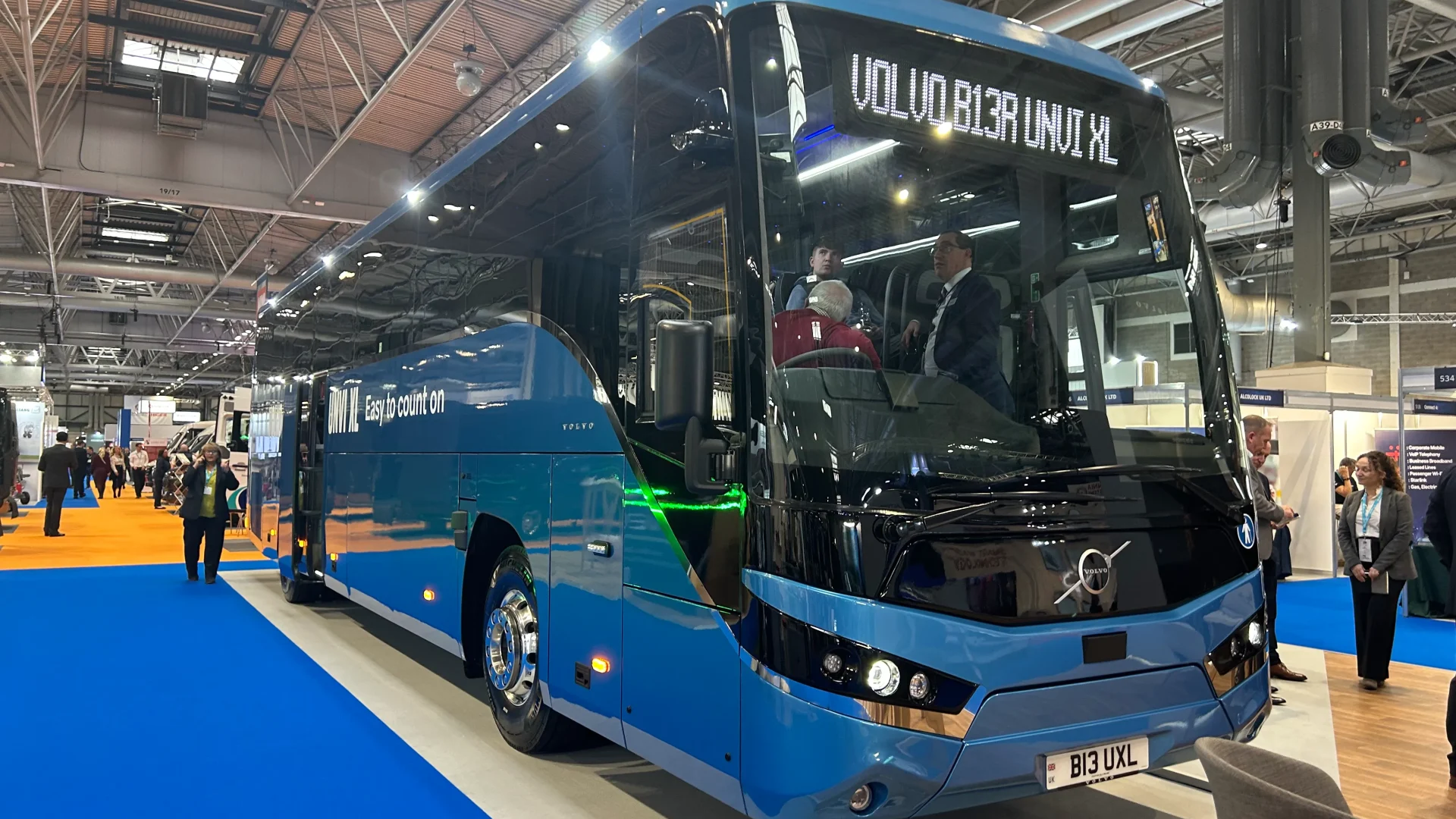
The vehicle measures 3.7 metres in height and 2.525 metres in width, with a maximum gross vehicle weight of 19 tonnes. Passenger capacity stands at 53 seats, or 49 seats plus one wheelchair space, with a PSVAR-compliant wheelchair lift integrated into the sidewall. The luggage compartment offers 9.2 cubic metres of capacity, increasing to 9.8 cubic metres without the wheelchair lift. Passenger equipment includes USB-A and USB-C charging, reclining seats, a toilet, a Bosch infotainment system with two 21.5-inch screens and Thermo King air conditioning. The driver’s area features a 12.3-inch digital instrument cluster, while the vehicle can be equipped with Volvo’s optional Dynamic Chassis Lowering system.
Wrightbus
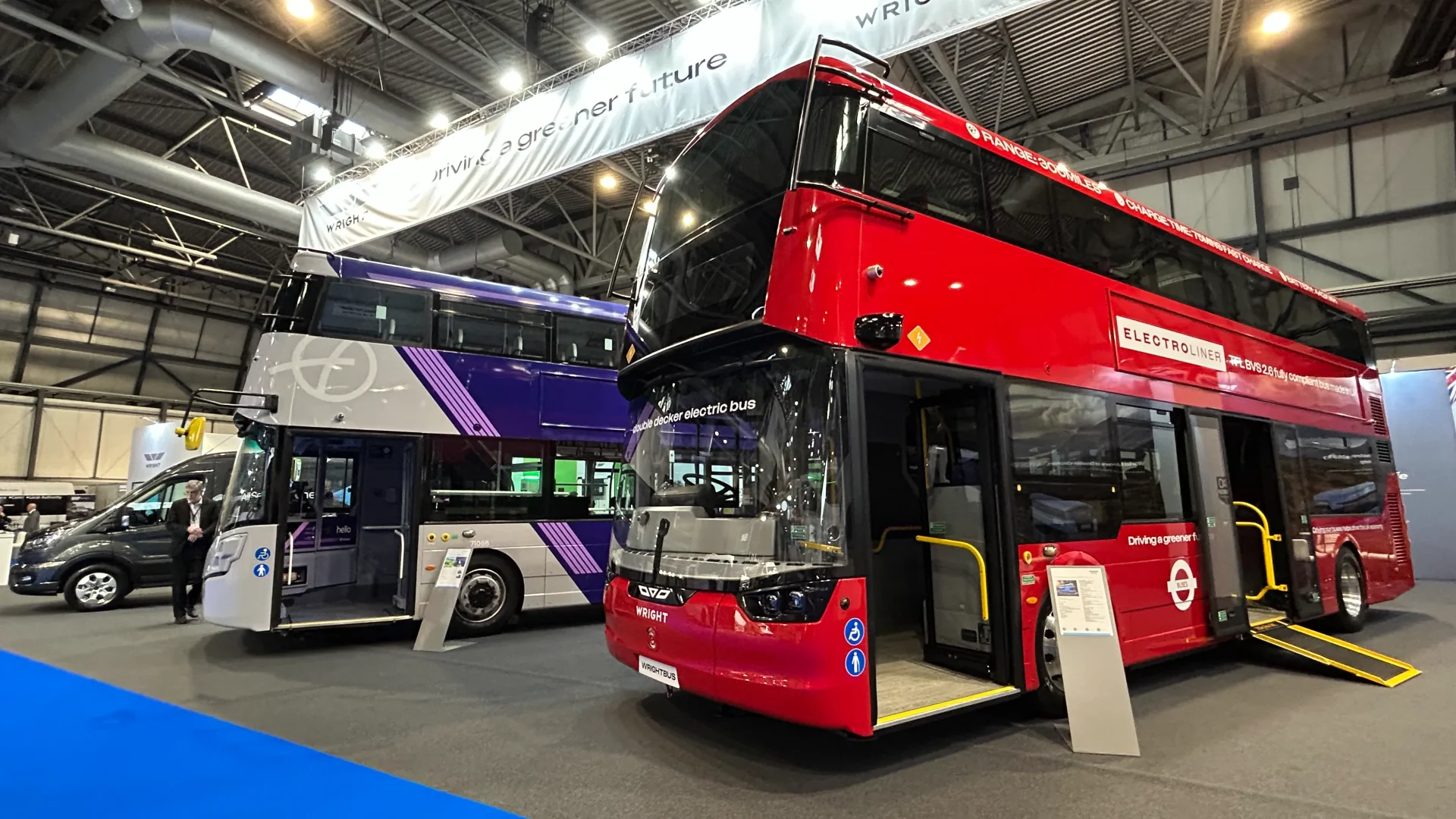
Wrightbus displayed the latest StreetDeck Electroliner 2.0 battery-electric double-decker, alongside a converted electric vehicle developed by its NewPower division.
The Electroliner 2.0 features a 442 kWh LFP battery, an electric motor delivering up to 250 kW and a maximum torque figure of 2,865 Nm. The vehicle is configured for up to 84 passengers, depending on specification, and supports CCS2 charging.
Wrightbus presented its Gen2 StreetDeck Electroliner, a battery-electric double-decker compliant with Transport for London’s Bus Vehicle Specification (BVS) 2.6, alongside a former First Bus diesel double-decker converted to battery-electric propulsion by its NewPower division. The stand also featured a new AllServiceOne service van, highlighting the manufacturer’s aftersales and maintenance activities.
During a press conference at Euro Bus Expo, Wrightbus Managing Director of Sales for the UK and Ireland John McLeister highlighted the company’s 80th anniversary and said it had delivered more than 4,000 zero-emission buses across the UK and Europe. According to McLeister, the company’s recent priority has been consolidating its position in the British market, while its next phase will focus on international expansion. He also indicated that Wrightbus is considering opening additional manufacturing facilities in the UK.
On the repowering side, Sales Director Phil Owens announced that First Bus had placed an additional order for 43 StreetDeck double-deckers to be converted from diesel to battery-electric propulsion. The new conversions will mark the first use of CATL batteries in the programme.
Owens also provided an update on Wrightbus’s hydrogen fuel-cell coach project, which was first announced in 2024 with a launch initially targeted for 2026. The project remains at an early development stage, with the manufacturer now indicating 2027 or 2028 as a possible introduction timeframe. The coach is being developed as a product for international markets, representing a potential expansion of Wrightbus’s portfolio beyond urban buses. In April 2025, the company had announced £5 million in R&D funding dedicated to the hydrogen coach, with a target range of up to 1,000 kilometres on a single refuelling.
Yutong
Through Pelican Bus & Coach, Yutong presented a range covering both diesel coaches and battery-electric urban buses.
The TC9 midicoach, measuring approximately 9.49 metres, uses a Cummins ISB 6.7 diesel engine rated at 320 bhp and provides seating for up to 37 passengers, or 34 with a toilet installed.
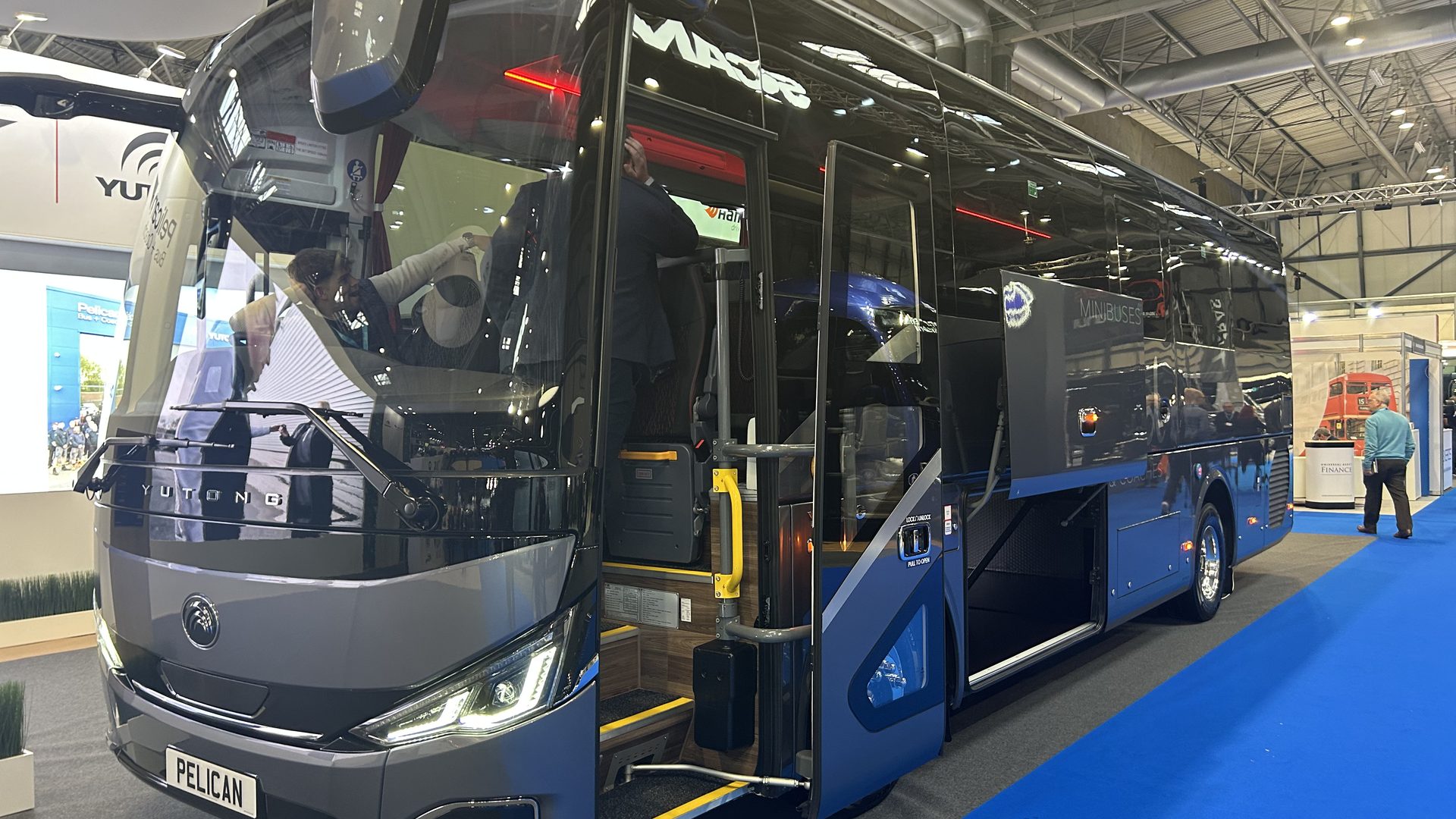
The larger GT12 coach measures approximately 12.25 metres and is equipped with a DAF MX-11 diesel engine rated at 450 bhp, with a 53-seat passenger configuration. The manufacturer’s coach display also included the GT14 tri-axle model.
On the electric bus side, Yutong presented the E12 single-decker and the latest-generation U11DD battery-electric double-decker, reinforcing its position across different vehicle classes in the UK market.
Zhongtong
Chinese manufacturer Zhongtong made its presence felt with the H12 Plus, a right-hand-drive diesel coach intended for the British market.
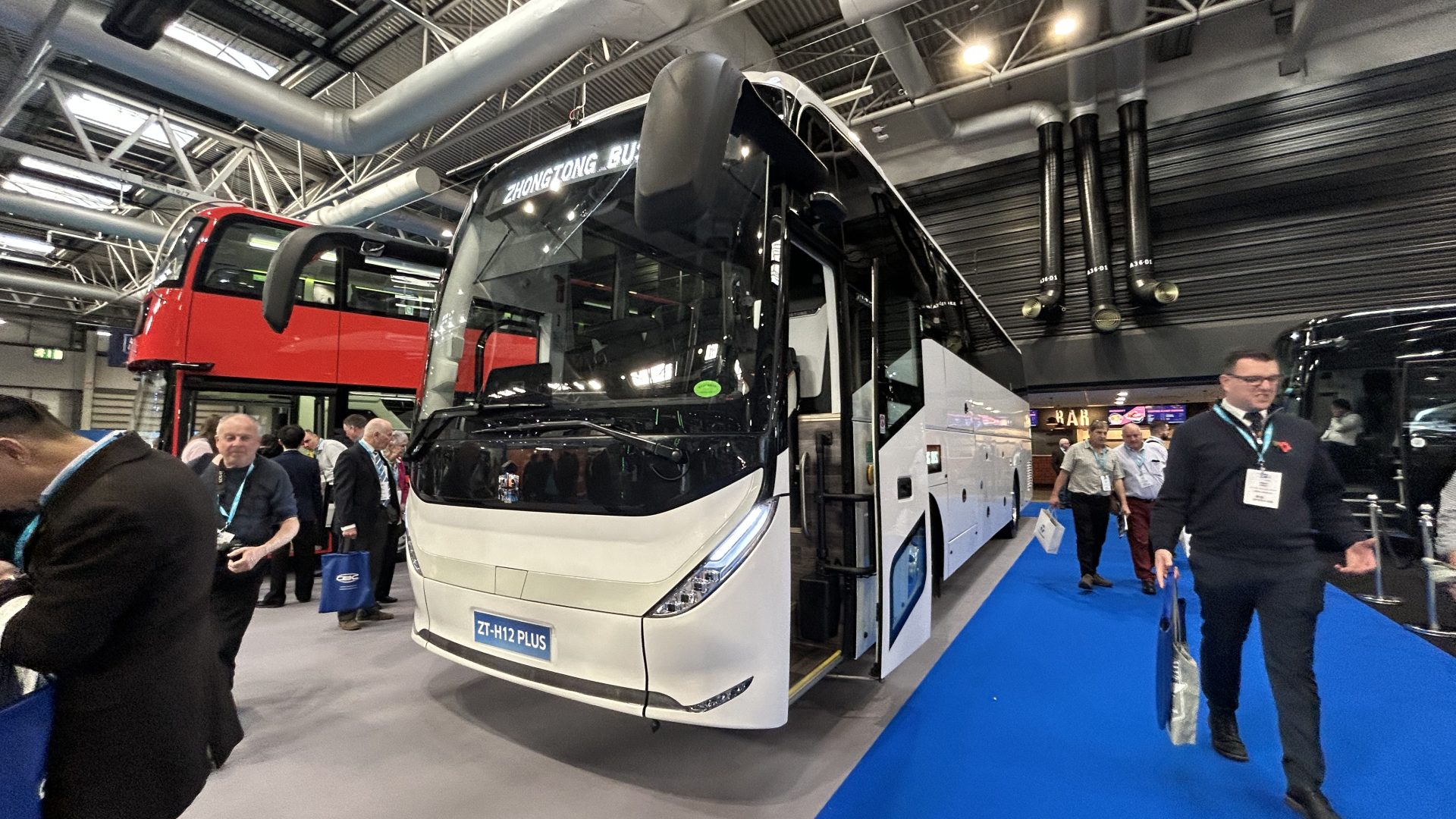
The vehicle measures approximately 12.25 metres and is powered by a DAF MX-11 diesel engine, with seating for 53 passengers plus crew. Its maximum speed is listed at 100 km/h. According to the technical specifications displayed at the stand, the coach measures 2.55 metres in width and 3.86 metres in height, with a 6.1-metre wheelbase and a passenger configuration indicated as 53+1+1.
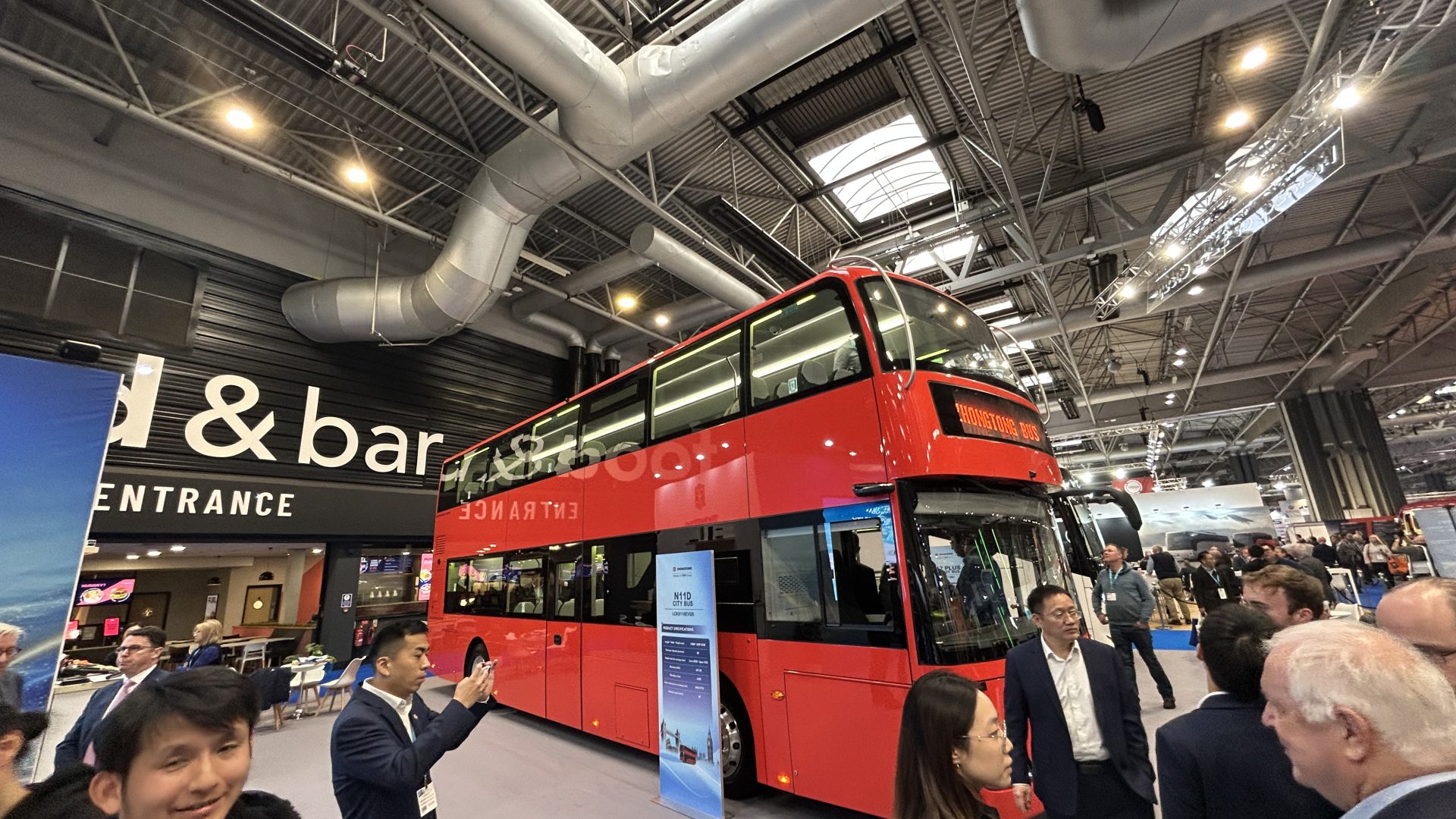
The N11D City Bus, a red double-decker with right-hand-drive configuration, was also presented as part of the manufacturer’s offering for the UK market.