CharterUP targets campus mobility and autonomous driving opportunities, says VP New Mobility Stephen Joos
U.S.-based group transportation technology company CharterUP, operating through a network of more than 700 operator partners and over 10,000 vehicles across North America, is active in both on-demand charter services and recurring shuttle operations, while also investing in autonomous mobility initiatives. Founded eight years ago, the company says it covered more than 12 million miles […]
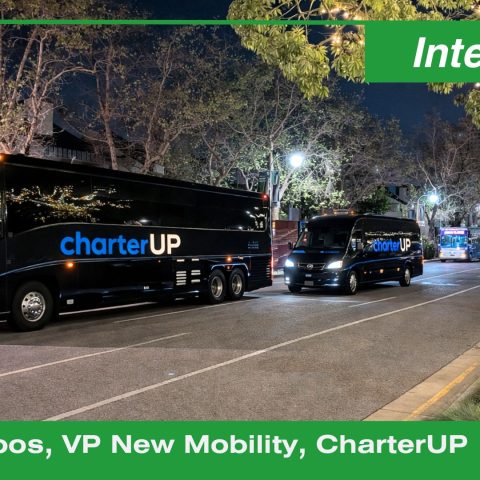
U.S.-based group transportation technology company CharterUP, operating through a network of more than 700 operator partners and over 10,000 vehicles across North America, is active in both on-demand charter services and recurring shuttle operations, while also investing in autonomous mobility initiatives.
Founded eight years ago, the company says it covered more than 12 million miles and transported 6 million passengers in 2024, leveraging an asset-light model built around its Transit Intelligence platform for dispatching, vehicle tracking and route management.

In this interview, Stephen Joos, VP New Mobility at CharterUP, discusses the company’s positioning in the group transportation sector, its partnership with autonomous shuttle manufacturer Holon, and the role of AI, electrification and autonomy in recurring mobility services such as university and corporate campus transportation.
There are about 4,000 universities in the US, and every single one needs to move students. Right now, around 1,200 universities use CharterUP in some way or another. There’s a lot of space for growth, then. Campuses are clearly defined, sometimes even private, which makes everything easier. And typically, transportation is managed by a small staff, or just one person, with a huge responsibility: moving large numbers of students every day, dealing with breakdowns, managing assets etc. So we believe this is an area where we can add significant value. When we talk about 10x growth, campuses are a very exciting opportunity for us.
Stephen Joos, VP New Mobility, CharterUP
Stephen Joos, the background of CharterUP
To start broadly, can you give a snapshot of CharterUP today: vehicles, partners, growth..
Just to give you a quick background on CharterUP, we’ve been in business now for eight years and after Covid saw a significant rise in demand for our services specifically in the group transportation segments. If we look at just last year, on our platform we covered over 12 million miles and moved over 6 million passengers, 25 million passengers all time. Within our partner model, right now across North America we have over 700 operator partners, which allows us to deploy over 10,000 vehicles.
We address the demand of on-demand charter, anything from athletic transportation for a team to a corporate board retreat to a group of people getting together. Because within the taxi and rideshare market the largest vehicle category really tops out at four to six passengers.
And so what are you going to do if you have a group of people that are above that? That’s really where CharterUP is leading that space and segment, above six passengers, from a van to motor coaches.
What drove a lot of our growth, especially in the technology focus, is our Series A funding we had in 2022, raising $60 million. And so with those funds we invested heavily in our technology and really took a technology-first approach for the business.
Your model is asset-light: CharterUP doesn’t own vehicles. Is it correct to describe it as a platform connecting customers and operators?
Yes, but we’re definitely much more than just a “platform.” We’re a true operating partner to our network of transportation companies, and increasingly, an operating system for modern group transportation.
Our Transit Intelligence platformis the backbone of our service offerings. It’s a full suite of tools and operational technology built for transportation coordinators, enterprise clients, and operator partners alike. It includes everything from live vehicle tracking and route optimization to dispatch workflows, reporting and trip management for large-scale coordination. We help operators fulfill demand, access enterprise opportunities, and leverage technology they likely wouldn’t otherwise have on their own.
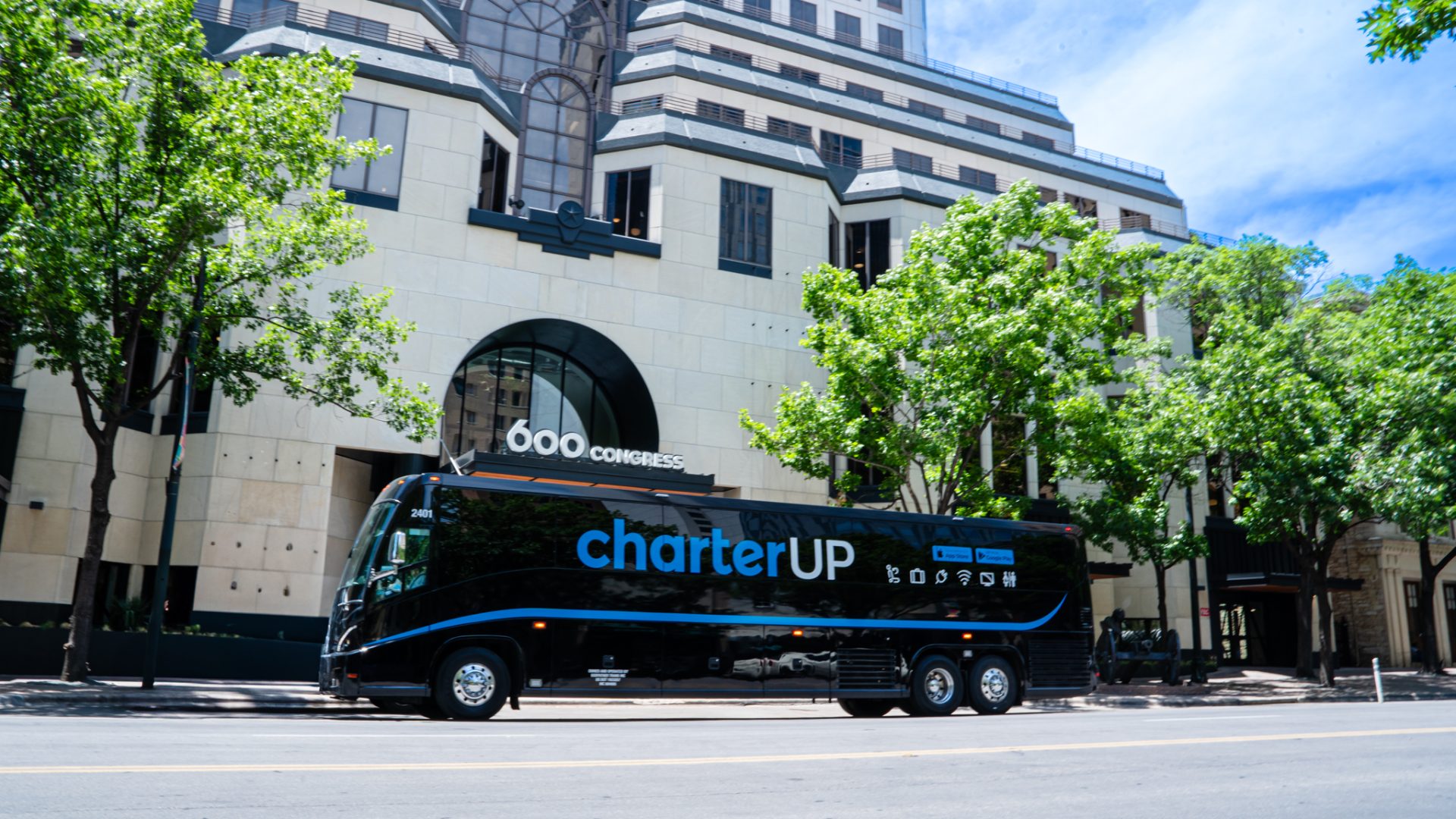
One of the great things that I love about this organization is that we give opportunities to smaller transportation companies and allow them to access larger opportunities that they might not have been able to, by layering our technology on top of their localized and operational expertise.
So let’s say you have a contract that requires live tracking, route optimization and planning. Historically, you would have only structured companies, with much capital and a certain size, bidding on this. We put our partners in a position to win those jobs. CharterUP changes that dynamic by giving our partners the technology and operational support needed to compete at that level.
Our model is based on service hours. So you have a cost per service hour. And we want to have a like-for-like structure between the driven side and the autonomous side.
Stephen Joos, VP New Mobility, CharterUP
Obviously, if a university, an airport or a corporate campus wants to invest to acquire vehicles, then our team can operate them and ensure control center operations, safety, etc. But what we are really aiming for is a comparable service-hour model. That is what we like about Holon, we can go to market with a competitive service-hour structure and speak the same “language” in terms of pricing and integration. So you move from a large CAPEX decision to a usage-based model, which is very exciting for the sector.
You have both on-demand charter and recurring services. How is that split today and how do you see it evolving?
We’re excited by both opportunities. Our goal really is to grow across these different use cases. Concerning the on-demand charter segment, we want to be the name-brand ‘go to’ when a group needs transportation, whether that’s corporate, university, athletics, sports teams, business or personal. We want to be that on-demand option for groups. And then the other side is daily, recurring group transportation and shuttles. We’ve invested heavily in that. Our customers receive almost, for lack of a better term, a ride-share-style tracking experience. On the shuttle side, we’re really looking at efficiency, optimisation and cost reduction through AI and autonomy.
We think there are a number of challenges within the shuttle, or recurring transportation market, and know we have the capabilities to solve and streamline those in the future.
CharterUP, Holon, autonomous driving…
You recently signed a partnership with Holon. How is this focus on autonomous driving going to fit with your business model?
Within this area we’re going to take a hybrid approach. You have the human-driven operations, which are human-driven buses and shuttles, and then you have the autonomous side. And we want to be the source for all of that. So as organisations like universities or corporate campuses start to explore and understand autonomy, we can deploy autonomous shuttles in phases. We run the traditional “human-driven” operations first, and integrate autonomous operations thoughtfully, making the transition easier. Because we already understand how the transportation network works, we can identify areas where autonomous solutions are needed.
And we will still leverage our partners to assist and step in, and ensure that the customer experience is there by managing the programmes, ensuring compliance, on-time performance and so on.
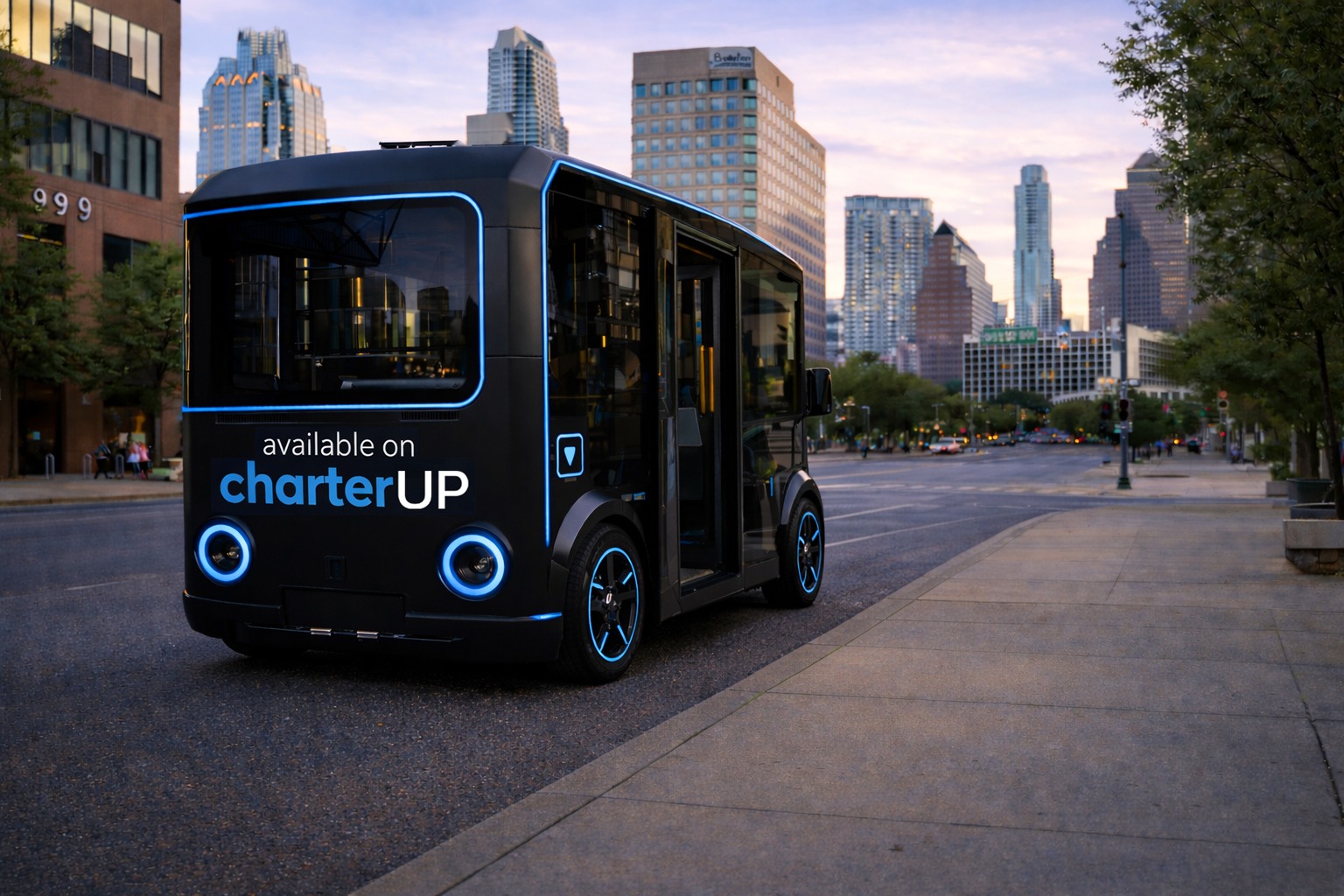
Will your model then remain asset-light?
Let me just step back and explain the structure. On the driven side, the model is based on service hours. So you have a cost per service hour. And we want to have a like-for-like structure between the driven side and the autonomous side. That is our goal and what we are pursuing with autonomy.
Obviously, if a university, an airport or a corporate campus wants to invest to acquire vehicles, then our team can operate them and ensure control center operations, safety, etc. That is fine. But what we are really aiming for is a comparable service-hour model. That is what we like about Holon, we can go to market with a competitive service-hour structure and speak the same “language” in terms of pricing and integration. So you move from a large CAPEX decision to a usage-based model, which is very exciting for the sector.
What are the main challenges and opportunities for autonomous driving in the US?
I think the main challenge in the shuttle or recurring group transportation space is cost. Right now, you have rising fuel costs, driver shortages and inflation. So universities, communities and everyone is trying to keep up. They are asking for more budget, and the question is whether those funds will be available.
We see autonomous technology as something that can help solve many of these challenges. At the same time, in the US the conversation has been very focused on robotaxis. But we saw the news: the average occupancy for Waymo is one passenger. With the vehicles we are looking at, which can carry up to 15 passengers, operations are much more efficient. These are EVs, more sustainable, and you can solve the transport need with fewer vehicles, which also helps reduce congestion. If you have a single occupant, on the other side, you are contributing to congestion, which are exactly the problems cities are trying to solve.
The huge market opportunities lying in the campus segment
Do you see partnering with transit agencies on deployment of autonomous vehicles as a future focus for CharterUP?
Initially, we are heavily focused on campuses. The key point is that these are contained environments. Universities, in particular, are ideal because they are essentially small cities with dedicated transportation networks. So there are opportunities to improve and optimise those systems without significant capital expenditure.
We’re definitely much more than just a “platform.” We’re a true operating partner to our network of transportation companies, and increasingly, an operating system for modern group transportation.
Stephen Joos, VP New Mobility, CharterUP
Our Transit Intelligence platformis the backbone of our service offerings. It’s a full suite of tools and operational technology built for transportation coordinators, enterprise clients, and operator partners alike. It includes everything from live vehicle tracking and route optimization to dispatch workflows, reporting and trip management for large-scale coordination. We help operators fulfill demand, access enterprise opportunities, and leverage technology they likely wouldn’t otherwise have on their own.
One of the great things that I love about this organization is that we give opportunities to smaller transportation companies and allow them to access larger opportunities that they might not have been able to, by layering our technology on top of their localized and operational expertise.
Your CEO Armir Harris has often spoken about a “10X growth mindset”. Where does the next 10X come from?
Universities are a good example. There are about 4,000 universities in the US, and every single one needs to move students. Right now, around 1,200 universities use CharterUP in some way or another. There’s a lot of space for growth, then. Campuses are clearly defined, sometimes even private, which makes everything easier.
And typically, transportation is managed by a small staff, or just one person, with a huge responsibility: moving large numbers of students every day, dealing with breakdowns, managing assets etc. So we believe this is an area where we can add significant value. When we talk about 10x growth, campuses are a very exciting opportunity for us.
CharterUP, the role of AI in charter transportation
Is AI an enabler of your business or an add-on? When CharterUP was founded, eight years ago, the topic was much less mainstream…
AI is deeply ingrained in everything we do and has been for a long time. Especially with autonomy, since there is a much larger volume of data coming in. When you define your service area, your ODD, and process all that data, there is a significant opportunity to improve transportation networks in terms of performance, efficiency and reliability.
Is CharterUP profitable as of today or still in an investment phase?
We’re a private company, so I cannot speak specifically about financials. But what I can say is that our business is very healthy and has been growing at over 100% YoY. We’re continuing to win meaningful, large-scale deals and are continuously investing in our team and our technology. We have a strong balanced cycle that helps to drive the company forward.
in the US the conversation has been very focused on robotaxis. But we saw the news: the average occupancy for Waymo is one passenger. With the vehicles we are looking at, which can carry up to 15 passengers, operations are much more efficient. These are EVs, more sustainable, and you can solve the transport need with fewer vehicles, which also helps reduce congestion. If you have a single occupant, on the other side, you are contributing to congestion, which are exactly the problems cities are trying to solve.
Stephen Joos, VP New Mobility, CharterUP
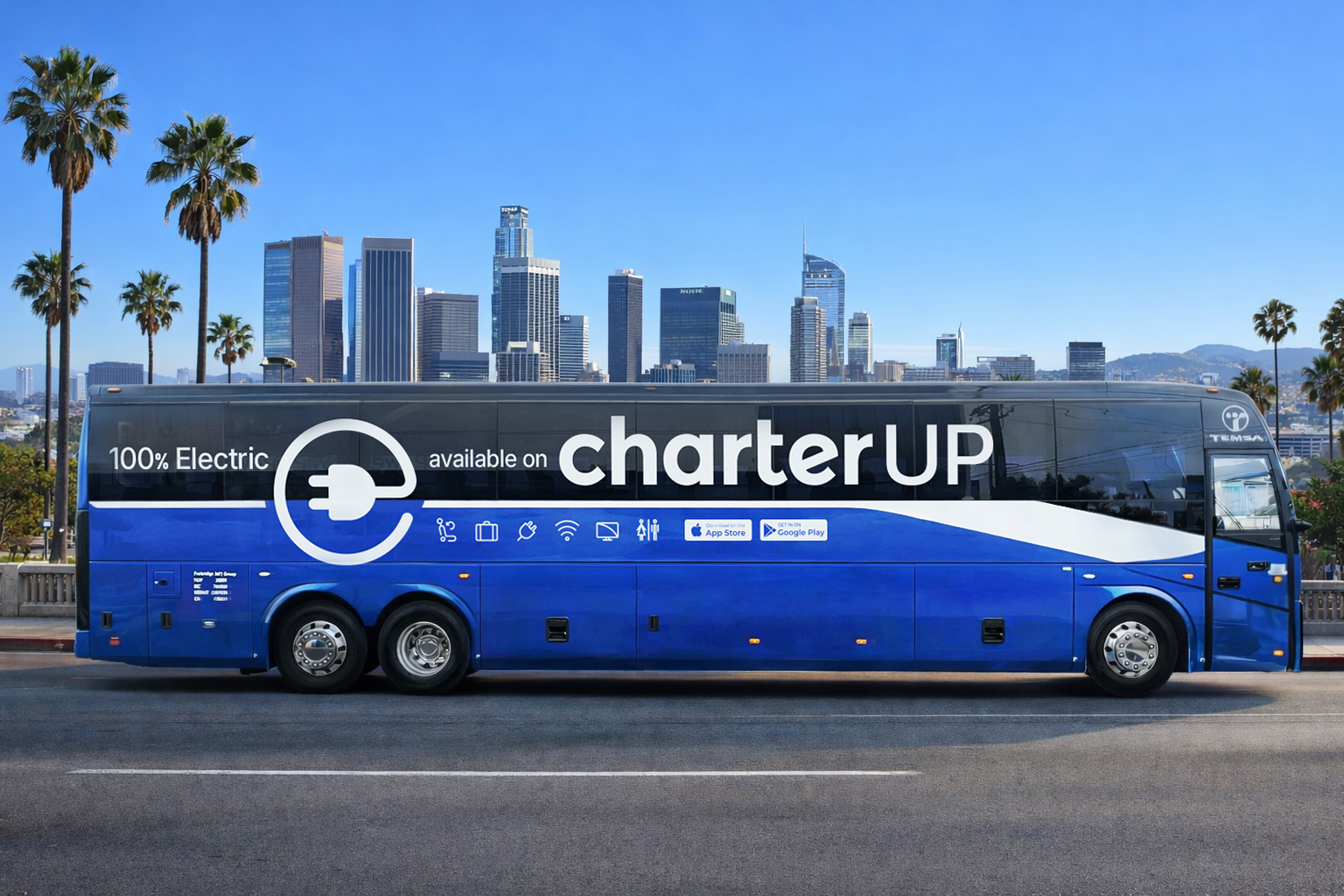
What about electrification? You recently announced a roll-out of e-coaches in California.
From a sustainability perspective, we support electrification. However, compared to individual car use, group transportation already has clear benefits. With EVs, implementation is critical. In my previous work in the goods movement sector, we used EVs extensively, and there are many factors to consider.
With passenger transport, it is even more critical—because passengers have schedules and expectations. If a vehicle goes down, it is not as simple to replace as in freight. So you need to be very precise in designing a zero-emission solution.
In partnership with one of our top operators managing airport operations and traditional charter-style routes, this project helped us test different approaches in a complex environment and, and gave many key learnings from the data.