Why intergenerational fairness depends on inclusive passenger transport. A contribution by Arriva’s CEO Gianfranco Sgro
This year, European Mobility Week brings an additional focus on intergenerational fairness – ensuring the decisions we make today create opportunities for people at every stage of life, while protecting the choices available to future generations. It is a timely focus, with the European Commission publishing its first strategy on Intergenerational Fairness earlier this year. For me, these ideas go hand in hand and fairness in mobility means three things: connecting people equally to opportunity, removing the barriers that might prevent them from travelling today, and planning transport networks that will serve communities sustainably for generations to come.
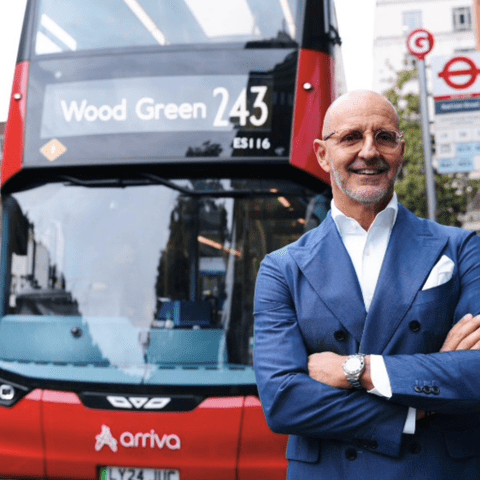
A contribution by Gianfranco Sgro, CEO of Arriva Group
European Mobility Week puts a simple but important principle in the spotlight: efficient and accessible mobility should be there for everyone. Because mobility is about much more than getting from A to B. The right transport connections unlock access to education, employment and essential services, help people remain independent and keep communities connected.
This year, European Mobility Week brings an additional focus on intergenerational fairness – ensuring the decisions we make today create opportunities for people at every stage of life, while protecting the choices available to future generations. It is a timely focus, with the European Commission publishing its first strategy on Intergenerational Fairness earlier this year.
For me, these ideas go hand in hand and fairness in mobility means three things: connecting people equally to opportunity, removing the barriers that might prevent them from travelling today, and planning transport networks that will serve communities sustainably for generations to come.
That requires action from operators, governments and transport authorities alike. We need to ensure that bus services and other forms of passenger transport are accessible to more people today, while taking the long-term decisions that will give future generations genuine confidence to choose public transport as their preferred option.
Connecting people to opportunity
Where you choose to live should not determine the opportunities available to you. But without good transport connections, too often it can.
For a young person, the right bus or rail service can determine whether they can get to school, take up a place in further education or accept their first job. For families, especially those without a car, it can provide access to work, healthcare and essential services. For older people, it can be fundamental to remaining independent and connected to their communities.
At Arriva, we transport around tens of thousands of pupils to primary and secondary schools every day across Europe. These are everyday journeys, but their impact can last a lifetime. By making access to education, employment and essential services less dependent on car ownership, income or postcode, passenger transport can widen opportunity and support social mobility.
Removing barriers to travel
But providing a transport connection is only the starting point. We can only deliver on the promise of mobility for everyone if people can use it safely, confidently and independently.
That means designing inclusivity into transport systems from the outset – from vehicles and stations to route planning, passenger information, ticketing and payment.
And accessibility is about more than physical access. It is also about making sure cost, confidence or circumstance don’t stop people from travelling. Across Arriva, we are working with our partners to tackle those barriers in different ways – from free public transport for people on lower incomes in the Netherlands and support for the UK Government’s free child bus travel scheme this summer, to Italy’s first integrated contactless payment system across urban and suburban bus transport in Brescia.
Technology has an important role to play too. Across our markets, we are investing in digital tools that make journeys easier to plan and navigate. From real-time journey updates to simpler ticketing and payment options across different markets and modes of transport, technology has the power to deliver more accessible and inclusive services.
Planning for future generations
Making mobility fairer today is only half of the equation. Intergenerational fairness also means recognising that the investment we make today will shape the choices available to people for decades to come.
That matters as our towns and cities grow and authorities across Europe work to reduce emissions. If we want cleaner air, less congestion and communities where people have genuine choices about how they travel, shared passenger transport must be part of the answer.
But that will not happen by chance.
Government and transport authorities need to build passenger transport into planning decisions from the outset and set ambitious targets for shifting more journeys from private cars to shared transport, walking and cycling.
Services should be designed around how people actually travel, with better coordination between different modes. Well-planned travel hubs can bring bus, rail and other transport options together in one place, creating more integrated networks that make public transport a more practical choice for everyone.
Arriva would like to see ambitious, measurable targets to shift more journeys from private cars to shared transport. Clear modal shift targets create a common goal, give public authorities the confidence to plan for the long term and provide operators with the certainty to invest in cleaner, more modern fleets with additional capacity to cater for future needs and growing networks.
Without long-term ambition, progress will remain inconsistent, with some communities benefiting from high-quality connections while others are left behind – deepening the inequalities passenger transport should help overcome.
European Mobility Week should be more than a moment of reflection. It should strengthen our collective commitment to making the long-term decisions and investments that give more people genuine choices about how they travel – wherever they live and whatever their stage of life.
At Arriva, our ambition is to create better every day journeys through safe, reliable, accessible and sustainable services. Because if we get interconnected mobility right, we do more than move people between places. We connect people with opportunity today – while creating cleaner, better-connected and fairer communities for generations to come.