US bus market between funding uncertainty and new OEMs: Catalyst Mobility’s Mike Hynes on Buy America, ZE transition and procurement reform
The US transit bus market is navigating funding uncertainty, evolving procurement models and a changing manufacturing landscape, while transit agencies continue to plan their transition to zero-emission fleets. At APTA Expo 2026 in Chicago, we discussed these developments with Mike Hynes, Deputy Director, Transit at Catalyst Mobility, addressing the state of the US bus industry, […]
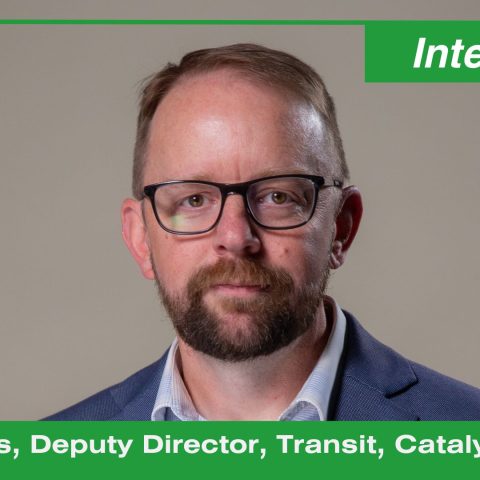
The US transit bus market is navigating funding uncertainty, evolving procurement models and a changing manufacturing landscape, while transit agencies continue to plan their transition to zero-emission fleets. At APTA Expo 2026 in Chicago, we discussed these developments with Mike Hynes, Deputy Director, Transit at Catalyst Mobility, addressing the state of the US bus industry, the role of federal funding, the entry of international manufacturers and the technological options available to public transport operators.
The interview comes shortly after CALSTART’s rebranding as Catalyst Mobility in September 2026, ahead of its planned combination with Forth at the beginning of 2027. The two organizations bring together activities in zero-emission vehicle deployment, policy, funding, charging infrastructure and technical support for fleet transitions.
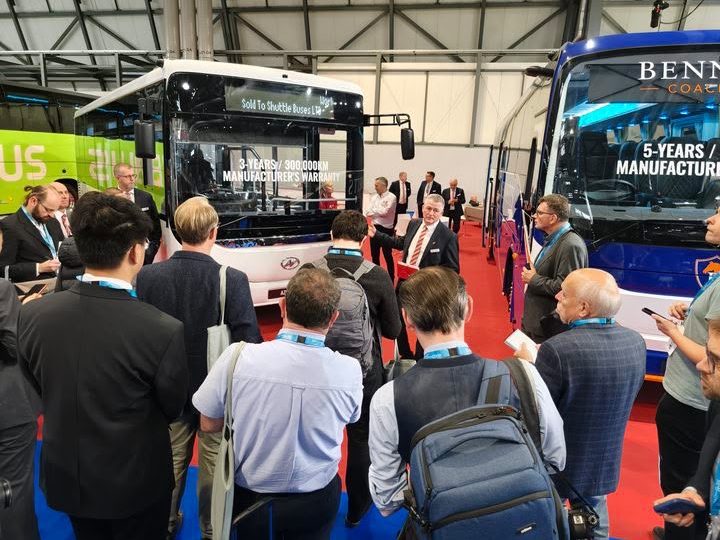
The discussion also took place against the backdrop of APTA Expo 2026 in Chicago, where vehicle manufacturers presented different approaches to fleet renewal, from battery-electric technologies to CNG and hybrid solutions. Hynes addresses the relationship between funding availability and vehicle procurement, the application of Buy America requirements to new market entrants, and the growing attention to joint procurement and shared-use infrastructure.
The conversation also covers workforce development, utility coordination, the need to update fleet electrification plans and the potential role of hydrogen in transit applications. According to Hynes, infrastructure planning and funding predictability remain central issues for agencies preparing vehicle and technology investments, alongside the development of more flexible procurement arrangements.

CALSTART becomes Catalyst Mobility for global penetration
CALSTART rebranded as Catalyst Mobility in September 2026 and is set to combine with Forth, a US nonprofit focused on transportation electrification, charging infrastructure and equitable access to clean mobility, at the beginning of 2027. What is the rationale behind this transition, and what, if anything, will change in your role and activities within the public transit sector?
CALSTART was born out of California, but our work has evolved in the past 30 years and spans across the U.S. and internationally. While California remains a core area for our work, we are a global accelerator for zero-emission vehicle adoption. Together with Forth, Catalyst Mobility will have the opportunity to further expand our reach, expertise, and impact in the transit sector. We’re really fortunate to have Forth with us. It puts us in a really good position on both the policy side and the funding side, leveraging the experience that Forth has and our technical expertise.
We know transitions to advanced technologies take a long time. It’s not a straight line. So we’ll continue to leverage our experience and support agencies with what they need.
There’s a general understanding that Buy America makes a lot of sense. What’s open to debate is how we get there. Perhaps we need a more gradual path, a roadmap that allows overseas manufacturers to enter the US market by meeting certain requirements and milestones. In return, the US could support their efforts to establish manufacturing operations here, create American jobs and build vehicles locally. It’s about giving these companies a clear path forward. Otherwise it’s really expensive to come to the US, find land, find a factory and train people.
Mike Hynes, Deputy Director, Transit, Catalyst Mobility
Are there any specific areas where you’re seeing new opportunities?
Supporting workforce development. There’s still a lot of work to be done there, particularly in scaling solutions.
Right now, we see a lot of agencies running one-off programs. We think there’s a missed opportunity to scale the solutions that work and make sure agencies have the resources they need. We’re continuing our work on workforce development, alongside the technology demonstration projects we’ve been involved in.
Mike Hynes on the state of US transit market
How do you assess the current state of the US transit market? At APTA Expo, we’ve seen a strong focus on the need for stable funding. But beyond funding, and from a technological perspective, how do you see the health of the market?
The market is in a transition period, because we’re still coming out of COVID in terms of how agencies are adjusting. The additional operational funding provided to agencies supported them through COVID and beyond.
We’re seeing the vehicle market still maturing. There was a contraction in the US market, and now we’re seeing it build back out. That’s why it’s a critical time.
We continue to add zero-emission vehicles and advanced technology vehicles. But that really relies on funding. If agencies don’t have funding for operations, they’re not going to have funding for vehicles or the capital projects they want to do.
That’s the biggest thing hanging over the market: what is the funding going to look like? Without those answers, agencies can’t plan, whether it’s vehicles, infrastructure or operations.
Speaking of the zero-emission transition, we used to see exhibitions as places where you could get a glimpse of what the market would look like in the next five years. In Europe, we started seeing electric buses at exhibitions around 2015, even when there were practically none on the roads. What surprised us in Chicago is that we apparently didn’t see much of a forward-looking approach on the manufacturing side. How do you interpret that?
I think US manufacturers are responding to the current market landscape, where funding potentially is not going to be there to support zero-emission. There are still agencies actively engaged in zero-emission projects. But many are now looking at CNG or hybrid as alternatives if funding isn’t available.
What we’re seeing reflects the different market conditions and strategies of the manufacturers. Established OEMs in the US are responding to a market where mixed fleets are likely to remain a reality for some time. Their product offerings reflect the operational needs and investment priorities of their customers.
On the other hand, manufacturers entering the US market from Europe and other regions are placing a stronger emphasis on zero-emission technologies. Many have already gained experience with these solutions in their home markets, and they’re now looking to bring that expertise and those products to North America.
I wouldn’t necessarily see this as a difference in ambition, but rather as two approaches shaped by different market experiences and expectations.
The US transit bus market is changing
Your take from APTA Expo 2026?
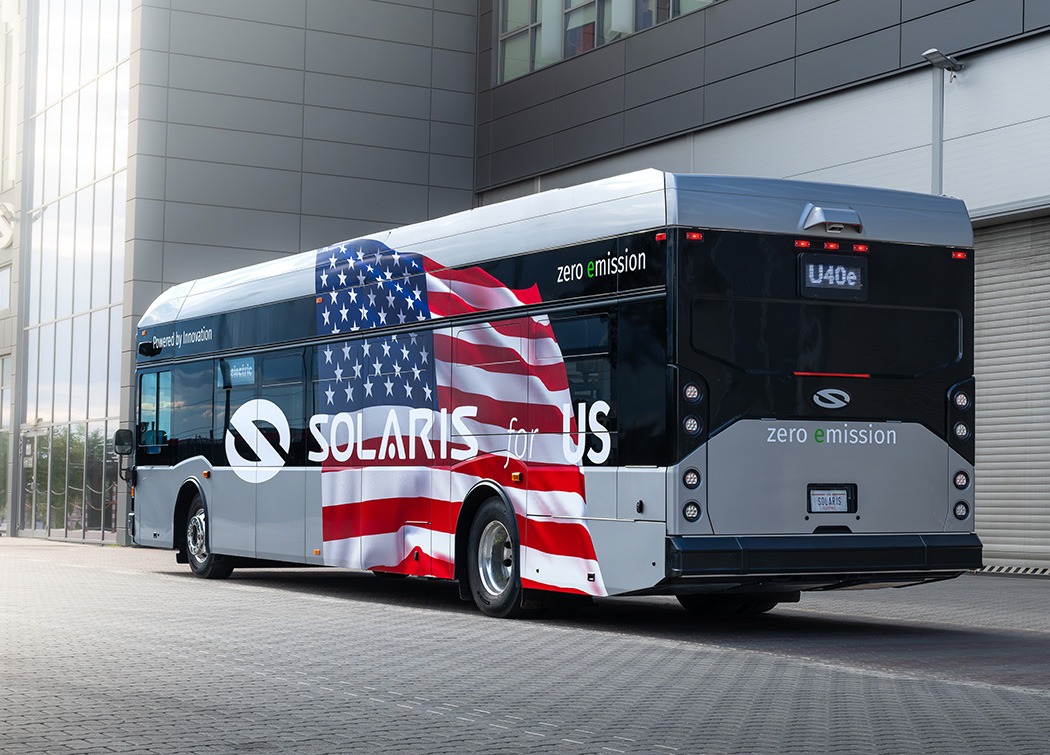
I think it’ll be interesting to look at how the market is going to react to the new entrants into the US, whether they’re building here or not. How is Solaris producing its buses? How is VinFast going to design its buses? What’s the market’s reaction, and what fleets are interested? What are they looking for?
Buy America is a major pillar of US industrial policy, with broad political support. But isn’t it also slowing the pace of innovation and putting something of a brake on the market?
There’s a general understanding that Buy America makes a lot of sense. What’s open to debate is how we get there.
Perhaps we need a more gradual path, a roadmap that allows overseas manufacturers to enter the US market by meeting certain requirements and milestones. In return, the US could support their efforts to establish manufacturing operations here, create American jobs and build vehicles locally.
It’s about giving these companies a clear path forward. Otherwise it’s really expensive to come to the US, find land, find a factory and train people.
There are agencies looking at different models, including public-private partnerships for specific service types. We’re seeing more agencies looking at shared-use infrastructure, potentially spreading the cost, or leveraging infrastructure that someone else is already developing. One example is a project we’re working on with UCLA involving wireless charging infrastructure. What’s interesting is that the infrastructure could support different types of vehicles, including transit buses and smaller shuttles, and potentially be used by multiple agencies. Rather than everyone developing their own infrastructure, there may be opportunities to share those investments.
Mike Hynes, Deputy Director, Transit, Catalyst Mobility
Public funding remains central to fleet renewal in the US, but procurement models are also evolving, with growing attention to leasing, joint procurement and more flexible purchasing arrangements. How do you assess these developments, and to what extent can they help operators make better use of available resources?
Restructuring how agencies can use the funds, giving them more flexibility, is helpful. And I think it’s going to have to continue. It’s not a one-size-fits-all fix. We’re starting to see increased emphasis on procurement reform: joint procurements, baseline specifications and state contracts, whether in Washington, Virginia or California. It’s about providing agencies with a way to get more for their dollar while tackling some of the costs we’re seeing with customization and delayed orders.
Are there cities, regions or transit agencies in the US experimenting with new business models, perhaps less dependent on public funding? For example, public-private partnerships or greater involvement from financial institutions. Are there alternatives to this strong reliance on public funding?
There are agencies looking at different models, including public-private partnerships for specific service types. We’re seeing more agencies looking at shared-use infrastructure, potentially spreading the cost, or leveraging infrastructure that someone else is already developing.
One example is a project we’re working on with UCLA involving wireless charging infrastructure. What’s interesting is that the infrastructure could support different types of vehicles, including transit buses and smaller shuttles, and potentially be used by multiple agencies. Rather than everyone developing their own infrastructure, there may be opportunities to share those investments.
I think the shared-use model is going to become more common.
One of the benefits of the transition to zero-emission or advanced technologies is that agencies start looking at things differently. They’re looking at vehicles, infrastructure, real estate and different funding models.
We’re seeing the vehicle market still maturing. There was a contraction in the US market, and now we’re seeing it build back out. That’s why it’s a critical time. We continue to add zero-emission vehicles and advanced technology vehicles. But that really relies on funding. If agencies don’t have funding for operations, they’re not going to have funding for vehicles or the capital projects they want to do. That’s the biggest thing hanging over the market: what is the funding going to look like? Without those answers, agencies can’t plan, whether it’s vehicles, infrastructure or operations.
Mike Hynes, Deputy Director, Transit, Catalyst Mobility
What about the rest of the supply chain? I’m thinking about energy providers, charging equipment manufacturers and charging infrastructure providers. Are all these elements already present in the US, or is this still an ecosystem that needs to be built?
Infrastructure has always been a challenge. That’s why one of the things we focus on at Catalyst is helping transit agencies address infrastructure requirements before anything else.
This means engaging with utilities and state regulators, understanding what infrastructure is needed and planning accordingly. The bus itself is actually the easiest part.
Fleet transition planning is particularly important. Many agencies have already developed electrification plans, sometimes to apply for funding or meet state requirements. But those plans often represent a snapshot in time, and some haven’t been updated for several years.
Reviewing these plans helps agencies understand their current infrastructure needs and gives utilities and other stakeholders the information they need to prepare.
If utilities know how many fleets are planning to transition, and when, they can plan their investments and infrastructure development accordingly. This is also important for understanding where the market is heading over the next five years.
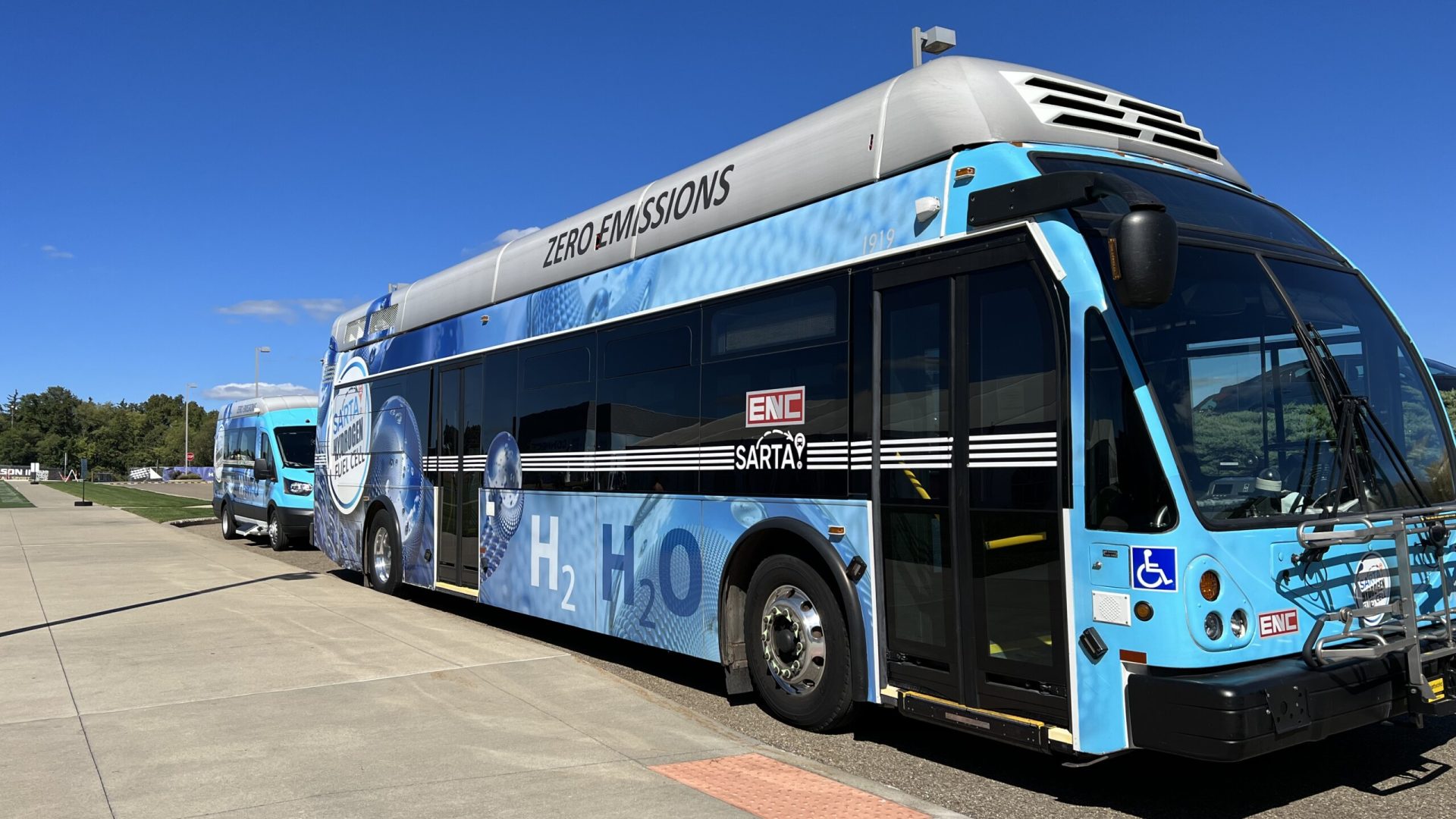
Catalyst has also been involved in some interesting hydrogen projects. Do you think there’s still room for hydrogen in the US market?
I do think there’s a role for hydrogen. But I don’t think its development will be driven by transit alone, just as battery-electric technology isn’t limited to transit. Hydrogen will require shared-use infrastructure. Transit agencies cannot be expected to take full responsibility for sourcing hydrogen and building fueling stations. We need infrastructure that can serve different types of fleets, including corridor-based projects.
We were making good progress with the hydrogen hubs concept. But there have been changes in funding availability, and there’s been something of a pause as everyone tries to understand what the future will look like.
One thing we frequently hear from fleets is that hydrogen offers greater range. But it also comes at a significant cost. Sometimes agencies focus almost exclusively on the range advantage without considering everything else. Where does the hydrogen come from? How much does it cost? What infrastructure needs to be built? And what range are they actually achieving?
Ultimately, hydrogen will be the right solution for some fleets, but they need the right information to make that decision.
I don’t think transit will necessarily lead the development of hydrogen infrastructure, largely because of the costs involved. We need to understand where shared infrastructure can be developed, whether trucking companies are involved, and whether corridor projects could support multiple users.