Iveco Bus launches e-bus manufacturing in Annonay (in addition to Rorthais)
Iveco Bus is set to produce e-buses also in its main French plant of Annonay, in addition to the Heuliez Bus facility in Rorthais that has been so far the ‘hub’ for e-bus manufacturing within the Iveco Group. The manufacturer also has an ongoing investment plan of 600 million euros in the coming years, as […]
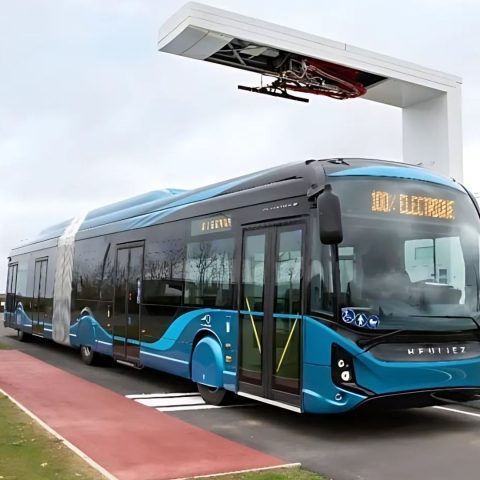
Iveco Bus is set to produce e-buses also in its main French plant of Annonay, in addition to the Heuliez Bus facility in Rorthais that has been so far the ‘hub’ for e-bus manufacturing within the Iveco Group.
The manufacturer also has an ongoing investment plan of 600 million euros in the coming years, as already announced during Iveco Group’s Capital Markets Day in March. The majority will be dedicated to the development of a new zero-emission vehicle platform for the urban and intercity segments in Europe, capitalizing on existing plants and the R&D center in France.
Iveco Bus: electric buses also in Annonay
During the round table on the theme “Europe’s Industrial Strategy: Is Mobility an Opportunity to Reindustrialize Europe?” held last week at the EuMo Expo in Strasbourg, Domenico Nucera, President of Iveco Bus and 2024 President of the Bus and Coach division of the European Automobile Manufacturers’ Association (ACEA), highlighted the major challenges that all stakeholders in the bus and coach sector must address in order to support the acceleration of the transition to zero-emission vehicles and meet the ambitious European regulations. By 2030, 90% of new urban buses will need to be zero-emission, a challenge requiring significant industrial investments for manufacturers aiming to sustain competitive European production of zero-emission vehicles.
To achieve this, Iveco Bus has decided to electrify its French historic plant in Annonay this year, to integrate the production of the Heuliez GX Elec and Iveco E-Way electric models into its assembly lines, which until now had only been handled by the Rorthais site, also located in France.
The lines will also accommodate the production of the new E-Way H2 fuel cell models. Additionally, a unit dedicated to the assembly of latest-generation electric batteries has also been introduced on the site, Iveco Bus underlines. The manufacturer will be better positioned than ever to meet the challenges of the necessary energy transition.
While manufacturers’ efforts are essential, the success of this industrial revolution will require the mobilization of all stakeholders, Iveco Bus strenghtens: “Financial support from the States and the European Union will be crucial for this transformation, along with enhanced cooperation with public transport operators”.
“Maintaining competitive production in Europe is a challenge but also an opportunity for reindustrialization,” said Domenico Nucera. “We are rising to the challenge of the energy transition by investing massively in our manufacturing sites in France, as well as in Italy and the Czech Republic.”
“If we all, as stakeholders, work effectively together, we can successfully meet these challenges and make the most of the opportunities they present for the reindustrialization of Europe,” concluded Domenico Nucera.