Daimler Truck CEO Karin Rådström appointed Chair of ACEA Commercial Vehicle Board
Karin Rådström, President and CEO of Daimler Truck, has been elected Chair of the ACEA Commercial Vehicle Board, effective 1 January 2026. From 2026, the Daimler Truck CEO (in the position since 2024, following a career in Scania) will represent the collective interests of Europe’s leading commercial vehicle manufacturers within the European Automobile Manufacturers’ Association […]

Karin Rådström, President and CEO of Daimler Truck, has been elected Chair of the ACEA Commercial Vehicle Board, effective 1 January 2026.
From 2026, the Daimler Truck CEO (in the position since 2024, following a career in Scania) will represent the collective interests of Europe’s leading commercial vehicle manufacturers within the European Automobile Manufacturers’ Association (ACEA), succeeding Christian Levin, President and CEO of Scania and Traton Group.
Karin Rådström and ACEA’s Commercial Vehicle Board
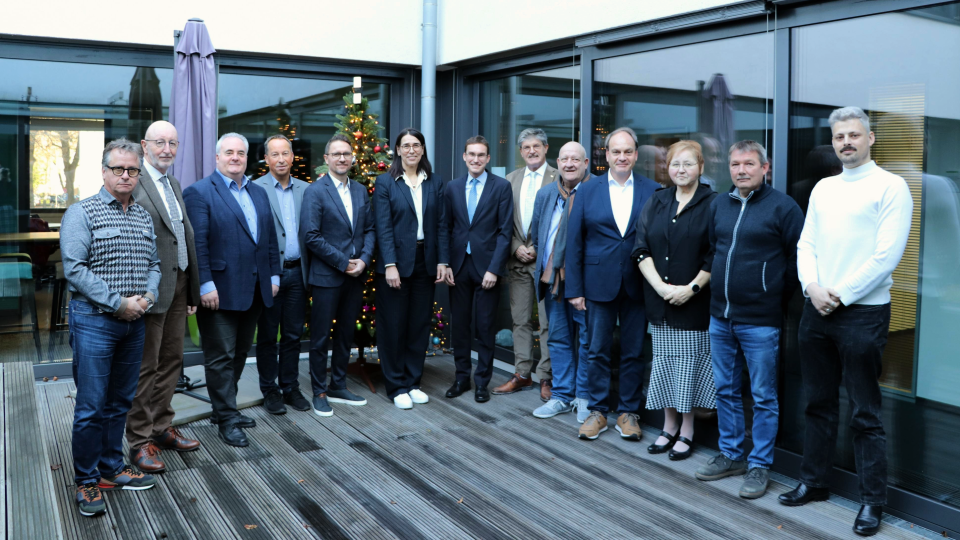
The ACEA Commercial Vehicle Board brings together the chief executives of DAF Trucks, Daimler Truck, Ford Trucks, Iveco Group, MAN Truck & Bus, Scania Group and Volvo Group. The Board is responsible for defining common industry positions on regulatory, industrial and infrastructure-related issues affecting the European truck and bus sector, and elects its Chair on an annual basis.
Karin Rådström stated: “It’s a privilege and honor to take over as Chair of ACEA’s Commercial Vehicle Board at such a crucial time for our industry. Trucks and buses keep Europe moving – they are the backbone of logistics and public transport. With many of the world’s leading truck and bus manufacturers based here in Europe, we have both the responsibility and the opportunity to lead. Yet, there are challenges that put our industry’s competitiveness at risk. We fully support the EU’s goal to decarbonise transport – and with dozens different zero‑emission truck and bus models in series production, our industry is delivering. But substantial market uptake will only happen when our customers can operate zero-emission vehicles as seamlessly and profitably as conventional vehicles today. That’s why we need an accelerated review of the heavy‑duty vehicle CO₂ legislation no later than mid‑2026. The Commission must take urgent action now to prevent manufacturers from having to pay penalties while the essential enabling conditions are simply not in place. The obligations for manufacturers must be aligned with the development of charging and hydrogen infrastructure networks and policy measures that support robust business cases for our customers, like CO2‑based road charges in all Member States”.
Again in the press note shared by Daimler Truck, she adds: “2026 has to be the year Europe turns challenges into progress, delivering pragmatic solutions that protect competitiveness while driving decarbonisation. Europe must quickly become our strong home market for zero‑emission technologies. Both the Commission and Member States must urgently streamline and simplify the regulation framework and accelerate the demand for zero‑emission vehicles. That is what I will focus on in my tenure at ACEA”.