What we have seen at Mobility Move 2026?
Let’s start with a premise: Mobility Move in Berlin is not a venue for product launches, headline announcements, or unveiling brand-new models under wraps. Instead, it serves as a meeting point for the German public transport industry—a “family gathering” (a term frequently used by attendees)—bringing together the entire community within the VDV association (that organize […]
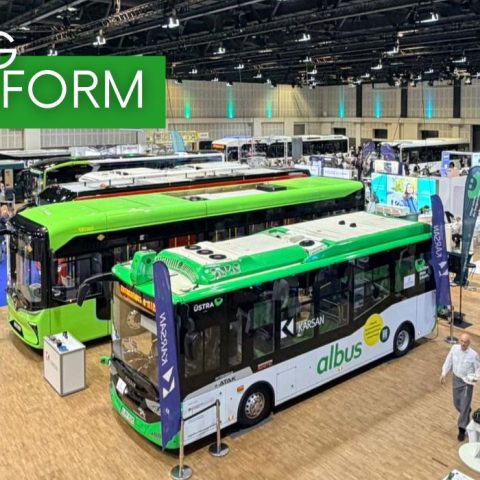
Let’s start with a premise: Mobility Move in Berlin is not a venue for product launches, headline announcements, or unveiling brand-new models under wraps. Instead, it serves as a meeting point for the German public transport industry—a “family gathering” (a term frequently used by attendees)—bringing together the entire community within the VDV association (that organize the event together with the DEVK Insurance Group) to discuss challenges, projects, and perspectives over two and a half days of exchange with technology suppliers and manufacturers.
The event combines conference and exhibition elements and has now reached its sixteenth edition. It has consistently anticipated innovation trends: the predecessor of Mobility Move, the VDV Elektrobus Conference focused on electric buses, dates back to the early 2010s. It later evolved into ElekBu, with a gradually expanding exhibition component that has always remained secondary to a conference program structured around four parallel thematic tracks and more than 100 sessions over two days. A few years ago, ElekBu became Mobility Move. As electrification has entered standard operational agendas for public transport operators, attention has shifted to other frontiers. Today, the Berlin event stands out as a key platform for observing developments in autonomous driving applied to public transport. This contributes to its increasingly international profile, while maintaining its strong domestic focus within the German public transport sector. Its positioning is reinforced by a high entry ticket, which effectively limits attendance to highly motivated buyers and stakeholders.
This year, the event again recorded peak figures, with over 1,600 participants and more than 110 exhibitors, on a growing trajectory.
Our staff has been joining and reporting from the event, like last year. In addition to this, our media has been featured among the media partners, and the Berlin’s event also provided a nice opportunity to launch our newest initiative: the special feature “The Battery Cycle”, that was in distribution at the expo.
BYD
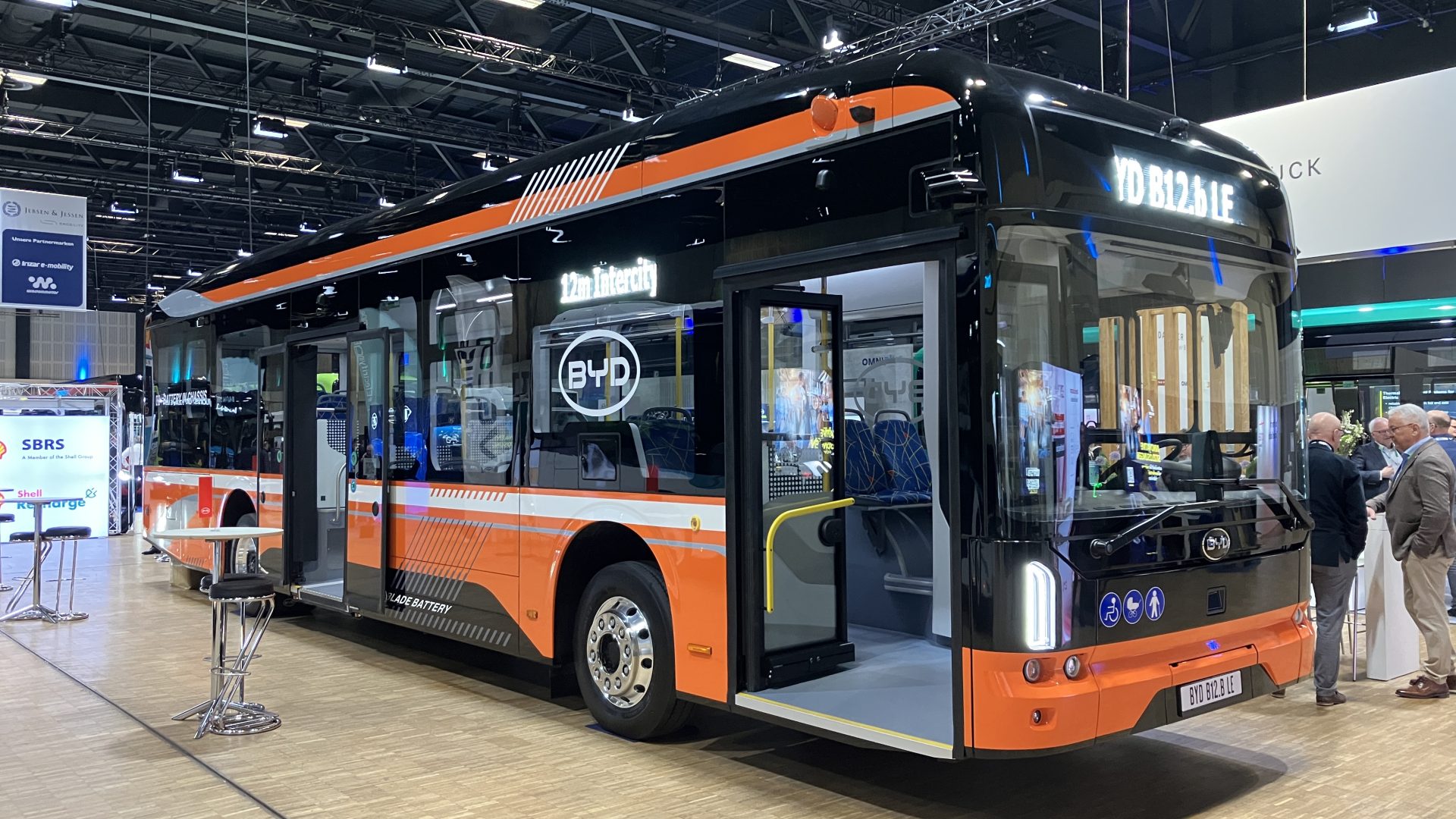
BYD also displayed its B12.b Low Entry intercity electric bus at Mobility Move, after official launch of the 13-meter version at the UITP Summit 2025 in Hamburg.
It is equipped with two 150kW wheel hub hairpin motors. BYD’s proprietary integrated Thermal Management System seamlessly integrates drivetrain cooling, battery cooling, battery heat pump heating, and drivetrain waste heat recovery. This has enabled BYD to increase the heating speed of the B13.b Blade Battery, while reducing energy consumption by 10% on the test cycle, still quoting from BYD’s press note.
The BYD eBus B13.b takes full advantage of BYD’s proprietary Blade Chassis Battery, which made its global production debut on the BYD eBus B12 in 2024.
Daimler Buses
Daimler Buses focused on the fourth generation of NMC batteries for the eCitaro. The new NMC4 generation, developed with BMZ, offers a 13% higher energy density, reaching up to 111 kWh per pack and a maximum capacity of 666 kWh on the 12-meter model. It succeeds the NMC3 generation, historically produced with Akasol (BorgWarner), while maintaining the same architecture, allowing retrofit on vehicles already in operation. In full configuration, the manufacturer indicates ranges of up to 600 km for rigid buses and 450 km for articulated versions, depending on operating conditions.
Ikarus
The Hungarian manufacturer presented the new generation of the 12-meter electric 120e, developed on a CRRC platform. The vehicle is equipped with LFP batteries totaling 422 kWh and a central motor rated at 180 kW (350 kW peak).
Irizar
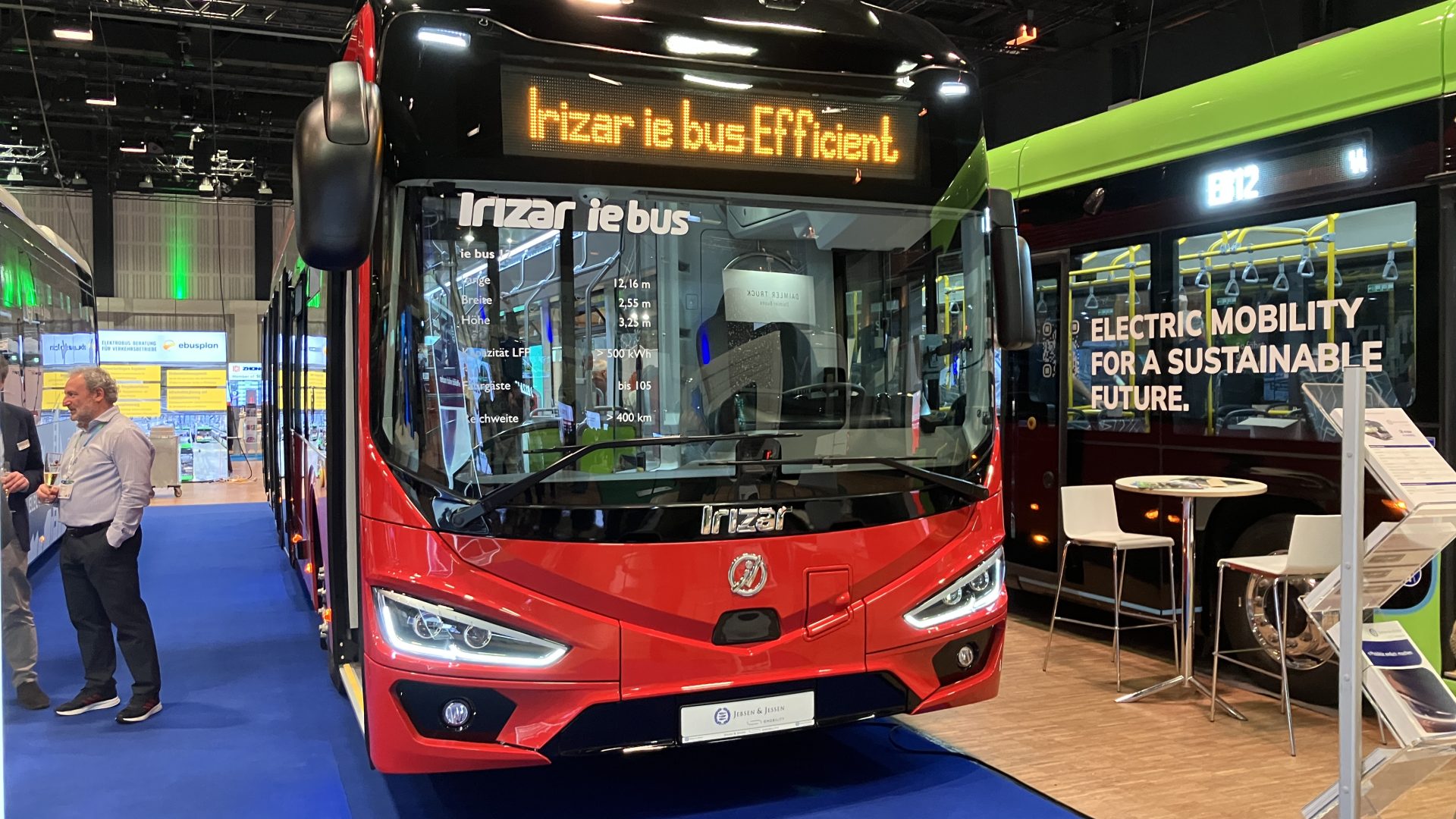
Irizar has showcased at Mobility Move the ie bus 12 Efficient, representing the significantly upgraded version of its electric bus first introduced at Busworld last October. The new generation features several efficiency improvements, including reduced curb weight, enhanced thermal management, an optimized e-motor and a new battery generation. Passenger comfort has also been improved with wider doors and aisle, as well as lower side windows.
Iveco Bus
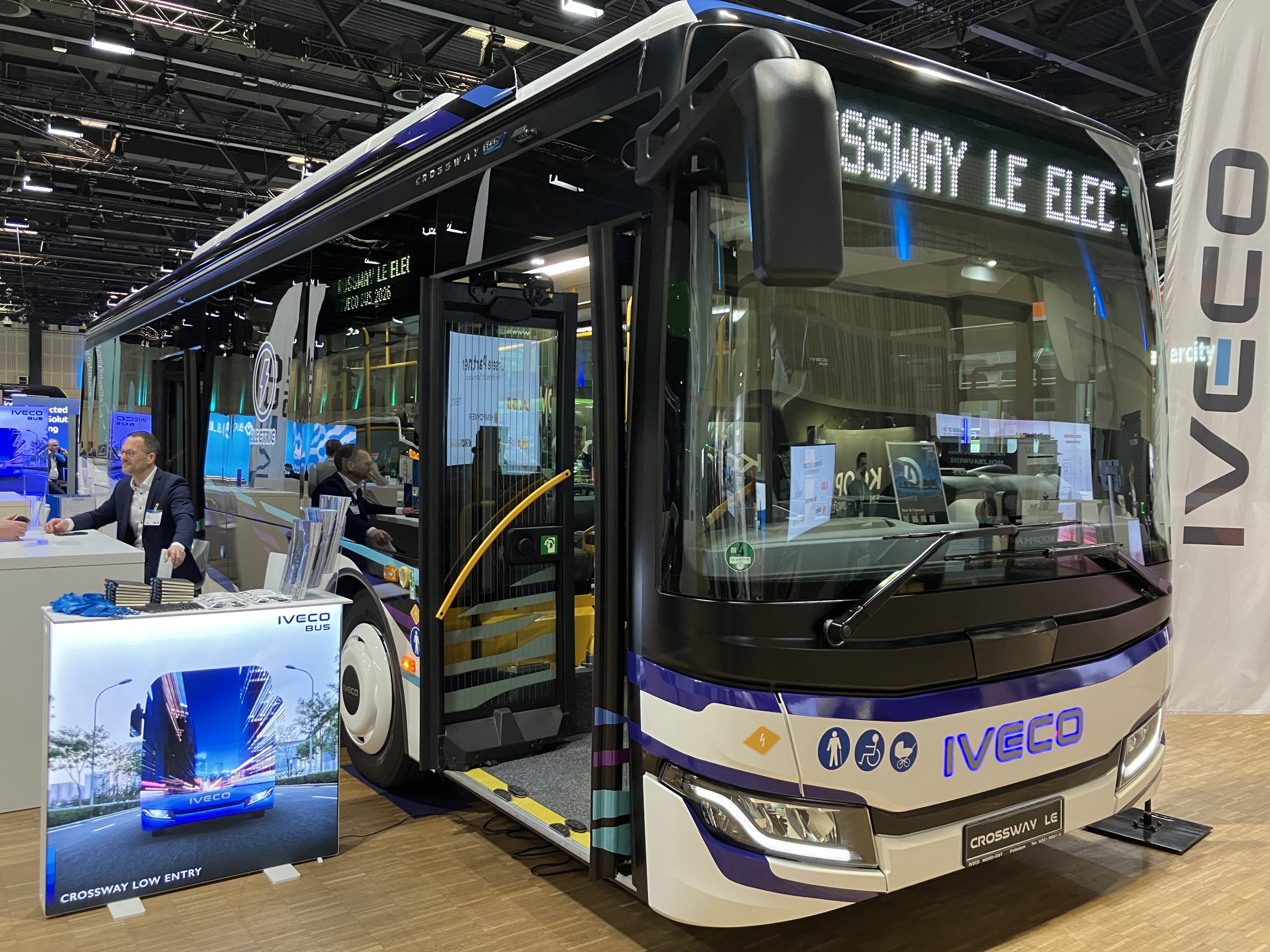
Iveco Bus displayed a Crossway LE Elec in Class I configuration for urban use, featuring two double-leaf doors and accommodation for up to seven battery packs, totaling 485 kWh.
The Crossway Low Entry Elec was launched in 2023 and was followingly subject to facelift. At Mobility Move there will be a 12-metre Crossway Low Entry Elec in Class I configuration with 42 seats. The bus is equipped with seven NMC battery packs providing a total installed capacity of 485 kWh and powered by a 290 kW Siemens (Cummins) Elfa III electric motor delivering 3,000 Nm of torque.
The Crossway Low Entry Elec is available in Class I and Class II variants and in two lengths, 12 and 13 metres. Battery configurations include five, six or seven packs corresponding to capacities of 346 kWh, 416 kWh and 485 kWh. Charging options include depot charging through a CCS2 connector as well as pantograph systems.
Karsan
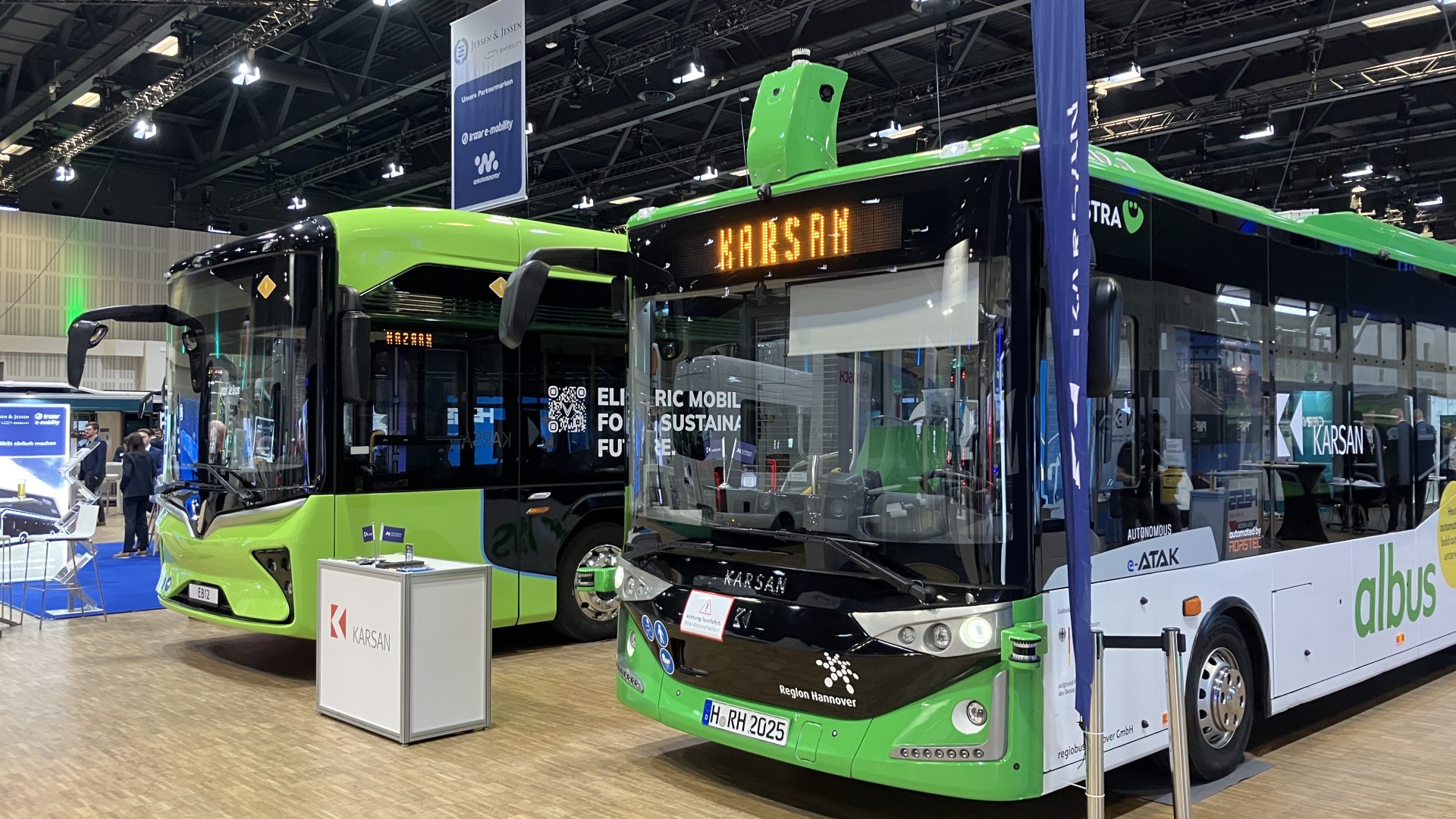
Karsan highlighted the driverless Autonomous e-Atak. The company also participated in the conference program, where Chief R&D Officer Orhan Dönmez outlined a target of reducing total cost of ownership for autonomous buses by 34% by 2028. The presentation detailed operational elements associated with this target, including the removal of the safety driver and reductions in technology costs.
MAN
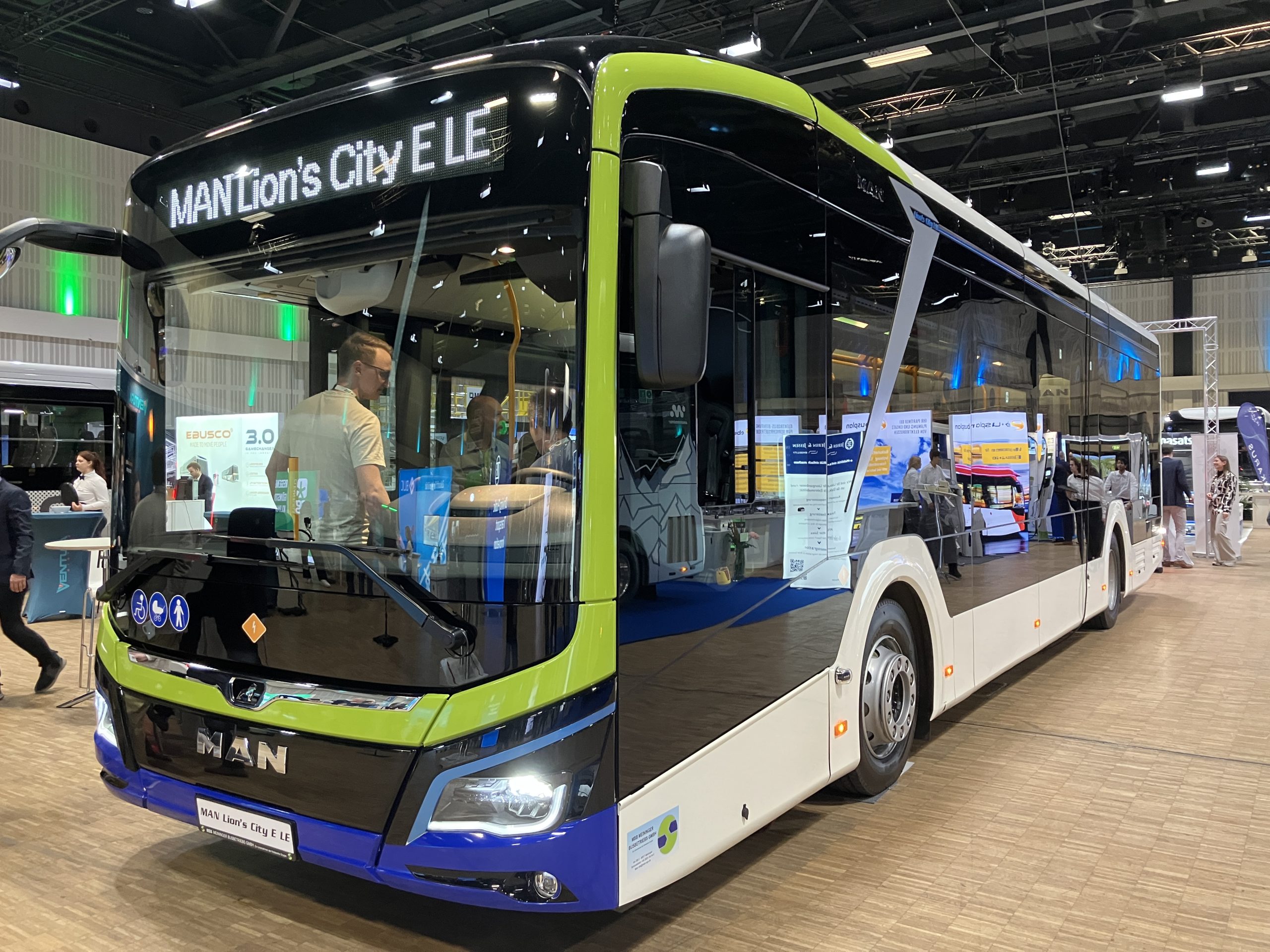
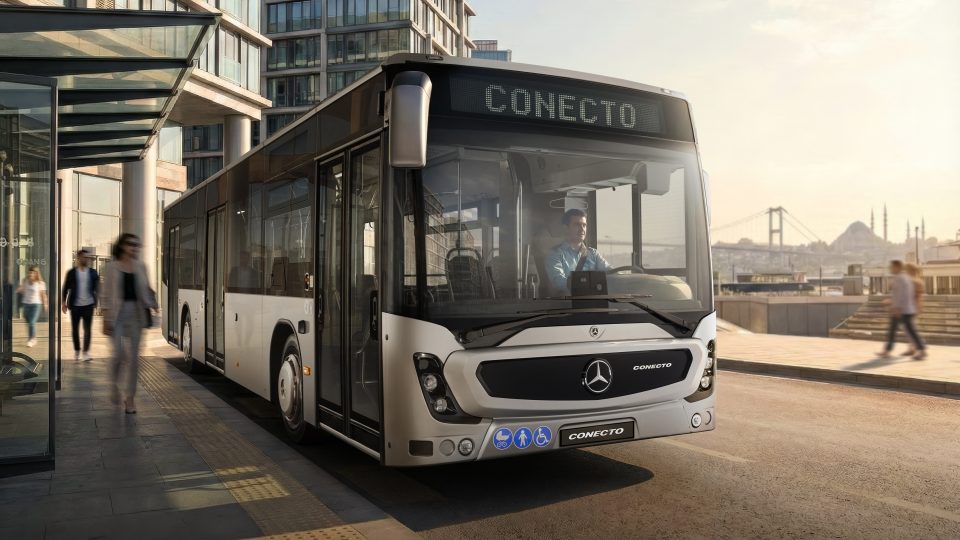
MAN was expected to present the new interurban Lion’s City 12 E LE (Class II), derived from the urban version. Due to a last-minute issue, the urban variant was exhibited. The model has however received homologation for intercity use at the end of 2025.
MCV
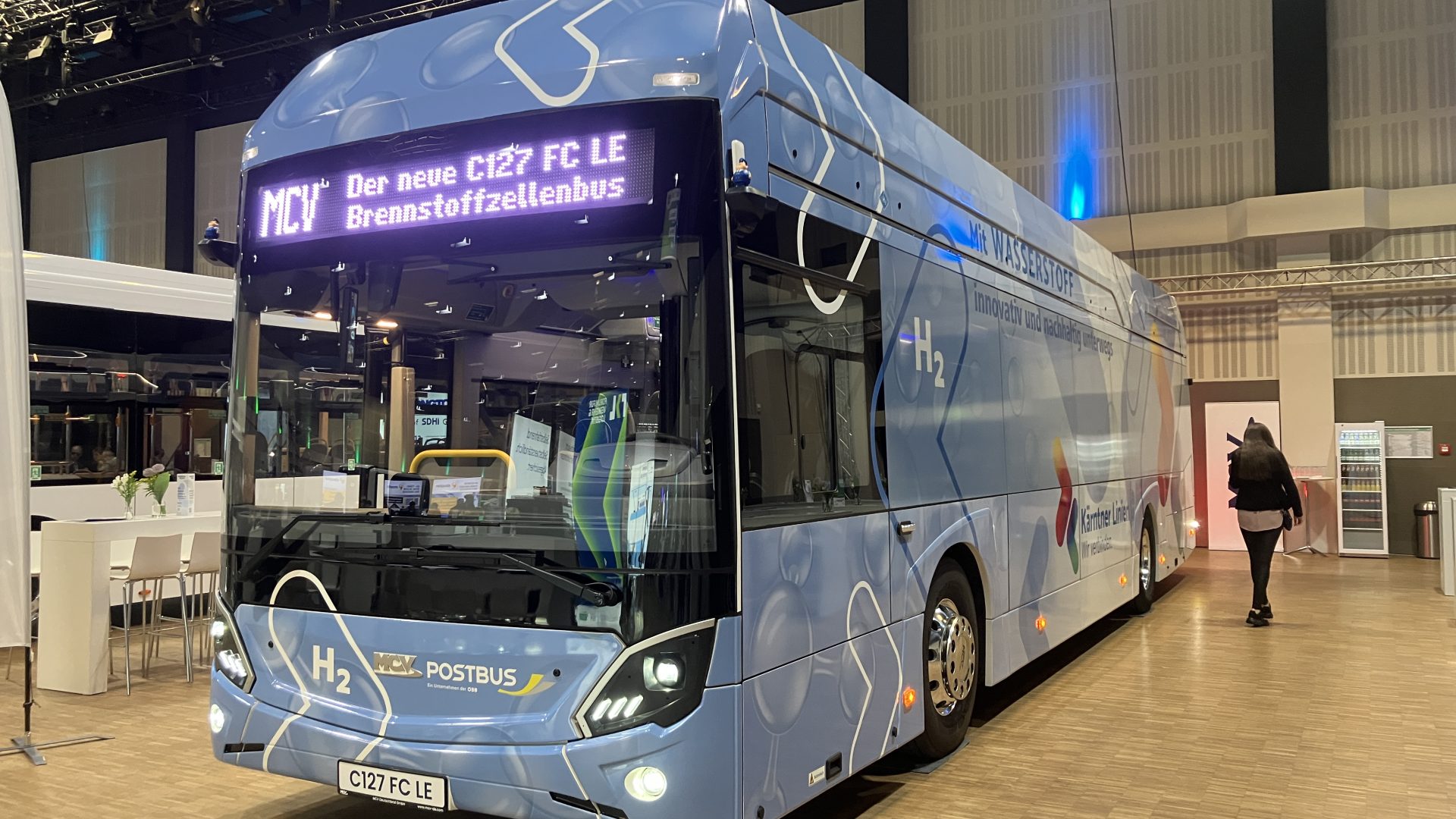
MCV showcased its new C127 FC Low Entry hydrogen-powered bus at Mobility Move, following its earlier debut at Busworld. The 12.1-meter vehicle offers 43 seats and a total capacity of up to 79 passengers, depending on the door configuration.
It is equipped with a 100 kW fuel cell from Ballard (with a 50-unit order secured in early 2025) and a central motor with a peak power of 410 kW supplied by Voith (now Driventic). The system includes around 40 kg of hydrogen stored at 350 bar and a 100 kWh battery to support hybrid operation.
Scania
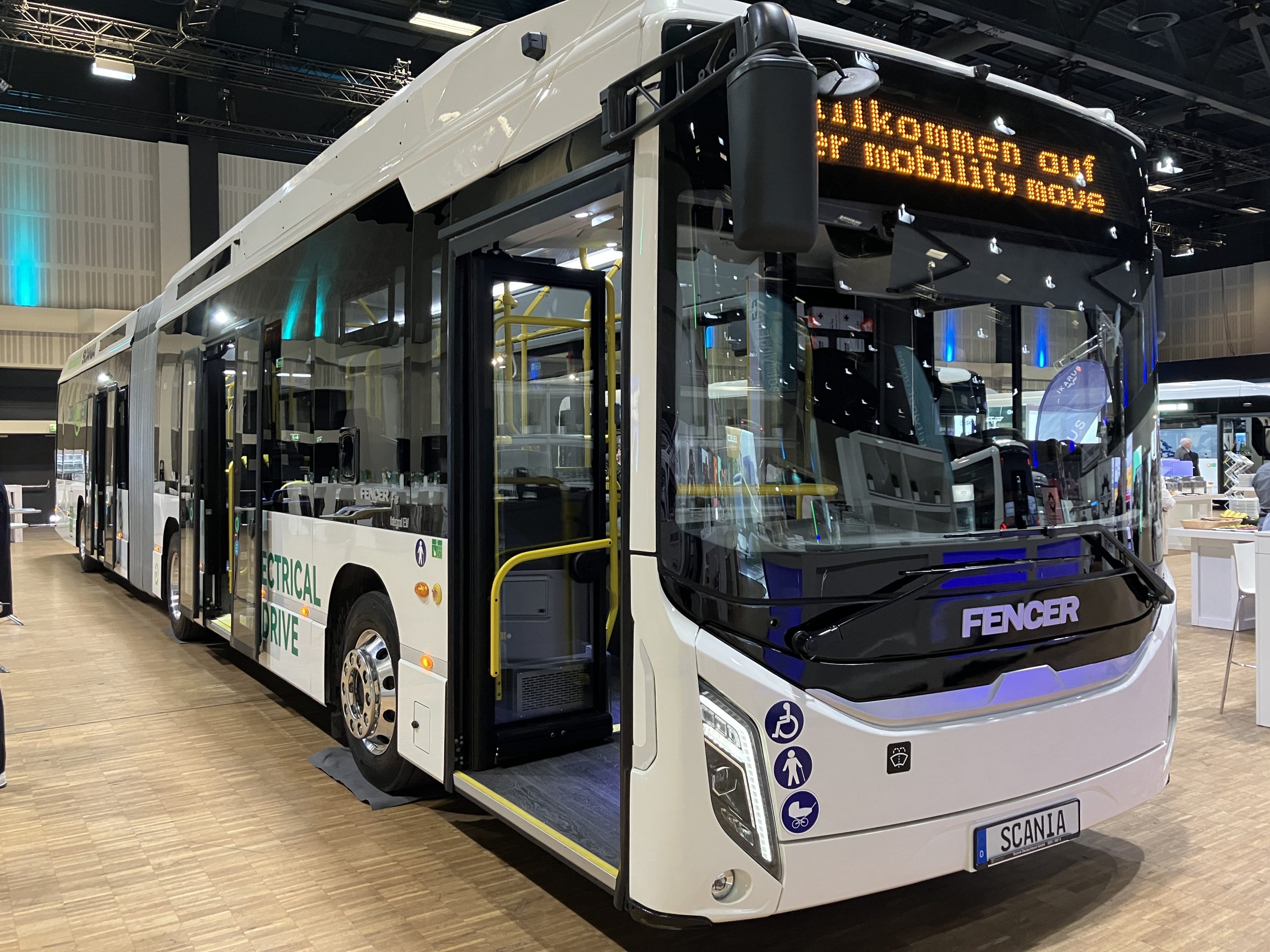
Scania exhibited the Fencer f18 Integral EV, a battery-electric articulated bus fully produced by Higer. The cooperation between Scania Deutschland and Higer assigns distribution and service responsibilities to Scania. The diesel Fencer range is based on Scania chassis. Within the year, the company also plans to launch a Class II battery-electric bus with high floor, combining a Scania chassis with Higer bodywork.
Solaris
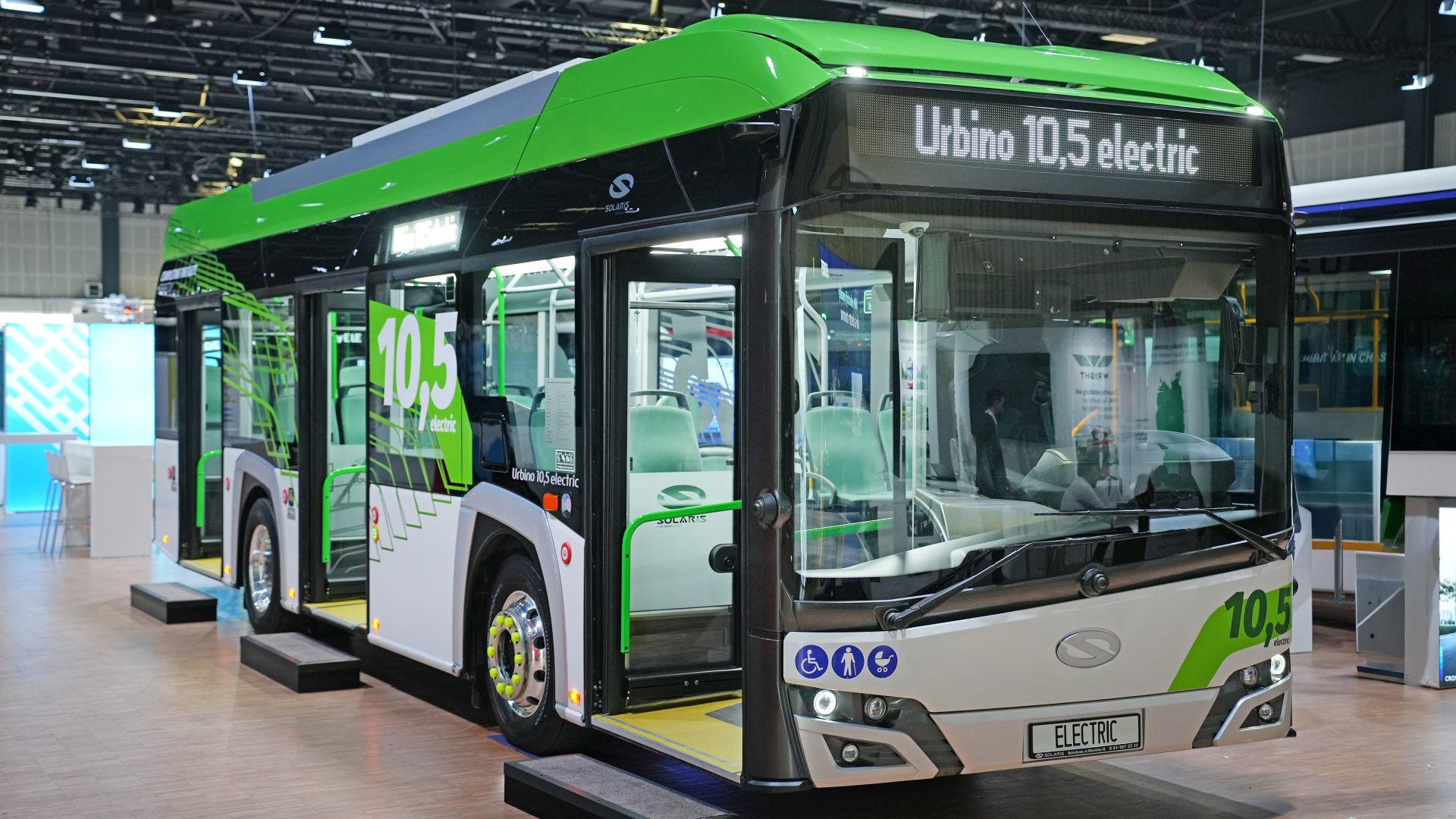
Solaris presented again, following its premiere at Busworld Europe 2025, the 10.5-meter Urbino electric, which received the Sustainable Bus Award 2026 in Brussels.
During the event, Chief Services Officer Marco Franza presented the company’s battery retrofit program launched at the end of 2025. The initiative targets early-generation electric buses currently in operation. According to company data, 1,325 e-buses delivered between 2013 and 2019 form the primary scope. The program includes replacement or upgrade of energy storage systems, installation of new-generation batteries, updates to thermal management and BMS systems, and compatibility checks with existing charging infrastructure. Depending on the vehicle, structural and electrical modifications may also be required. Approximately 170 vehicles are currently in the pipeline, including a project in Berlin involving 105 buses.
Škoda
Škoda used the Berlin event to present technical details of its electric bus platform, offering power outputs between 160 and 250 kW. The platform supports multiple charging options, including pantograph charging up to 600 kW and plug-in charging via CCS2 connectors up to 150 kW.
VDL
VDL showcased the Citea LE-135 Electric, a 13.5-meter low-entry bus equipped with a central ZF motor and battery capacity up to 647 kWh. The Dutch group, which has integrated Van Hool’s bus division, registered approximately 350 electric buses in 2025, corresponding to a 3% market share, down by 2.2 percentage points compared to the previous year.
VinFast
The Vietnamese manufacturer made its debut at Mobility Move with the EB12 electric bus, previously shown at Busworld. The vehicle integrates European components from ZF, Knorr, and Ventura, and is equipped with LFP batteries supplied by CATL, totaling 422 kWh. A complete bus range is expected for launch within two years, told to Sustainable Bus Patrick Oosterveld, VinFast Director of Sales eBus for Europe.
Wisdom
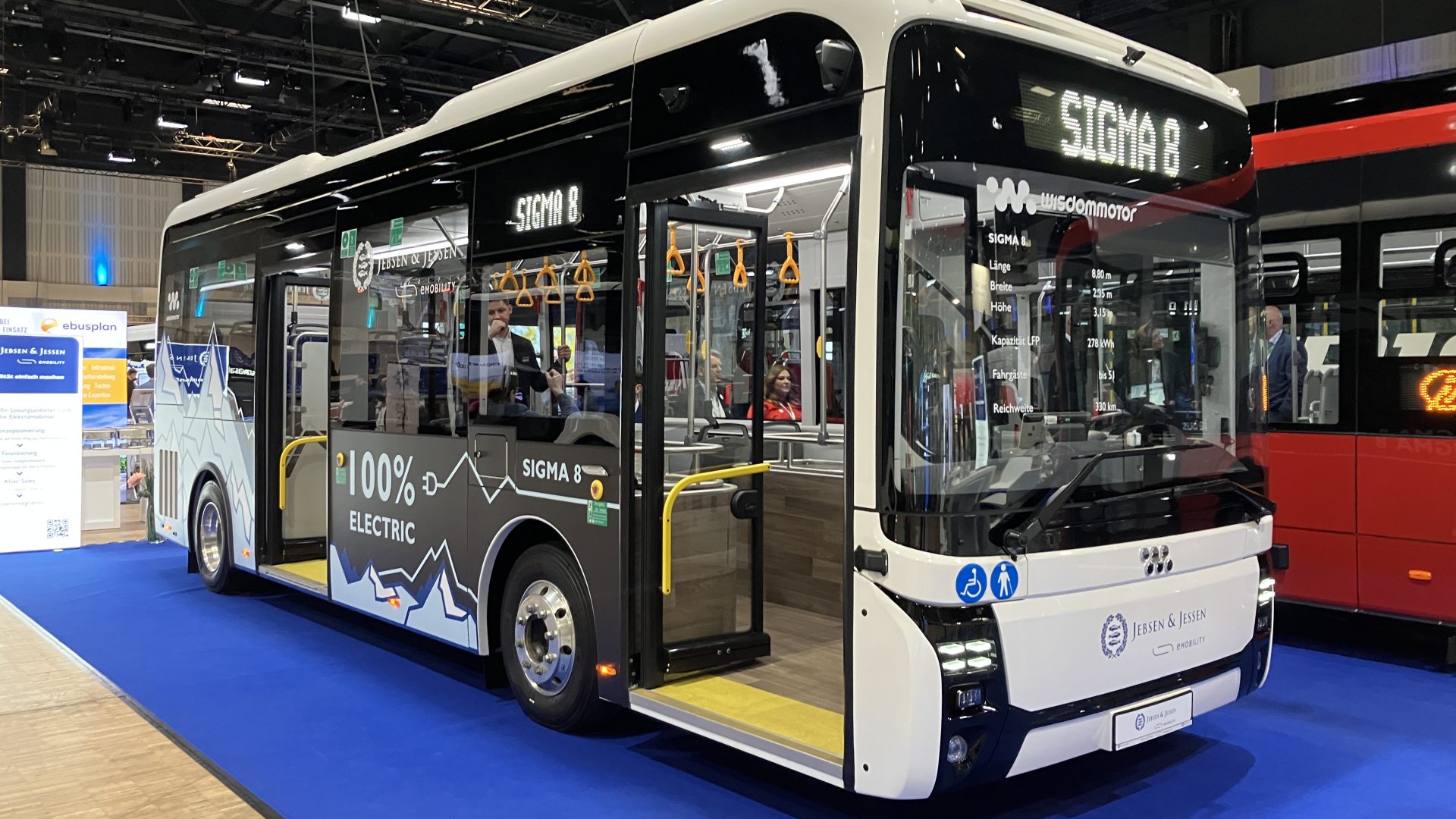
Jebsen & Jessen is responsible for marketing the Wisdom range in the DACH region. At the event, the company presented the Sigma 8 electric minibus, measuring 8.7 meters and equipped with CATL batteries up to 278 kWh. In Germany, Wisdom also offers a hydrogen range through a partnership with Hy-X (International Hydrogen and High Voltage Competence Center GmbH), outside the Jebsen & Jessen dealership structure.
Zhongtong
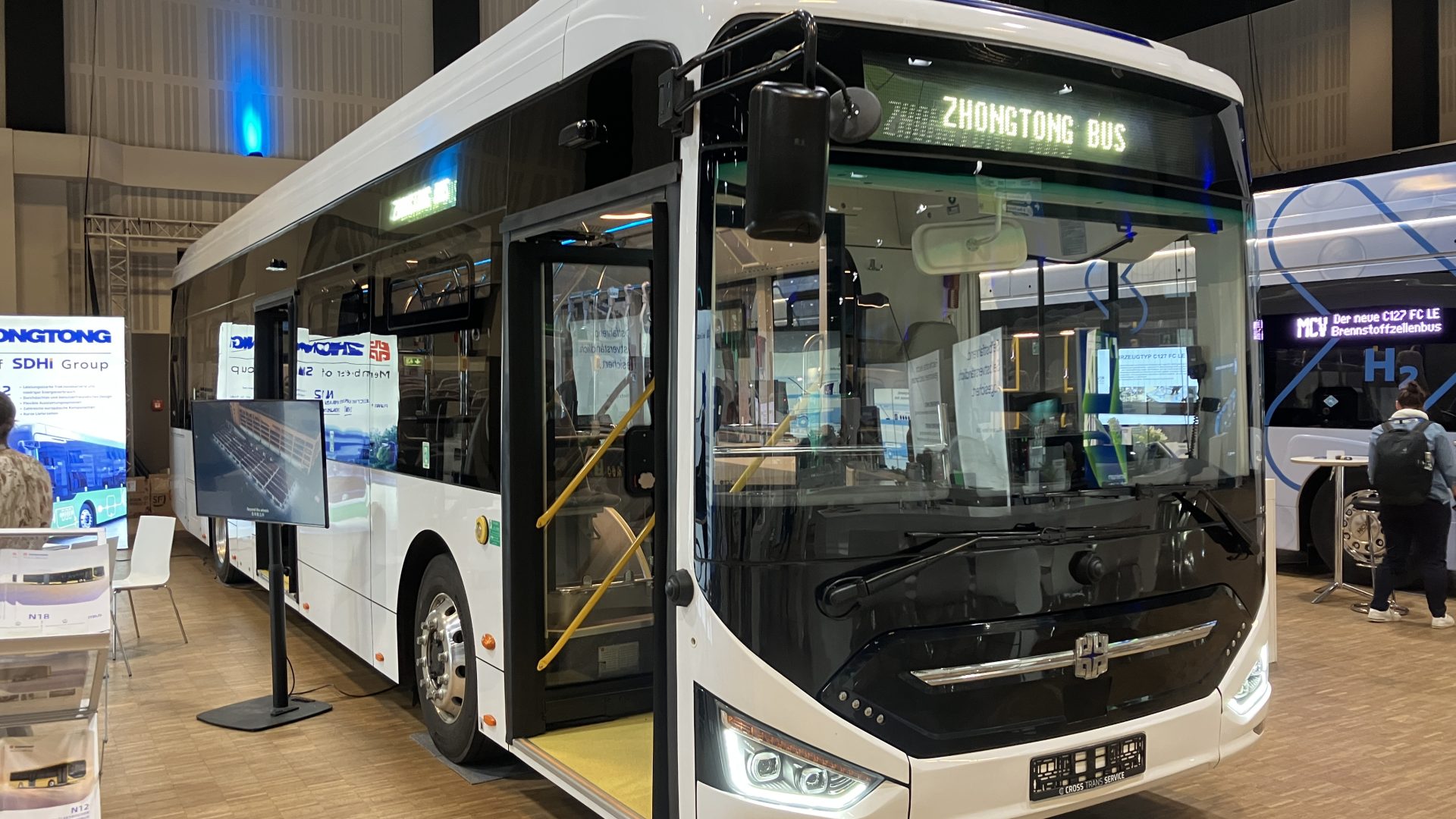
Zhongtong displayed a 12-meter urban bus with battery capacity exceeding 500 kWh. The Chinese manufacturer operates in Germany through the dealer Norddeutsche E-Busse GmbH. This collaboration led to a secondary framework agreement with Deutsche Bahn at the end of 2025, within the broader European tender for DB Regio’s fleet renewal, alongside manufacturers such as Iveco, Scania, and Daimler Buses, with a role focused on ensuring production capacity and supply flexibility relative to the main supplier MAN.
Additional exhibitors included Driventic, a spin-off of Voith’s electric traction activities for commercial vehicles; Hess, following the launch of its Italian subsidiary after acquiring Kiepe’s trolleybus business; Wrightbus, present through its German structure after entering the continental market with hydrogen bus contracts, including Cologne; and ZF, which focused on its next-generation electrified axle AxTrax 2, scheduled to enter production by the end of the year.
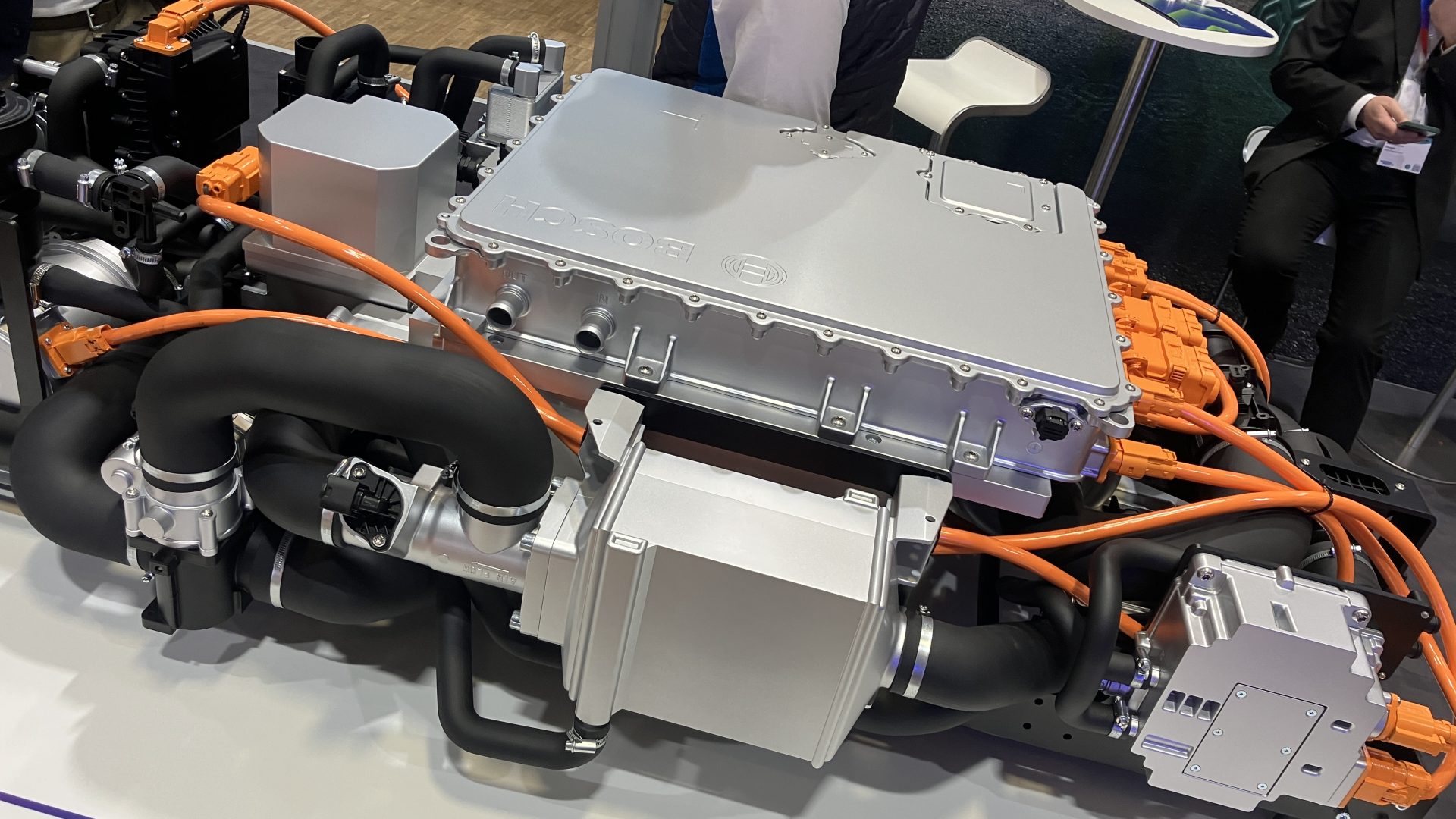
Last but not least, Bosch showcased at Mobility Move 2026 the new FCPM C100 fuel cell module for city buses, a compact system designed for easy rooftop integration. Targeting 12–18 meter buses, it sits at the lower end of Bosch’s fuel cell range (100 kW) and is optimized for urban duty cycles.