Shell will perform MCS testing at its Technology Center in Hamburg
Shell is developing a new testing facility for electric vehicle (EV) charging technologies at its Technology Centre in Hamburg. The site will focus on megawatt charging systems (MCS), supporting testing and development for high-powered charging solutions applicable to electric trucks, buses, off-road vehicles, and in the future, ships and stationary storage systems. Testing capabilities will […]
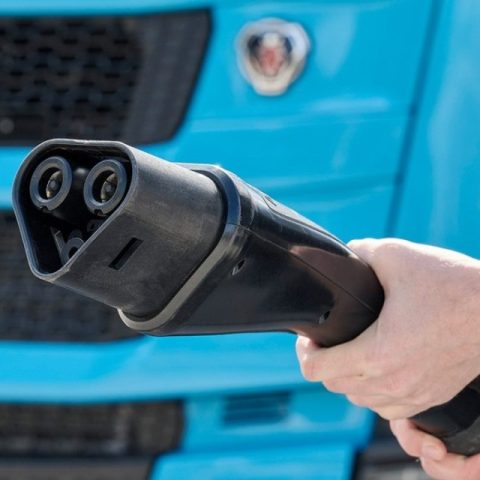
Shell is developing a new testing facility for electric vehicle (EV) charging technologies at its Technology Centre in Hamburg. The site will focus on megawatt charging systems (MCS), supporting testing and development for high-powered charging solutions applicable to electric trucks, buses, off-road vehicles, and in the future, ships and stationary storage systems.
Testing capabilities will include energy and power management, system interoperability, automated back-office acceptance procedures, safety protocols for high-risk components, battery performance assessments up to hazard level 6, and hardware-in-the-loop (HIL) simulations.
Shell MCS test center in Hamburg is coming
The facility will feature 12 automated test benches, over 50 configurable test stations, and climate-controlled chambers replicating extreme conditions ranging from -40°C to +50°C. Testing infrastructure will include a 10kV AC and 3.6kV DC switchgear system, as well as a bi-directional DC emulator rated at up to 5.2 MW, enabling concurrent operation of multiple charging systems. The center will be powered entirely by renewable electricity.
Spanning approximately 3,500 square meters, the facility will include a secured test area for powertrain systems, including those with autonomous operation, as well as offices, workshops, and technical buildings. An additional 500 square meters are reserved for future expansion. Full deployment of the test center is expected by 2027.
The project is part of Shell’s broader efforts in the field of e-mobility, complementing its existing portfolio of charging services in Europe, including the Shell Recharge network and depot infrastructure provided by Shell subsidiary SBRS, acquired in 2022.
“With the construction of this high-performance test center, we aim to contribute to the maturation of megawatt charging solutions and support the commercial transport sector in its energy transition,” said Felix Faber, Chair of the Management Board of Shell Germany. “Solutions can be validated and refined here under real and simulated conditions, enabling collaboration across the industry.”