Île-de-France launches Tzen 4 BRT with 24m Hess e-buses and Alstom ground charging
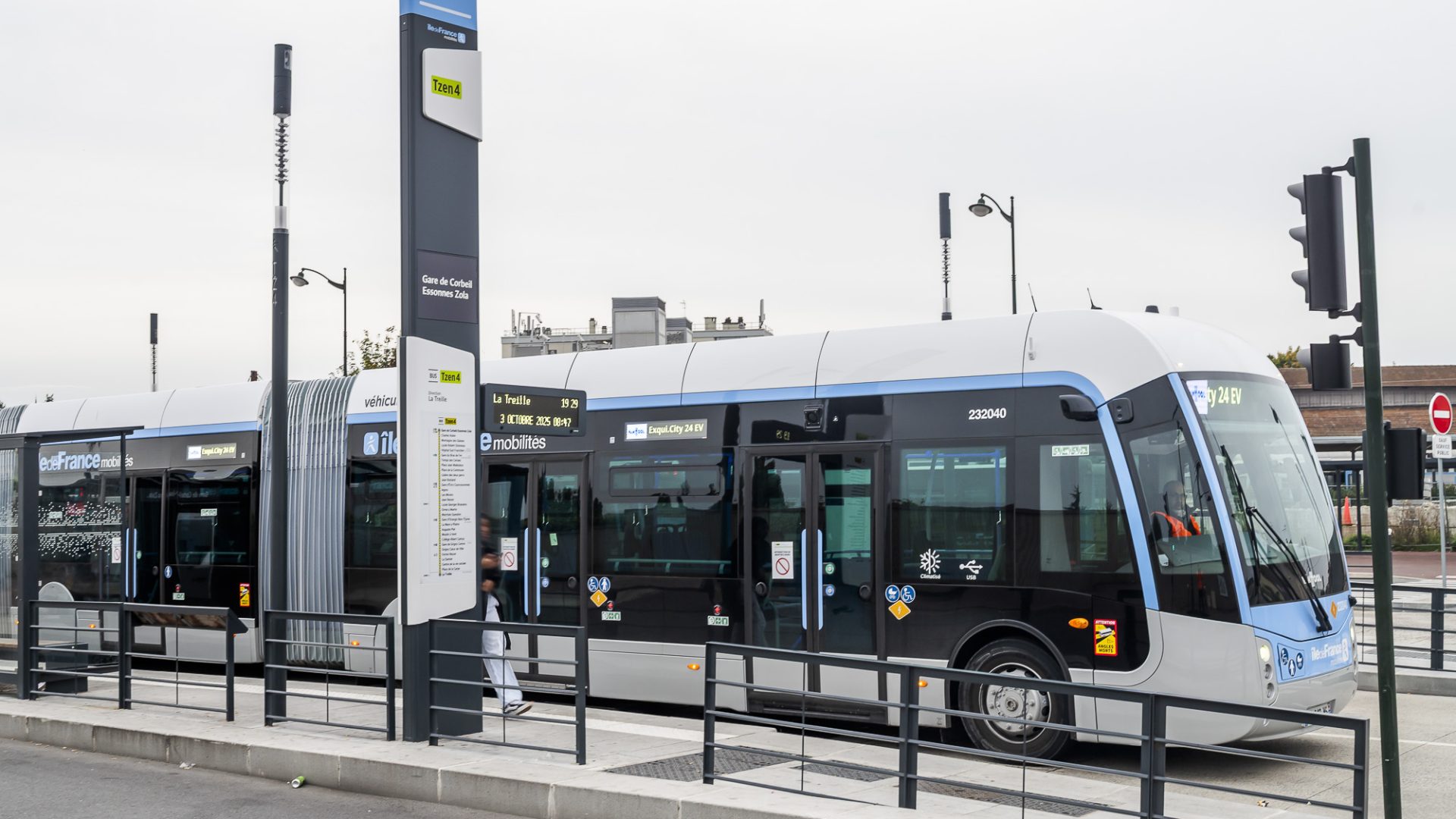
The Tzen 4, a fully electric bus rapid transit line operating largely on segregated lanes, entered service on 10 February 2026 in the southern Île-de-France region. After several years of infrastructure works (the start of commercial operations was expected in 2024…), the new corridor connects Viry-Châtillon to Corbeil-Essonnes, serving the municipalities of Grigny, Ris-Orangis and […]
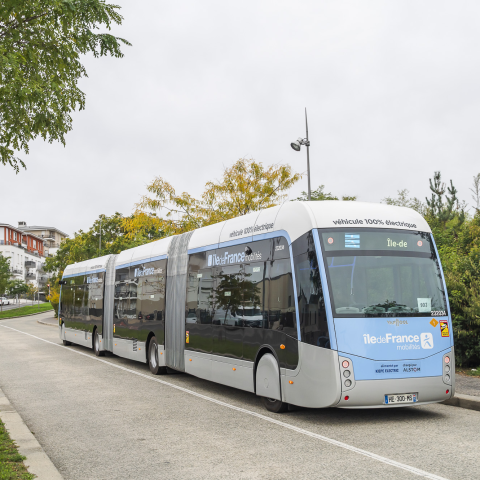
The Tzen 4, a fully electric bus rapid transit line operating largely on segregated lanes, entered service on 10 February 2026 in the southern Île-de-France region.
After several years of infrastructure works (the start of commercial operations was expected in 2024…), the new corridor connects Viry-Châtillon to Corbeil-Essonnes, serving the municipalities of Grigny, Ris-Orangis and Évry-Courcouronnes along a 14-kilometre route. According to a press note issued by Île-de-France Mobilités on 10 February 2026, the line is expected to carry more than 50,000 passengers per day.
Pictures sourced by Sylvain Cambon, Île-de-France Mobilités
Hess – Kiepe – Alstom trambuses for Paris
The line is operated with 30 bi-articulated electric buses measuring 24 metres in length, developed specifically for Île-de-France Mobilités by Swiss manufacturer Hess (that has taken over the contract from Van Hool following the bankruptcy of the latter). The vehicles, that were reported as ready for deployment in October 2025, are equipped with high-power batteries supplied by Kiepe Electric (whose trolleybus business has been recently taken over by Hess) and use Alstom’s ground-based static charging system (SRS). The first model, manufactured by Van Hool, was showcased at Busworld in 2023.
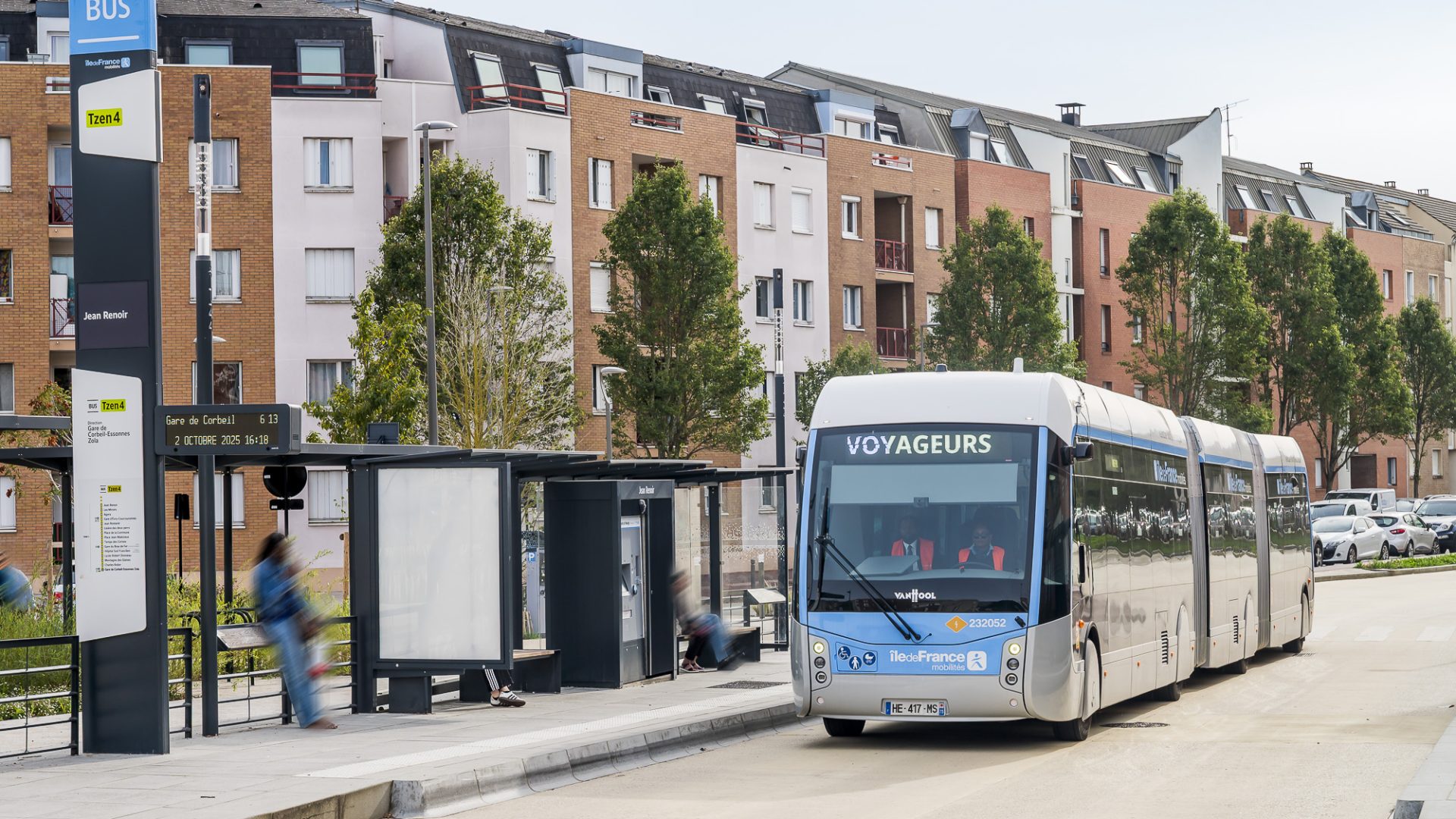
According to Île-de-France Mobilités, the system allows a full recharge in less than five minutes at the termini without overhead infrastructure. The buses are designed to carry up to 140 passengers and feature air conditioning, wide sliding doors, onboard USB ports, dynamic passenger information systems and video protection equipment. The vehicles are fully low-floor and equipped with wheelchair ramps as well as audio and visual passenger announcements.
14 km corridor with 30 new stations in Essonne
The Tzen 4 infrastructure has been fully redesigned, with the majority of the alignment operating on dedicated lanes and benefiting from traffic signal priority at intersections. The line includes 30 newly built stations equipped with extended platforms, shelters, ticket vending machines, real-time passenger information displays and video surveillance systems. Accessibility features include level boarding, adapted equipment for passengers with reduced mobility and tactile guidance elements.
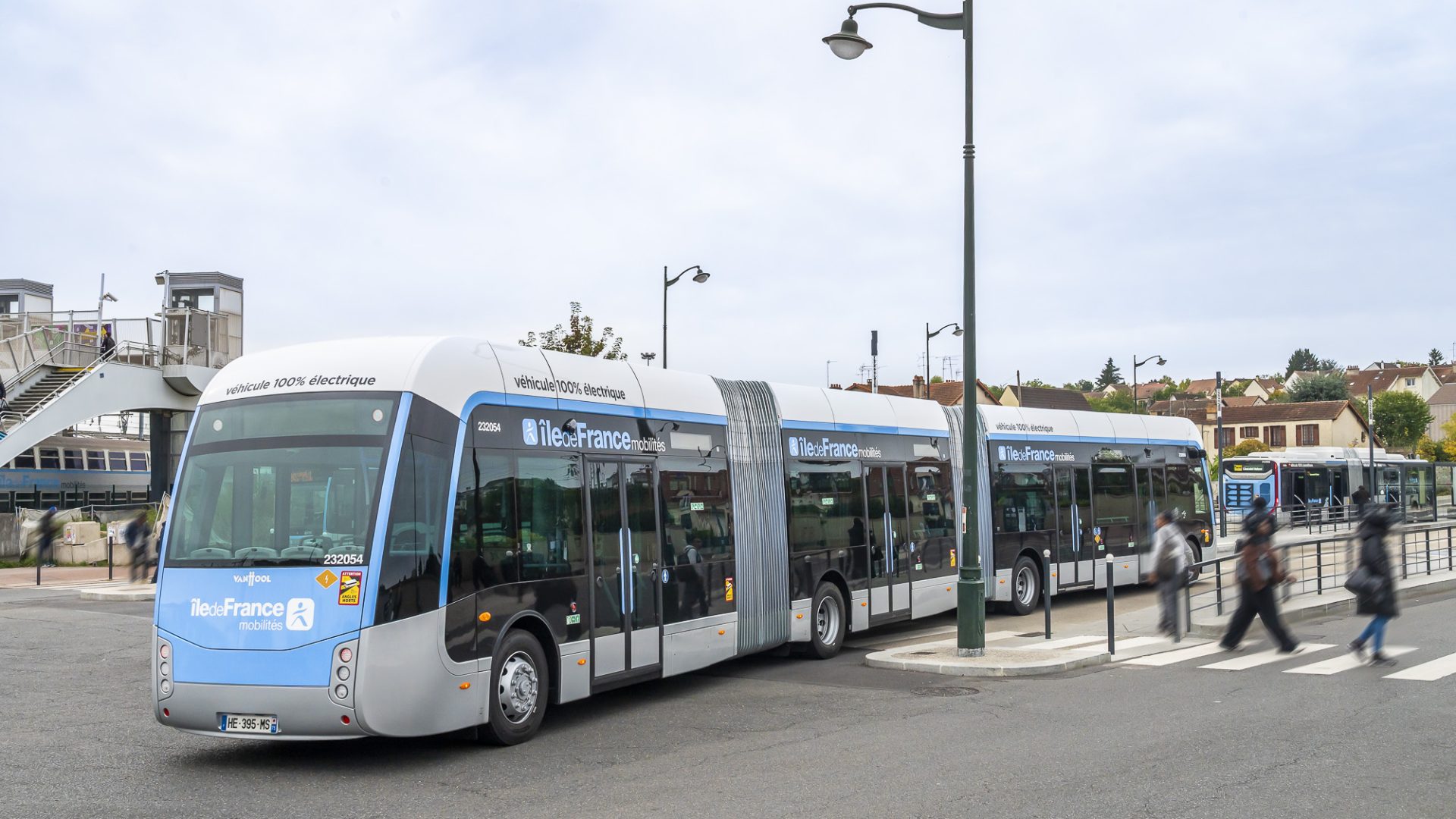
The service will progressively replace the existing line 4206, currently the busiest suburban bus line in the outer Paris region. During a transition phase, line 4206 will continue to operate every 15 minutes on weekdays along the same corridor, complementing Tzen 4 services.
The operating plan foresees a headway of five minutes during peak hours and continuous service from 5:00 a.m. to 1:00 a.m. daily.
€123 million infrastructure investment
The infrastructure investment for Tzen 4 amounts to nearly €123 million. Funding was provided by the Île-de-France Region (49%, €60 million), the Département de l’Essonne (30%, €37 million), the French State (15%, €19 million) and the European Union (6%, €7 million), as stated in the press release. The rolling stock and operational costs are fully financed by Île-de-France Mobilités.
Île-de-France Mobilités states that the new line is intended to support growing mobility demand in Essonne, where demographic and employment growth has been recorded in recent years, and to strengthen connections with regional rail and tram services including RER D, T12 and Tzen 1.