UITP, IRU, ACEA urge EU to exclude Class II Low-Entry buses from urban bus definition in new CO2 emission targets
UITP, IRU and ACEA call legislators to remove Class II low-entry buses from the urban bus definition included in the new CO2 emission targets proposed by EU Commission earlier this year, that would imply also diesel low entry buses to be banned from 2030. In our new position paper, UITP reviews the promising state of […]
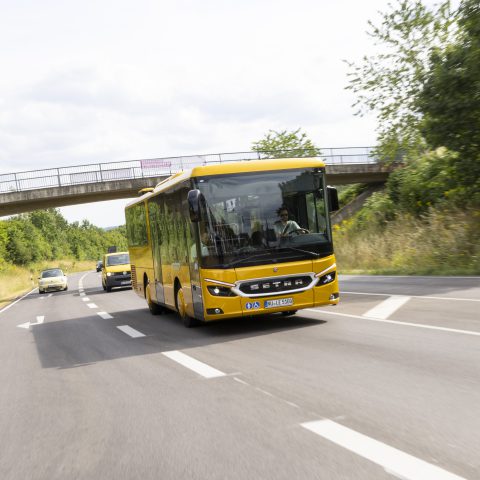
UITP, IRU and ACEA call legislators to remove Class II low-entry buses from the urban bus definition included in the new CO2 emission targets proposed by EU Commission earlier this year, that would imply also diesel low entry buses to be banned from 2030.
In our new position paper, UITP reviews the promising state of clean bus deployment and the remaining challenges that need to be addressed.
The CO2 standards for HDVs are a key instrument in promoting cleaner and sustainable transport. The European is extended to new vehicle categories, including buses and coaches, for the first time. While we generally support including new vehicle segments as step towards the decarbonisation of road transport, it is crucial to carefully consider the grouping of certain vehicle segments, in particular that of Class II buses.
joint letter to the Chair of the European Parliament’s ENVI Committee and the Presidency of the Council by uitp, acea, iru
UITP concerned by new timeline
The key point, already underlined by UITP Senior European Policy Expert Lucie Petersen during a Sustainable Bus Tour VideoSpotlight in mid-April, is that “under the Clean Vehicles Directive, the procurement targets for clean and zero-emission buses only applied to Class I and Class A buses. These exclusively urban buses are at the forefront of efforts to transition to low-carbon alternatives. However, the proposed Regulation extends the definition of urban buses to include Class II buses with low entry, which are often used for longer distance public transportation, both regional and interurban, and remain harder to decarbonise. These vehicles were not previously covered by any procurement targets, meaning the ambition level would go from 0 to 100 in a single step”.
UITP “is concerned about the proposed timeline of the zero-emission target for new urban buses. Its success does not only hinge on whether manufacturers can produce enough zero-emission buses, but also on whether the framework conditions allow the public transport sector to buy only these vehicles from 2030 onwards”.
A joint letter to the EU
Now the three organizations sent a joint letter to the Chair of the European Parliament’s ENVI Committee and the Presidency of the Council.
Thomas Avanzata, Spokesperson of UITP’s European Union Committee, stated: “The new CO2 Standards send a clear market signal and can give a real boost to zero-emission bus deployment, which is promising. But we also hear our members’ concerns, those who don’t see a path to sufficient funding ahead and those who invested in biomethane to decarbonise their fleets. The timeline for urban buses is extremely ambitious and risks leaving parts of the public transport sector behind.”
IRU Director EU Advocacy Raluca Marian said, “Interurban buses are not city buses. Their functionality is closer to coaches than the buses serving our cities. Zero-emission vehicles need charging infrastructure along their routes. Depot charging, used for urban buses, does not work for them. We’re asking the EU to set realistic decarbonisation targets for interurban buses as the required infrastructure is not on track to be ready by 2030. Road transport organisations and vehicle manufactures are simply seeking a correction to the Commission’s CO2 standards proposal to exclude interurban buses from the definition of urban buses. This approach is consistent with the related Clean Vehicles Directive, which sets purchasing targets only for city buses,” highlighted Raluca Marian. “Regional public transport is precious to society and a sustainable mode of transport for the mobility of people. Decarbonising interurban buses at a viable pace is vital to its continuity,” she added.