Via launches BVG Muva: on-demand shared-mobility services complementing public transport offer
Tech company Via has launched in mid September on-demand public transport offering BVG Muva in Berlin. BVG Muva, powered by software from Via, “will expand access to efficient, equitable, and sustainable transportation for the improvement of connectivity and passengers needing barrier-free transportation in Berlin”, Via highlights. BVG Muva is Via’s third service in partnership with […]
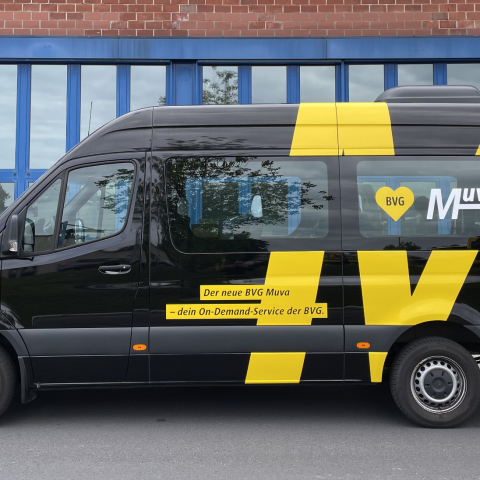
Tech company Via has launched in mid September on-demand public transport offering BVG Muva in Berlin.
BVG Muva, powered by software from Via, “will expand access to efficient, equitable, and sustainable transportation for the improvement of connectivity and passengers needing barrier-free transportation in Berlin”, Via highlights.
BVG Muva is Via’s third service in partnership with the leading transportation authority in Berlin. Prior to the launch of BVG Muva, Via’s software powered the BerlKönig, which successfully served more than 1.85 million passengers in Berlin and helped to reduce private vehicle use and environmental impact from transportation. Via’s technology is used by more than 45 partners in German-speaking countries, including on-demand services such as sprinti, in partnership with Region Hannover; MainzRIDER, in partnership with Mainzer Mobilität; and SSB Flex 2.0 in partnership with Stuttgarter Straßenbahnen AG (SSB).
Via launches BVG Muva
“BVG Muva will tackle two distinct but overlapping use cases – Via explains -. The ‘Flexible Ride‘ use case connects riders to public transportation in an underserved area, while the ‘Elevator Replacement‘ use case tackles the issue of inaccessibility at public transit stations. These services will complement and extend existing public transport infrastructure in Berlin by filling the gaps in transit where it is needed, and enabling passengers needing barrier-free transportation in Berlin to access public transport hubs in a more convenient and flexible way. The service will also include electric vehicles to further combat climate change”.
The Flexible Ride will run 24/7 in a 60-square-kilometer service area in East Berlin, focusing on first-and-last mile trips to main transportation hubs by collecting passengers at a nearby bus stop or at a ‘virtual bus stop’. Trips to-and-from public transportation stations will be at a reduced fare. As an on-demand service, Via’s algorithms will bundle journeys by matching multiple passengers into a single vehicle in real time, with the goal to reduce congestion on Berlin’s streets and limit environmental impact.
The Elevator Replacement is designed to ensure equal access to public transport for those with limited mobility. The service will enable passengers who depend on the U-Bahn, S-Bahn, and regional trains to take on-demand transport by connecting them between two stations when, for example, the train station doesn’t have an elevator, or where an elevator is currently out of service. This on-demand service will be available to book through a mobile app or by phone.
“We are proud to continue Via’s long-term partnership with BVG to introduce BVG Muva that will ensure residents across Berlin have efficient and equal access to mobility,” said Chris Snyder Via’s co-COO and Europe CEO. “While cities around the world face challenges including congestion, lack of transportation equity, and increasing transportation emissions, BVG Muva is an example of innovative public transport solutions powered by technology that can begin to tackle these issues directly.”