ZF reports lower sales but improved profitability in 2025, alongside Electrified Powertrain restructuring and ADAS divestment
ZF closed 2025 with higher operating profitability, stronger free cash flow and lower net debt, while reporting a net loss after one-off charges linked mainly to the early termination of non-profitable electric mobility projects. The German group, following anticipations released in January, reported 2025 group sales of €38.8 billion, compared with €41.4 billion in 2024, […]
ZF closed 2025 with higher operating profitability, stronger free cash flow and lower net debt, while reporting a net loss after one-off charges linked mainly to the early termination of non-profitable electric mobility projects.
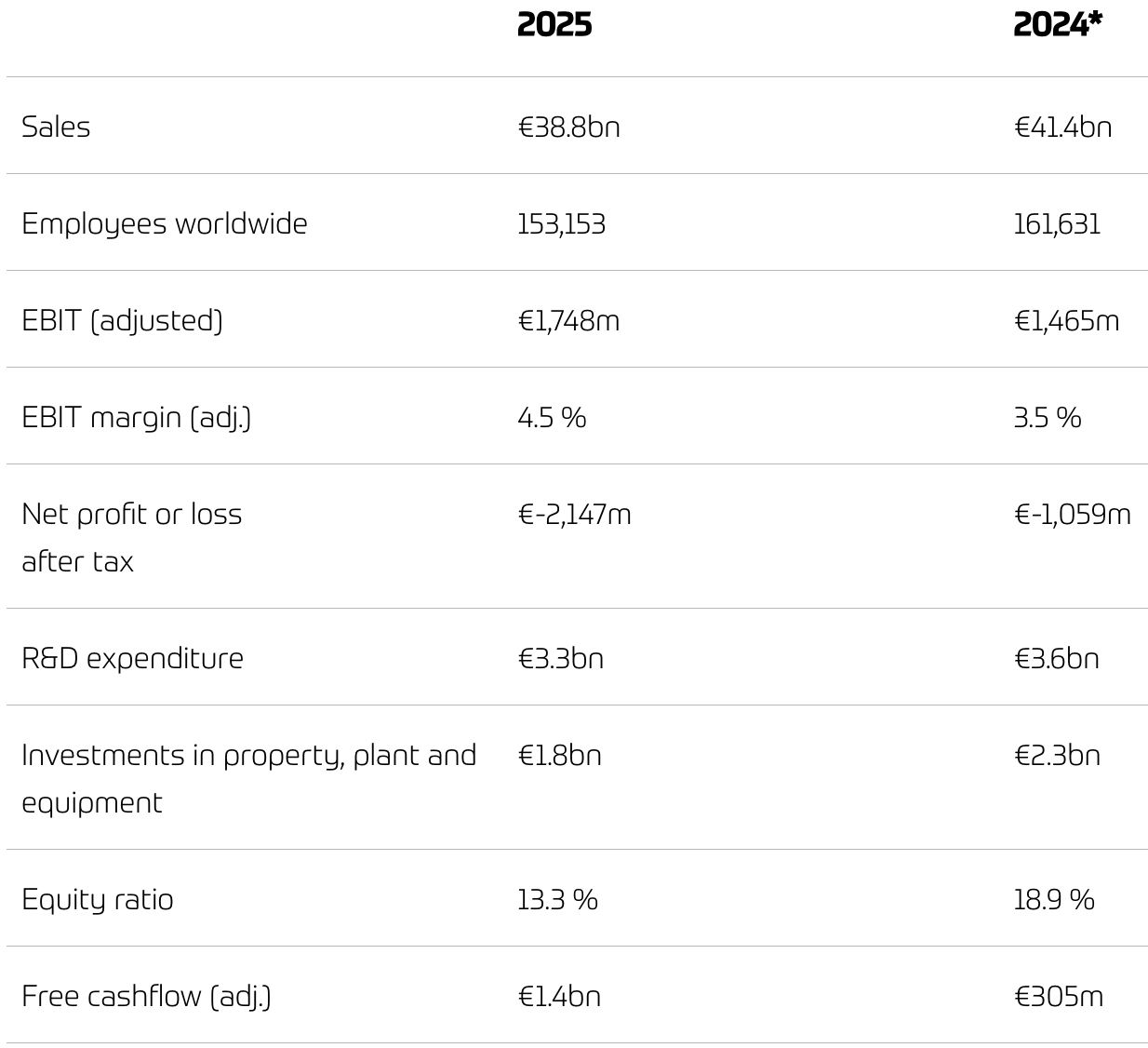
The German group, following anticipations released in January, reported 2025 group sales of €38.8 billion, compared with €41.4 billion in 2024, while stating that organic growth reached 0.6 percent. The 2024 figure itself marked an 11 percent decline compared with 2023, or around 3 percent on an organic basis excluding the deconsolidation of the axle assembly product line. In 2024, adjusted EBIT stood at €1.5 billion with a margin of 3.6 percent, down from 5.1 percent in 2023, while adjusted free cash flow reached €305 million and net debt rose to €10.5 billion. Against this backdrop, ZF states that the 2025 figures reflect improved operating performance in a context of macroeconomic volatility and subdued global market dynamics: EBIT margin is up to 4.5%.
For 2026, ZF expects group sales of more than €38 billion at stable exchange rates, without forecasting a significant increase compared with 2025. The company indicated an adjusted EBIT margin target range of 4.0 to 5.0 percent and adjusted free cash flow above €1 billion, excluding M&A effects. ZF also said that it expects the global economic environment to remain uncertain in 2026, with persistently weak demand particularly in the commercial vehicle sector.
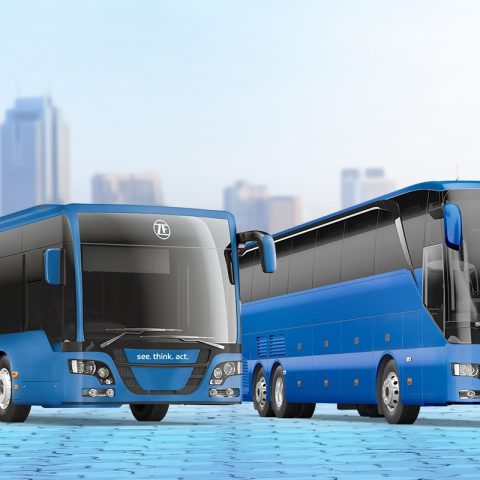
Focus on the bus segment, ZF reported at Busworld Europe 2025 that “Our bus business has grown by 30 percent over the last three years, and we now have more than one billion euros in orders in the pipeline”.
ZF 2025 results: margin up, free cash flow higher, debt reduced
The company said net debt declined to €10.2 billion in 2025, with financial liabilities reduced by around €250 million over the year. The equity ratio stood at 13.3 percent. Research and development expenditure amounted to €3.3 billion, down from €3.6 billion in 2024, while the R&D ratio remained unchanged at 8.6 percent. Capital expenditure was €1.8 billion, compared with €2.3 billion a year earlier, corresponding to a capex ratio of 4.6 percent versus 5.4 percent in 2024.
We expect Berlin to present a new reform agenda. And we expect Brussels to be honest about fleet‑wide CO₂ legislation. The European Commission has hinted at more flexibility but continues an industrial‑policy collision course. We urgently need adjustments, especially regarding plug‑in hybrids, which are a key transition technology. They ease range anxiety, support the ramp‑up of electric mobility, and help safeguard jobs
Mathias Miedreich, CEO, ZF Group
ZF also reported a net income of minus €2.1 billion for fiscal year 2025. The result was driven mainly by a one-time charge of around €1.6 billion related to the restructuring of the Electrified Powertrain Technology Division and the agreed early termination of several customer projects. In ZF’s words: “As part of Division E restructuring, ZF agreed with several customers to terminate several projects ahead of schedule. Due to the slower‑than‑expected market ramp‑up of electric mobility, these programs would not have achieved the required profitability“.
The workforce stood at 153,153 employees worldwide as of 31 December 2025, down from 161,631 a year earlier. In Germany, headcount declined to 49,210 from 52,027. ZF stated that it remains on track with the target announced in July 2024 to reduce its German workforce by 11,000 to 14,000 positions, with measures based on attrition, severance packages, partial-retirement schemes and reduced working hours.
Strategic refocusing includes ADAS divestment
A central element of the group’s strategic repositioning is the sale of the Advanced Driver Assistance Systems business unit to Harman at an enterprise value of €1.5 billion. ZF said the transaction is expected to close in the second half of 2026, subject to regulatory approvals. The group also carved out its wind-power activities as a standalone unit.
Geographically, ZF’s revenue distribution shows stability in EMEA and declines across other core regions. EMEA sales stood at €19.3 billion in 2025, broadly in line with €19.4 billion in 2024, while Germany increased to €8.5 billion from €8.0 billion. North America recorded €10.0 billion in sales, down from €11.2 billion, with U.S. revenues decreasing to €8.7 billion from €9.5 billion. In South America, sales declined slightly to €1.3 billion compared with €1.4 billion in the previous year. Asia-Pacific and India reported €8.2 billion in revenue, down from €9.5 billion, including China at €5.7 billion versus €6.4 billion in 2024.
Within the Electrified Powertrain Technology Division, ZF reached an agreement with employee representatives in autumn 2025 on an independent restructuring path while keeping the division within the group. The company stated that the division’s operating performance improved year-on-year and that the restructuring process will continue in 2026. The press note by ZF also states that employees are contributing to cost savings through reduced working hours and temporary wage concessions.
ZF linked customer activity in 2025 to new high-volume awards including a BMW Group contract covering continued supply and further development of the company’s eight-speed automatic transmission family, including electrified variants. The group also highlighted demand for its chassis systems from domestic and international customers.
In February 2026, ZF placed a €1 billion bond with a six-year maturity and a 5.5 percent coupon. The company said the order book was six times oversubscribed. According to ZF, the issuance forms part of its medium- and long-term funding strategy and is intended to extend maturities, lower refinancing costs and improve planning certainty.
ZF keeps urging the EU to adjust the CO2 regulation
Geographically, ZF’s revenue distribution shows stability in EMEA and declines across other core regions. EMEA sales stood at €19.3 billion in 2025, broadly in line with €19.4 billion in 2024, while Germany increased to €8.5 billion from €8.0 billion. North America recorded €10.0 billion in sales, down from €11.2 billion, with U.S. revenues decreasing to €8.7 billion from €9.5 billion. In South America, sales declined slightly to €1.3 billion compared with €1.4 billion in the previous year. Asia-Pacific and India reported €8.2 billion in revenue, down from €9.5 billion, including China at €5.7 billion versus €6.4 billion in 2024.

“Operationally, we surpassed our 2025 targets. The fact that our efficiency program is gaining traction encourages us to stay the course. Performance and profitability take precedence over sales and size. But we also know: continuing our upward path will require full focus and maximum effort across the Group,” said ZF CEO Mathias Miedreich, appointed in September 2025, at the annual results presentation in Friedrichshafen. “The numbers reflect our past, while our business momentum points to our future. We will steadily rebuild the level of profitability our owners – and we ourselves – expect.”
During the results presentation, Mathias Miedreich also addressed political and regulatory headwinds: “Location factors continue to weigh on us. We expect Berlin to present a new reform agenda. And we expect Brussels to be honest about fleet‑wide CO₂ legislation. The European Commission has hinted at more flexibility but continues an industrial‑policy collision course. We urgently need adjustments, especially regarding plug‑in hybrids, which are a key transition technology. They ease range anxiety, support the ramp‑up of electric mobility, and help safeguard jobs.”