Europe registers 8,141 electric buses in H1 2026, growing +49%: Yutong first, Iveco takes second place with 1,156 units
Electric bus registrations in Europe reached 8,141 units in the first half of 2026, up 49% from 5,477 units in the same period of 2025. The figures, released by DVV Media Group in its Q2 2026 European Bus Data report, cover buses above 8 tonnes GVW and exclude trolleybuses. The 8,141 battery-electric registrations recorded in […]
Electric bus registrations in Europe reached 8,141 units in the first half of 2026, up 49% from 5,477 units in the same period of 2025.
The figures, released by DVV Media Group in its Q2 2026 European Bus Data report, cover buses above 8 tonnes GVW and exclude trolleybuses.
The 8,141 battery-electric registrations recorded in six months are equivalent to almost 69% of the 11,819 units registered during the whole of 2025 in the updated DVV dataset. The same source reports 7,843 electric buses in 2024.
The figures follow a 2025 European electric bus market that had already recorded strong year-on-year expansion. We reported in March that the 2025 dataset counted 11,607 registrations, up 48% from 2024, with Yutong leading the manufacturer ranking and MAN, Mercedes and BYD following. The latest Q2 report revises the 2025 electric total to 11,819 units.
European electric bus registrations grow 49% in H1 2026
Registrations of buses with alternative drivetrains reached 11,315 units in the first six months of 2026, compared with 8,292 in H1 2025. Battery-electric buses accounted for 8,141 of the H1 2026 total, compared with 5,477 one year earlier.
Hybrid bus registrations increased from 1,348 to 1,449 units, while CNG buses rose from 1,195 to 1,328. Fuel-cell bus registrations increased from 272 units in the first half of 2025 to 397 in H1 2026.
Battery-electric buses therefore represented 71.9% of the four alternative-driveline categories.
The longer-term series published by DVV shows 4,152 electric bus registrations in 2022, 6,354 in 2023, 7,843 in 2024 and 11,819 in 2025. The first six months of 2026 accounted for 8,141 registrations.
Hybrid and CNG volumes recorded comparatively limited changes, rising from 1,348 to 1,449 units and from 1,195 to 1,328 units respectively. Fuel cell buses also increased, from 272 to 397 registrations, corresponding to 46% year-on-year growth.
The geographical perimeter used for the 2026 figures comprises the EU27 plus the United Kingdom, Iceland, Norway and Switzerland, with the country and city-bus tables also including Serbia and Ukraine. Lithuania figures are available through March 2026 only.
Italy leads European electric bus registrations, followed by the UK and Poland
Italy was the largest national market for battery-electric buses in H1 2026, with 1,559 registrations. This compares with 369 units in the first half of 2025. The United Kingdom (known for being Europe’s largest electric bus market so far) followed with 1,075 electric buses, down from 1,299 in H1 2025, while Poland reached 1,060 units, compared with 148 one year earlier.
Norway registered 660 electric buses, followed by Germany with 553 and the Netherlands with 510. Portugal recorded 473 units, France 337, Sweden 326 and Spain 223.
Other markets included Belgium with 140 registrations, Austria with 128, Switzerland with 96, Finland with 88 and Lithuania with 69, although the latter figure covers the year only through March.
Romania registered 343 electric buses in the first half, compared with 161 in H1 2025, while Denmark moved from 161 to 208. Greece recorded eight battery-electric buses, compared with 100 in the corresponding period of 2025.
Yutong leads manufacturers with 1,636 electric buses, Solaris exceeds 1,000 units
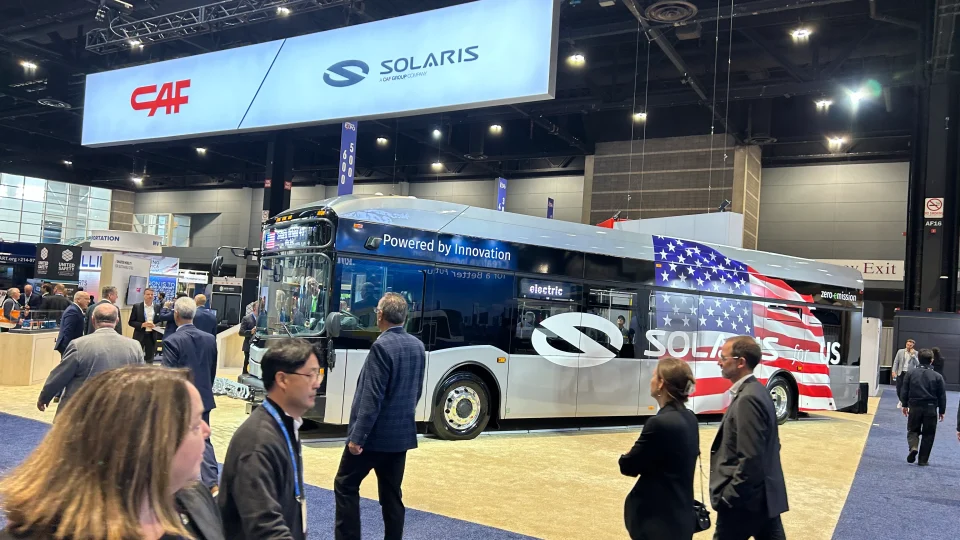
The manufacturer ranking places Yutong first with 1,636 electric buses registered in H1 2026. Iveco/Heuliez ranks second with a combined 1,156 units, taking together the 911 registrations listed under Iveco, 173 under Iveco/Heuliez and 72 under Heuliez. Solaris follows with 1,022 units.
BYD registered 681 electric buses, followed by MAN with 584, Mercedes with 553 and Wrightbus with 542. Karsan reached 321 registrations, while VDL recorded 202, Alexander Dennis 157 and Volvo 153.
The ranking continues with King Long at 146 units, Zhongtong at 131, Irizar at 109, Golden Dragon at 103 and CRRC at 100. Hess recorded 76 registrations, Oceantia 68, SOR 56, Scania 44 and Isuzu 37.
The manufacturer chart applies a threshold of 30 registrations for the manufacturers displayed in the treemap.
DVV Media Group reports a combined 11,315 registrations for battery-electric, hybrid, CNG and fuel-cell buses in H1 2026. Including the 38 trolleybuses shown in its country table brings the total number of “not-diesel” registrations in that table to 11,321.
In brief
- How many electric buses were registered in Europe in H1 2026?
8,141 battery-electric buses, compared with 5,477 in H1 2025, an increase of 49%. - Which country registered the most electric buses?
Italy ranked first with 1,559 registrations, followed by the UK with 1,075 and Poland with 1,060. - Which manufacturer led the European electric bus market?
Yutong led the DVV ranking with 1,636 registrations, ahead of Iveco/Heuliez with a combined 1,156 units and Solaris with 1,022. - What share of European city buses was battery-electric?
Battery-electric buses represented 61.2% of the city bus market in H1 2026, with 7,480 registrations.
Battery-electric buses reach 61.2% of the European city bus market
The DVV dataset separately breaks down registrations within the city bus segment. In H1 2026, 7,480 battery-electric city buses were registered out of a total city bus market of 12,215 vehicles (which is an extraordinary high volume, given that the average figure for the European city bus market in the last ten years is between 13 and 14,000 units in the whole year), excluding 38 trolleybuses. Electric buses therefore accounted for 61.2% of the city bus market.
In the first half of 2025, the corresponding electric volume was 4,953 units out of a city bus market of 8,548, representing 57.9%. In H1 2024, electric buses accounted for 49.6% of the city bus market, with 3,636 registrations out of 7,326 buses. The same DVV series reports a battery-electric share of 36.1% in H1 2023 and 29.0% in H1 2022.
Hydrogen bus registrations reach 397 units in H1 2026
Fuel-cell bus registrations reached 397 units in the first six months of 2026, compared with 272 in H1 2025, according to DVV Media Group.
Italy recorded the highest national volume with 178 hydrogen buses, followed by Poland with 119. Austria registered 34, France 27 and Germany 26, while Portugal recorded six, Luxembourg five and Slovenia two.
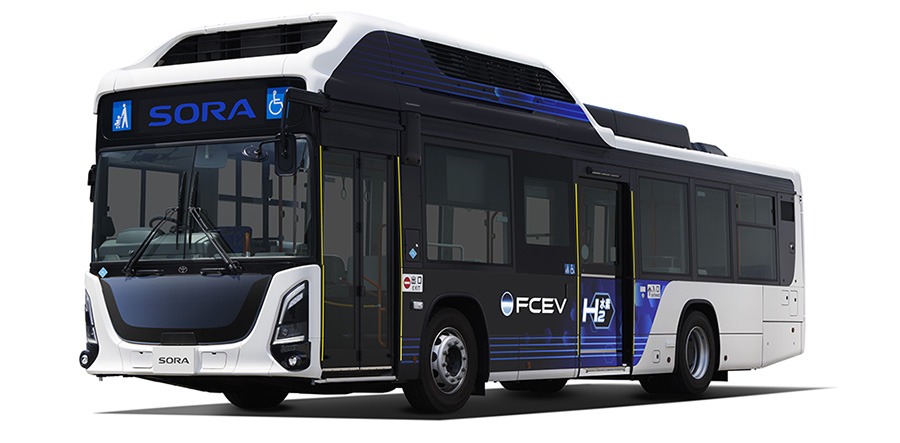
Solaris accounted for 256 hydrogen buses in the manufacturer ranking published in the report. Neso Bus followed with 39 registrations, MCV with 36, Mercedes with 34, Wrightbus with 21 and Caetano with six.
Hybrid and CNG buses in the first half of 2026
Hybrid bus registrations totalled 1,449 units in H1 2026, compared with 1,348 in the same period of 2025. Germany was the largest market with 718 registrations, followed by Spain with 296 and France with 148.
CNG registrations reached 1,328 units, compared with 1,195 in H1 2025. France registered 593 CNG buses, Italy 295 and Greece 189. Serbia accounted for 52 units, Portugal and Spain 34 each, Estonia 29 and Poland 24.
If battery-electric and fuel-cell registrations are combined, the manufacturer ranking would change, mainly because of Solaris’ 256 hydrogen buses.
Yutong would remain first with 1,636 zero-emission buses, followed by Solaris with 1,278 units (1,022 BEV + 256 FCEV) and Iveco/Heuliez with 1,156.