The future of IMC trolleybuses in focus: seven highlights from the 2026 Lyon conference by trolley:motion and UITP
The IMC Trolleybus Conference 2026, held in Lyon on 12–13 November and organised by trolley:motion and UITP, brought together public transport authorities, operators, manufacturers, consultants, research organisations and financing institutions to discuss the development of In-Motion Charging (IMC) trolleybus systems and electric Bus Rapid Transit (e-BRT). The event addressed fleet electrification strategies, infrastructure planning, operational […]
The IMC Trolleybus Conference 2026, held in Lyon on 12–13 November and organised by trolley:motion and UITP, brought together public transport authorities, operators, manufacturers, consultants, research organisations and financing institutions to discuss the development of In-Motion Charging (IMC) trolleybus systems and electric Bus Rapid Transit (e-BRT). The event addressed fleet electrification strategies, infrastructure planning, operational performance, financing and lifecycle costs, with contributions from cities including Lyon, Prague, Pescara and Shanghai.
Over the years, trolley:motion has established itself as a reference platform for the trolleybus and IMC sector, bringing together manufacturers, public transport operators, consultants and other stakeholders involved in the planning, development and operation of these systems. The Lyon conference reflected this network, with contributions from SYTRAL Mobilités, Keolis, UITP, EBRD, POLIS, the eBRT2030 project, research institutions and technology suppliers.
The presentations covered different stages of public transport electrification, from the renewal of established trolleybus networks to new high-capacity corridors, alongside the financial management of electric bus batteries and the introduction of circular economy criteria in vehicle procurement.
From Lyon’s decision to expand its trolleybus network to Prague’s high-capacity IMC operations, Shanghai’s fleet electrification programme and new approaches to battery lifecycle management, seven highlights from the conference are presented below.
Highlights from IMC Trolleybus Conference 2026
Lyon’s trolleybus strategy: 175 vehicles planned by 2027
Lyon’s relationship with trolleybuses dates back to 1904. By the 1960s, the city operated more than 300 trolleybuses, with electric trolleybus services accounting for over 60% of public transport trips.
Opening the conference, Edwige Besse of SYTRAL Mobilités retraced this history and described the evolution from vehicles requiring continuous overhead connection to modern IMC trolleybuses, capable of operating significant portions of their routes on battery power.
She stated that: “Modern IMC trolleybuses can operate for around 50% of their routes without overhead wires, offering greater flexibility while retaining the benefits of electric traction. SYTRAL has chosen to invest in this technology, introducing new trolleybus lines and 15 new vehicles. The latest addition, line C5, opened just last week”.
The operational reasoning behind Lyon’s investment programme was detailed by Magalie Campmas, Director of Transport Systems Bus & Trolleybus at SYTRAL Mobilités.
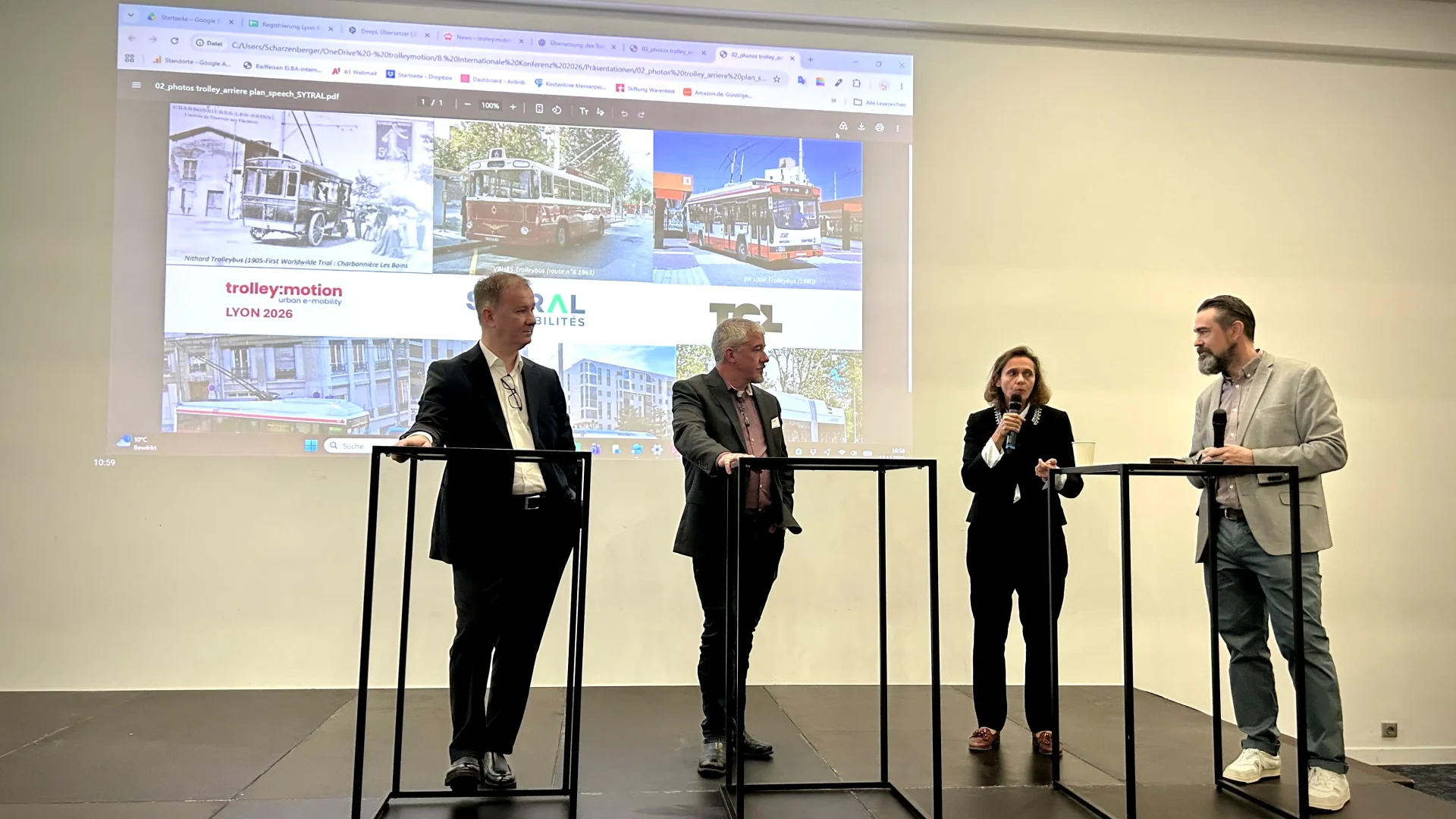
Around two decades after the introduction of the Cristalis trolleybus fleet, SYTRAL had to evaluate whether to continue investing in trolleybus technology or move towards battery-electric buses. Magalie Campmas explained: “At the time, articulated battery-electric buses were not yet available on the market. And even today, their autonomy remains below what we need.”
Another constraint concerned overnight charging. SYTRAL decided against this approach because of strict safety regulations governing the distances between charging vehicles and buildings.
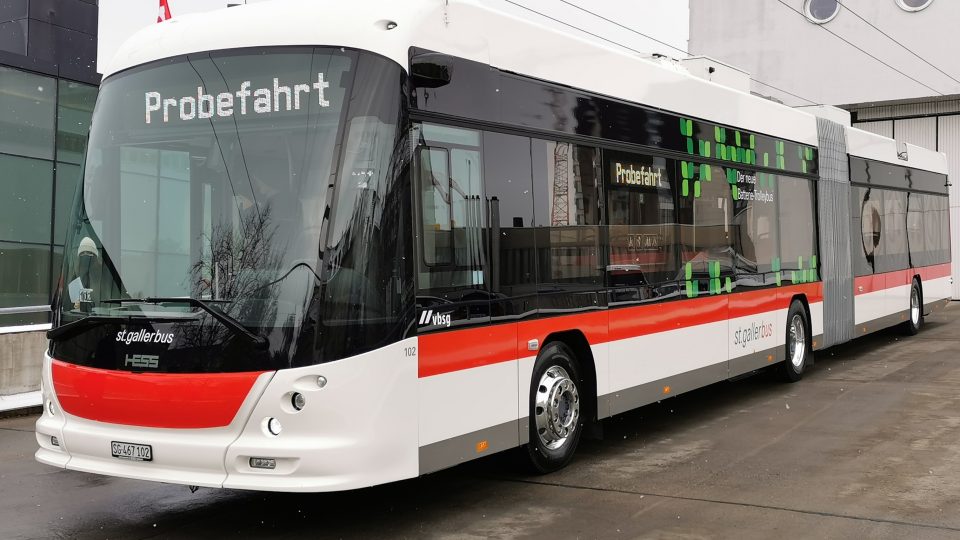
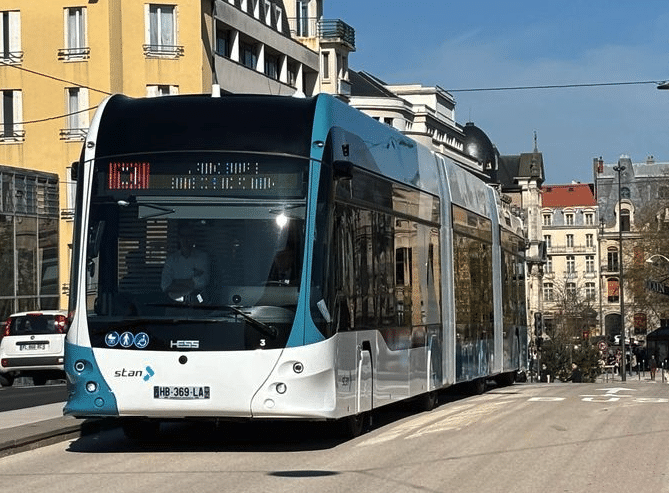
Following the introduction of 21 new trolleybuses supplied by HESS in 2021, SYTRAL placed a further order for 141 vehicles, its largest trolleybus order to date.
The renewal programme includes a 2023 contract awarded to Swiss manufacturer HESS for 127 articulated electric buses for Lyon, announced alongside an order for 121 electric vehicles for Geneva. The Lyon project envisaged the extension of the overhead network while retaining substantial sections of battery-powered operation without wires.
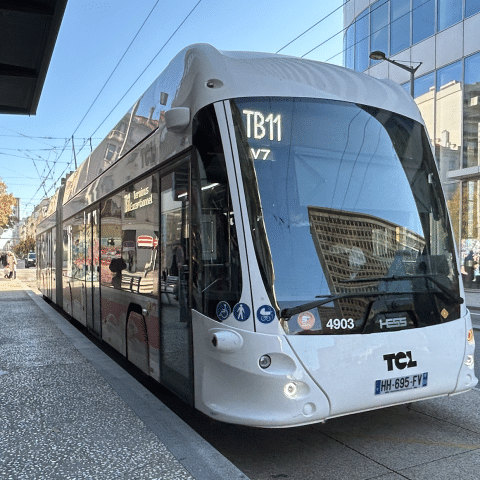
Network expansion has also included the TB12 TramBus line, whose first 5-km section opened in April 2026, connecting Part-Dieu V. Merle to Kimmerling Genets with 12 stops. Operated with articulated HESS Lightram 19 IMC trolleybuses, the corridor features dedicated lanes, tram-style stations and traffic signal priority, with services running every seven minutes during peak hours.
The authority aims to operate 175 trolleybuses by 2027, serving 12 major bus corridors across the metropolitan area with approximately 130 km of overhead wiring.
Lyon’s overall bus fleet comprises around 1,000 vehicles, including 13 battery-electric buses, two hydrogen buses undergoing trials and more than 100 CNG buses. Diesel vehicles still account for the majority of the fleet.
Prague: 24-metre IMC trolleybuses for high-capacity airport services
The use of IMC technology on high-demand routes was addressed by Jan Barchánek, Transport Director at Prague Public Transport Company (DPP), who presented the Czech capital’s trolleybus development programme, including the electrification of the airport connection and plans for additional routes.
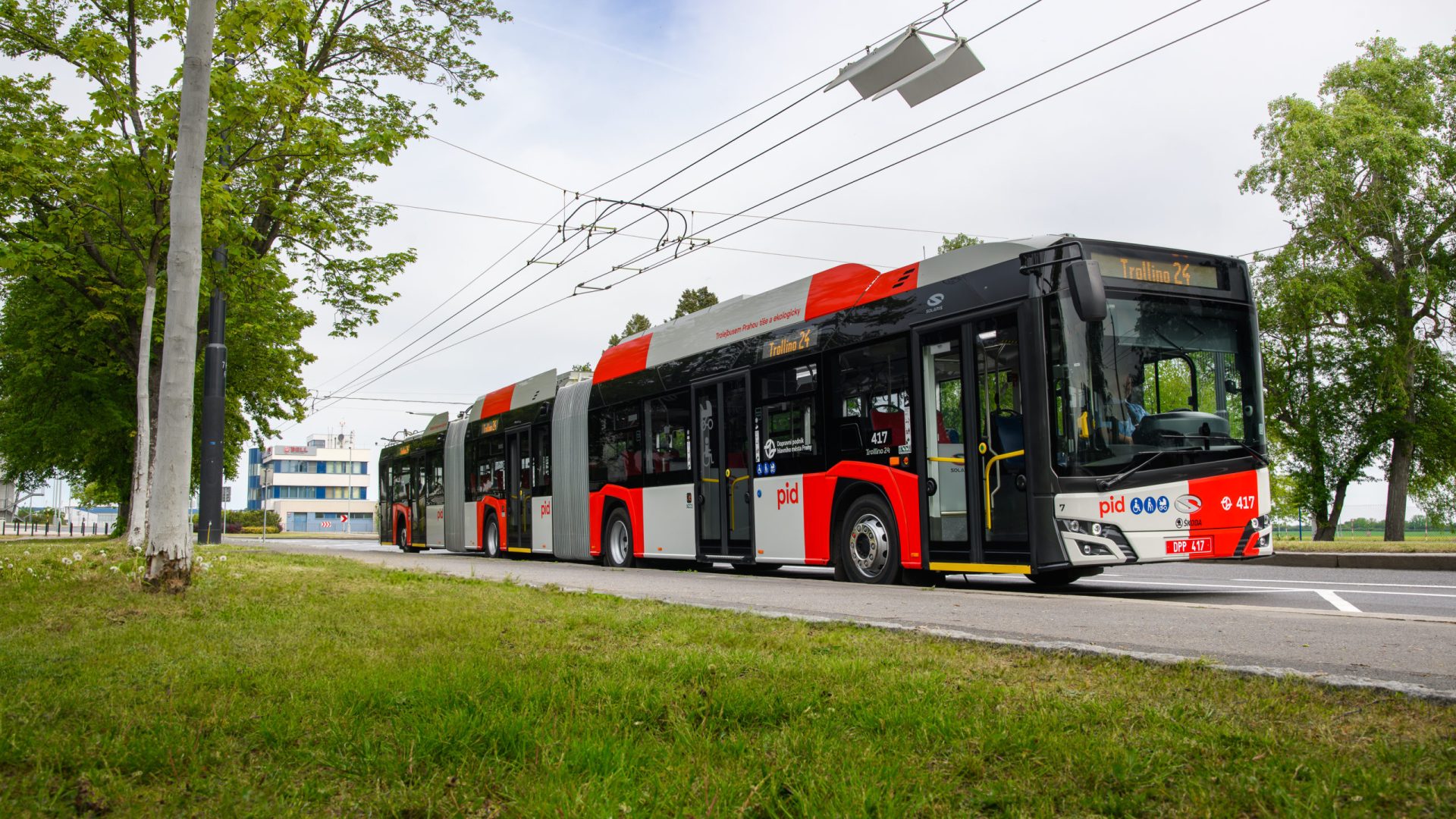
Prague’s trolleybus line 59, connecting Nádraží Veleslavín with Václav Havel Airport, has operated since March 2024, replacing diesel buses on a corridor carrying approximately 16,000 passengers per day. The previous diesel fleet covered around 70,000 km annually per vehicle. The service uses 24.7-metre bi-articulated Škoda-Solaris Trollino trolleybuses, with overhead operation along the route and battery-powered operation in the airport terminal area.
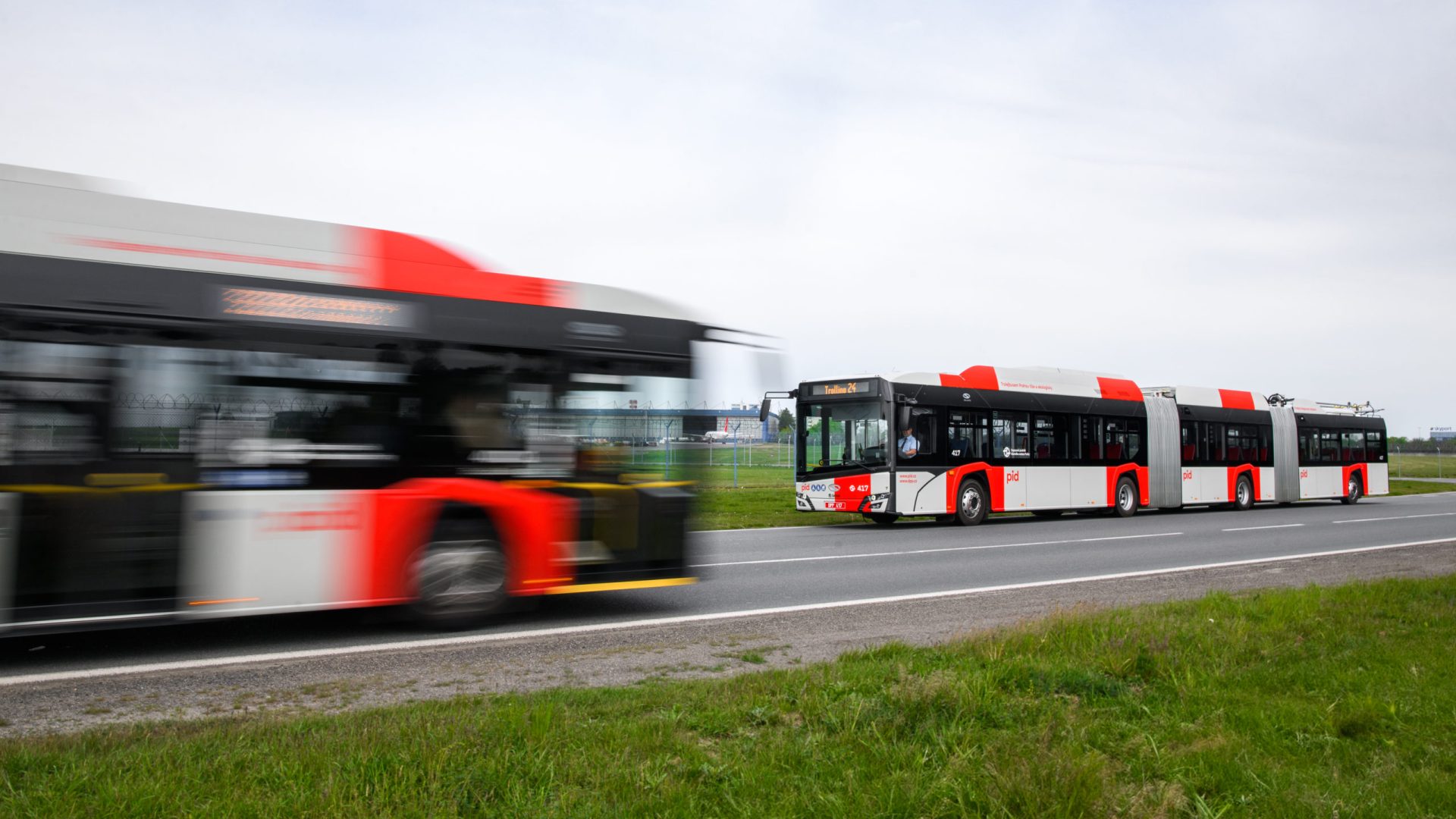
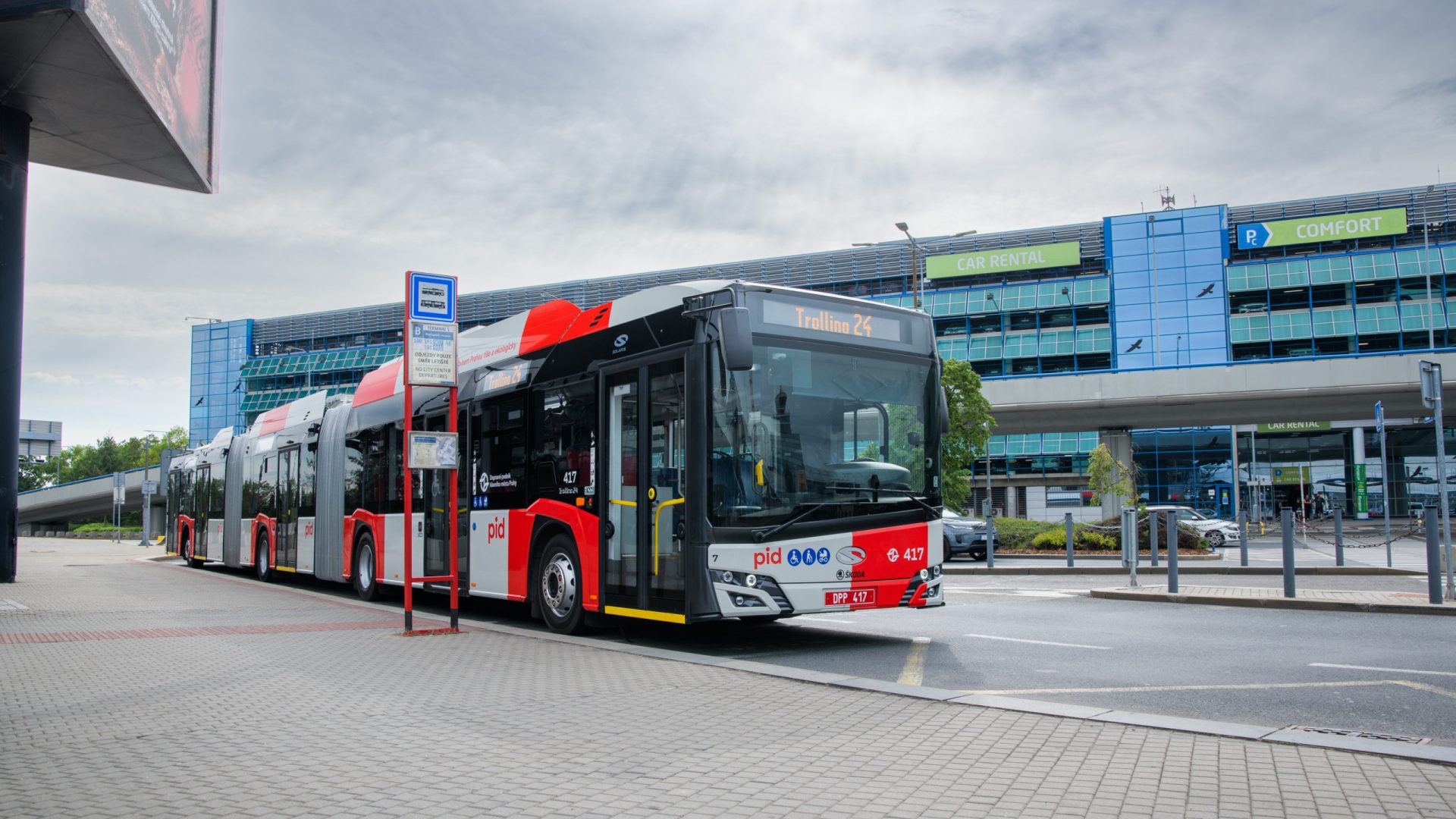
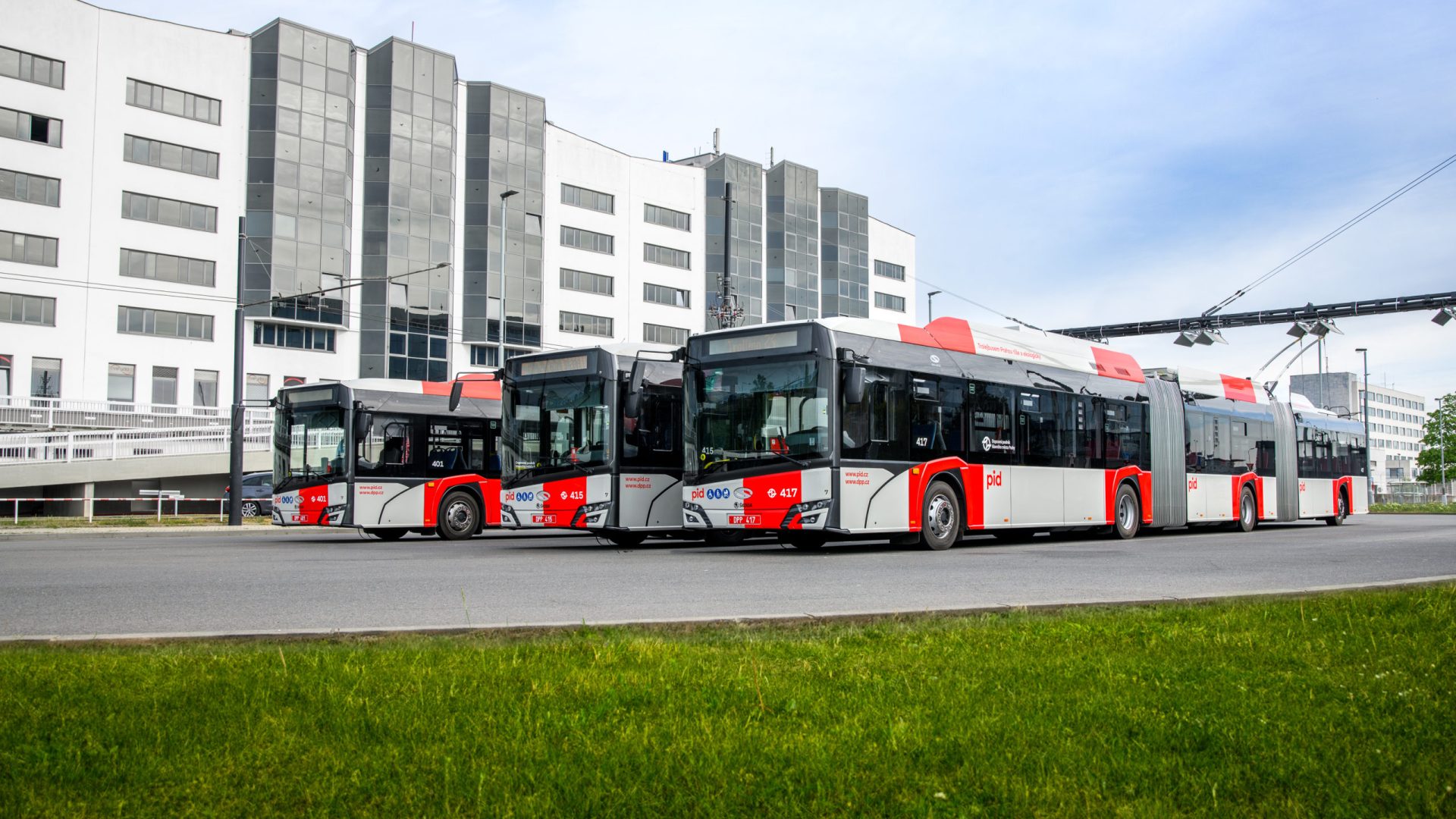
The vehicles originate from a 2022 contract for 20 bi-articulated trolleybuses, awarded to a consortium comprising Škoda Electric, Solaris Bus & Coach and Solaris Czech. Each vehicle is equipped with two traction motors, a battery system and five double doors. The technical specification provides for a minimum off-wire range of 11 km, while the vehicles have a nominal passenger capacity of 179. The first Škoda-Solaris 24m trolleybus was presented at Czechbus in November 2023.
Barchánek described the operational arrangement on line 59, combining stationary charging at the airport terminus, in-motion charging along the route and battery operation within the airport area. The vehicles were presented as a solution for high-capacity services, with the conference presentation referring to a passenger capacity of up to 200.
The DPP Transport Director also addressed the economic comparison between battery-electric buses and IMC trolleybuses, identifying battery capacity, charging times and available grid capacity among the parameters affecting operating costs.
According to Barchánek, “operating battery-electric buses can be more expensive than running IMC trolleybuses, even without subsidies”.
Prague currently operates five IMC trolleybus lines, with three additional lines planned. Further development is focused on high-demand corridors and routes with challenging topography.
The fleet expansion programme also includes a contract awarded to Turkish manufacturer Bozankaya in January 2025 for up to 70 additional 12-metre trolleybuses, with deliveries envisaged over five years. The SNG 12 vehicles, equipped with electrical systems supplied by Medcom, are specified to provide up to 15 km of autonomous battery operation. The contract also covers diagnostic equipment, portable chargers and an energy management system for remote charging monitoring and control.
Pescara: more than 2 million passengers on the La Verde IMC corridor
The first-year operating results of Pescara’s La Verde trolleybus corridor were presented by Maxmilian Di Pasquale, General Manager of Società Unica Abruzzese di Trasporto (TUA), who outlined passenger figures, operational performance and plans to extend the service connecting Pescara and Montesilvano.
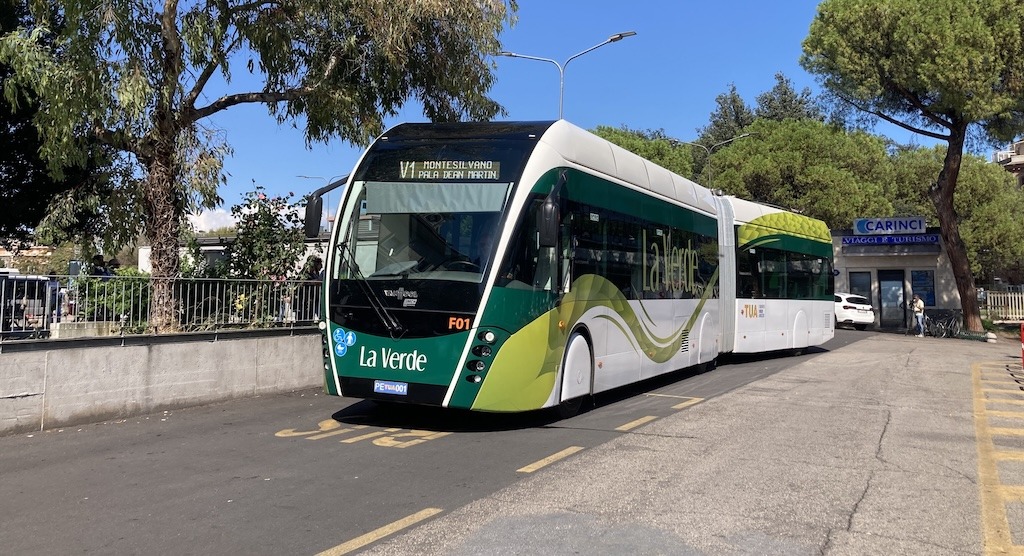
The La Verde trolleybus project covers an approximately 8.15-km corridor with 25 stops, connecting Pescara railway station with Montesilvano. Technical testing began in February 2024, following a prolonged development process, while commercial services eventually started on 11 September 2025. Most of the route follows the former Adriatic railway alignment, with battery-powered operation on sections outside the overhead network.
The fleet originates from a 2021 contract awarded to Van Hool and Kiepe Electric for six articulated Exqui.City trolleybuses equipped with IMC500 technology. After Van Hool’s bankruptcy, servicing is covered by Hess Belgium. The electrical equipment includes traction systems, converters, battery chargers and onboard batteries. The vehicles are 18.61 metres long and feature two 160 kW motors and 45 kWh battery packs, with capacity for 134 passengers, including 37 seated.
According to Di Pasquale, the corridor carried more than 2 million passengers during its first year of operation, averaging 7,200 passengers on weekdays. Services currently operate six times per hour, with an average commercial speed of 20 km/h.
TUA estimates a catchment area of approximately 38,000 residents within walking distance of the line, with a penetration rate of 9.5%.
The first operating figures published in November 2025 recorded nearly 6,500 passengers over one week. At that stage, TUA also announced plans to introduce two additional 18-metre articulated vehicles supplied by Yutong.
At the Lyon conference, Di Pasquale presented further expansion plans, including an extension of 3.5 km in each direction and a forthcoming tender for six additional trolleybuses. The programme envisages increasing service frequency and extending the route without additional overhead wiring infrastructure.
Further connections to Pescara Airport and Chieti are also under consideration, subject to funding availability, with opportunity charging stations planned at terminal locations.
Shanghai: diesel bus withdrawal completed across a 16,700-vehicle network
A different scale of fleet electrification was presented by Edward Chen of Sunwin, who outlined Shanghai’s transition towards electric public transport. The manufacturer Sunwin, part of SAIC group, has a market share of over 60 percent in the city.
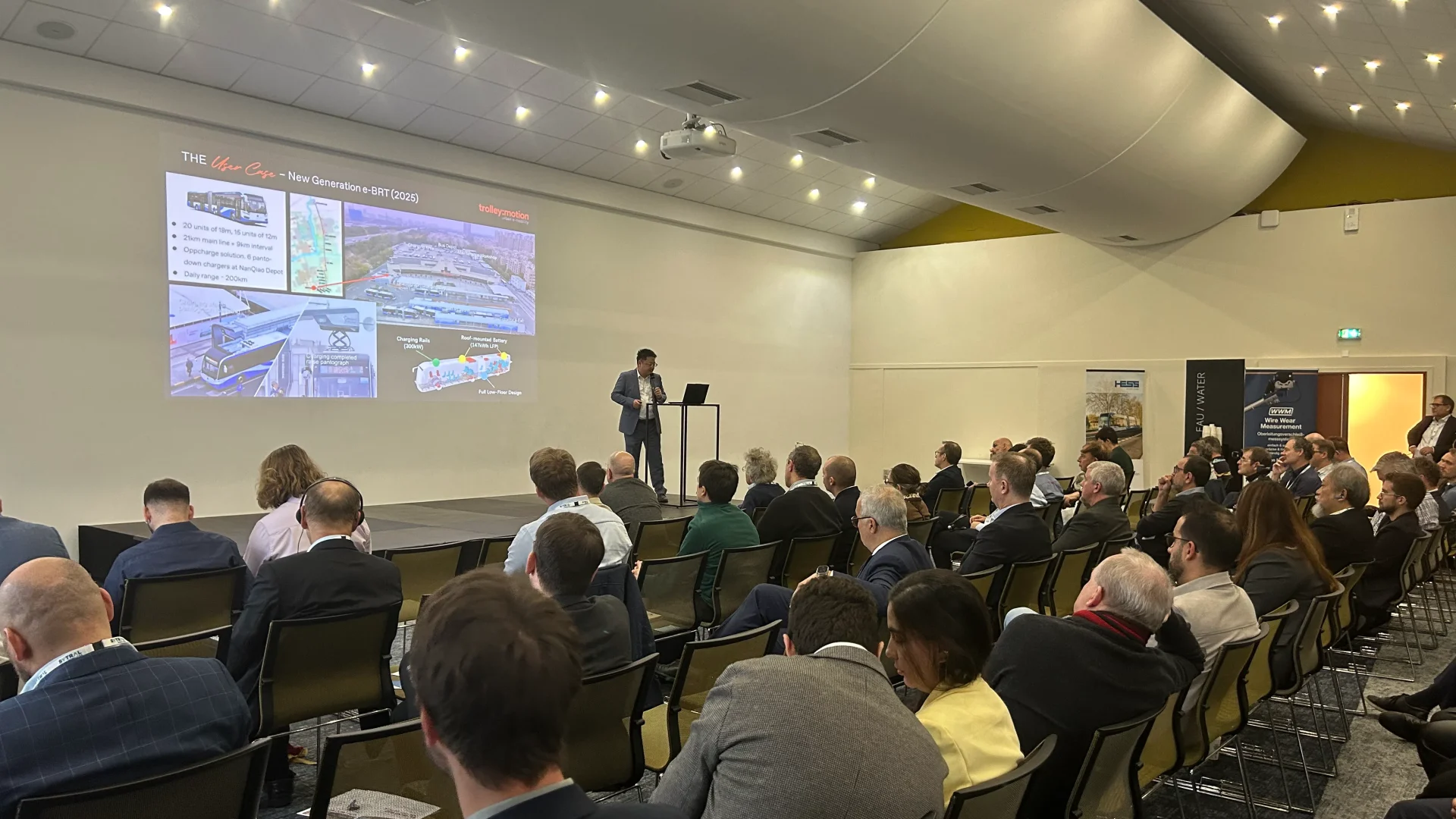
According to Chen, the Shanghai government decided in 2018 to concentrate bus fleet renewal on electric vehicles. The final batch of conventional diesel buses was withdrawn approximately two weeks before the conference. Shanghai’s public transport network comprises 1,590 routes and approximately 16,700 buses.
The fleet includes 15,570 battery-electric buses, 240 trolleybuses, 540 diesel plug-in hybrid buses and 350 hydrogen fuel-cell buses. Plug-in hybrid vehicles are deployed mainly on intercity and suburban services, while fuel-cell buses operate primarily in suburban areas.
Shanghai also retains what Chen described as the world’s largest continuously operating trolleybus system.
Alongside fleet renewal, the city has introduced electric BRT services. Chen referred to a new project launched in the eastern part of Shanghai in 2025, involving 35 electric buses.
Electric bus battery lifetime: Keolis extends replacement planning to 10 years
The financial management of electric bus fleets was addressed by Thierry Guinard, Group Technical Director – Bus & Energy Transition at Keolis Group, who presented the operator’s experience in Rennes. Keolis has deployed 92 electric buses in the French city, representing an investment of approximately €60 million.
The initial battery replacement planning assumed an eight-year interval. Under this scenario, replacing the battery packs would have required more than €15 million in additional investment.
Through cooperation with the vehicle manufacturer and continuous monitoring of battery ageing, Keolis has extended the expected battery replacement interval from eight to ten years. The revised interval changes the timing of the anticipated replacement expenditure within the fleet’s asset management programme. Guinard’s presentation focused on the relationship between battery ageing, replacement schedules, capital expenditure and the total cost of ownership of electric bus fleets.
Bergamo: circular procurement criteria enter electric bus fleet renewal
Procurement and lifecycle management were the focus of a presentation by Gabriele Grea of Redmint Impresa Sociale, who introduced a project developed with Italian public transport operator ATB Azienda Trasporti Bergamo.
Bergamo is among the European cities targeting climate neutrality by 2030. Its public transport strategy includes the development of an electric BRT system, expansion of the tram network through the new T2 line and a wider fleet electrification programme.
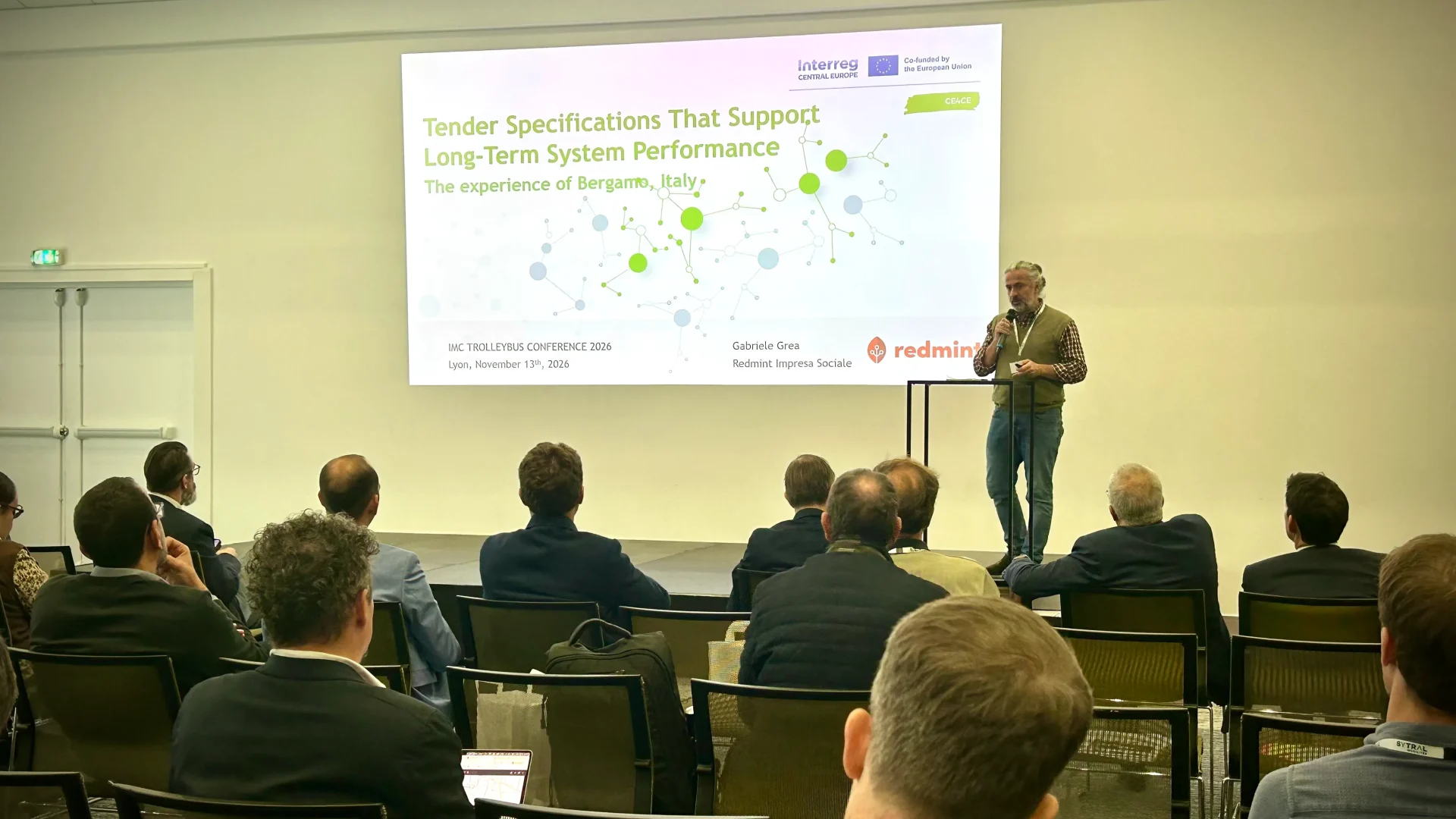
The project presented by Grea aims to integrate circular economy principles into ATB’s operations and procurement processes. Three priorities have been identified: reducing consumption of critical resources, extending the lifespan of vehicles and other assets, and introducing circularity across the supply chain.
A central element is circular procurement, with tender assessments incorporating lifecycle value and environmental performance alongside initial purchase costs.
The proposed measures include minimum durability requirements for electric bus batteries, circularity criteria in tender specifications and additional evaluation scores for innovative solutions involving the reuse of end-of-life batteries.
Trolleybus infrastructure and charging: Kummler+Matter KUMOTION solution
The role of electrical infrastructure in IMC trolleybus operations was addressed by Fawzi Fattel, Head of Sales International at Swiss company Kummler+Matter, who presented the company’s approach to overhead line systems, power distribution and charging infrastructure.
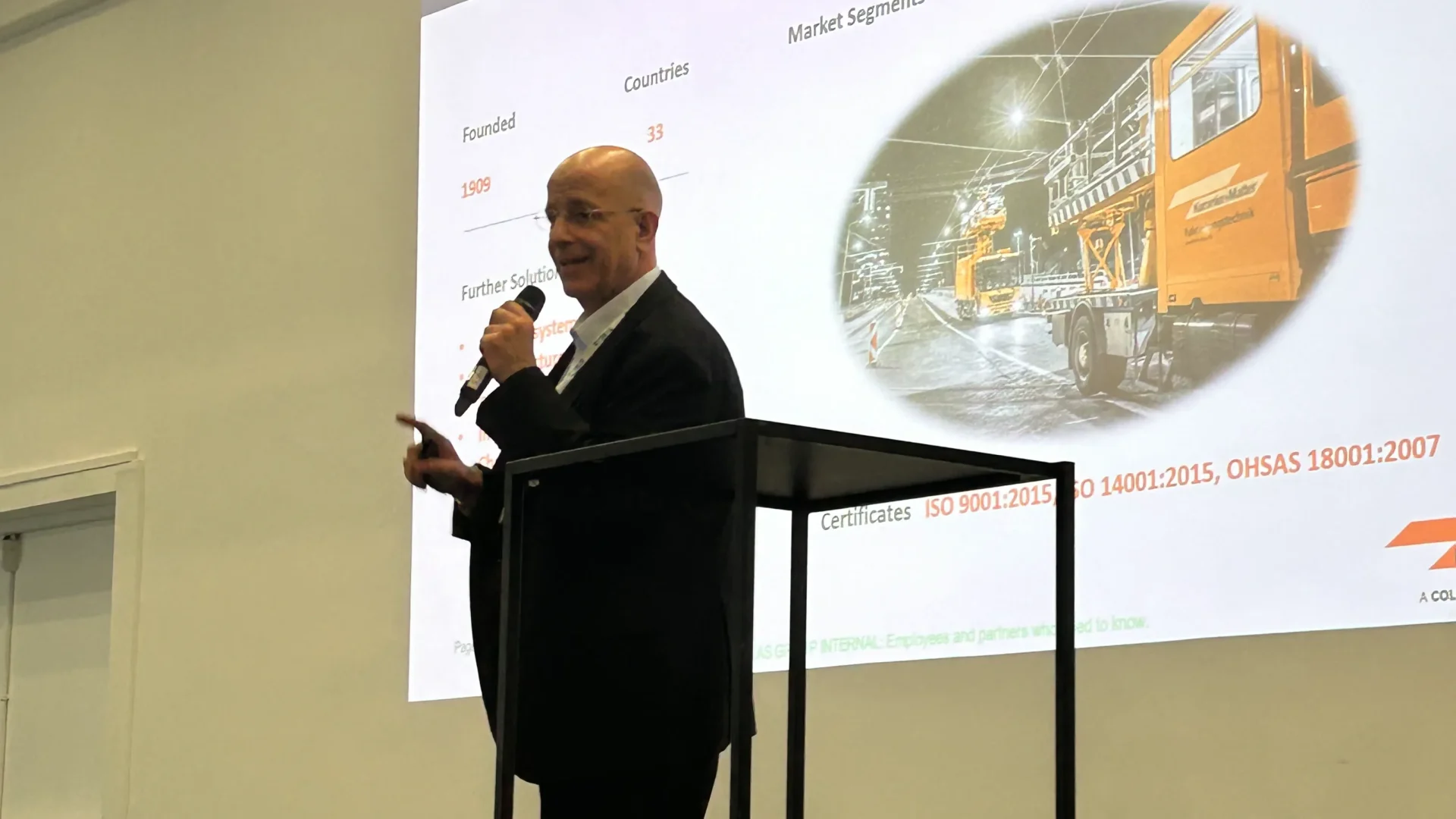
Fattel highlighted the need to consider trolleybus operations as an integrated system, combining traction substations, overhead contact lines, onboard batteries and maintenance procedures. Particular attention was given to the design and maintenance of overhead infrastructure, including contact wires, switches, crossings and electrical sectioning equipment.
The presentation introduced KUMOTION, Kummler+Matter’s trolleybus charging solution, designed to enable battery-equipped trolleybuses to operate beyond continuously wired sections through charging at terminal stations. According to Kummler+Matter, the system provides battery charging power of at least 200 kW, with an indicative ratio of one minute of charging for approximately one kilometre of operation. The solution allows trolleybus routes to be extended beyond existing overhead infrastructure and provides the possibility of reducing overhead wiring in city centres.