FIFA World Cup drives record transit ridership as 26 US agencies in 11 host cities mobilize expanded services
Twenty-six public transit agencies across 11 US host cities activated expanded services, infrastructure upgrades and safety measures as the 2026 FIFA World Cup got underway. As matches began across North America, public transportation systems implemented operational plans developed over the previous two years to support the movement of spectators, workers and visitors attending the tournament. […]
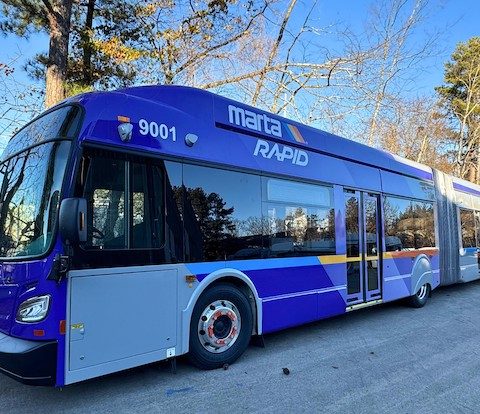
Twenty-six public transit agencies across 11 US host cities activated expanded services, infrastructure upgrades and safety measures as the 2026 FIFA World Cup got underway.
As matches began across North America, public transportation systems implemented operational plans developed over the previous two years to support the movement of spectators, workers and visitors attending the tournament. According to the American Public Transportation Association (APTA), agencies coordinated preparations through the association’s Mega Events Task Force, which brought together transit operators to align service planning and share operational practices ahead of the event.
The opening days of the competition quickly generated high passenger volumes across several host cities. Reporting published by Metro Magazine on 18 June highlighted record ridership levels on a number of transit systems, with demand surpassing figures associated with major sporting events and concerts.
2026 FIFA World Cup host-city transit agencies expanded services
According to APTA, measures introduced by agencies included:
- Expanded rail, bus and shuttle services in host cities;
- Extended operating hours and increased capacity on match days;
- Additional safety, security and emergency coordination measures;
- Enhanced customer information systems and multilingual communications;
- Integrated fare payment solutions;
- Infrastructure improvements completed ahead of the tournament.
APTA stated that agencies spent the past two years preparing for World Cup operations and earlier in 2026 briefed the White House FIFA World Cup Task Force on industry readiness efforts and public transportation requirements during the competition.
The operational plans were tested immediately during the first round of matches. According to Metro Magazine, Santa Clara Valley Transportation Authority (VTA), working alongside BART and Caltrain, transported 37,642 passengers to and from the opening World Cup match held at Levi’s Stadium on 13 June. The publication reported that the figure exceeded transit demand recorded during Super Bowl LX by more than 6,000 passengers.
On 16 June, VTA carried more than 39,500 passengers to and from the Austria–Jordan match, establishing a new tournament ridership record, according to Metro Magazine.
The publication also reported that BART registered a more than 160 percent increase in ridership at Milpitas Station compared with the previous weekend, while Caltrain carried nearly 7,000 passengers travelling to and from the event.
In brief
- How many US transit agencies participated in World Cup preparations? APTA reported that 26 agencies across 11 host cities coordinated operations and service planning.
- What measures were introduced for the tournament? Agencies expanded services, increased capacity, extended operating hours and implemented additional safety and customer information measures.
- What long-term investment levels is APTA advocating? The association recommends $138 billion for public transit and $130 billion for passenger rail over five years.
In Vancouver, TransLink recorded its busiest Saturday for a BC Place event since the 2010 Winter Olympics during the city’s first FIFA World Cup fixture. Preliminary figures cited again by Metro Magazine showed more than one million boardings and approximately 648,200 trips systemwide on 13 June. SkyTrain ridership approached 450,000 boardings, while SeaBus traffic increased by more than 37 percent compared with a typical Saturday.
In Mexico, Guadalajara’s Urban Electric Train System (SITEUR) implemented a dedicated World Cup mobility plan featuring a 12.2 percent increase in light rail capacity, equivalent to nearly 27,000 additional passenger spaces. The operator also extended service hours on Light Rail Lines 1, 2 and 3, the Macro Periférico bus rapid transit corridor and the Line 5 Macro Airport service.
Among the resources available to agencies was the Special Event Transportation – Guidance and Opportunities (SetGo) Playbook, released by LA Metro in collaboration with APTA in 2025. The document compiles operational practices for managing transportation during large-scale sporting, entertainment and cultural events.
The playbook draws on experiences from the Olympic and Paralympic Games in Paris, London, Salt Lake City and Atlanta, together with Formula One races, major concert tours and convention events.
Congress is discuting on future transportation funding
The FIFA World Cup also took place while Congress continued discussions on future transportation funding. APTA’s Surface Transportation Authorization Recommendations call for investments of $138 billion in public transit and $130 billion in passenger rail over five years. According to the association, the proposed funding would contribute to addressing a state-of-good-repair backlog exceeding $150 billion while supporting infrastructure modernization, safety improvements and mobility projects.
Paul P. Skoutelas, President and CEO of APTA, said: “This is what public transportation does best. Public transportation connects people to opportunity, supports local businesses, and helps communities host major events safely and efficiently. The World Cup is a chance to showcase the strength of America’s public transportation network on a global stage. From day one, our agencies understood that World Cup fans and everyday riders are not competing priorities—they are the same mission. The service improvements, safety enhancements, and infrastructure investments being made for this tournament will benefit residents long after the final match.”