Germany launches new nationwide funding call to boost zero-emission bus procurement, including retrofits
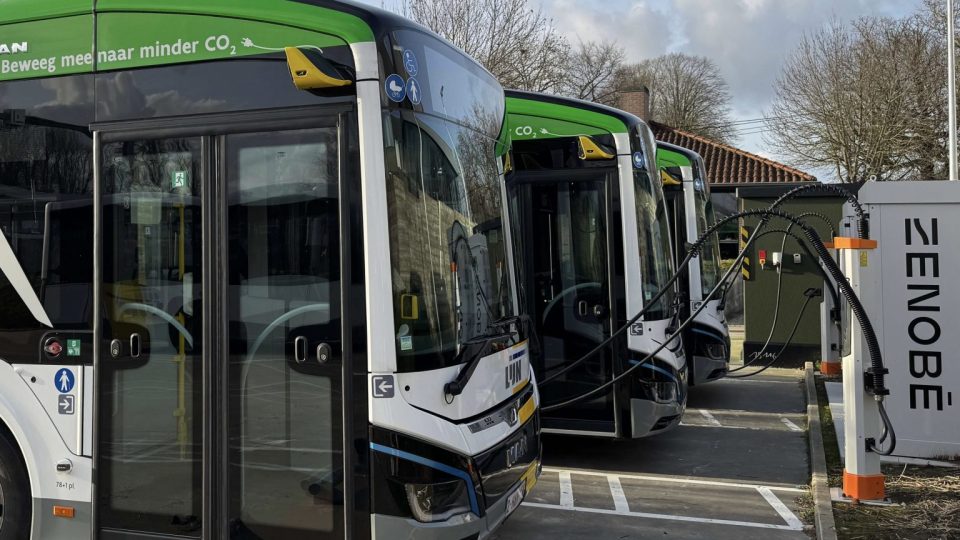
The German Federal Ministry for Transport (BMV) has announced a new funding round to support public transport operators across the country in transitioning their bus fleets to zero emission technology. The call is open to battery-electric and hydrogen-powered (fuel cell) buses, including the necessary infrastructure and which is worth mentioning, retrofitting of conventional buses. Germany’s […]

The German Federal Ministry for Transport (BMV) has announced a new funding round to support public transport operators across the country in transitioning their bus fleets to zero emission technology. The call is open to battery-electric and hydrogen-powered (fuel cell) buses, including the necessary infrastructure and which is worth mentioning, retrofitting of conventional buses.
Germany’s federal funding program for alternative drive systems in public buses, launched in 2021, has already supported the procurement of around 3,500 zero emission emission buses. However, in early 2024, the funding program was halted, with concerns arising on the development of the zero emission bus market in the country. According to the VDV, halting federal subsidies “put conversion of 10,000 buses to zero emission at risk”.
New funding program for zero emission buses in Germany
The implementation of the program is coordinated by NOW GmbH and managed by Projektträger Jülich (PtJ). Parts of the funding are co-financed through the German Recovery and Resilience Plan (DARP) with support from the European Union’s Recovery and Resilience Facility (RRF).
Public transport operators and other eligible stakeholders from the bus sector can submit project proposals via the federal government’s portal until 31 August 2025: https://foerderportal.bund.de/easyonline.
Funding will be awarded through a competitive selection process, the BMV states. Projects will be evaluated based on expected CO₂ savings, deployment context, fleet electrification ratios, and financial need. The call is based on the German government’s draft 2025 federal budget and is subject to final approval by parliament. Final project approvals will be granted once the Federal Budget Act enters into force in autumn 2025.
The funding conditions remain in line with previous rounds. The government will cover up to 80% of the additional costs of zero-emission vehicles compared to conventional diesel buses. For charging, refueling, and maintenance infrastructure, the subsidy can reach up to 40%, with the possibility of higher rates for small and medium-sized enterprises (SMEs). Each project—covering both vehicles and infrastructure—is capped at a maximum of 15 million euros in total funding.
Federal Transport Minister Patrick Schnieder emphasized the importance of the initiative, stating: “Clean mobility for all – that’s why we need climate-friendly technologies and a strong public transport system. This new funding call will bring more climate-neutral buses to the road – and across the entire country. In doing so, we’re not only making a tangible contribution to achieving our climate goals, but also delivering modern, quiet, and clean mobility to people on the ground.”