HEAG mobilo’s Arne Rath: e-bus batteries are lasting longer than expected — and are improving their economics
Electric bus operating costs are falling, but purchase prices remain the main barrier to achieving full cost parity with diesel fleets, according to HEAG mobilo Managing Director Arne Rath. Speaking with Sustainable Bus at Mobility Move 2026 in Berlin, in March, Rath outlined the German operator’s experience with fleet electrification, highlighting lower energy and maintenance […]
Electric bus operating costs are falling, but purchase prices remain the main barrier to achieving full cost parity with diesel fleets, according to HEAG mobilo Managing Director Arne Rath.
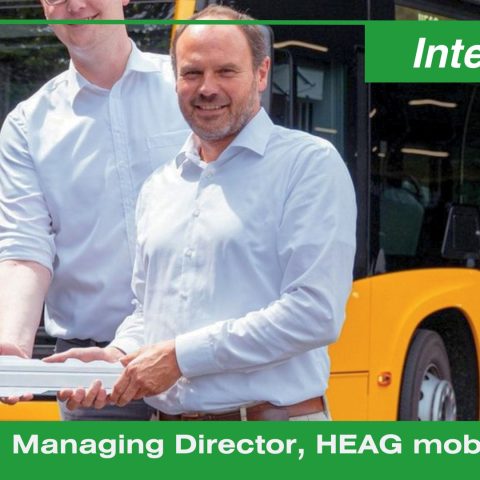
Speaking with Sustainable Bus at Mobility Move 2026 in Berlin, in March, Rath outlined the German operator’s experience with fleet electrification, highlighting lower energy and maintenance costs alongside battery performance that has exceeded initial expectations. HEAG mobilo currently operates 54 battery-electric buses within its regular service fleet and plans to complete the transition of its core network between 2027 and 2029.
In the interview, Rath discusses the evolution of battery durability, the role of public funding in supporting vehicle procurement, the flexibility of Darmstadt’s long-term public transport contract, and the potential of demand-responsive and autonomous mobility services. He also addresses the challenges facing public transport operators, including rising personnel costs, stable ridership levels and the need to improve accessibility and reliability to attract more passengers to public transport.
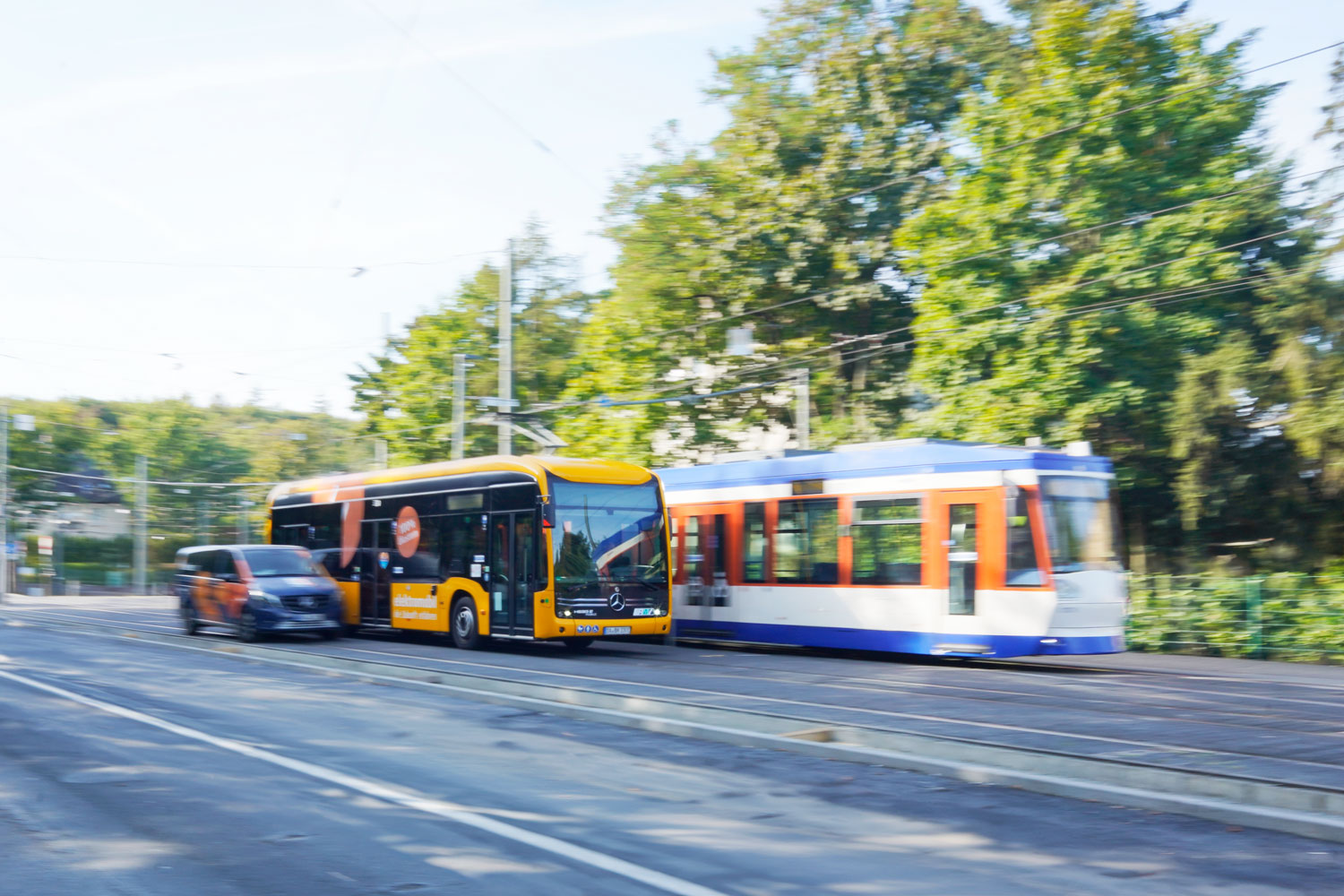
Arne Rath, HEAG, on reducing operating costs with e-buses
Your contribution at Mobility Move agenda 2026, in March, has been about “reducing operating costs with electric buses”. However, it is quite common to hear from other operators that the Total Cost of Ownership of BEVs is still, as of today, higher than diesel. How does HEAG mobilo achieve (or aims to achieve) a result that proves the opposite? So how did you achieve or how to achieve?
You have to consider different parts. The investment for a fully electric bus is twice that of a standard diesel bus. But the running costs for fuel – diesel versus electricity – in our experience, are today half the price and depends on the price development. And the maintenance is cheaper for electric buses.
Also, the batteries are getting increasingly better. When we started our investment in 2020, we thought the lifetime would be eight years, with a state of health of 80%. After five years, we saw they still had around 90% capacity. So sometimes it works better than expected. Now we think the batteries will last 10 years. This year they are six years old and still just under 90% original capacity.
Also the batteries we bought in 2021 still have more than 97% capacity after five years.
Better compared to your plans.
Yes. At the beginning, we assumed we would have to buy new batteries after eight years. In our projections, the bus would run for 16 years, so one battery replacement in its lifetime. Now we see the batteries may last 10 years or longer. So the question is whether we even need to replace the batteries at all or not. This would eventually drive down costs.
Fuel, batteries and maintenance will all get cheaper. The remaining problem is that the upfront investment is still too high. In Germany, we have federal support, and we still need this support to bring prices into the range of a normal diesel bus.
So lower OPEX still doesn’t offset the higher CAPEX?
Not yet. The running costs will go down, but they do not cover the investment. Not yet. Prices would have to go down by about 30%.
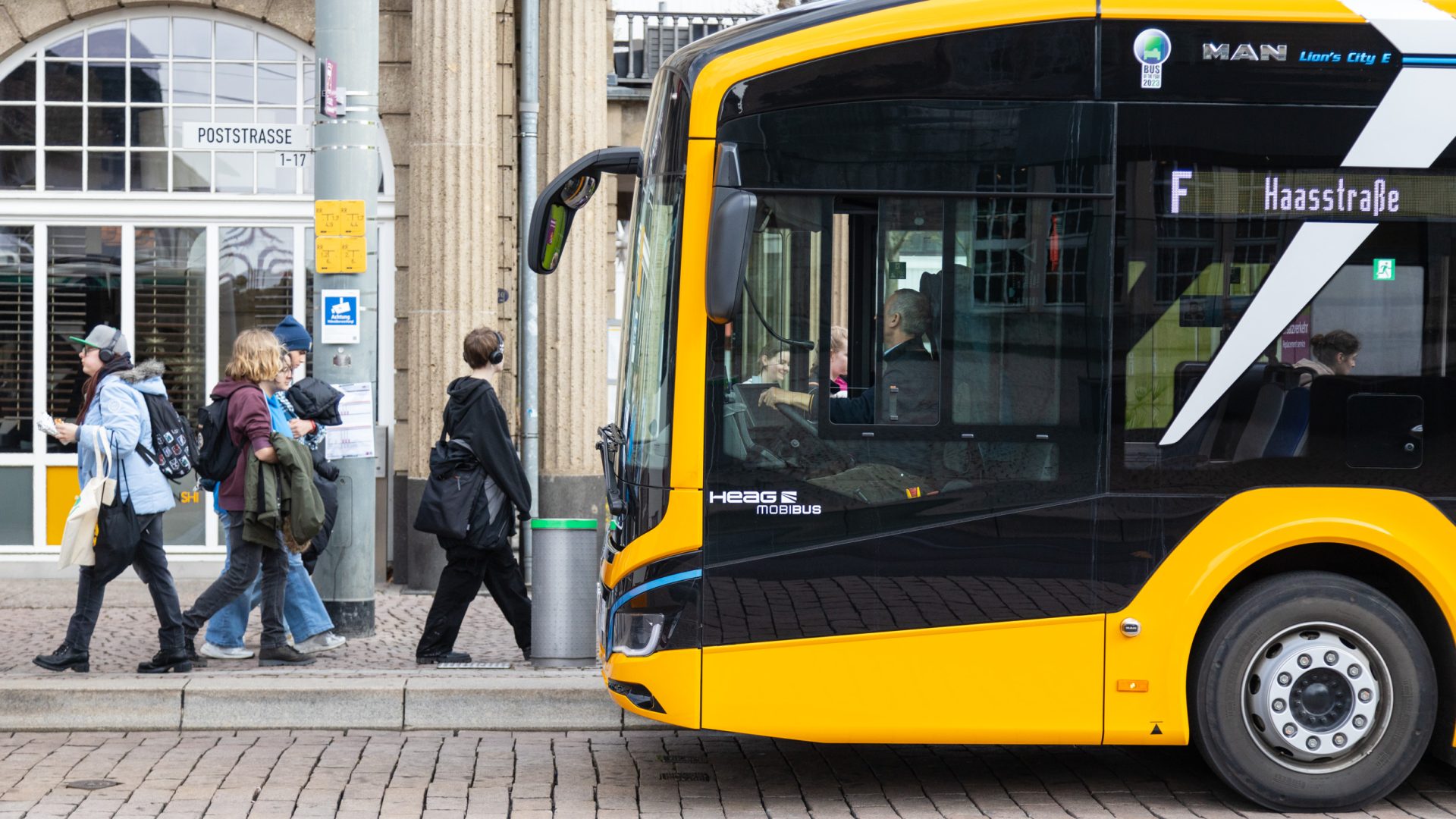
HEAG, state of electrification in Darmstadt
How is the state of electrification of your fleet at the moment?
We have almost 100 buses. Some are reserve buses, for example for rail replacement services. For the normal network we have about 80 to 85 buses. Out of these, 54 are electric. We plan to replace the remaining buses used on the regular network between 2027 and 2029. The reserve buses will remain diesel.
How is the funding landscape?
First, it is money from our city and district as our shareholder. Then we try to get support from federal or state programs. This year, federal funding provided about €500 million, but requests totalled around €5 billion. So demand was ten times higher.
Public transport is generally not profitable, and the same applies to on-demand. But profitability is not the main point. It brings more people into public transport and can replace low-ridership bus lines. The key is attracting more passengers and offering flexibility. For example, in new urban areas, you can use on-demand to develop services. In the future, autonomous vehicles will likely start in on-demand services. The main issue in Germany is regulation: we still need a safety driver onboard. Once that requirement is removed, costs will drop significantly. Europe is moving too slowly. We need to invest more in these technologies.
Arne Rath, Managing Director, HEAG mobilo
If you were the minister, how should subsidies be shaped?
The best way is to reduce the gap between diesel and electric bus purchase prices. Also, funding rounds today are like a lottery. Companies cannot plan their investments because they don’t know if they will receive support. It would maybe be better to give smaller amounts to all companies so they can properly plan.
Do you see other business models likely to play a growing role in this environment, such as leasing?
It’s possible. Regulation allows us to lease buses; but for us, buying is better because as a municipal company we get very good conditions from banks, and we use the buses until their end of life.
Public transport contracts and the push for innovation
You recently secured a new 15-year contract in Darmstadt. How does this fit with innovation requirements?
Our contract is flexible. It allows us to introduce new technologies, electrification and digitalisation. It’s not a fixed contract where you only operate from A to B.
So it’s not based on a fixed number of kilometres.
No. It’s a financial model but flexible. In competitive tenders, you often have fixed requirements for 10 years. Our model allows for change and innovation.
What about demand-responsive transport?
It’s also possible within our contract. We already operate on-demand services like HeinerLiner. But everything depends on how much the city is willing to invest.
Do you see DRT becoming economically sustainable?
No. Public transport is generally not profitable, and the same applies to on-demand. But profitability is not the main point. It brings more people into public transport and can replace low-ridership bus lines.
Some software providers claim DRT reduces costs, but operators usually disagree…
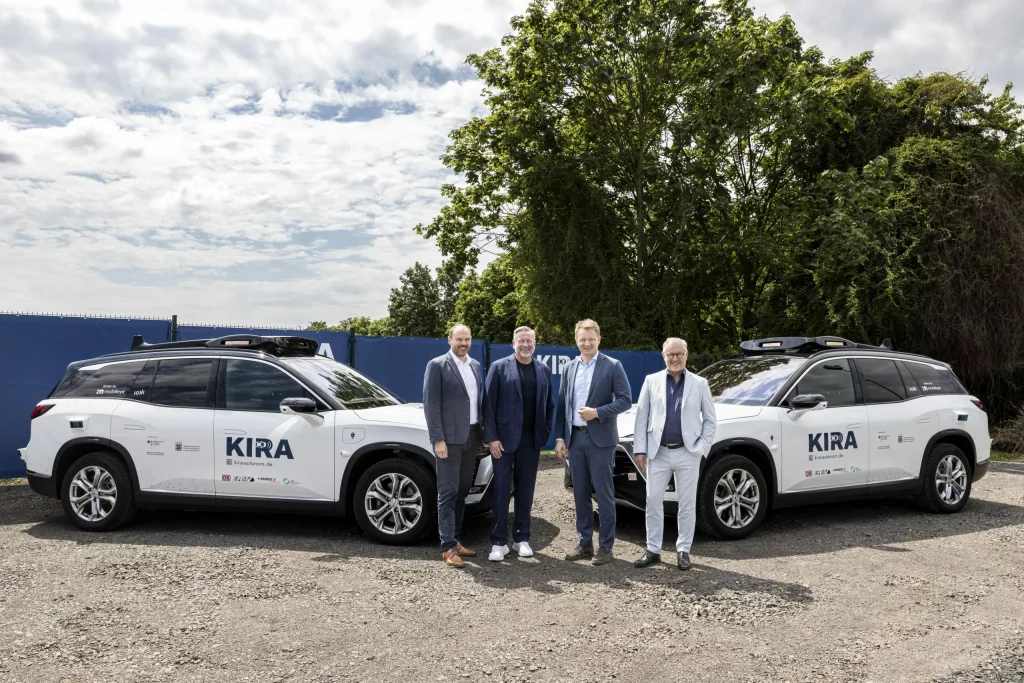
You can save money, but that’s not the main point. The key is attracting more passengers and offering flexibility. For example, in new urban areas, you can use on-demand to develop services. In the future, autonomous vehicles will likely start in on-demand services. We already have the Kira project in Darmstadt with Deutsche Bahn, RMV and ioki. It works. The main issue in Germany is regulation: we still need a safety driver onboard. Once that requirement is removed, costs will drop significantly. Europe is moving too slowly. We need to invest more in these technologies.
What can operators do to encourage industry investment?
Politicians must create the right environment and provide funding. Europe lacks companies like Google that invest heavily in autonomous driving.
E-bus batteries are getting increasingly better. When we started our investment in 2020, we thought the lifetime would be eight years, with a state of health of 80%. After five years, we saw they still had around 90% capacity. So sometimes it works better than expected. Now we think the batteries will last 10 years. This year they are six years old and still just under 90% original capacity. Also the batteries we bought in 2021 still have more than 97% capacity after five years.
Arne Rath, Managing Director, HEAG mobilo
Autonomous driving, jobs, PTOs’ priorities
There are also concerns about jobs.
Yes, but we also face a shortage of drivers. Many are approaching retirement, and we don’t know if enough new workers will come. Automation could help to address this. At the same time, we have set up several programs to find replacements for those that retire in the years to come.
VDV data shows rising costs and flat ridership. Do you see the same trend?
Yes. Personnel costs are increasing, but passenger numbers are almost the same as in 2019. The Deutschlandticket reduced fares, so revenues are lower, even with compensation. Costs go up, income stays flat: that’s the problem.
What are your main priorities as an operator today?
We have to bring more people into public transport. It must become more attractive. The key is lowering barriers – especially ticketing. It should be easy to use. The Deutschlandticket is a good step. Reliability is also crucial. People must trust that the bus will come. If they don’t trust public transport, they will use their car. These are the two main points: easy access and reliability.