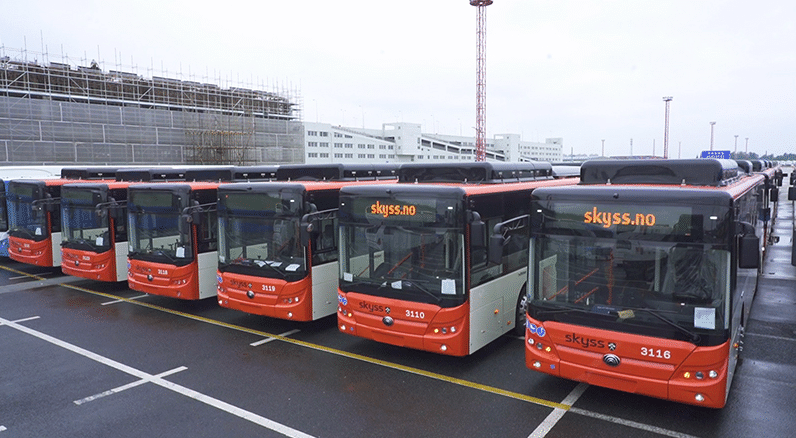
Beyond the FIFA World Cup: turning peak demand into a better public transport offer, according to Luminator’s CEO Magnus Friberg
The 2026 FIFA World Cup put public transport systems across North America under unprecedented operational pressure, with agencies managing millions of additional passenger journeys in host cities. “A tournament like this is the hardest usability test our industry ever faces,” says Magnus Friberg, CEO of Luminator, whose passenger information and onboard security technologies support transit […]

The 2026 FIFA World Cup put public transport systems across North America under unprecedented operational pressure, with agencies managing millions of additional passenger journeys in host cities. “A tournament like this is the hardest usability test our industry ever faces,” says Magnus Friberg, CEO of Luminator, whose passenger information and onboard security technologies support transit operators in all 16 World Cup host markets across the U.S., Canada and Mexico. Within the 2026 FIFA World Cup, whose final will be held on 19 July 2026, 26 US agencies in 11 host cities mobilizing expanded services.
In this interview with Sustainable Bus, Magnus Friberg discusses how major events accelerate technology deployment, the role of AI in public transport, and why investments made for peak demand should become part of everyday operations.
Friberg has served as CEO of Luminator Technology Group since November 2023, leading the global provider of passenger information, software, data and AI-enabled technologies for public transport. Before joining Luminator, he was CEO of onboard connectivity specialist Icomera and previously held executive roles at Scanreco and Reverb Networks. Founded in 1928, Luminator employs around 1,000 people and serves customers in more than 85 countries.
FIFA World Cup as a stress test for transit
You lead a company that operates in more than 85 countries, and you have watched transit systems evolve across many markets. As North America hosts the largest event in the sport’s history this summer, what is your read on where the North American market is today, and where it is heading?
Luminator has been part of the fabric of North American transit since 1928, and today our passenger information and onboard video surveillance solutions are on thousands of buses and railcars across the continent. This summer, we’re supporting operators in all sixteen World Cup host-markets in the US, Canada, and Mexico.
As for where the market stands, I am optimistic, and I do not say that lightly. North America is one of the most demanding markets we operate in. The scale of the networks, the complexity of funding, and rising expectations around safety and rider experience all land at once.
Those who treat this summer as a one-time spike will be back to business as usual in the fall. Those who treat it as a preview of what their systems can deliver every day will set the standard for the next decade. I am betting on the second group.
The promise of AI is turning data agencies already have into something operators, planners, and riders can feel. In practice, that means three things for us. Better real-time passenger information, because the system can reason about what is actually happening. Smarter maintenance and asset management, because anomaly detection can flag a problem before it becomes a failure. And safer operations, because intelligence can surface what matters from hours of video and sensor data no human could review in full. Our newest AI applications use video to detect issues affecting rider experience inside and outside the bus. AI also analyzes driver behavior to power driver-assistance tools that make operations safer.
Magnus Friberg, CEO, Luminator
A tournament like this drops millions of first-time riders into systems overnight, many of them visitors who do not know the network or speak the local language. What does it take for a transit system to be legible and reassuring to someone using it for the very first time, and what does that challenge teach agencies about their everyday riders?
A tournament like this is the hardest usability test our industry ever faces, because it removes every assumption. The rider does not know the network, may not read the language, and has minutes, not months, to build confidence.
The discipline for that first-time rider, clear information that stays consistent across onboard displays, stops and stations, web, and mobile apps, and stays calm under load, is exactly the discipline your daily commuter quietly depends on.
So, the real lesson is not about visitors at all. The everyday rider deserves the same care we work so hard to deliver when the world is watching. Designing for the stranger is how you end up serving the regular.
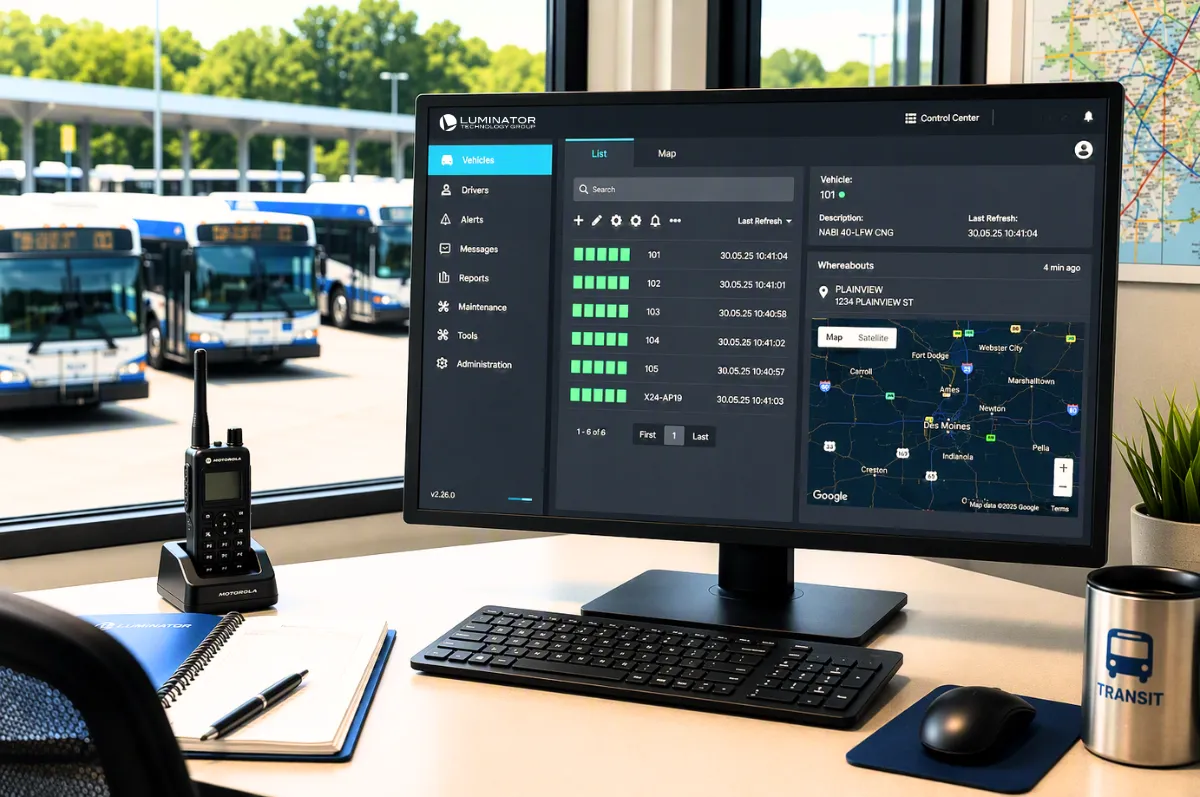
A summer like this is a stress test of relationships as much as of systems. What does it reveal about how agencies and their technology partners work together when the stakes are highest, and how does Luminator think about showing up as a partner in those moments?
A summer like this tests relationships before it tests equipment. When a system is under real load, you find out very quickly whether a supplier is a vendor or a partner.
A vendor’s job ended at the purchase order. A partner is in the room six months later asking whether the system works, and on the phone at the hard moments, sometimes literally on site.
Look at our recent work with a major Australian agency: when system strain exposed critical technical gaps, we brought the full weight of our global organization to bear. We deployed three specialized teams, from Quality Assurance in Europe, to our engineers in Brazil, to our local team in Australia, to embed with agency staff and stabilize the network.
Building a seamlessly integrated portfolio takes time, especially for a company like Luminator that has grown through both organic development and acquisition. What we can promise is total honesty. Partnerships only survive when both sides tell each other the truth, and major events are where that trust gets proven or exposed.
North America’s scale and diversity are distinctive. The size of the networks, the federal and local funding dynamics, the distances involved, all produce an operational pragmatism I admire. European systems, by contrast, often benefit from density and longer planning horizons that let standards mature. Neither is better. North America can learn from Europe’s appetite for integration and long-term standardization. Europe can learn from North America’s willingness to move, to pilot, to adapt under pressure.
Magnus Friberg, CEO, Luminator
Magnus Friberg and Luminator’s perspective across markets
Behind every smooth event are the operators and frontline staff running service under real pressure. What does supporting those people well look like during a peak like this, and how much of rider safety ultimately rests on the situational awareness of the people doing the work?
Behind every smooth event is an operator making decisions under pressure and frontline staff absorbing stress so that riders never feel it.
A great deal of safety, more than the public realizes, rests on whether those people have situational awareness and feel supported by their tools. That is why so much of what we build is aimed at the operator as much as the rider: the visibility, the video, the clarity that lets a person do a hard job well.
The lesson for agencies: you cannot deliver a safe and well-informed rider experience on the backs of people who feel unsupported. The two rise and fall together.
Having built and observed systems across Europe, the Middle East, Asia Pacific, and the Americas, what does North America do differently from other markets you know well, for better and for worse, and what could each learn from the other?
I have built and watched systems across Europe, the Middle East, Asia Pacific, and the Americas, and I resist easy generalizations, because every market reflects its own history.
That said, North America’s scale and diversity are distinctive. The size of the networks, the federal and local funding dynamics, the distances involved, all produce an operational pragmatism I admire. European systems, by contrast, often benefit from density and longer planning horizons that let standards mature.
Neither is better. North America can learn from Europe’s appetite for integration and long-term standardization. Europe can learn from North America’s willingness to move, to pilot, to adapt under pressure.
As a Swedish-born leader running a company headquartered in Texas, I live in that exchange every day, and part of Luminator’s value is that we carry lessons across those borders. The best ideas in transit do not respect geography.
Much of the market still thinks of Luminator as a hardware company. We earned that reputation nearly a century ago by building signs, displays, and communication systems. But today we work across software-driven networks built on proven technology, aimed at the three outcomes our customers care about: smarter operations, safer environments, and better rider journeys.
Magnus Friberg, CEO, Luminator
We are organizing ourselves around outcomes, not a product list. That is the throughline of what we will bring to APTA EXPO in Chicago this fall: software-driven safety and security across every environment, our latest video surveillance, and enhanced passenger communications and control across the fleet network.
The impact of events on the deployment of new technologies
Large-scale events often accelerate the adoption of new technology. Are you seeing agencies use this summer as an opportunity to pilot or scale solutions that are likely to become permanent once the event is over?
Yes, one of the more encouraging trends I see. Large events have always accelerated adoption because they give agencies a reason and a deadline to do what they already knew they should. The risk is that new capability gets framed as temporary event infrastructure, quietly switched off once the crowds leave. The agencies doing this well choose the opposite, using the event to justify investments in better passenger information, stronger onboard security, and analytics that let them see their own operation, and they intend to keep them.
By expanding capacity and multi-modal connectivity for event days, agencies are building a repeatable blueprint for future events and permanent transit infrastructure, with insights far too valuable to abandon. That is why we have multiple pilot applications in play across the industry, focused on passenger experience, rider safety, and revenue capture both on and off vehicles.
My advice to any agency is simple: don’t treat what you stood up this summer as a temporary fix. It is the foundation you need to scale. Keep the systems running, study the data, and use these capabilities to flex when ridership shifts or the next big event arrives.
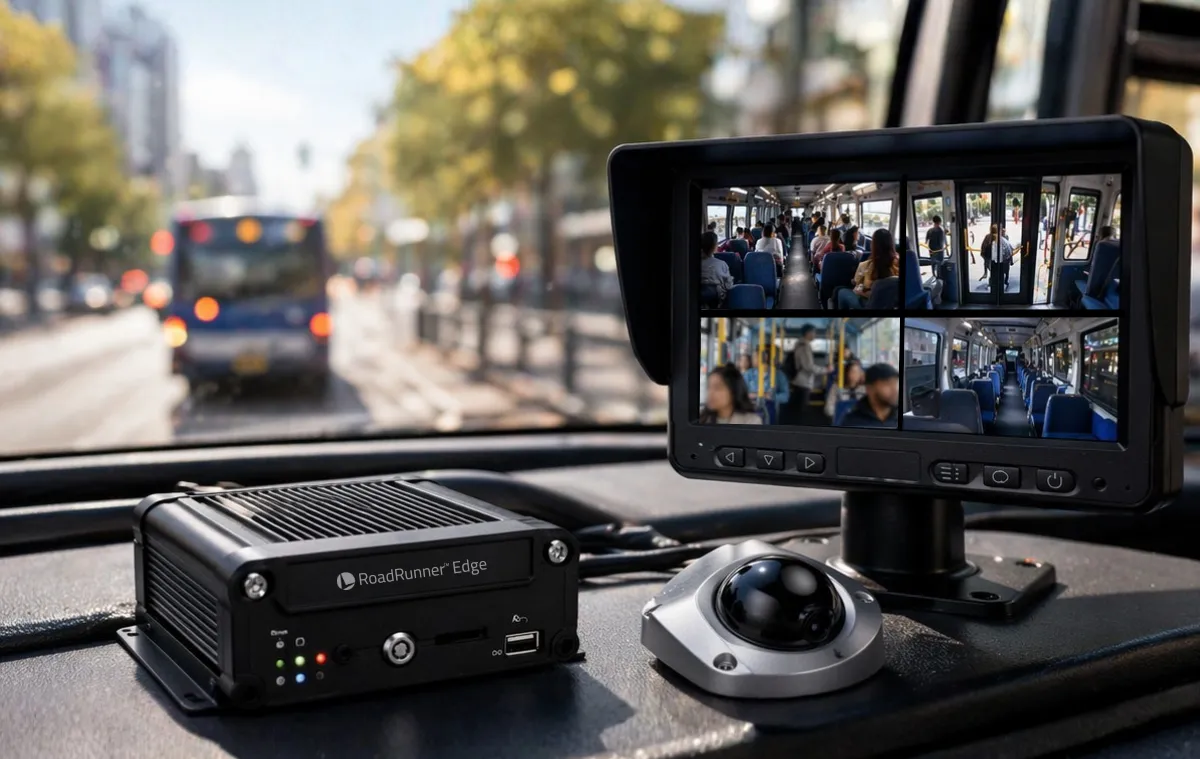
How AI can benefit public transport
Buses and transit vehicles are increasingly connected digital platforms generating vast amounts of operational and passenger data. What role do you see artificial intelligence playing in turning that data into better operational decisions, from real-time passenger information to maintenance and asset management?
I want to answer this without the hype. A modern bus is a connected platform generating enormous volumes of operational and passenger data. For most of this industry’s history, that data sat unused. The promise of AI is not novelty. It is finally turning data agencies already have into something operators, planners, and riders can feel.
In practice, that means three things for us. Better real-time passenger information, because the system can reason about what is actually happening rather than what was scheduled. Smarter maintenance and asset management, because anomaly detection can flag a problem before it becomes a failure. And safer operations, because intelligence can surface what matters from hours of video and sensor data no human could review in full.
Our newest AI applications use video to detect issues affecting rider experience inside and outside the bus. AI also analyzes driver behavior to power driver-assistance tools that make operations safer. The outcome is spotting safety issues and operational gaps faster, so agencies can act.
Our approach is deliberately grounded. We focus AI on real transit problems, we are transparent about what it can and cannot do, and we keep human judgment in the loop. AI is a tool for the people who run transit, not a replacement for them.
A tournament like this is the hardest usability test our industry ever faces, because it removes every assumption. The rider does not know the network, may not read the language, and has minutes, not months, to build confidence. The discipline for that first-time rider, clear information that stays consistent across onboard displays, stops and stations, web, and mobile apps, and stays calm under load, is exactly the discipline your daily commuter quietly depends on. So, the real lesson is not about visitors at all. The everyday rider deserves the same care we work so hard to deliver when the world is watching. Designing for the stranger is how you end up serving the regular.
Magnus Friberg, CEO, Luminator
Much of the market still thinks of Luminator as a hardware company. What do you want agencies and the wider industry to understand about where the company is now, and what will you be bringing to APTA EXPO in Chicago this October?
Much of the market still thinks of Luminator as a hardware company. We earned that reputation nearly a century ago by building signs, displays, and communication systems that agencies count on every day, and that work is still core to who we are.
But the perception is a decade behind reality. Today we work across software-driven networks built on proven technology, aimed at the three outcomes our customers care about: smarter operations, safer environments, and better rider journeys. The shift is additive, not a pivot away from the reliability that built the trust.
We are organizing ourselves around outcomes, not a product list. That is the throughline of what we will bring to APTA EXPO in Chicago this fall: software-driven safety and security across every environment, our latest video surveillance, and enhanced passenger communications and control across the fleet network.
The honest version of our story is a company with deep roots in transit technology becoming the partner agencies need beyond the hardware, across software, data, and services for the life of their assets.
Looking past the final whistle and toward Los Angeles in 2028, what do you most want the industry to carry forward and build on from this summer?
Our industry has a habit of treating major events as finish lines. They are not. They are the clearest, fairest test we will ever get, and the most important work happens after the final whistle. So, what I most want the industry to carry forward is the standard itself. The clarity, the coordination, and the visible safety we summon when the world is watching should become the everyday floor, not the memory of a special occasion.
I hope agencies keep working from a shared picture across transit, public safety, and city partners; keep the data from this summer and let it inform ordinary decisions in October and beyond; and extend the trust they earn from a first-time visitor to the commuter who rides every day.
We have two years to Los Angeles. The agencies that treat this summer as a rehearsal, not a performance, will be ready for it.