MCV unveiled new version of the C127 EV with 497 kWh LFP battery at BUS2BUS 2026 (and wins award with the H2 model)
MCV introduced the new-generation C127 EV at BUS2BUS 2026, featuring a redesigned platform with updated battery system, onboard architecture, and interior configuration. The presentation took place at Hub 27 of the Berlin trade fair, where MCV displayed its latest developments in alternatively powered city buses, including the revised battery-electric C127 EV in “Easy-Bus” configuration alongside […]
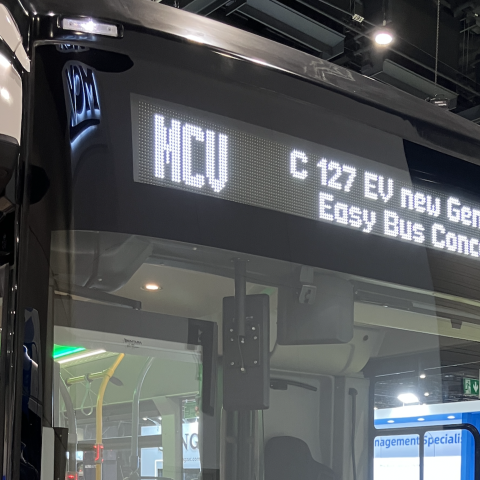
MCV introduced the new-generation C127 EV at BUS2BUS 2026, featuring a redesigned platform with updated battery system, onboard architecture, and interior configuration.
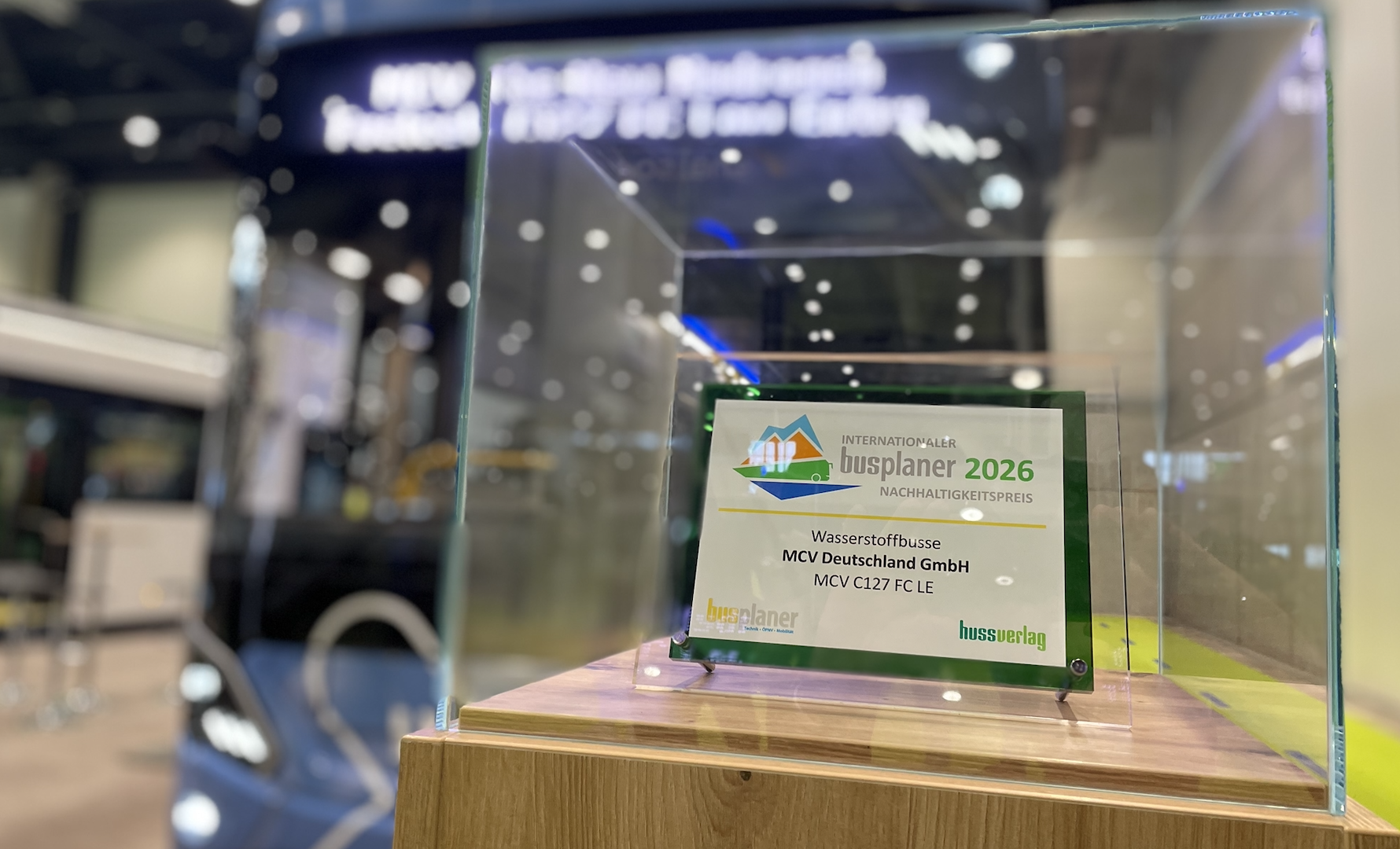
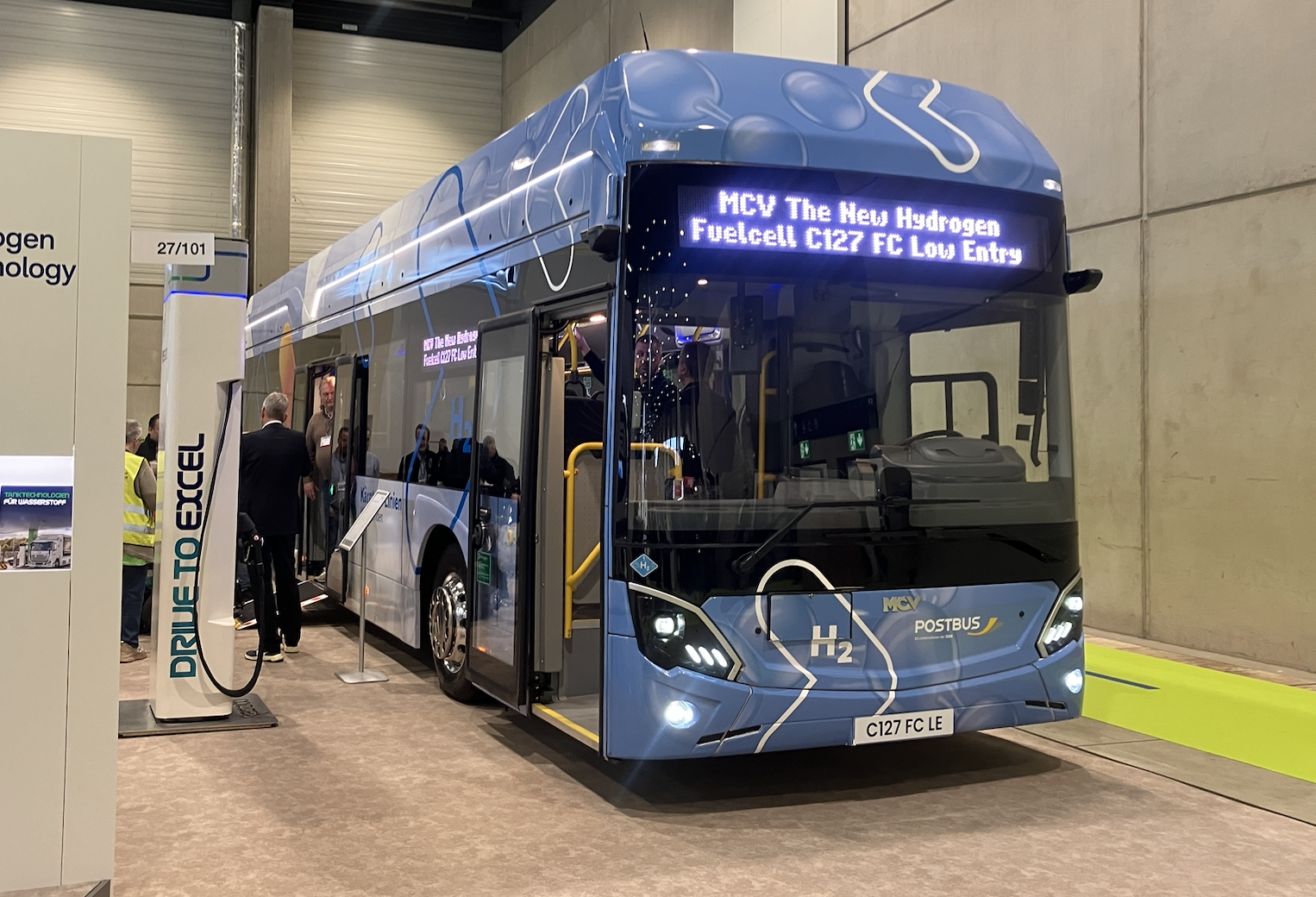
The presentation took place at Hub 27 of the Berlin trade fair, where MCV displayed its latest developments in alternatively powered city buses, including the revised battery-electric C127 EV in “Easy-Bus” configuration alongside its hydrogen-electric counterpart, the newly-launched C127 FC. The latter has been awarded with the Busplaner Sustainability Award 2026 in the hydrogen bus category.
The new C127 EV adopts a modular battery configuration based on lithium iron phosphate (LFP) technology supplied by CATL, replacing previous equipment by Forsee Power and based on NMC. The system comprises 12 battery packs, delivering a total installed capacity of 497 kWh (vs 462 previously available). Charging is enabled via a CCS 2 interface, supporting a maximum power of 150 kW.
MCV shows C127 EV with new configuration
The new C127 EV adopts a modular battery configuration based on lithium iron phosphate (LFP) technology supplied by CATL, replacing previous equipment by Forsee Power and based on NMC. The system comprises 12 battery packs, delivering a total installed capacity of 497 kWh (vs 462 previously available). Charging is enabled via a CCS 2 interface, supporting a maximum power of 150 kW.
The high-voltage system is complemented by a fully revised 24-volt onboard architecture. This includes the integration of an electronic handbrake and a newly implemented 24-volt electric power steering system, MCV states. The redesign also incorporates the drivetrain and driver’s workspace concept derived from the C127 FC LE platform: previously both motor and dashboard were sourced by ACTIA, now driveline is by Driventic (the VEDS with 410 kW of peak power available) while the dashboard carries Conti brand.
Thermal management is handled through a heat pump system using CO₂ as refrigerant, applied to the vehicle’s air conditioning system.
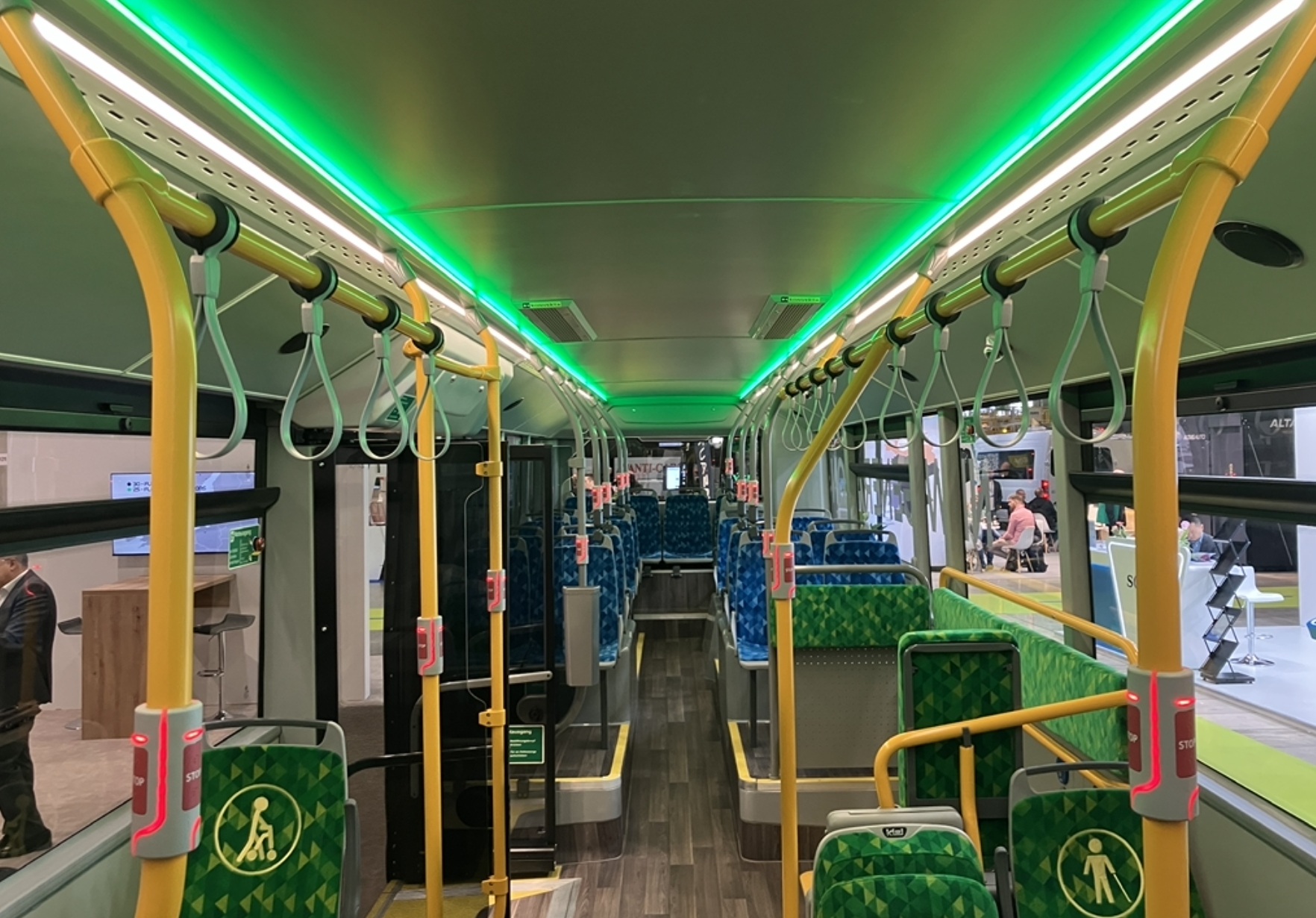
The vehicle interior is configured according to the “Easy Bus” concept, with specific design elements aimed at passenger guidance and accessibility. Visual guidance is provided through yellow floor markings directing passengers with reduced mobility toward designated seating areas.
In the front section, seating is arranged on raised platforms to facilitate standing and sitting movements. Additional seating positions allow placement of walkers adjacent to the passenger. The layout includes fold-out ramps at both doors.
At BUS2BUS 2026, MCV also received the Busplaner Sustainability Award 2026 in the hydrogen bus category for its C127 FC LE. The award was presented during an evening ceremony organized by the trade journal busplaner in Berlin, marking the seventh edition of the recognition. According to the MCV press note , the jury highlighted the vehicle’s technical configuration, including a 100 kW fuel cell system, a 117 kWh battery, and a hydrogen storage capacity of approximately 40 kg. The award was accepted by Ashraf Fawzi, Sales Director – Bus Division of MCV, and Pierre Dellori, Managing Director of MCV Deutschland GmbH.