RATP Dev wins seven-year contract to operate Greater Nancy transport network, targeting 35% electric buses by 2033
RATP Dev has been awarded a seven-year contract to operate the integrated public transport network of Greater Nancy, France, from January 2027, with plans to increase the share of electric buses and trolleybuses to 35% of the fleet by 2033. The contract, covering the period 2027–2033, was signed by RATP Dev, a subsidiary of RATP […]
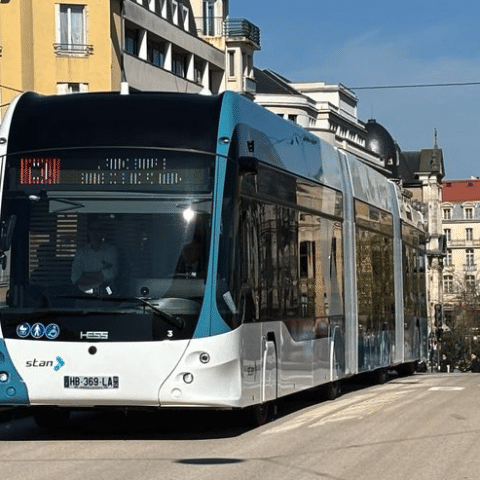
RATP Dev has been awarded a seven-year contract to operate the integrated public transport network of Greater Nancy, France, from January 2027, with plans to increase the share of electric buses and trolleybuses to 35% of the fleet by 2033.
The contract, covering the period 2027–2033, was signed by RATP Dev, a subsidiary of RATP Group, and the Syndicat Mixte des Mobilités du Bassin Nancéien (SMBN), the local mobility authority. According to the operator, the agreement brings together public transport services across four territories for the first time, serving approximately 340,000 residents and more than 20 million passenger journeys annually.
The network comprises 257 vehicles, with electric buses and trolleybuses currently accounting for 11% of the fleet. Under the new contract, RATP Dev plans to increase this share to 35% by 2033, alongside a targeted 38% reduction in CO₂ emissions over the contract period.
RATP Dev to operate 257 vehicles in Greater Nancy
The contract covers the Greater Nancy Metropolitan Area, Bassin de Pompey, Sel & Vermois, and Moselle et Madon, bringing their transport services under a single operating framework.
According to RATP Dev, the unified network will include five backbone bus routes, including one fully electric trolleybus line, alongside 30 regular bus routes, 28 school routes, two night services and five demand-responsive transport services. Park-and-ride facilities are also included in the operating perimeter.
The transition to the new operator is scheduled for 1 January 2027, with the existing services maintained during the handover. A redesigned network is expected to be introduced at the beginning of the 2027 school year, including changes to services on major transport corridors.
Further modifications are planned for 2029–2030, including the conversion of the T2 route into a low-carbon Bus Rapid Transit (BRT) line by 2030.
The contract also introduces a unified identity for public transport services across the four territories, with the existing STAN brand extended to the entire network.
A harmonised fare structure is scheduled to enter into force on 1 August 2027. Demand-responsive transport services will be consolidated under the Rivéo brand, with a single telephone number, website and dedicated mobile application.
Electric buses to reach 35% of Greater Nancy’s fleet by 2033
Fleet electrification is one of the targets included in the new operating contract. According to RATP Dev, the share of electric buses and trolleybuses will increase from 11% at the beginning of the contract to 35% by 2033. The operator has also committed to a 38% reduction in network CO₂ emissions over the seven-year period.
The contract also includes the development of digital passenger services through a Mobility as a Service (MaaS) application, integrating real-time information, mobile ticketing and demand-responsive transport bookings.
An open-payment system will allow passengers to pay directly with contactless bank cards on board vehicles. Passenger information will also be provided through centralised traffic alerts and a dedicated WhatsApp channel.
From 2027, a new assistance service will be introduced for passengers with reduced mobility or reduced independence. Additional measures include an increased presence of security personnel and mediators across the network and the extension of evening stop-on-demand services.
In brief
- Who will operate Greater Nancy’s transport network? RATP Dev, under a seven-year contract running from January 2027 through 2033.
- How large is the network? It comprises 257 vehicles and serves more than 20 million passenger journeys annually.
- What is the electrification target? Electric buses and trolleybuses are expected to represent 35% of the fleet by 2033, up from 11%.
- What infrastructure changes are planned? The T2 route is scheduled to be converted into a low-carbon BRT line by 2030.
Hiba Farès, Chairwoman of the Executive Board of RATP Dev, stated: “We are delighted to embark on this journey alongside the Syndicat Mixte des Mobilités du Bassin Nancéien. This project reflects a bold and inspiring ambition: to bring mobility services together across a single functional urban area, creating stronger connections between communities, residents and opportunities. Beyond building a unified network, it embodies a powerful vision of cooperation and regional cohesion. We are proud to dedicate our expertise, energy and commitment to this shared ambition and, together with all stakeholders, help shape the mobility solutions of tomorrow.”