Zenobē closes $400m financing platform for zero-emission fleets in Australia and New Zealand
Zenobē announces it has secured a $400 million debt facility to deploy a multi-site fleet electrification financing platform across Australia and New Zealand. The transaction introduces a financing structure designed to support the rollout of zero-emission transport across public transport networks and commercial fleets in the region. The platform is backed by a syndicate of […]
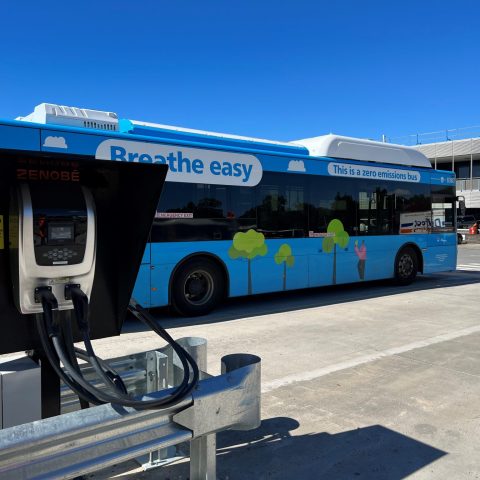
Zenobē announces it has secured a $400 million debt facility to deploy a multi-site fleet electrification financing platform across Australia and New Zealand.
The transaction introduces a financing structure designed to support the rollout of zero-emission transport across public transport networks and commercial fleets in the region. The platform is backed by a syndicate of international banks and is structured to fund multiple projects under a single framework.
The announcement follows Zenobē’s previous activity in the region, including a $100 million truck electrification programme disclosed in March 2026. The company has also implemented similar financing structures in Europe and the United Kingdom, where its EV financing platform exceeds $1.8 billion (including a latest 980million euros round for 1,200 zero emission buses). Also this month, Zenobē has also signed a €120 million leasing framework for electric buses in Spain with Vectalia. And one year ago a €325M debt facility from a syndicate of local and global banks was achieved, with goal of funding the expansion of its electric fleets-as-a-service offering in Europe.
Zenobe and financing model for fleet electrification
The platform is defined as the first integrated, multi-site heavy vehicle fleet electrification financing structure established in Australia and New Zealand. It combines financing with Zenobē’s operational and technical services, including depot electrification, battery and vehicle leasing, mid-life battery replacement, and operational optimisation.
In brief
- What is the value of the financing platform? The platform is expected to support over $400 million in investment.
- What does the platform include? It integrates financing with depot electrification, vehicle and battery leasing, and operational services.
- Where are the first projects located? Initial deployments are in Leichhardt, Dunedin, West Auckland, and Greater Wellington.
- Is this Zenobē’s first such platform? It is the first of its kind in Australia and New Zealand, following similar models in Europe and the UK.
The structure is set to enable fleet operators to access electrification services without direct upfront capital expenditure. The financing model incorporates long-term leasing of chassis and batteries and includes lifecycle services within a single contractual framework.
The platform is structured to raise debt centrally and deploy it across multiple electrification projects. This configuration allows financing to be arranged at scale rather than on a standalone basis for each fleet deployment.
Lenders’s list is made of MUFG Bank (Agent/Security Trustee), Credit Agricole CIB, Siemens Bank, Sumitomo Mitsui Banking Corp, Societe Generale.
Zenobe, four operational projects already in service in Australia and New Zealand
At launch, the financing platform includes four operational projects already in service. These are located in Leichhardt in Australia and in Dunedin, West Auckland, and Greater Wellington in New Zealand.
The funding platform is expected to support more than $400 million in investment across the region. The deployment model covers both public transport applications and commercial fleet electrification.
Gareth Ridge, Country Director, Australia and New Zealand at Zenobē, said: “This platform represents a major step forward for zero-emission transport in Australia and New Zealand. By combining proven operational projects with a strong pipeline into a single financing structure, we’re able to bring greater scale, certainty and cost efficiency to fleet electrification. Our model removes many of the traditional barriers operators face, from upfront capital costs to technology risk, while providing a fully integrated, end-to-end solution. This allows our customers to focus on delivering cleaner, more reliable transport services, while we manage the complexity. With strong momentum already underway across both markets, this platform positions us to accelerate investment and play a leading role in decarbonising transport across the region.”