Alexander Dennis to introduce SAE Level 4 autonomous buses in Cambridge under £3.88 million project
Alexander Dennis will introduce full SAE Level 4 autonomous driving capability to its Enviro100AEV and Enviro200AEV electric buses under the £3.88 million Commercialising Connector project in Cambridge, UK. The programme, announced by Alexander Dennis in mid-August, has received UK Government grant funding and will be led by the Greater Cambridge Partnership. It builds on the […]
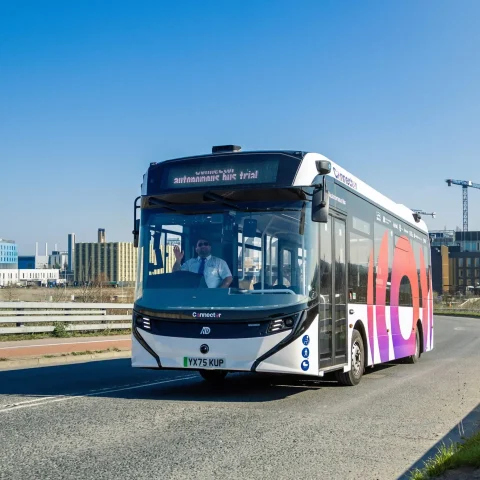
Alexander Dennis will introduce full SAE Level 4 autonomous driving capability to its Enviro100AEV and Enviro200AEV electric buses under the £3.88 million Commercialising Connector project in Cambridge, UK.
The programme, announced by Alexander Dennis in mid-August, has received UK Government grant funding and will be led by the Greater Cambridge Partnership. It builds on the existing Connector project, which has already introduced three Alexander Dennis Enviro100AEV autonomous buses on a route serving the Cambridge Biomedical Campus.
The new phase will involve the technical upgrade of an existing Enviro100AEV and the introduction of a larger Enviro200AEV electric single-decker, both equipped for SAE Level 4 operation. The project will also investigate the deployment of autonomous buses on Cambridgeshire’s planned busway network, including a trial on the southern section of the existing guided busway.
According to Alexander Dennis, Commercialising Connector will examine the transition from autonomous bus trials to regular public transport operations, with activities covering passenger experience, ticketing, safety and accessibility.
Alexander Dennis and Fusion Processing were also involved in Scotland’s CAVForth autonomous bus project, which began carrying passengers in May 2023 with five Enviro200AV buses operated by Stagecoach on a 14-mile route between Fife and Edinburgh Park. The subsequent CAVForth2 programme included plans to extend the route towards Dunfermline and introduce an autonomous Enviro100AEV equipped with an upgraded Fusion Processing CAVStar system. However, the original CAVForth service was discontinued in February 2025, after Stagecoach reported passenger numbers below the levels required to continue operations beyond the project’s scheduled end.
Enviro100AEV and Enviro200AEV to receive Level 4 autonomous driving technology
Under the programme, Alexander Dennis and autonomous driving technology partner Fusion Processing will upgrade one of the three Enviro100AEV buses already deployed in Cambridge.
The vehicle, owned by Mistral Group and operated by Whippet, will be fitted with dual-redundant actuator technology to achieve full SAE Level 4 capability. The project will also introduce an Enviro200AEV electric single-decker equipped to the same technical standard.
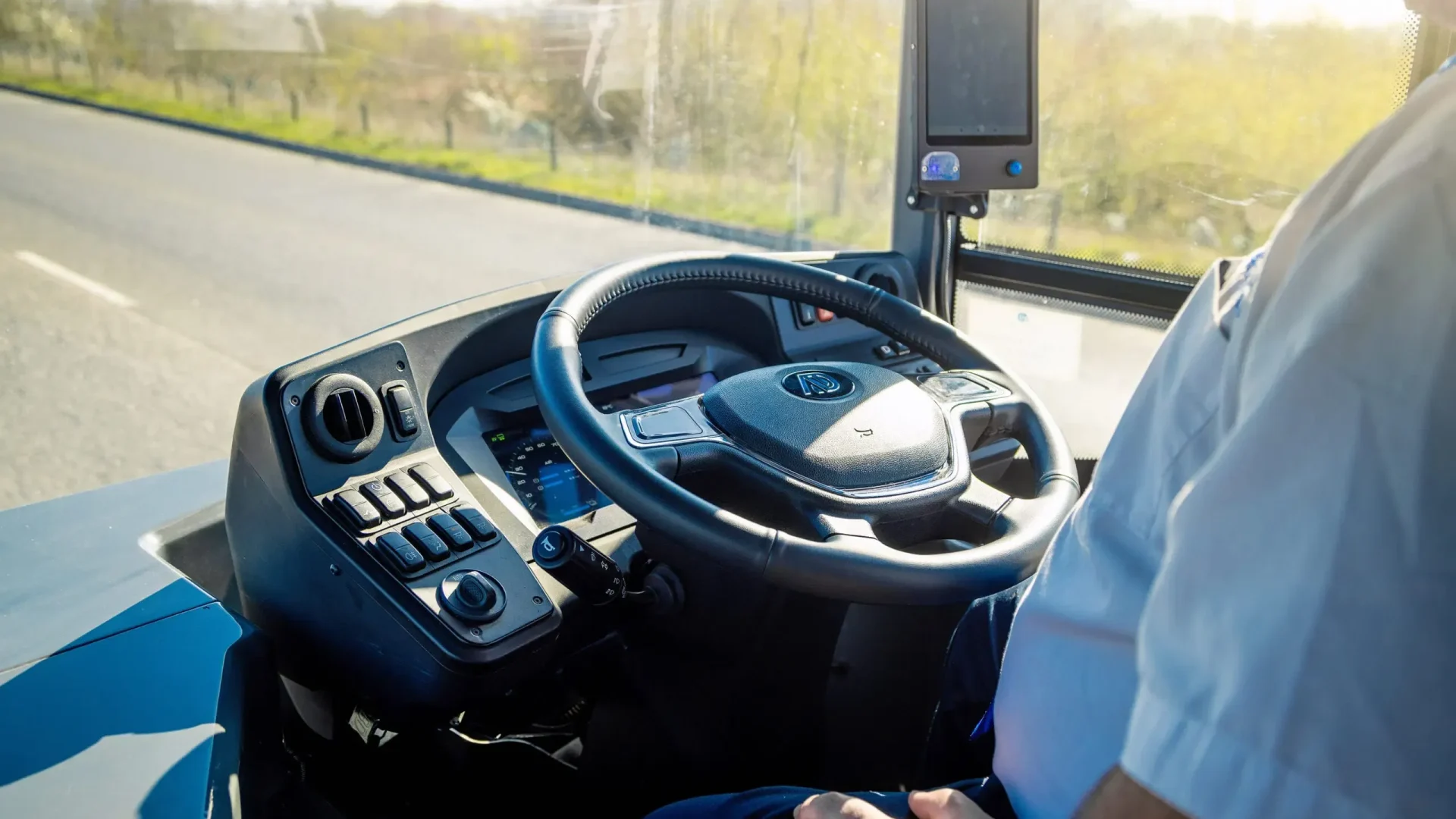
SAE Level 4 refers to automated driving systems capable of performing the complete driving task without human intervention within defined operational conditions. The upgraded vehicles will be used to demonstrate no-user-in-charge operation, in which no person is required to be responsible for driving the vehicle while the automated system operates within its specified conditions.
The existing Connector programme has already placed three Enviro100AEV buses into service on a route serving the Cambridge Biomedical Campus. The new grant funding will support the extension of current services and further testing of autonomous driving technology in public transport applications.
The programme will collect evidence on customer experience, ticketing arrangements and the requirements for safe and accessible operation. Alexander Dennis states that the activities will address the practical arrangements needed to introduce self-driving buses beyond trial projects.
£3.88 million UK Government funding
Commercialising Connector has been awarded £3.88 million in grant funding under the UK Government’s £150 million CAM Pathfinder programme, delivered in partnership with Zenzic and Innovate UK.
The project consortium is led by the Greater Cambridge Partnership and comprises Alexander Dennis, Fusion Processing, Anthrometric, Whippet and Ticketer.
Alongside the vehicle upgrades, Commercialising Connector will examine the use of autonomous buses on Cambridgeshire’s planned busways. A trial is scheduled to take place on the southern section of the existing guided busway, extending the scope of the programme beyond the Cambridge Biomedical Campus route.
The project will also address operational aspects of automated bus services, including passenger interaction, ticketing and accessibility requirements.
In brief
- How much funding has Commercialising Connector received? The project has been awarded £3.88 million under the UK Government’s £150 million CAM Pathfinder programme.
- Which autonomous buses will be deployed? An upgraded Alexander Dennis Enviro100AEV and a larger Enviro200AEV, both equipped for SAE Level 4 operation.
- Where will the autonomous buses be tested? In Cambridge, including services serving the Biomedical Campus and a planned trial on the southern guided busway.
- Who are the project partners? Greater Cambridge Partnership, Alexander Dennis, Fusion Processing, Anthrometric, Whippet and Ticketer.
Jamie Wilson, Head of Concepts & Advanced Engineering for Alexander Dennis, said: “Today’s confirmation of the Commercialising Connector project is fantastic news as it will continue the great work delivered by the Greater Cambridge Partnership and project partners. With the help of this latest UK Government funding, we will be able to deliver the most advanced self-driving buses in the country yet and develop them into a commercial proposition that can enhance and complement real-world bus services. We have a window of opportunity to develop and enhance the core expertise for connected and automated vehicles on a domestic level, not only securing job opportunities in Britain but also ensuring sovereignty over this key technology for transport.”
Mark Cracknell, Programme Director at Zenzic, said: “Today’s announcement builds on all of the fantastic progress made by CAM Pathfinder so far and puts the UK firmly in the driving seat when it comes to developing and deploying the CAM solutions of tomorrow. From construction to public roads and airside, these projects have the potential to transform UK businesses, create and safeguard hundreds of jobs and further strengthen the domestic supply chain.”