VVTA has unveiled 13 hydrogen buses, interim fueling station and new branding
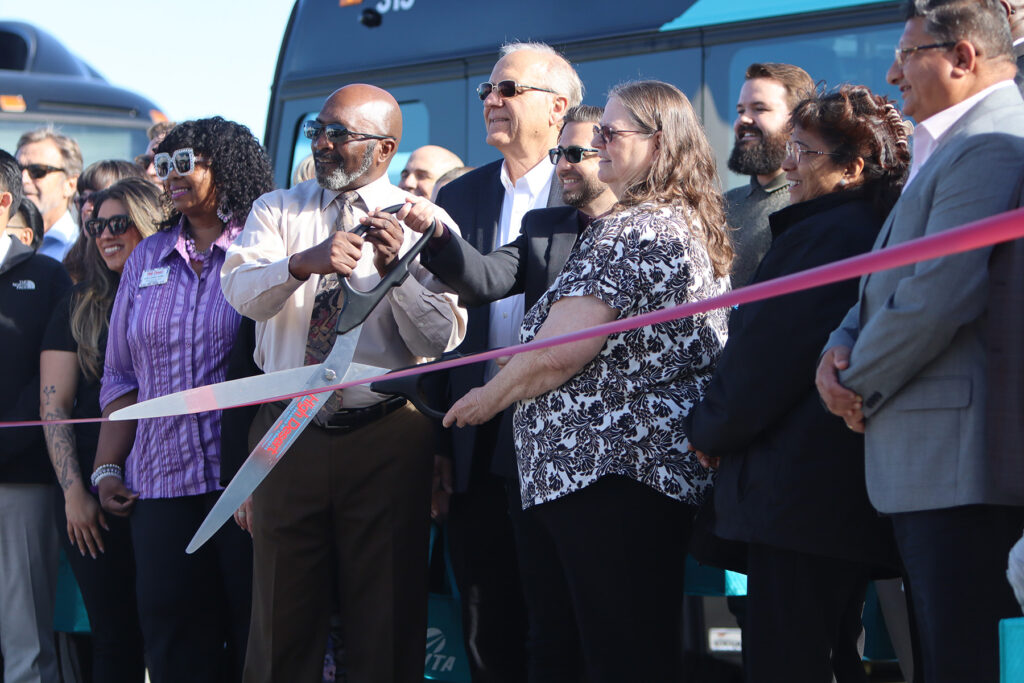
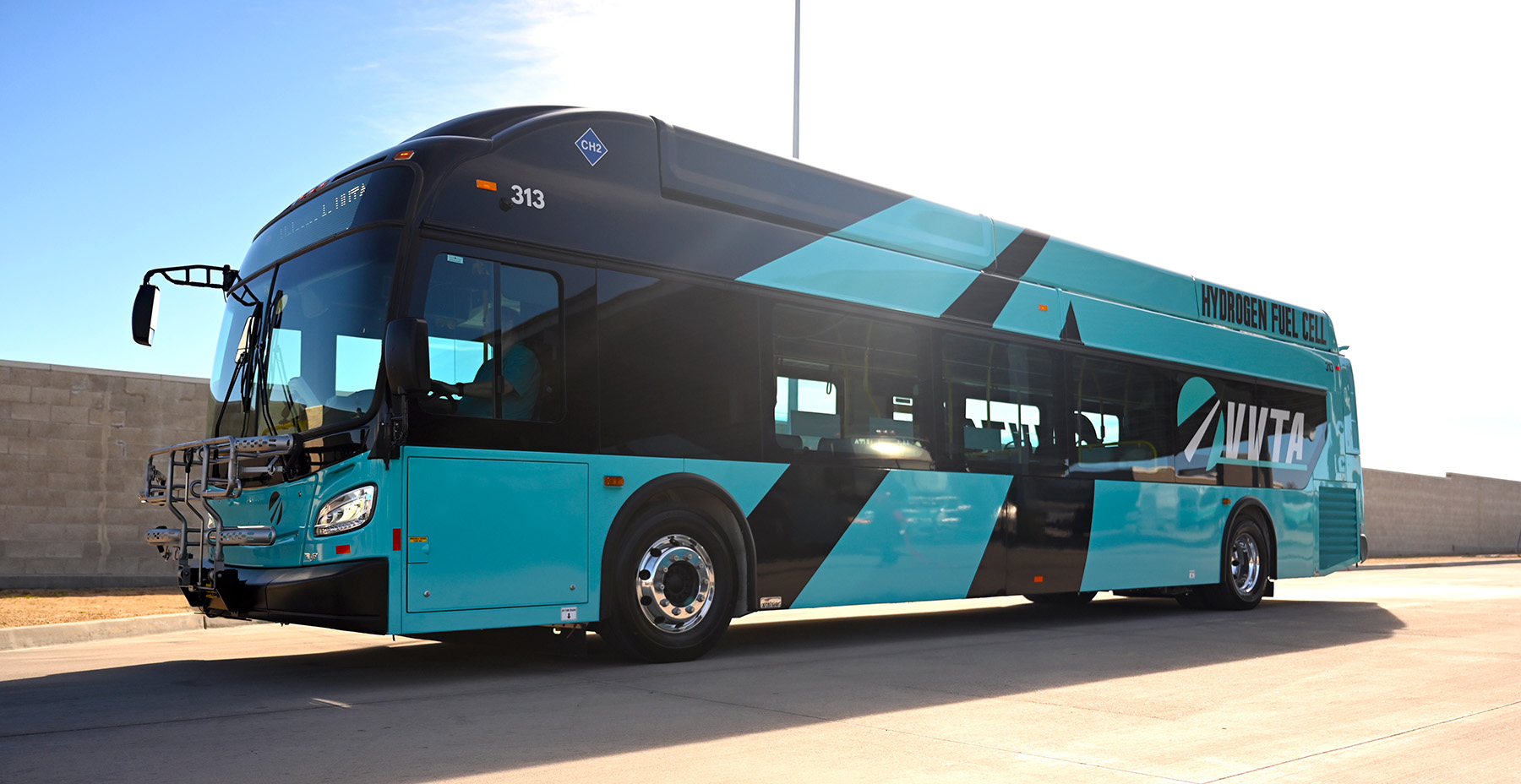
Victor Valley Transit Authority, in California, has introduced in mid-January 13 hydrogen buses (by New Flyer), an interim hydrogen fueling station and new agency branding during a public ceremony in California’s High Desert. The unveiling took place at a ribbon-cutting event attended by local, regional and state representatives, industry partners and members of the Greater […]
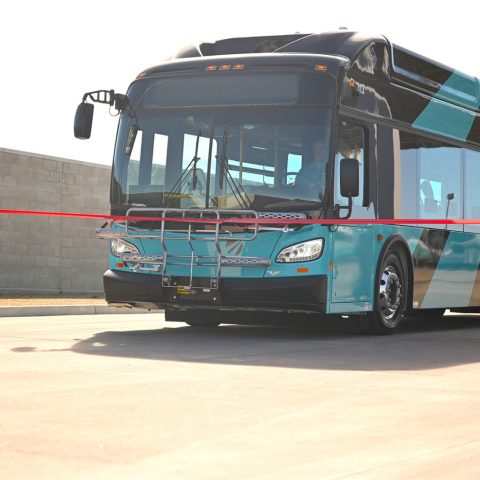
Victor Valley Transit Authority, in California, has introduced in mid-January 13 hydrogen buses (by New Flyer), an interim hydrogen fueling station and new agency branding during a public ceremony in California’s High Desert.
The unveiling took place at a ribbon-cutting event attended by local, regional and state representatives, industry partners and members of the Greater High Desert Chamber of Commerce, according to a press note released by VVTA. The initiative formally combines fleet deployment, refueling infrastructure and the transition to the VVTA brand.
New Flyer hydrogen buses have been ordered so far in California by Orange County Transportation Authority (OCTA) and San Francisco Bay Area’s AC Transit. In California all new sales of transit buses must be zero-emission by 2030 in the state.
VVTA hydrogen buses and refueling infrastructure
Victor Valley Transit Authority is the public transportation agency serving the High Desert region of Southern California. The authority operates fixed-route, demand-response and commuter services across Victor Valley, including the cities of Victorville, Hesperia, Apple Valley and Adelanto, in addition to local and regional mobility within San Bernardino County and connections to surrounding areas.
According to the latest figures on zero-emission bus deployment outlined in Zeroing in on Zero-Emission Buses – The U.S. Advanced Technology Transit Bus Index, published by CALSTART in March 2025, the United States had 7,028 full-size zero-emission transit buses funded, ordered, delivered or deployed as of July 2024. This represents a 14% year-on-year increase, with battery-electric buses accounting for the majority of the fleet, while hydrogen fuel cell buses recorded a 55% increase compared with 2023. California continues to lead the nation with 2,285 full-size ZEBs, accounting for 32% of the national total.
The project received funding and program support from the Federal Transit Administration, San Bernardino County Transportation Authority, CalACT, California Air Resources Board and GO_BIZ, alongside other regional and local partners. Industrial contributors include New Flyer, Linde, ZeroMission, Ballard, GMV Syncromatics and Keolis North America, that was awarded the concession in 2020, according to the VVTA press note.
VVTA stated that the hydrogen fuel cell buses add to a fleet portfolio that has included renewable natural gas buses for several decades and battery-electric buses since 2019. The same event marked the official launch of the VVTA brand, completing the transition from the “Victor Valley Transit” name.
“This is an exciting and important day for our agency and our region,” said James Noble, Chair of the VVTA Board of Directors. “What we are celebrating today represents years of collaboration, planning, and partnership. It reflects VVTA’s commitment to innovation and our role as a regional leader in moving the High Desert toward a cleaner, more connected future that benefits our riders and our communities.”
VVTA CEO Nancie Goff says: “By introducing 13 hydrogen fuel cell buses and an interim fueling station, VVTA is advancing zero-emission transit, cleaner air, and a more sustainable future. This milestone, along with our new VVTA branding, reflects the power of strong partnerships and our commitment to investing wisely today for generations to come.
Chief Maintenance Officer Dustin Strandberg stated: “VVTA has a long-standing history of leadership in clean transportation. For decades, our buses have operated on renewable natural gas, and in 2019, we further expanded our commitment to zero-emission solutions with battery electric buses. Transitioning to hydrogen fuel cell technology is a natural next step, one that aligns with our operational needs, our desert environment, and our long-term vision for a more sustainable future.”