Battery electric vs hydrogen buses: what matters when choosing?
Battery electric buses lead the overall assessment in a new international study based on the views of 34 experts. Hydrogen gains ground when rapid refuelling and operational flexibility carry greater weight. For operators and authorities, the findings show why technology selection needs to bring together service requirements, energy supply, costs and public support.
A contribution by Mohammad Sadrani (University of Twente), Mirko Giagnorio (Sapienza University of Rome), and Alejandro Tirachini (Technische Universität Braunschweig and Universidad de Chile).
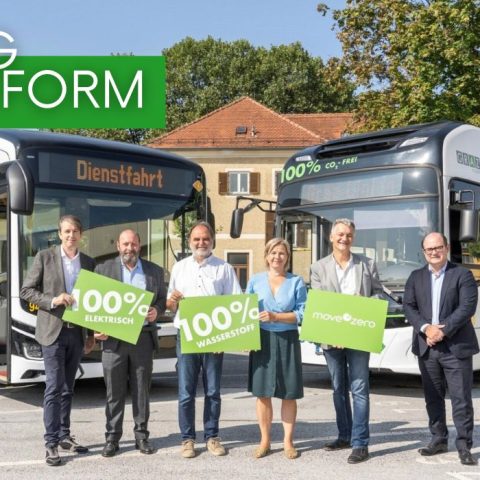
Opening picture: credit Holding Graz/Foto Fischer
Choosing a new energy bus technology commits an operator to an energy supply chain, depot infrastructure and an operating model for years. A new study published in Transportation Research Part A: Policy and Practice offers a structured way to assess that commitment. Its authors are based at the University of Twente (the Netherlands), Sapienza University of Rome (Italy), TU Braunschweig (Germany) and Universidad de Chile (Chile).
Building on earlier research on barriers to zero-emission bus adoption, previously featured in Sustainable Bus, the study compares battery-electric buses, hydrogen fuel cell buses and fleets combining both. It draws on assessments from 34 international experts, including 19 academics and 15 professionals from operators, manufacturers, consultancies and public institutions. They assessed 31 criteria across six dimensions (economic, institutional, technological, environmental, managerial and social), assigning weights to the dimensions and criteria and rating the three fleet options against the criteria.
Costs, institutions and technology drive the decision
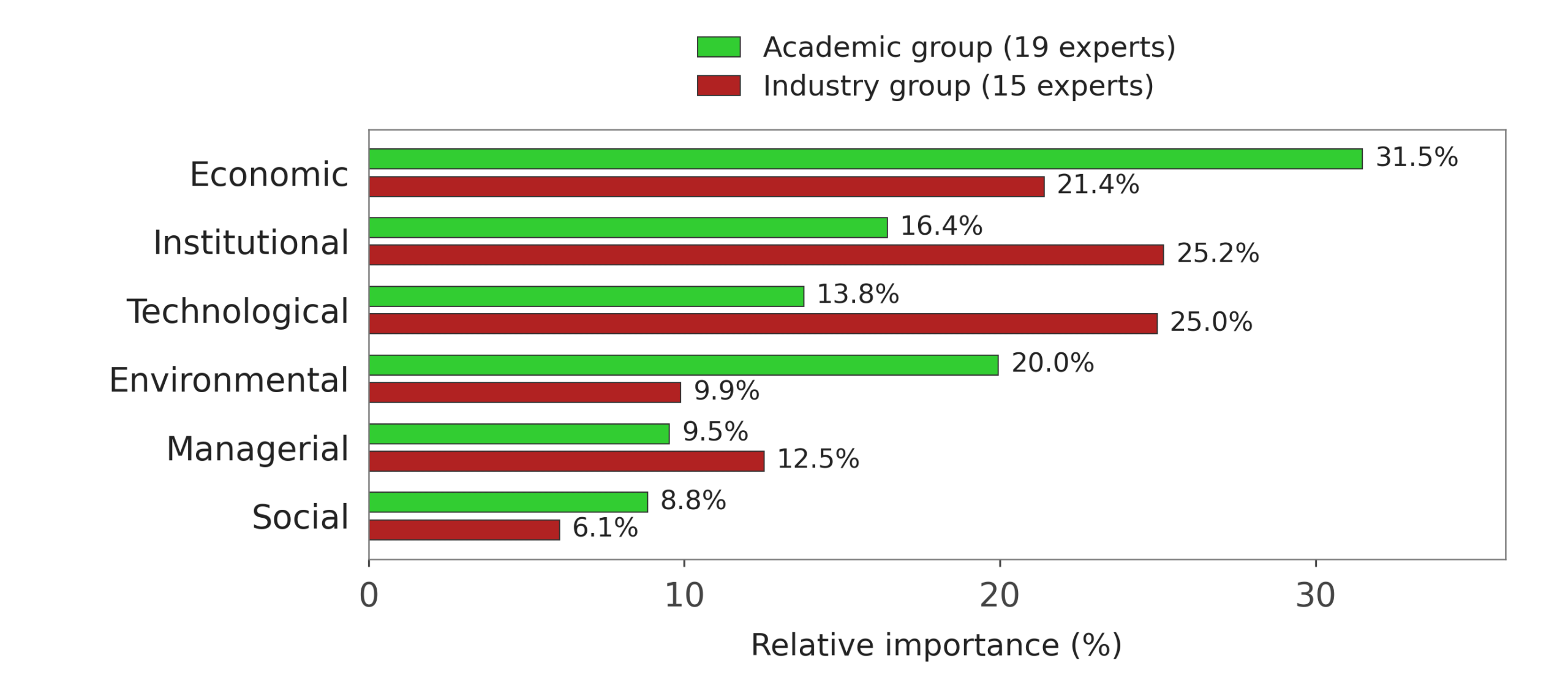
Economic factors receive the highest overall weight, at around 26%, followed by institutional factors at 21% and technological factors at 20%. These percentages describe the relative importance assigned to each dimension in the assessment. They are not shares of fleet expenditure.
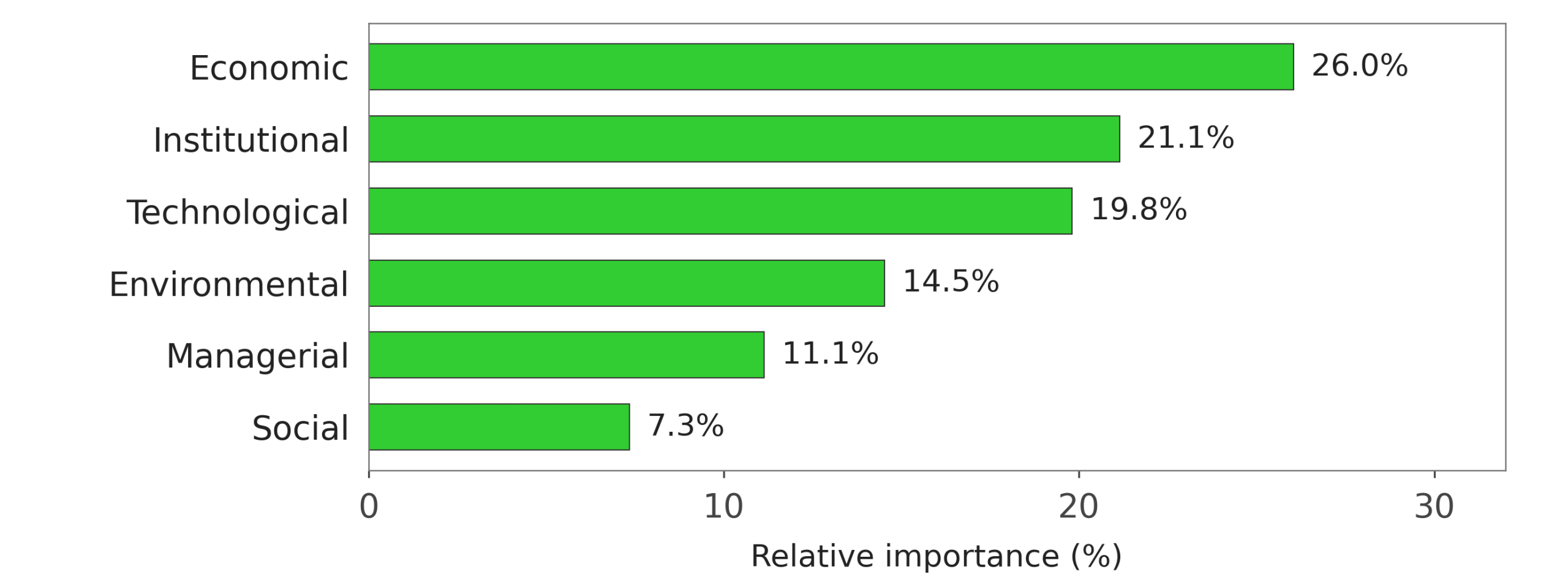
Relative importance of the six decision dimensions in the overall assessment. Weights are expressed as percentages of the total, with values rounded. Source: Sadrani, Giagnorio and Tirachini (2026), Table 3. Redrawn under CC BY 4.0.
Where battery electric and hydrogen buses fit
Battery-electric buses rank first in the combined assessment, followed by hydrogen fuel cell buses and the mixed-fleet option. Experts rate battery electric buses more favourably on most criteria, including energy costs, industry maturity and maintenance and safety procedures. Hydrogen fuel cell buses score better on driving range, refuelling time and scheduling complexity. The table below compares the two technologies across all 31 criteria.
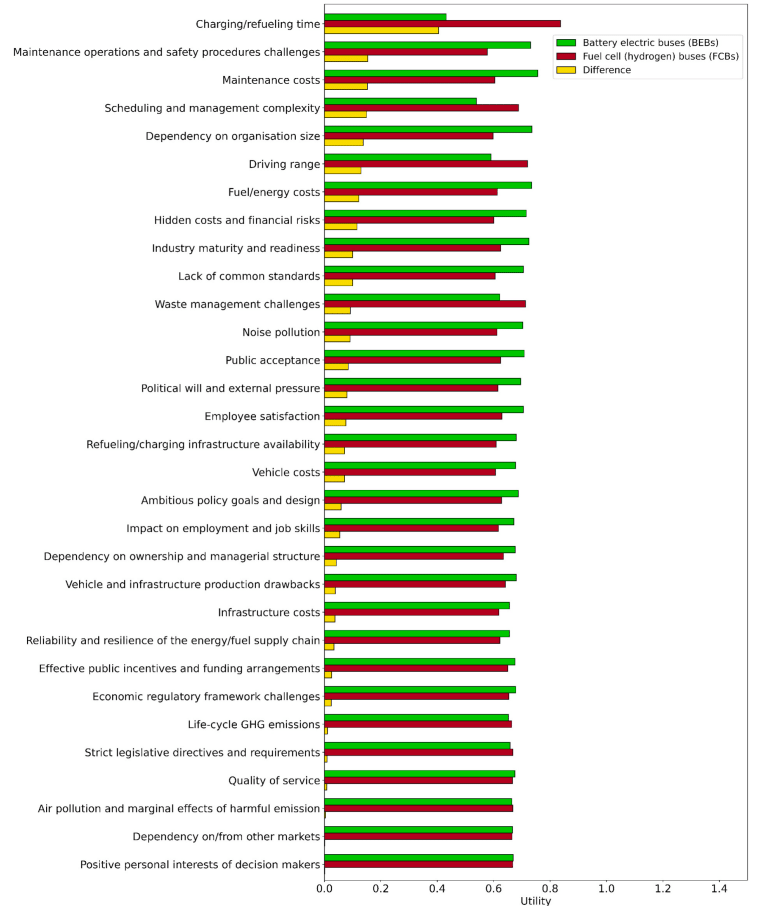
The sensitivity analysis makes this trade-off concrete. Giving vehicle costs less importance does not displace battery-electric buses from first place in the scenarios tested. Giving charging and refuelling time substantially greater importance can put hydrogen first. This is a change in decision priorities, rather than a forecast of future bus prices.
The operational implication is to examine actual duty cycles. Where daily mileage and available charging windows are compatible with battery operation, the overall result supports considering battery-electric buses as a strong starting option. Where rapid turnaround and extended range are critical, hydrogen merits closer assessment, provided dependable fuel supply and refuelling capacity can be secured. The study does not establish a universal mileage threshold separating the two technologies.
Battery-electric buses rank first in the combined assessment, followed by hydrogen fuel cell buses and the mixed-fleet option. Experts rate battery electric buses more favourably on most criteria, including energy costs, industry maturity and maintenance and safety procedures. Hydrogen fuel cell buses score better on driving range, refuelling time and scheduling complexity.
Industry and academia place different priorities first
The panel does not speak with one voice. While academics favour battery-electric buses overall, the industry group favours hydrogen fuel cell buses. Their underlying priorities also differ: academics place greater weight on economic and environmental factors, while the industry group prioritises institutional and technological factors.
This finding concerns the professionals surveyed, rather than the industry as a whole. Its practical value is to make potential disagreements visible before procurement. An assessment focused on lifetime costs and emissions may lead to a different choice from one giving greater weight to implementation constraints. Operators and authorities need to agree explicitly on those priorities.
Mixed fleets need a clear operational role
Combining battery electric and hydrogen buses may help cover different service requirements, but the mixed-fleet option ranks slightly below both single-technology alternatives in the overall assessment. Parallel infrastructure, separate maintenance and training requirements, and reduced economies of scale may offset some of the flexibility benefits. A mixed fleet can still make sense where routes or energy constraints justify complementary roles, but the study does not calculate an optimal battery-to-hydrogen fleet split.
How to apply the findings before procurement
For a local application, the framework provides a useful sequence of decisions:
- Define the service and depot requirements. Check daily vehicle duties, charging windows, grid capacity, depot space and hydrogen availability. Establish which options can reliably deliver the timetable.
- Compare the complete investment and operating package. Include vehicles, infrastructure, energy, maintenance and component replacement, and clarify who bears the main financial and supply risks.
- Agree priorities with the actors responsible for delivery. Involve operations and maintenance teams, the transport authority, energy and infrastructure providers, suppliers and relevant user representatives. Make differences in priorities explicit.
- Test whether the preferred option remains credible as assumptions change. Revisit costs, energy availability and public funding, and check how strongly the decision depends on rapid turnaround or driving range.
Environmental assessment should also cover the source of electricity or hydrogen and the production and end-of-life treatment of components. Eliminating exhaust emissions does not by itself establish the lowest life-cycle climate impact.
The results provide a benchmark based on expert judgement, not a statistically representative verdict for every city. The transferable contribution is the structured comparison: local stakeholders can reassess the criteria and technology performance for their own network. The questionnaire and calculation code are provided as supplementary material to support that exercise.
For public authorities, this means aligning vehicle funding with infrastructure delivery and clear contractual responsibilities. For operators, it means checking that the selected technology can deliver the timetable with a dependable energy supply at an affordable lifetime cost.
Sadrani, M., Giagnorio, M. and Tirachini, A. (2026). A decision-support framework for selecting new energy bus technologies: Assessing battery electric and hydrogen fuel cell buses. Transportation Research Part A: Policy and Practice, 213, 105201.
https://doi.org/10.1016/j.tra.2026.105201
Open access under the Creative Commons Attribution 4.0 licence.