Big Bus Wien plans to operate 16 electric double-deck buses by the end of 2025 (as 6 more are coming)
Sightseeing operator Big Bus is transitioning its fleet to battery-electric vehicles. Ten electric double-deck buses are already in daily operation, and the fleet is scheduled to expand to 16 by the end of 2025, according to the Austrian Federal Ministry for Innovation, Mobility and Infrastructure. Trade agency electrive notes that “back in 2024, Big Bus […]
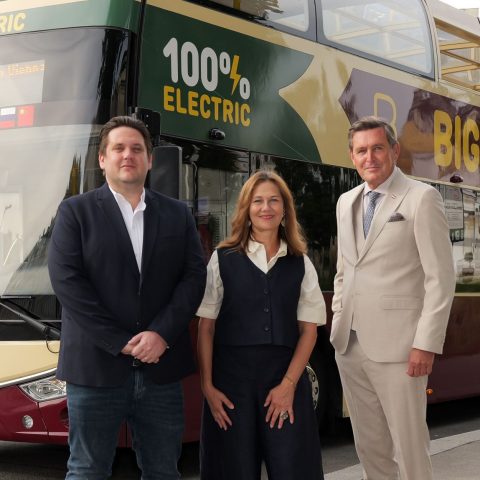
Sightseeing operator Big Bus is transitioning its fleet to battery-electric vehicles. Ten electric double-deck buses are already in daily operation, and the fleet is scheduled to expand to 16 by the end of 2025, according to the Austrian Federal Ministry for Innovation, Mobility and Infrastructure.
Trade agency electrive notes that “back in 2024, Big Bus Tours announced its intention to add another 40 electric buses to its fleet. These were to enter service in London, Paris and Vienna. The fleet expansion consists of 20 new electric buses from Chinese manufacturer Ankai for Paris and Vienna, as well as 20 former combustion engine buses from the existing fleet, which are to be converted to electric drive and then put back into service in London. The conversion is being carried out by specialist Equipmake”.
Electric sightseeing buses to Vienna
The Austrian project, titled Big Bus goes electric, has received €1.2 million in funding through the Austrian Research Promotion Agency (FFG), provided by the Federal Ministry for Innovation, Mobility and Infrastructure and co-financed by the European Union under NextGenerationEU.
The initiative is part of eMove Austria, the federal program launched in July 2025 to accelerate the deployment of zero-emission buses and charging infrastructure. The next funding round opens in September with more than €80 million available. Subsidies cover up to 60% of the price difference between a conventional bus and an electric bus, as well as 60% of charging infrastructure costs.
Austrian Minister for Mobility Peter Hanke commented: “With eMove Austria, we are driving e-mobility forward on a massive scale. The fact that Vienna’s famous sightseeing buses are now also electric shows how firmly electric mobility has already become established in everyday life. This not only makes an important contribution to climate protection, but also sends a strong signal for innovation and sustainable tourism in Austria. In just a few weeks, we will be launching our next round of funding for e-buses – with over 80 million euros going directly into the mobility transition.”