More than 20 countries surpass 50% electric city bus sales as e-buses head for 60% of global market by 2030
Electric buses remain the leading electrified vehicle segment globally, with more than 20 countries already recording majority-electric municipal bus sales. Just-released BloombergNEF’s Electric Vehicle Outlook 2026 identifies city buses as the most advanced segment in road transport electrification, with electric adoption rates exceeding those of passenger cars, vans, trucks and two-wheelers across multiple markets. According […]
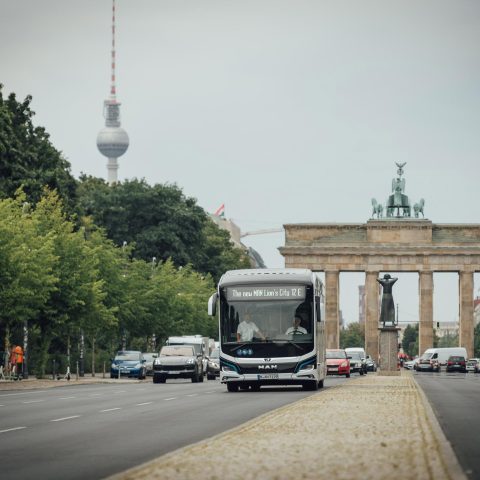
Electric buses remain the leading electrified vehicle segment globally, with more than 20 countries already recording majority-electric municipal bus sales.
Just-released BloombergNEF’s Electric Vehicle Outlook 2026 identifies city buses as the most advanced segment in road transport electrification, with electric adoption rates exceeding those of passenger cars, vans, trucks and two-wheelers across multiple markets. According to the report, more than half of municipal bus sales were already electric in over 20 countries during 2025.
Zero-emission buses reached 60% of EU city bus market in 2025, while one quarter of the total market (then including coaches) was covered by ‘electrically-chargeable’ buses.
Electric bus sales continue to outpace other vehicle segments
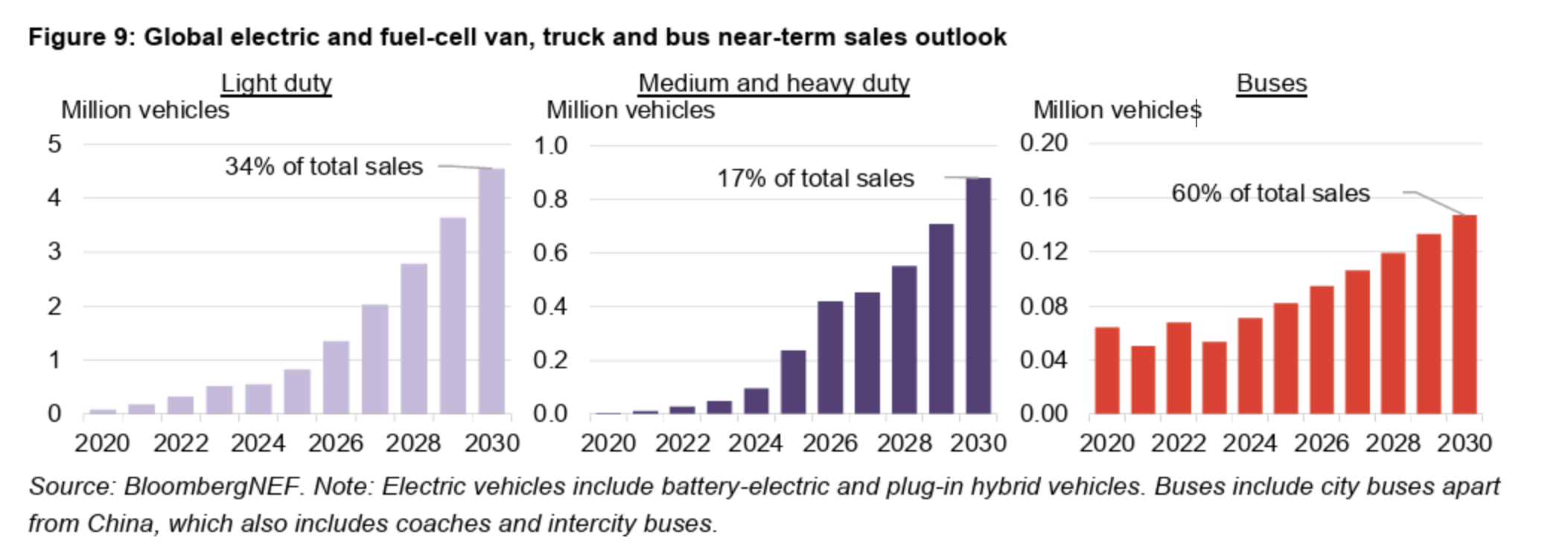
BloombergNEF forecasts that electric and fuel cell buses will account for approximately 60% of global bus sales by 2030, a significantly higher share than medium- and heavy-duty trucks, expected at 17%, and light commercial vehicles, projected at 34%. The near-term sales outlook presented in the report shows buses maintaining the highest electrification rate among all commercial vehicle categories.
The report highlights that city buses are already leading electrification globally. Municipal transit operators in more than 20 countries recorded electric buses representing over 50% of total city bus sales in 2025. BloombergNEF adds that most markets are on track to reach fully zero-emission city bus sales by 2040, while some regions, including the Nordic countries, could achieve this milestone before the end of the current decade.
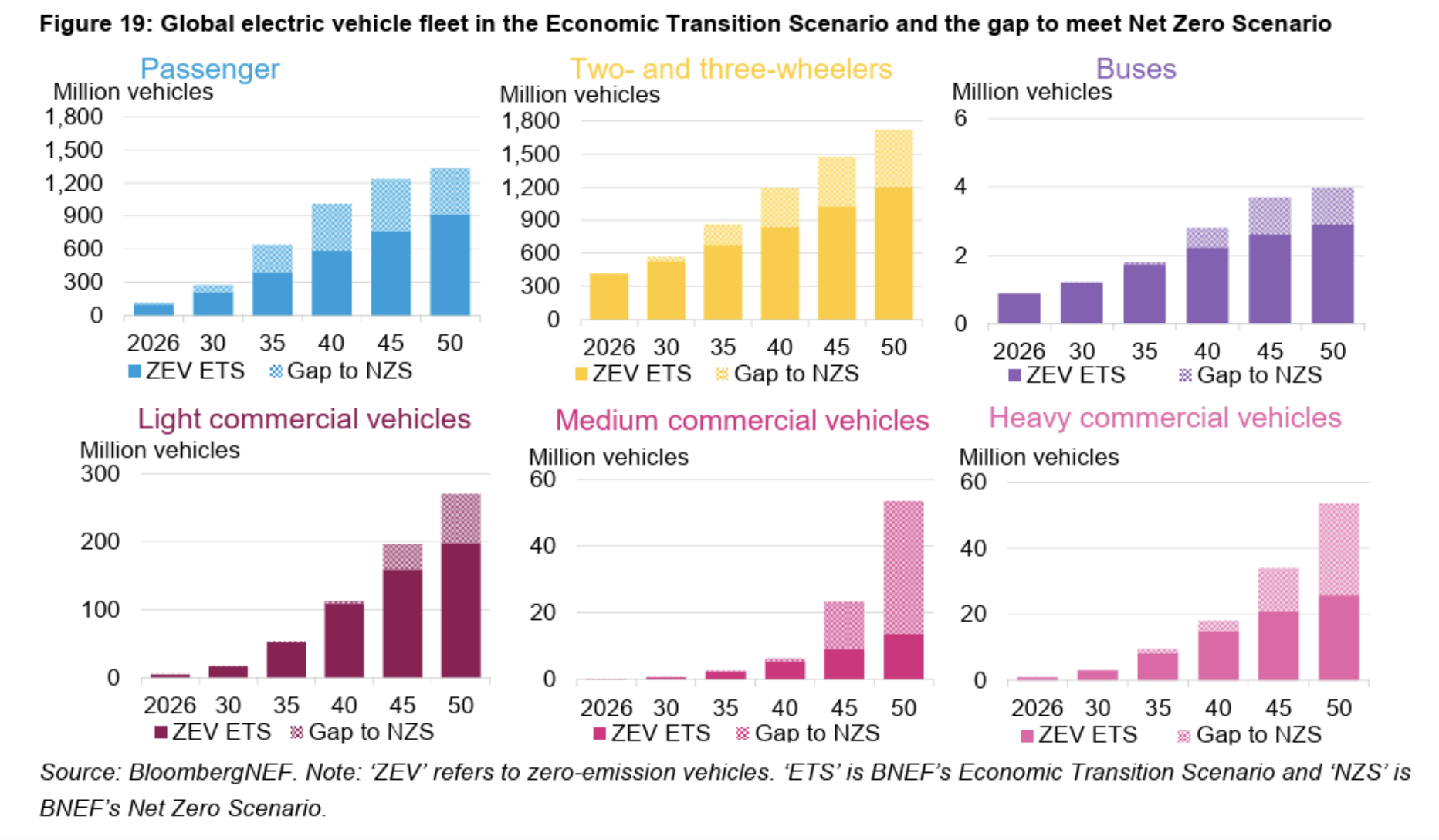
The long-term outlook presented in the report indicates that the global electric bus fleet under the Economic Transition Scenario could reach approximately four million vehicles by 2050.
China remains the largest electric bus market
BloombergNEF states that China is expected to retain the largest share of the global electric bus market over the coming decades. The report attributes this position to the size of the country’s domestic bus market and the maturity of its local manufacturing and supply-chain ecosystem.
In brief
- How many countries recorded majority-electric municipal bus sales in 2025? More than 20 countries had electric buses representing over 50% of municipal bus sales.
- What share of global bus sales could be electric by 2030? BloombergNEF projects electric and fuel-cell buses could account for about 60% of global bus sales by 2030.
- When could city bus sales become fully zero-emission? Most markets could reach fully zero-emission city bus sales by 2040, with the Nordics potentially achieving this within the current decade.
The broader EV outlook also identifies China as the dominant global market for vehicle electrification. In passenger vehicles, the country represented 63% of global EV sales in 2025 and is expected to account for more than half of worldwide electric car sales by 2030. BloombergNEF notes that China continues to benefit from extensive manufacturing capacity, established battery supply chains and large-scale domestic demand.
The report further highlights that road transport electrification is expanding beyond passenger cars. Electric commercial vehicles have reached annual sales volumes exceeding one million units globally, while electric buses continue to register the highest penetration levels among major vehicle segments.