Over 75 zero-emission buses and transit vehicles funded under California’s new $1.3 billion transport programme
California has announced nearly $1.3 billion in public transport funding, including investments in more than 75 zero-emission buses and smaller transit vehicles, alongside passenger rail infrastructure and service improvements across the state. The funding package, announced by Governor Gavin Newsom in connection with California’s participation in the COP31 climate conference in Türkiye, comprises 28 awards […]
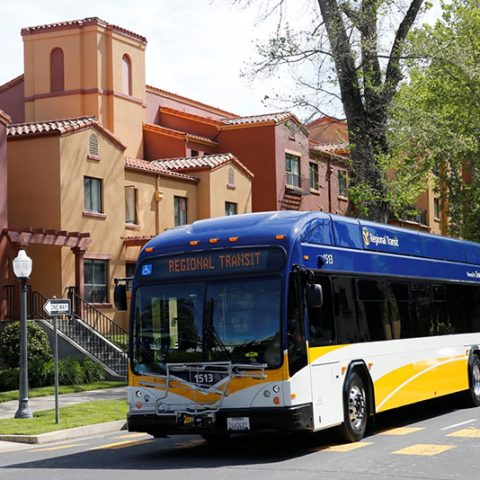
California has announced nearly $1.3 billion in public transport funding, including investments in more than 75 zero-emission buses and smaller transit vehicles, alongside passenger rail infrastructure and service improvements across the state.
The funding package, announced by Governor Gavin Newsom in connection with California’s participation in the COP31 climate conference in Türkiye, comprises 28 awards administered through the California State Transportation Agency’s Transit and Intercity Rail Capital Program (TIRCP) and State Rail Assistance programme.
According to the Governor’s office, the allocations cover battery-electric and hydrogen fuel cell bus procurement, transit facility modernisation, rail infrastructure projects and measures to maintain existing passenger services. The largest individual allocation amounts to $750 million for the extension of Caltrain into downtown San Francisco.
California has been at the forefront of zero-emission bus deployment in the United States, accounting for more than 32% of the national total of zero-emission buses funded, ordered, delivered or operating as of July 2025, according to CALSTART’s Zeroing in on ZEBs report. The latest allocation follows a series of state funding initiatives, including $202 million awarded to 143 local transit projects in January 2026 and a $988.7 million transport investment package approved in February, which included funding for 20 electric buses in Glendale. Investments in hydrogen technology have also included the development of a refuelling station for SamTrans in San Mateo County, designed to support up to 175 fuel cell buses. More recently, California reopened its Zero-Emission School Bus and Infrastructure incentive programme, making at least $55 million available for zero-emission school buses and associated charging infrastructure.
California zero-emission bus funding
The funding package includes the procurement of more than 75 zero-emission buses and smaller transit vehicles, according to the California Governor’s office. Projects are distributed across several regions, with investments covering vehicle acquisition, transit facilities and service expansion.
In the Sacramento region, funding will support the introduction of 21 hydrogen fuel cell electric buses for services between Sacramento and Davis. The project is among the hydrogen-powered public transport investments included in the latest state allocation.
Battery-electric bus procurement is also planned in several other locations. In Santa Monica, new electric buses will complete the transition of the municipal Big Blue Bus fleet to fully electric operation.
In Kings County, in the Central Valley, the programme includes the modernisation of transit facilities and the introduction of battery-electric buses, with connections planned to future California high-speed rail services. Merced County will receive support for the expansion of zero-emission microtransit operations.
Additional zero-emission buses are included in projects serving Marin County and Montebello, while investments in Ventura, Riverside and Los Angeles counties cover fixed-route services, microtransit and zero-emission vehicle deployment.
Nearly $1.3 billion for rail infrastructure and transit modernisation
The largest allocation in the package is $750 million for The Portal, a project led by the Transbay Joint Powers Authority to extend Caltrain approximately two miles from its existing Fourth and King streets terminus to the Salesforce Transit Center in downtown San Francisco.
The project will establish a connection between Caltrain and the downtown transit hub, which is also planned to become the San Francisco terminus of California’s future high-speed rail network.
According to the Governor’s office, the state allocation complements local and regional funding commitments, while the project progresses through the Federal Transit Administration’s Capital Investment Grant programme.
Other rail investments include the construction of a second main track through Fremont and Newark to improve Altamont Corridor Express operations, as well as further development of Caltrain’s battery-electric train pilot between San Jose and Gilroy.
On the Central Coast, funding will support infrastructure works associated with the planned extension of passenger rail services to Salinas, together with transit facility improvements in Santa Cruz County.
Additional projects cover access improvements at BART’s Ashby Station in Berkeley, pedestrian safety works near Sonoma-Marin Area Rail Transit infrastructure, and the expansion of e-bike sharing in Truckee.
The package also includes the modernisation of California’s bi-level intercity passenger rail fleet and infrastructure improvements along several regional railway corridors.
Metrolink receives $20 million to maintain services until 2028
A separate component of the programme addresses existing passenger rail operations in Southern California.
Metrolink will receive $20 million to maintain services and avoid previously proposed reductions of 29% on weekdays and 40% at weekends compared with its 2025 timetable.
According to the Governor’s office, the funding will support the continuation of existing services through summer 2028, coinciding with preparations for the Los Angeles Olympic and Paralympic Games.
The allocation is accompanied by a requirement for Metrolink and its member agencies to work with the state on longer-term financial arrangements.
Other investments will support the continuation of COASTER commuter rail services in San Diego County, the replacement of ageing railway signalling infrastructure near Davis Station and the upgrading of signalling and communications equipment along the SPRINTER line between Oceanside and Escondido.
The funding also covers the introduction of contactless fare payments using bank cards and mobile devices across the Metrolink network.
California’s TIRCP programme got $12.7 billion since 2015
The latest allocations form part of California’s existing public transport investment framework.
According to the Governor’s office, nearly $1.3 billion will support 19 projects under the eighth funding cycle of the Transit and Intercity Rail Capital Program, which finances improvements to urban, commuter and intercity rail networks, as well as bus and ferry services.
Since its introduction in 2015, TIRCP has awarded more than $12.7 billion to 171 projects across California.
A further $66.5 million in State Rail Assistance funding will support eight projects covering passenger rail operations, infrastructure reliability and safety.
Both programmes receive resources through Senate Bill 1, the Road Repair and Accountability Act of 2017. TIRCP also receives funding from California’s Cap-and-Invest programme, through the California Climate Investments framework.
The latest awards follow the approval of a $4.64 billion transit recovery package secured by the Governor and the state Legislature, covering the maintenance of existing public transport operations and additional capital investments.
In brief
- How much funding has California announced for public transport?
Nearly $1.3 billion through the TIRCP and State Rail Assistance programmes. - How many zero-emission buses and transit vehicles are included?
More than 75 zero-emission buses and smaller transit vehicles are covered by the investments. - Where will the new hydrogen buses operate?
The Sacramento region will receive 21 hydrogen fuel cell electric buses for services between Sacramento and Davis. - What is the largest project in the funding package?
The Portal, Caltrain’s downtown San Francisco extension, will receive $750 million.
Commenting on the investment package, California Governor Gavin Newsom stated: “California has shown that investing in cleaner transportation can improve people’s everyday lives. These investments build on that progress, funding cleaner buses, better rail connections, and the train service families count on to get to work and school. As we take California’s experience to the world stage, we’re continuing to build a cleaner, more connected state.”
California Transportation Secretary Toks Omishakin said: “California is turning big transit ideas into everyday trips. From Caltrain’s extension into downtown San Francisco to clean buses in the Central Valley and tap-and-pay fares across Metrolink, these awards make transit cleaner, faster and easier for riders across the state.”
Metrolink CEO Darren Kettle added: “We are grateful to Governor Newsom, Secretary Omishakin and the State of California for recognizing the essential role Metrolink plays in connecting Southern California’s communities. This critical investment helps us maintain the service our riders depend on to get to work, attend school and access opportunities throughout the region. It also provides much-needed stability as we work with the state and our member agencies to build a more sustainable future for regional rail. Reliable, accessible transportation is vital to our region’s economic health and quality of life, and this funding helps ensure we can continue delivering on that commitment.”