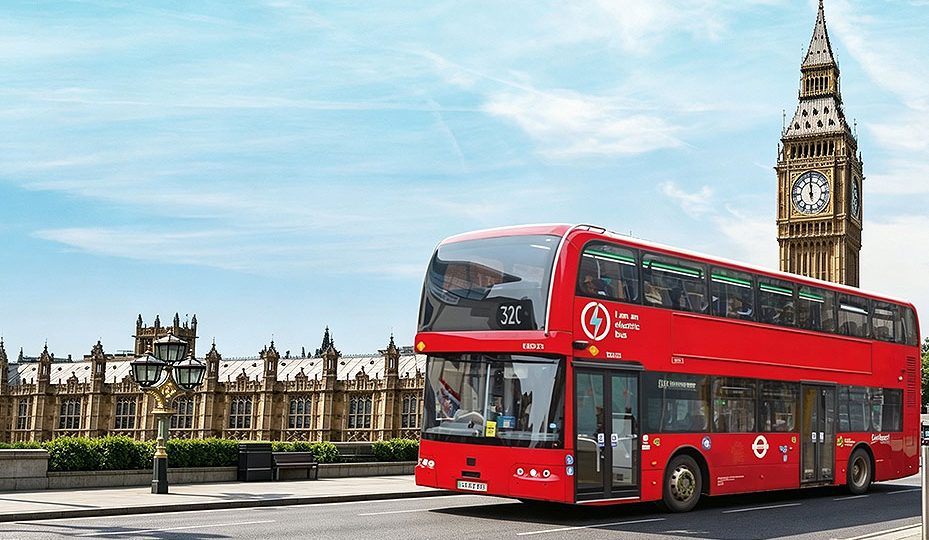
Electric buses cover a share of 6% of all bus registration in the EU
Electric buses increased to a share of 6.1% of the registrations in Europe, while diesel vehicles decreased almost 10 percentage points from 2019 to 72.9%. The figures released by ACEA take into consideration all the new medium and heavy buses (over 3.5 tonnes) registered in the European Union, then putting together city buses (where the […]
Electric buses increased to a share of 6.1% of the registrations in Europe, while diesel vehicles decreased almost 10 percentage points from 2019 to 72.9%. The figures released by ACEA take into consideration all the new medium and heavy buses (over 3.5 tonnes) registered in the European Union, then putting together city buses (where the share of e-buses is higher) with touristic coaches, where electric models are not on the market yet. The decrease of diesel buses registered in 2020 is also due to the contraction of the Class III bus market caused by Covid crisis (-27%).
Hybrid buses increased their market share from 5.7% in 2019 to 9.5%. All alternatively-powered vehicles (APV) combined represented more than a third of the total EU bus and coach market in 2020.
Diesel bus registration hit by Covid crisis
Last year, registrations of diesel-fuelled buses took the biggest hit from the coronavirus crisis, with sales falling by 27.1% to 20,458 units across the European Union, ACEA points out. Diesel held an EU-wide market share of 72.9% in 2020, down from 82.4% in 2019.
Each of the four major EU markets recorded double-digit losses last year: Spain (-46.2%), Italy (-26.6%), France (-21.9%) and Germany (-15.9%). Over the same period, only six petrol buses were sold in the EU, all of them in Hungary.
Electric bus registration +18%
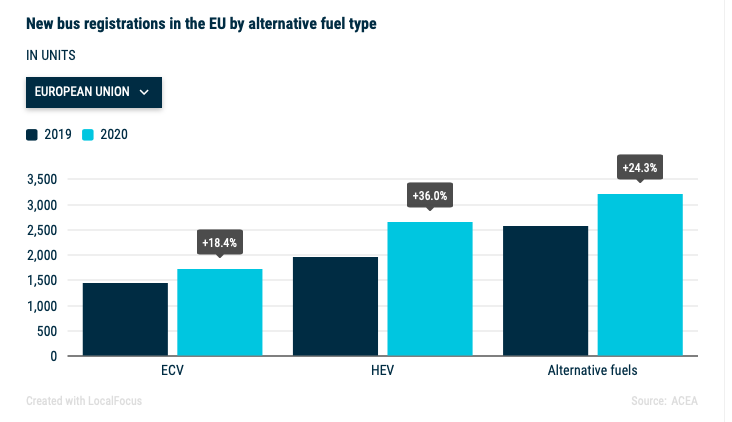
In 2020, registrations of new electrically-chargeable buses (a definition that ties together «full battery electric vehicles, fuel-cell electric vehicles, extended-range vehicles and plug-in hybrids») in the EU increased by 18.4% from 1,448 units in 2019 to 1,714 buses sold in 2020, representing a market share of 6.1% (the increase is 22% considering Western Europe and the sole segment of city buses).
With 446 electric buses sold last year, the Netherlands was the leading market for these vehicles, followed by Germany (388 units) and Poland (200 units). Together, these three countries accounted for more than 60% of total sales of electrically-chargeable buses across the EU.
Hybrid buses take a growing share of EU registrations
Hybrid electric vehicles (HEV), on the other hand, made up 9.5% of the EU bus market in 2020. Registrations of hybrid buses totalled 2,662 units last year, an increase of 36.0% compared to the year before (also due to the spread of mild hybrid models). Germany accounted for roughly half of total sales with 1,243 units. By contrast, in 14 EU countries not a single hybrid electric bus was sold last year.
11.4% of all new buses sold in the European Union in 2020 ran on alternative fuels, nearly all of them powered by natural gas. France (+71.3%), Sweden (+63.4%) and Spain (+13.4%) – the largest EU markets for these vehicles – all posted double-digit percentage increases in 2020. This contributed to an uplift in sales of 24.3% across the region, reaching a total of 3,206 buses registered last year.