Karsan will provide fuel cell buses equipped with Toyota fuel cells starting in 2025
Karsan has signed a H2-powered cooperation with Toyota. The two companies plan to launch their first hydrogen fuel cell-equipped buses in 2025. In the fuel cell bus sector, Toyota is already working with Portuguese CaetanoBus and Daimler Buses. Karsan fuel cell buses with Toyota modules Karsan introduced the e-ATA Hydrogen at IAA in 2022. Within […]
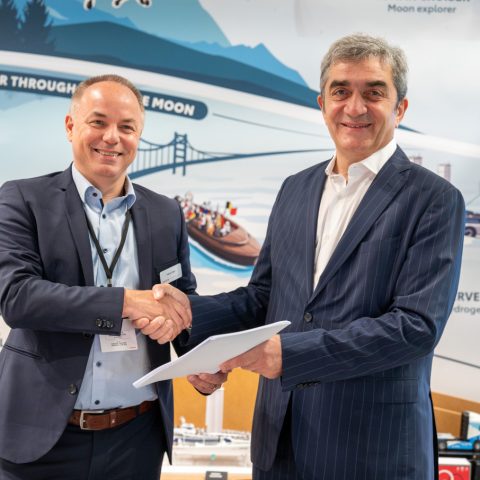
Karsan has signed a H2-powered cooperation with Toyota. The two companies plan to launch their first hydrogen fuel cell-equipped buses in 2025.
In the fuel cell bus sector, Toyota is already working with Portuguese CaetanoBus and Daimler Buses.
Karsan fuel cell buses with Toyota modules
Karsan introduced the e-ATA Hydrogen at IAA in 2022. Within the scope of this cooperation, “Karsan will constantly diversify its technological solutions by using Toyota’s Fuel Cell Module as an alternative in its hydrogen vehicles”, Karsan says in a press note. Karsan’s hydrogen buses equipped with Toyota Fuel Cell Modules are expected to be released to the market in 2025. Toyota assembles fuel cell systems at its facilities located in Zaventem, Belgium.
Karsan CEO Okan Baş said, “As Karsan, our progress in advanced technologies continues unabated. We don’t find being the pioneer in mobility sufficient, we continue to implement future-shaping innovations, with the desire to achieve better. Through this cooperation, we are proud to include Toyota, a global powerhouse that has proven itself in hydrogen technology, among our business partners. With e-ATA Hydrogen launched at the end of 2022, we executed our vision for cutting-edge technologies once more. Owing to this new partnership, we will get stronger with outstanding Japanese technology, maintaining our claim in the field of hydrogen.”
Thiebault Paquet, Vice President of Toyota Hydrogen Factory Europe stated: “We strongly believe that Hydrogen will play a crucial role in future decarbonization of public transport. That’s why we are more than happy to extend our cooperation and supply Karsan with our Fuel Cell Modules, together working towards a hydrogen society.”