Los Angeles starts construction of 20-km Vermont BRT project: 26 stations and dedicated bus lanes
LA Metro has broken ground on the 12.4-mile (20-km) Vermont Transit Corridor Bus Rapid Transit (BRT) project in Los Angeles, with 26 upgraded stations, dedicated bus lanes and projected ridership of 66,200 passengers per day. The project, announced by the Los Angeles County Metropolitan Transportation Authority on 21 October 2026, is expected to reduce end-to-end […]
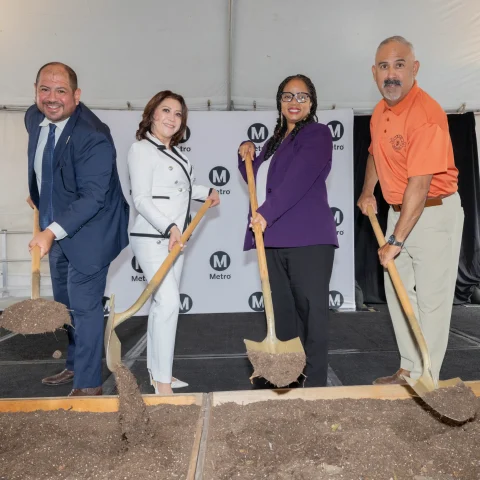
LA Metro has broken ground on the 12.4-mile (20-km) Vermont Transit Corridor Bus Rapid Transit (BRT) project in Los Angeles, with 26 upgraded stations, dedicated bus lanes and projected ridership of 66,200 passengers per day.
The project, announced by the Los Angeles County Metropolitan Transportation Authority on 21 October 2026, is expected to reduce end-to-end travel times by up to 24% through dedicated bus lanes, traffic signal priority, off-board fare collection and all-door boarding. The corridor will connect four Metro Rail lines and more than 13 east-west bus routes, with full opening expected in 2028, potentially in time for the Los Angeles Olympic Games.
Electric buses are also envisaged for the corridor, although the latest groundbreaking announcement does not provide details on vehicle procurement. Earlier LA Metro project documentation identifies 40-foot (12.2-metre) battery-electric buses with on-route charging capability as future planned vehicle configuration.
The project is fully funded following a $149.9 million federal grant awarded in September 2026, combined with state resources and local sales tax revenues.
The Vermont BRT project forms part of LA Metro’s wider bus network development programme. The agency has also placed an order with ENC for 220 battery-electric buses in September 2026. Elsewhere in the United States, in October 2025, Miami-Dade County launched its 20-mile (32-km) Metro Express BRT corridor, a $300 million project featuring 14 new stations and 60-foot (18.3-metre) articulated electric buses supplied by New Flyer.
Vermont BRT: 20-km corridor with 26 stations
The Vermont Transit Corridor BRT project covers 12.4 miles along Vermont Avenue, one of Los Angeles County’s most heavily used public transport corridors.
The route extends from East Hollywood in the north to the West Athens neighbourhood in the south, and provides connections to the B, C, D and E Metro Rail lines and more than 13 east-west bus routes.
LA Metro reports that the corridor currently carries approximately 11 million passengers annually, while the new BRT service is projected to accommodate 66,200 daily riders.
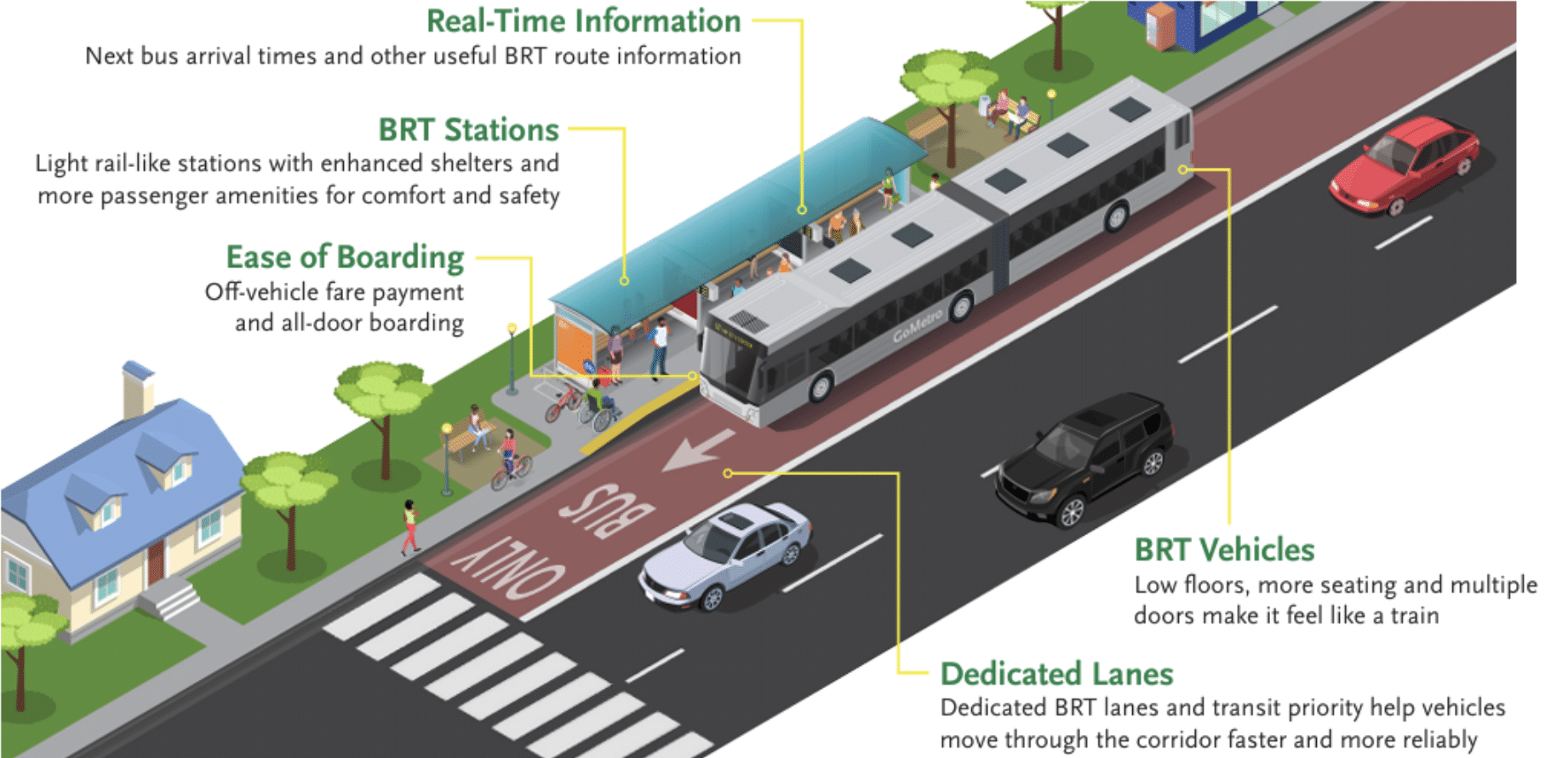
The infrastructure programme includes dedicated side-running bus lanes, transit signal priority, off-board fare payment systems and all-door boarding. The agency expects these measures to reduce end-to-end travel times by up to 24% and improve service punctuality.
Station upgrades will cover 26 locations, with new weather-protected and shaded shelters, lighting, real-time passenger information displays, emergency call buttons and accessible curb ramps. Additional works include wider sidewalks, protected bicycle lanes and bus bulb-outs designed to shorten pedestrian crossings.
Electric buses envisaged for the Vermont BRT corridor
Although the October 2026 groundbreaking announcement focuses on infrastructure and operational improvements, earlier LA Metro documentation explicitly includes battery-electric buses in the project scope.
According to the agency’s Vermont Transit Corridor Project SB 922 report, the proposed BRT service is planned around 40-foot (12.2-metre) electric buses capable of using on-route charging infrastructure.
A separate LA Metro transportation technical report indicates a passenger capacity of up to 75 people per vehicle and a maximum of 16 buses operating during peak periods.
The agency’s Vermont Transit Corridor project fact sheet also refers to future electric buses as part of the planned service.
However, the October 2026 press release does not confirm a vehicle procurement contract, bus manufacturer, final fleet size or delivery timetable. The electric bus specifications therefore remain those outlined in earlier planning documents.
Vermont BRT financing: $149.9 million federal grant
The Vermont BRT project received $149.9 million from the Federal Transit Administration (FTA) on 1 September 2026 through the Capital Investment Grant Small Starts Program.
The agency expects construction to support more than 4,800 jobs, generate approximately $95 million in tax revenue and create around 260 permanent operations and maintenance positions.
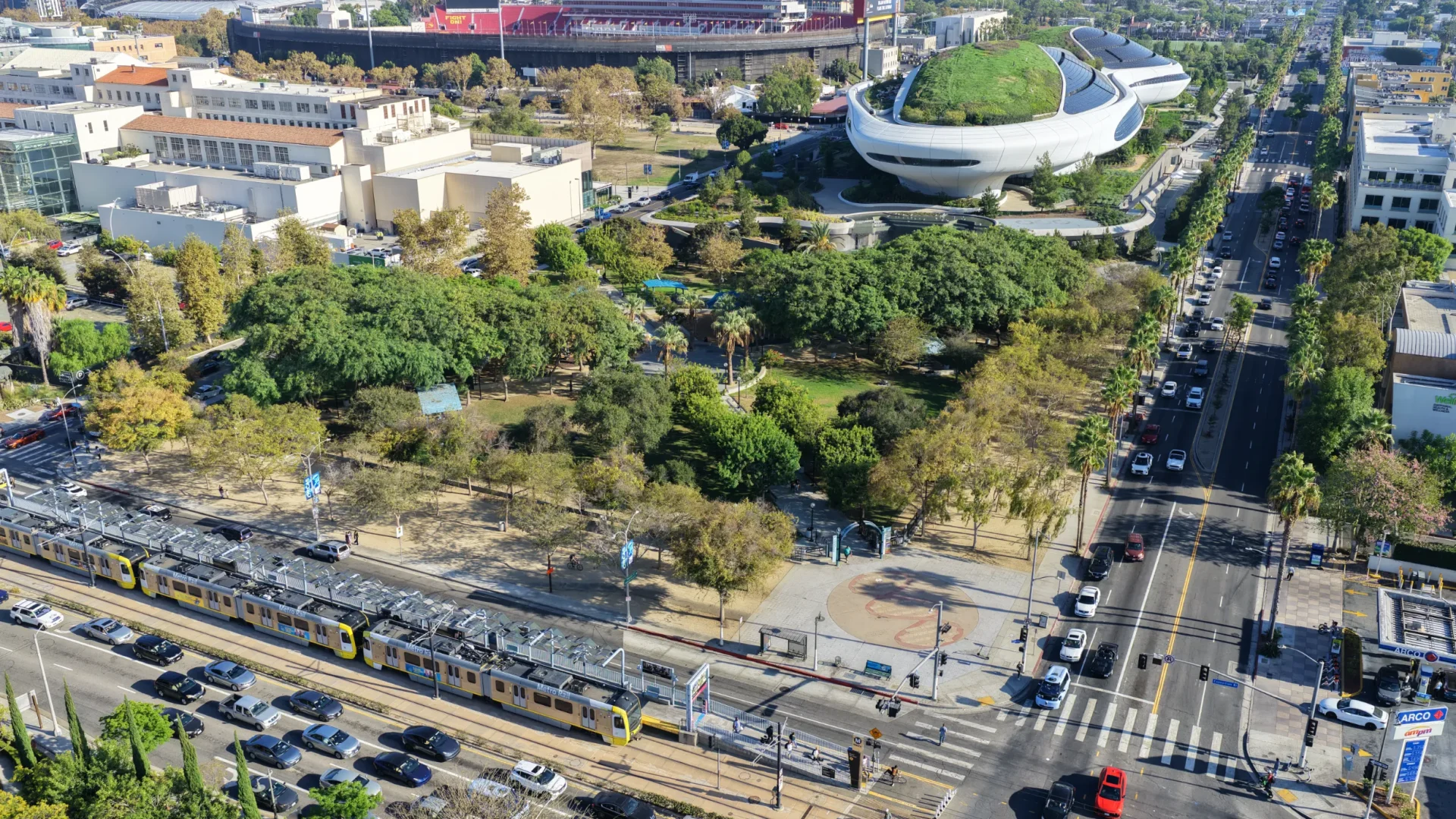
The corridor serves several major destinations, including the University of Southern California, Exposition Park, the Lucas Museum of Narrative Art, Los Angeles City College and Kaiser Permanente Sunset.
It also provides access to 88 local schools and 375 faith-based institutions. More than 21% of existing Vermont Avenue passengers use Metro’s GoPass programme, which provides free public transport to K-12 and community college students.
LA Metro states that the project design was developed through consultation with approximately 26,000 residents, working with 38 community and faith-based organisations since 2021.
The consultation programme included multilingual door-to-door canvassing, urban design workshops and passenger surveys, with input covering station locations, lighting, cleanliness and safety features.
In brief
- How long is the Vermont BRT corridor?
12.4 miles (approximately 20 km), with 26 enhanced stations. - Will electric buses operate on the corridor?
Earlier LA Metro documents envisage 40-foot battery-electric buses, but no final procurement is confirmed. - How many passengers are expected?
LA Metro projects 66,200 daily riders and travel-time reductions of up to 24%. - When will the Vermont BRT open?
Full opening is expected in 2028, with completed sections entering service earlier.
Metro Board Chair and Los Angeles Mayor Karen Bass said: “This is more than a bus route. As a former community organizer in South LA, I know personally that this project is a transformational investment that will deliver reliable and affordable transportation for more than 38,000 hardworking people who use this bus every weekday. By connecting South LA with Los Feliz, we’re creating good-paying union jobs, building a greener, more sustainable city, and connecting people to local businesses, healthcare, world-class institutions and real economic opportunity.”
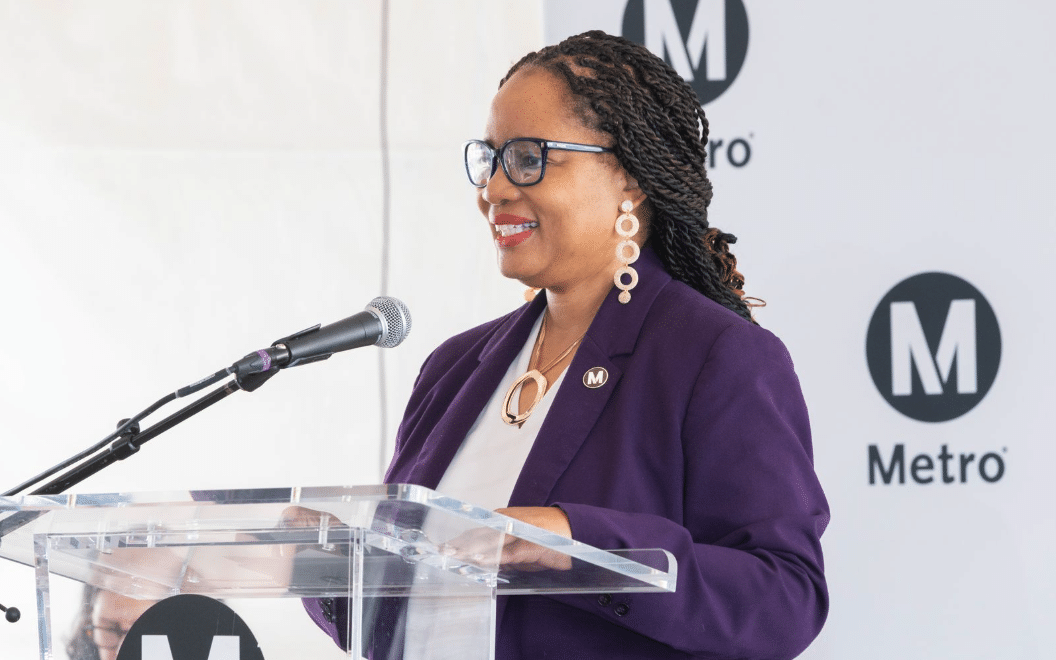
LA Metro CEO Stephanie Wiggins stated: “Carrying 11 million riders every year, Vermont Avenue is a vital lifeline for students, workers, parents and seniors across the region. We approached this project with urgency and listened closely to the community, making critical adjustments as we are cutting travel times, fortifying our bus network and building a world-class transit system ready to move LA.”
Metro Board Member and Los Angeles County Supervisor Holly J. Mitchell added: “Every day, tens of thousands of Angelenos ride the bus on Vermont to get where they need to go, from work and school to cultural institutions to medical appointments. Today, we are delivering those riders the transit experience they deserve – fast, reliable service with welcoming, comfortable stops. When riders can count on the bus coming on time and getting them where they need to go faster, they get time back to spend as they want instead of sitting in traffic or waiting for the next bus.”