London reaches 3,000 zero-emission buses as one-third of TfL fleet becomes emission-free
London has reached 3,000 zero-emission buses in service, with around one-third of Transport for London’s fleet now operating without tailpipe emissions. Transport for London (TfL) and the Mayor of London announced that the capital’s zero-emission bus fleet has surpassed 3,000 vehicles ahead of Clean Air Day on 18 June. The milestone represents a 100-fold increase […]
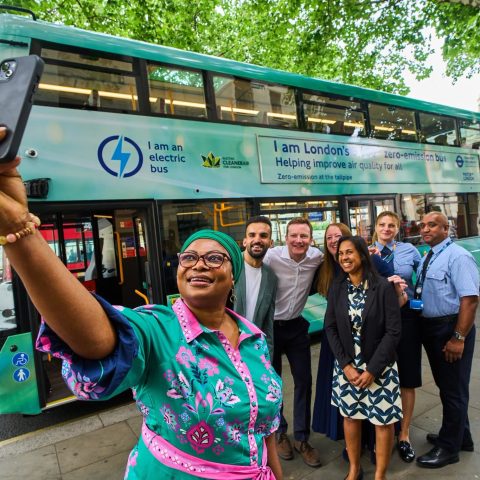
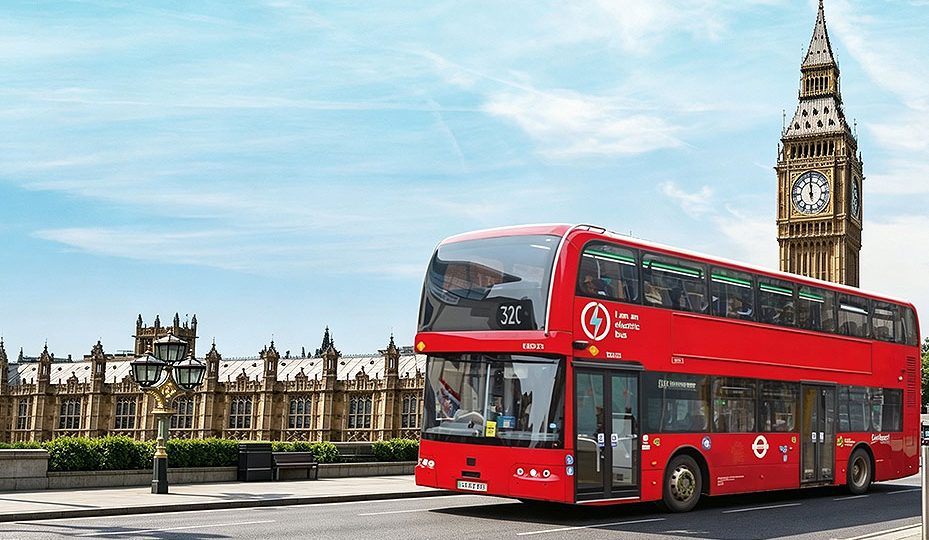
London has reached 3,000 zero-emission buses in service, with around one-third of Transport for London’s fleet now operating without tailpipe emissions.
Transport for London (TfL) and the Mayor of London announced that the capital’s zero-emission bus fleet has surpassed 3,000 vehicles ahead of Clean Air Day on 18 June. The milestone represents a 100-fold increase compared with 2016, when only 30 electric buses were operating on London’s network.
The achievement consolidates London’s position as the largest zero-emission bus fleet in Western Europe. According to TfL, the number of zero-emission buses is expected to continue growing, with the fleet projected to double within the next five years, therefore aiming for 6,000 e-buses after 2030.
Since 2021, all newly introduced buses in London have been zero-emission at the tailpipe. Remaining vehicles in the fleet comply with or exceed Euro VI emissions standards. There are 135 bus routes in London that are fully zero-emission and 68 that are partially converted to zero-emission.
With a third of London’s fleet of iconic buses are now zero-emission, it is even easier for customers to travel around the city in a sustainable, affordable and accessible way. We have the largest zero-emission bus fleet in Western Europe and now more than 3,000 of London’s buses are now zero-emission, up from just 30 in 2016, demonstrating the pace of progress as we strive to transition the whole of the fleet.
Lorna Murphy, Director of Buses, TfL
London reaches 3,000 zero-emission buses
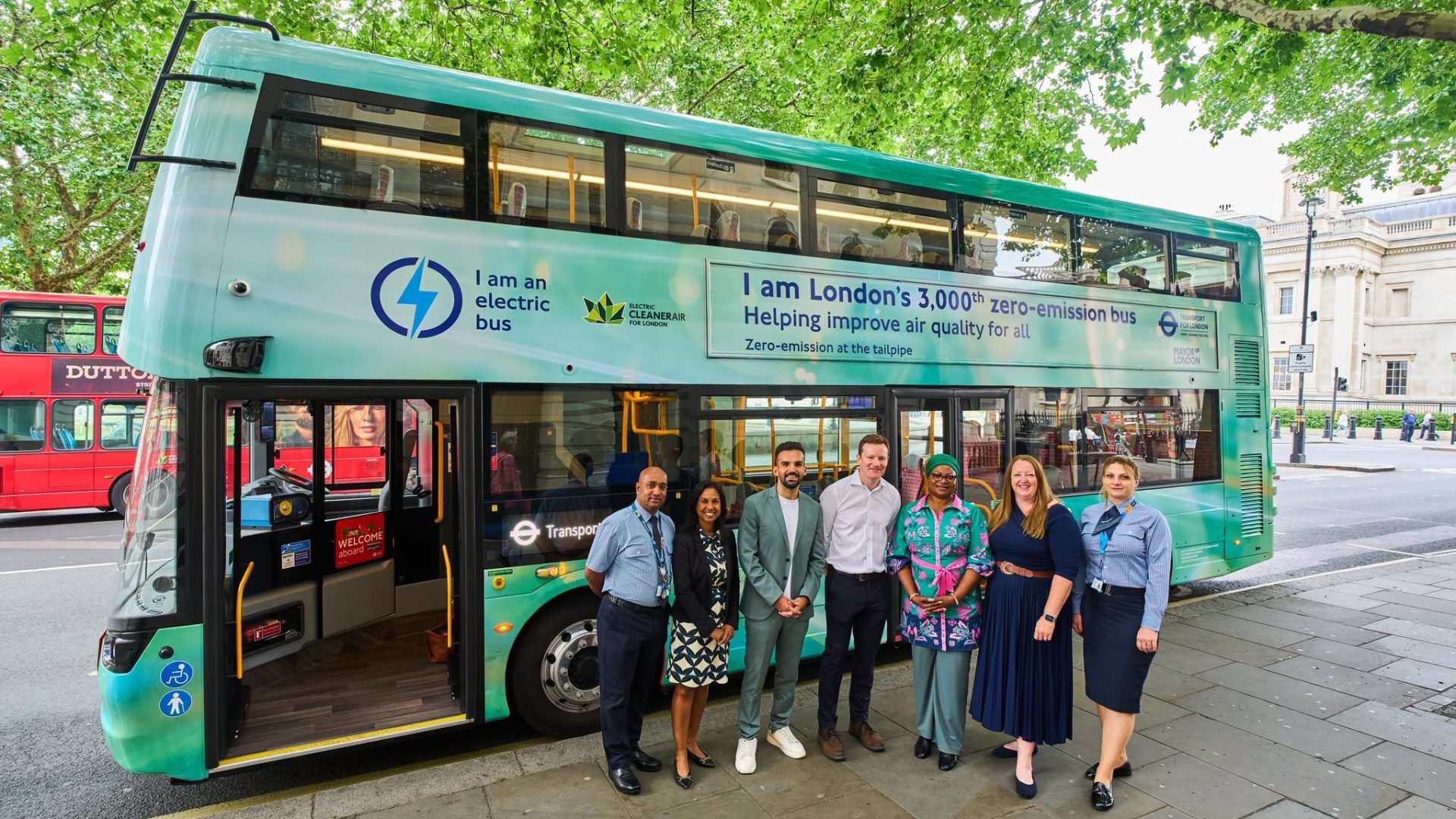
The 3,000th zero-emission bus has entered service on route 165 between Romford and Rainham and will operate from Stagecoach’s Rainham depot. The vehicle has been specially wrapped to commemorate the milestone.
The bus forms part of an order of more than 120 zero-emission buses supplied by Wrightbus. The procurement will support the ongoing electrification of services operated from Rainham depot, where routes 174/674, 165 and 287 already operate with zero-emission vehicles.
Within the next year, six additional routes based at the depot are scheduled to transition to zero-emission operation, including the future SL12 route connecting Rainham and Gants Hill.
Depot infrastructure is being upgraded to support the transition. Works include the installation of overhead charging systems mounted on steel gantries. TfL noted that the steel structures have been sourced from Rainham Steel, a company located close to the depot.
TfL: bus shelters upgraded with LED lighting
Alongside fleet electrification, TfL announced the completion of a programme to replace lighting across approximately 12,000 bus shelters with LED technology.
According to the transport authority, the new lighting system reduces energy consumption by more than 50% while increasing brightness levels by around 10%. TfL stated that the upgrade is intended to improve visibility at shelters while reducing electricity demand.
London’s bus network remains a central component of the city’s public transport system. TfL noted that buses can carry up to 80 times as many passengers as a private car while occupying approximately three times as much road space.
In brief
- How many zero-emission buses are currently operating in London? Transport for London has reached 3,000 zero-emission buses in service, representing approximately one-third of the capital’s bus fleet.
- When did London begin deploying zero-emission buses at scale? London had around 30 electric buses in 2016. The fleet has since expanded 100-fold to reach the current 3,000-vehicle milestone.
- Which manufacturer supplied the 3,000th zero-emission bus? The milestone vehicle is part of an order of more than 120 zero-emission buses supplied by UK manufacturer Wrightbus.
- What are the next steps for the Rainham depot electrification programme? Six additional routes are scheduled to become zero-emission within the next year, supported by charging infrastructure upgrades at the depot.
The Mayor of London, Sadiq Khan, said: “I’m proud that London is leading the charge in sustainable transport with 3,000 of our iconic red buses now going green – which is a hundred times more than when I took office in 2016, and one of the largest zero-emission bus fleets in Europe. Over the last decade as Mayor, I’ve worked with TfL to take our bus network from strength to strength – creating new services, such as the game-changing Superloop, and boosting our zero- and low-emission buses to help clean up our air and support our climate goals. I remain committed to doing everything in my power to ensure that buses remain the most accessible, affordable and sustainable form of transport in the capital as we continue building a greener, fairer, better London for everyone.”
Lorna Murphy, Director of Buses at TfL, said: “This is more than a milestone; it is real visible change – cleaner journeys for Londoners every day. With a third of London’s fleet of iconic buses are now zero-emission, it is even easier for customers to travel around the city in a sustainable, affordable and accessible way. We have the largest zero-emission bus fleet in Western Europe and now more than 3,000 of London’s buses are now zero-emission, up from just 30 in 2016, demonstrating the pace of progress as we strive to transition the whole of the fleet. We’re brightening up our customers’ journeys in more ways than one, as we’ve also converted all of the lighting at our bus shelters to LED lighting. Using less energy, these bulbs will make our bus shelters more welcoming for customers and help them to feel safer, especially at night. From new zero-emission buses to LED bulbs, every step we take to decarbonise the public transport network propels us on our journey towards net zero.”
Sam Greer, Chief Operating Officer at Stagecoach Group, said: “We’re incredibly proud to be playing our part in London’s transition to a zero-emission bus network and it’s fantastic to see the 3,000th zero-emission bus entering service from our Rainham Garage. This milestone reflects the strength of collaboration between TfL, operators and industry partners along with our shared commitment to delivering cleaner, greener journeys for the communities we serve.”
Christian Reynolds, Managing Director of Wrightbus, said: “We are delighted to have provided London’s 3,000th zero-emission bus in what is also a landmark year for us, as we celebrate our 80th anniversary. Each vehicle represents not only a step forward in decarbonising transport, providing cleaner air for the people of London, but also a commitment to accessibility, innovation and passenger experience.”
Charles Long, Senior Political Advisor at Green Alliance, said: “Red buses are going green around the capital. Buses cut congestion and damaging air pollution – electric buses supercharge this. London is showing the way by only buying new buses if they are zero-emission at the tailpipe.”