RATP will be operating Karsan autonomous bus in Paris for six months, starting in September 2025
Karsan announces it has initiated an extensive project with RATP, where the company’s Autonomous e-Atak will transport passengers on the 4.5-kilometer Paris 393 bus route as of September under real urban traffic conditions As part of the cooperation with RATP, Karsan’s 8-meter Autonomous e-Atak vehicle will begin carrying passengers on the 4.5-kilometer Paris 393 bus […]
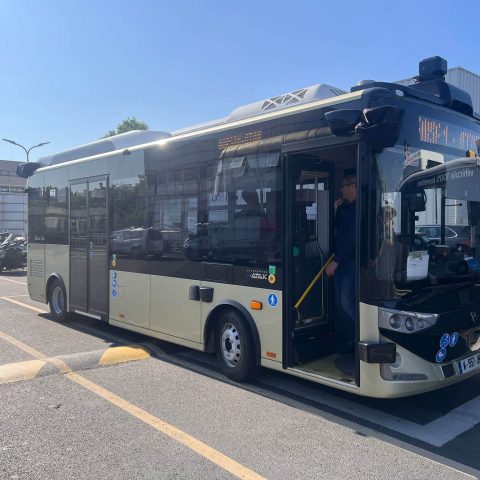
Karsan announces it has initiated an extensive project with RATP, where the company’s Autonomous e-Atak will transport passengers on the 4.5-kilometer Paris 393 bus route as of September under real urban traffic conditions
As part of the cooperation with RATP, Karsan’s 8-meter Autonomous e-Atak vehicle will begin carrying passengers on the 4.5-kilometer Paris 393 bus route (Sucy-Bonneuil RER /Thiais-Carrefour de la Résistance) in September 2025.
Karsan autonomous bus in Paris
In 2022 the Turkish Karsan provided in Norway the first normal size autonomous bus in operation in Europe. The Karsan Autonomous e-Atak is made driverless by Adastec’s flowride.ai Level-4 automated driving software platform and has been used since then on a city line, operated by Vy Buss, to transport passengers in the city of Stavanger.
Two years of operation were achieved in March 2024. According to the OEM, the bus performed well on this route and in December 2023 was deployed on a much more challenging route with lane changes in heavy traffic and driving at higher speeds and a tunnel to pass through. Another project is live in Tampere, Finland. And Gothenburg will come from August 2025: the Karsan Autonomous e-Atak will operate on a line connecting Gothenburg Central Station to Liseberg train station.
Karsan CEO Okan Baş stated: “Our vehicle is currently being tested by UTAC (Union Technique de l’Automobile du Motocycle et du Cycle), France’s independent testing and certification organization, at its facility. Tests conducted by UTAC indicate that Karsan Autonomous e-Atak is safe, smart, and operationally ready according to international standards. These dynamic and static test processes will be in place until the end of August. After the successful completion of the tests, Autonomous e-Atak will start to carry passengers, actively providing transportation services for six months.”