Inside Turkey’s bus industry: production, capacity and the OEMs driving growth
Turkey’s bus industry grew in 2025, with production +25 percent to 12k units. High output levels, stable leadership brands, expanding e-bus offers strengthen the country's role as one of Europe’s main bus production hubs
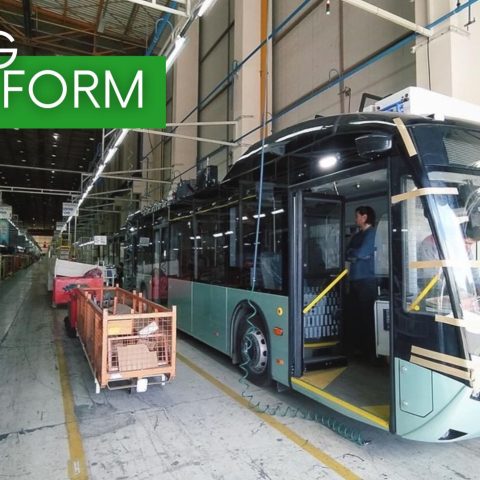
Turkey is the bus factory of Europe – how often has this been said? The country maintained the largest presence by number of exhibitors at Busworld Europe last year, with Turkish companies accounting for roughly one in five exhibitors in Brussels in 2025.
The domestic ecosystem continues to provide a complete supply chain, from components to finished vehicles, with a concentration of suppliers and manufacturers serving European demand. In this framework, established domestic brands such as Anadolu Isuzu, Otokar, Karsan and Temsa operate alongside long-standing international manufacturers with production bases in the country, including Mercedes-Benz Türk and MAN.
Production volumes are growing
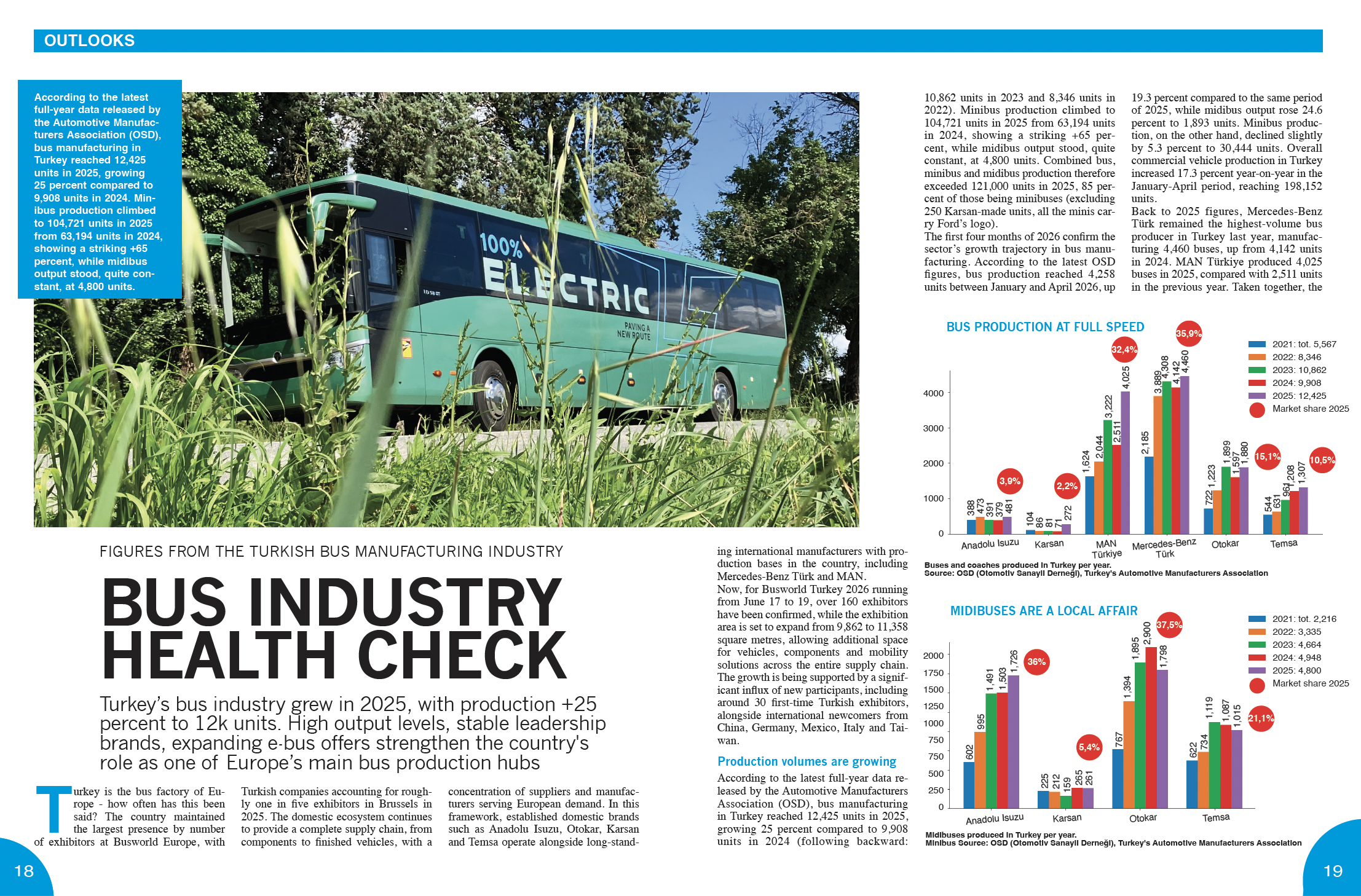
According to the latest full-year data released by the Automotive Manufacturers Association (OSD), bus manufacturing in Turkey reached 12,425 units in 2025, growing 25 percent compared to 9,908 units in 2024 (following backward: 10,862 units in 2023 and 8,346 units in 2022).
Minibus production climbed to 104,721 units in 2025 from 63,194 units in 2024, showing a striking +65 percent, while midibus output stood, quite constant, at 4,800 units. Combined bus, minibus and midibus production therefore exceeded 121,000 units in 2025, 85 percent of those being minibuses (excluding 250 Karsan-made units, all the minis carry Ford’s logo).
The first four months of 2026 confirm the sector’s growth trajectory in bus manufacturing. According to the latest OSD figures, bus production reached 4,258 units between January and April 2026, up 19.3 percent compared to the same period of 2025, while midibus output rose 24.6 percent to 1,893 units. Minibus production, on the other hand, declined slightly by 5.3 percent to 30,444 units. Overall commercial vehicle production in Turkey increased 17.3 percent year-on-year in the January-April period, reaching 198,152 units.
Total bus production more than doubled over the 2021 – 2025 period, rising from 5,567 units in 2021 to 12,425 units in 2025. Mercedes-Benz Türk increased output from 2,185 to 4,460 buses, while MAN Türkiye expanded from 1,624 to 4,025 units, recording the strongest absolute growth among Turkish bus manufacturers. Otokar also more than doubled production over the same timeframe, growing from 722 to 1,880 buses, while Temsa increased from 544 to 1,307 units. Anadolu Isuzu maintained comparatively stable bus volumes throughout the period, fluctuating between 379 and 481 units annually, whereas Karsan’s bus production remained limited until the significant increase registered in 2025, when output reached 272 vehicles.
Back to 2025 figures, Mercedes-Benz Türk remained the highest-volume bus producer in Turkey last year, manufacturing 4,460 buses, up from 4,142 units in 2024. MAN Türkiye produced 4,025 buses in 2025, compared with 2,511 units in the previous year. Taken together, the two groups account for over 68 percent of national bus output.
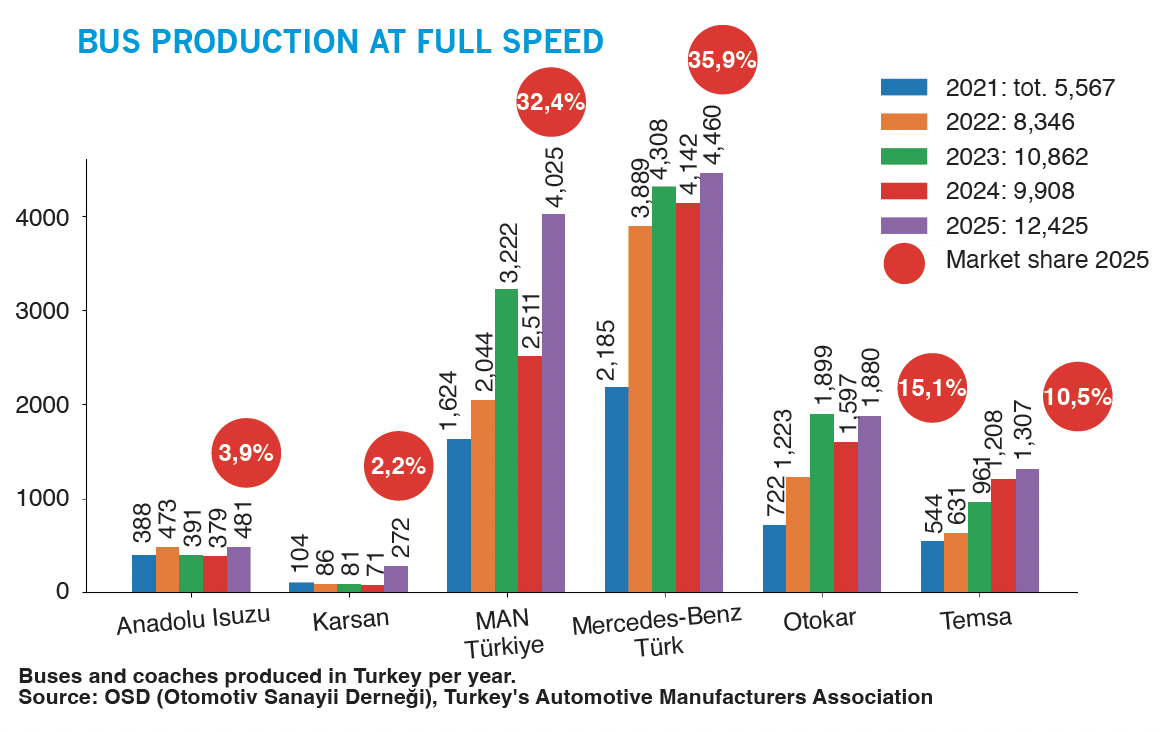
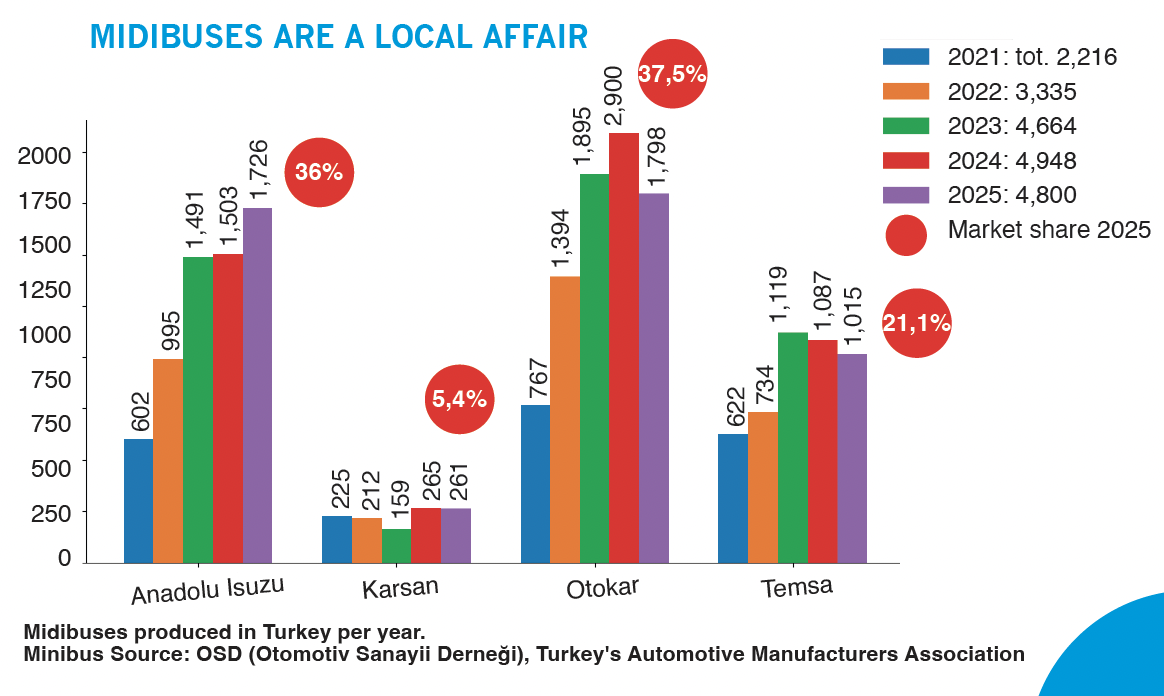
Moving to the local manufacturers, Otokar produced in 2025 1,880 buses and 1,798 midibuses, while Temsa produced 1,307 buses and 1,015 midibuses. Anadolu Isuzu’s production profile remained more weighted toward midibuses, with 1,726 units and a 36 percent share of national midibus output, compared with 481 buses. Karsan sales covered 2.2 percent of the bus market and 5.4 percent of the midibus market thanks to 272 and 261 units respectively. Adding the 248 already-mentioned minibuses, we achieve a total volume of 781 units across segments. However, it should be noted that it’s the only company, among the ones considere here, focusing solely on zero emission vehicles.
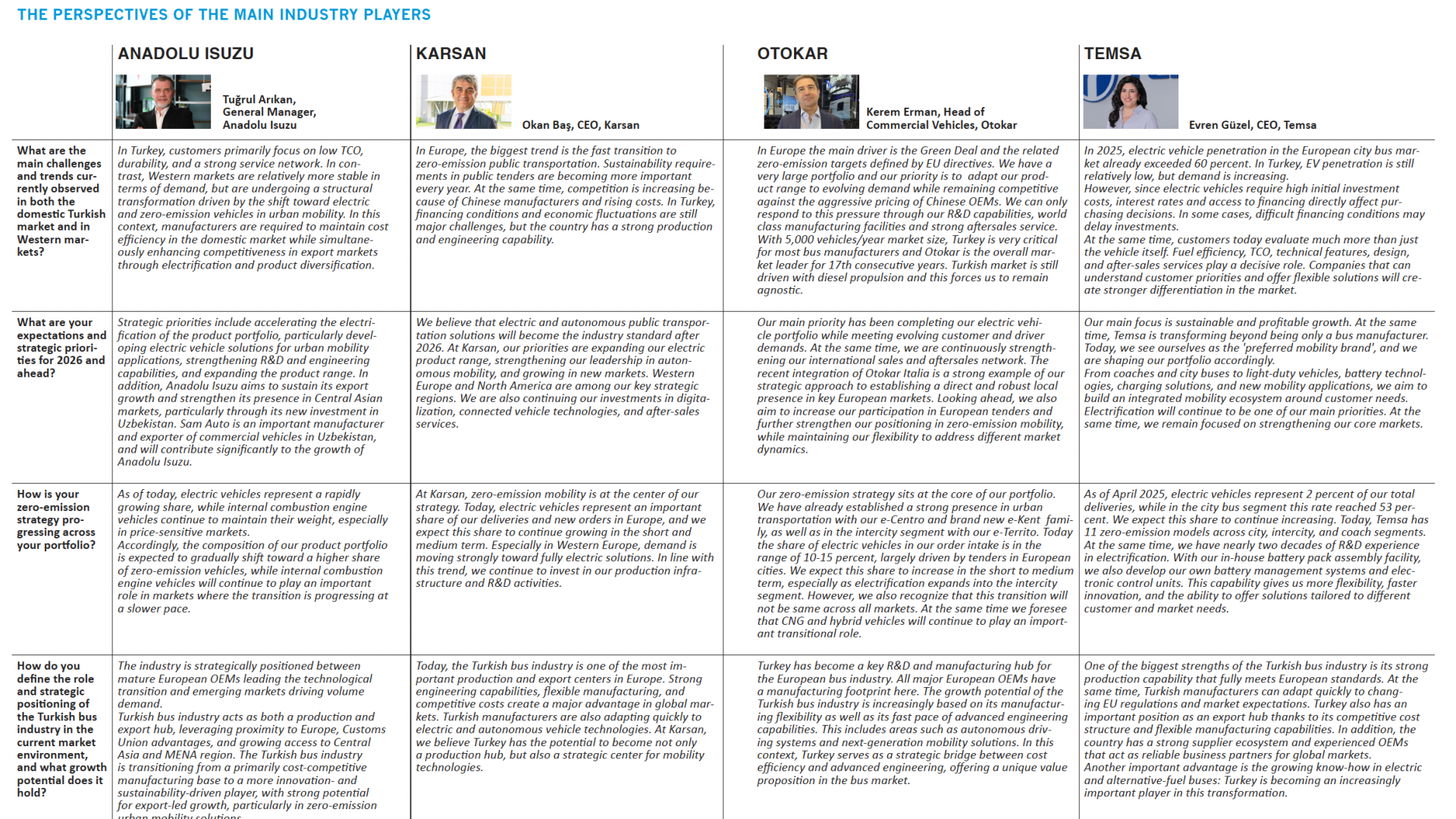
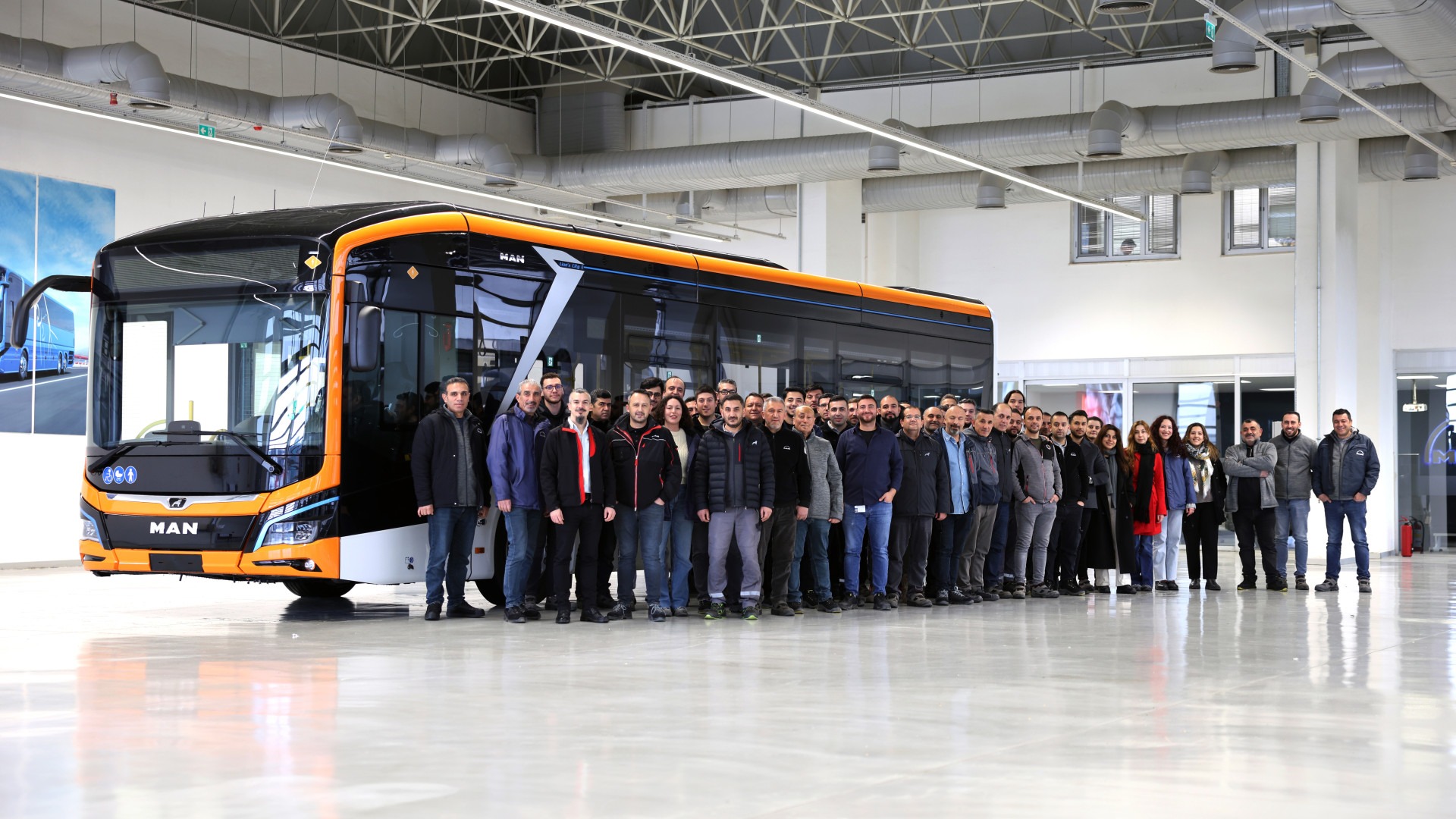
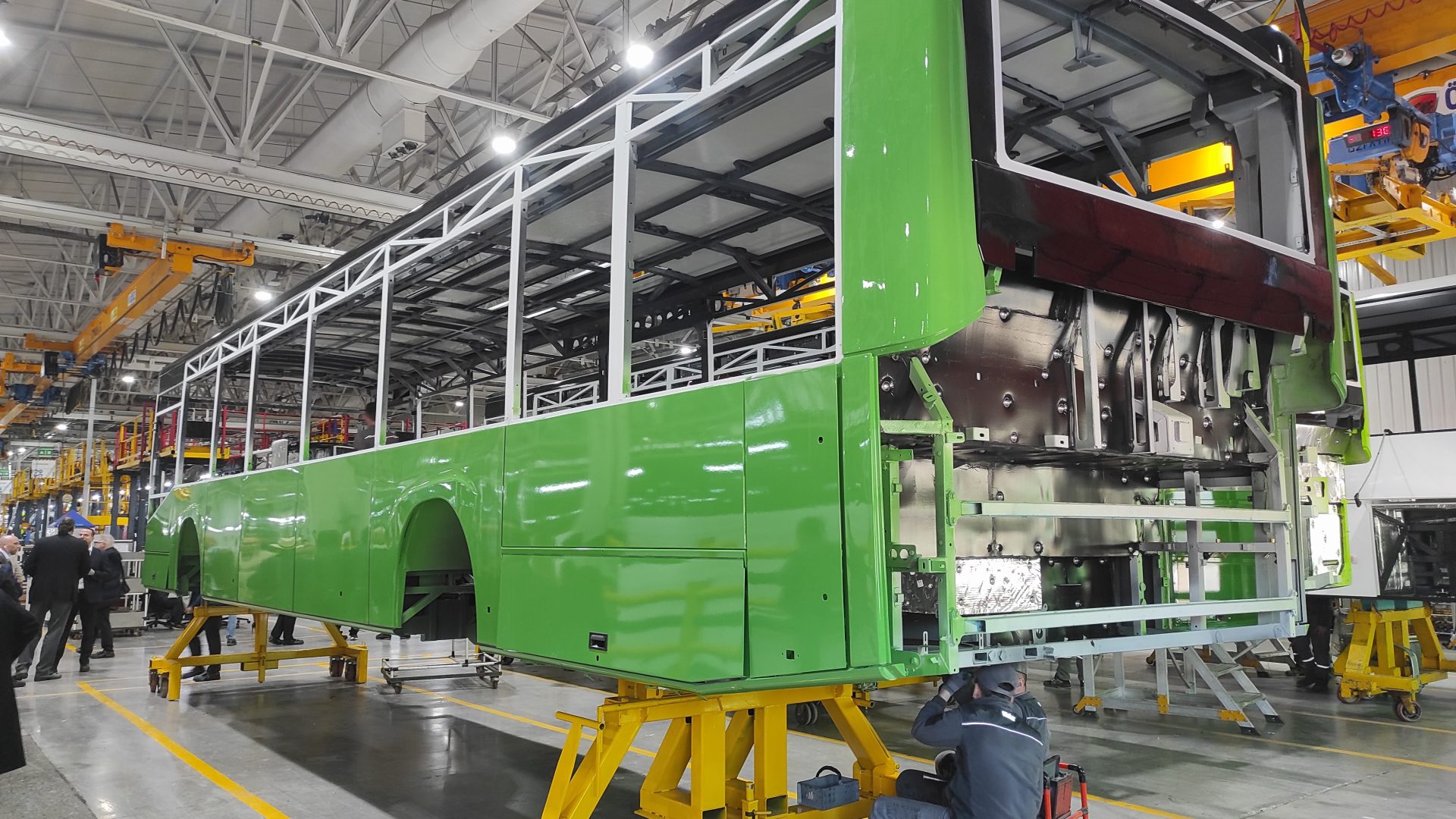
Such figures are set to evolve further in the coming years: MAN is expected to increase output following the inauguration of electric city bus production in Ankara in April 2026. Meanwhile, Mercedes-Benz is phasing out Conecto production in-house, with manufacturing outsourced to Otokar. As announced in late 2025, production is scheduled to begin in September 2026, including vehicles intended for the German market, where the Conecto will start to be offered.
A five-year perspective
Taking stock of the five-year period between 2021 and 2025, Turkey’s bus manufacturing sector shows a clear expansion in production volumes, although the 2021 baseline still reflected the effects of the post-pandemic market slowdown and weaker demand environment following Covid-19. Total bus production more than doubled over the period, rising from 5,567 units in 2021 to 12,425 units in 2025. Mercedes-Benz Türk increased output from 2,185 to 4,460 buses, while MAN Türkiye expanded from 1,624 to 4,025 units, recording the strongest absolute growth among Turkish bus manufacturers. Otokar also more than doubled production over the same timeframe, growing from 722 to 1,880 buses, while Temsa increased from 544 to 1,307 units. Anadolu Isuzu maintained comparatively stable bus volumes throughout the period, fluctuating between 379 and 481 units annually, whereas Karsan’s bus production remained limited until the significant increase registered in 2025, when output reached 272 vehicles.
How is 2026 shaping up?
Looking at the January-April 2026 figures, Mercedes-Benz Türk and MAN Türkiye maintained broadly stable positions in the Turkish bus market, accounting respectively for 35.7 percent and 33.3 percent of total national bus production, in line with their 2025 shares. More visible shifts emerged among the other manufacturers. Otokar’s bus share declined from 15.1 percent in 2025 to 12.7 percent in early 2026, although the company strengthened its dominance in the midibus segment, where it increased its share from 37.5 percent to 43.5 percent with 823 units produced. Temsa slightly expanded its position in the bus segment, reaching 11 percent compared with 10.5 percent in 2025, while maintaining a stable role in midibuses with a 20.2 percent share. Anadolu Isuzu increased its presence in buses from 3.9 percent to 4.5 percent of national production, while its weight in midibuses declined from 36 percent to 32 percent despite output remaining above 600 units in the January-April period. Karsan also expanded its presence in the bus segment, reaching a 2.7 percent share compared with 2.2 percent in 2025.
Midibuses under the lens
The midibus segment also expanded substantially between 2021 and 2025, although growth slowed in the latest year. Total national midibus production rose from 2,216 units in 2021 to 4,800 units in 2025. Anadolu Isuzu and Otokar remained the dominant manufacturers in this category throughout the period. Anadolu Isuzu nearly tripled output, moving from 602 to 1,726 units, while Otokar increased from 767 to a peak above 2,000 units before reaching 1,798 units in 2025. Temsa also recorded sustained growth in midibus production, rising from 622 units in 2021 to 1,015 in 2025. Karsan’s midibus volumes remained comparatively stable across the five-year timeframe: the company’s production profile remained concentrated on smaller passenger transport vehicles.
Ford Otosan continued to dominate Turkish minibus production with 104,473 units manufactured in 2025, while total commercial vehicle production in the country reached 546,926 units, up from 460,783 units in 2024. Overall automotive production totaled 1.445 million vehicles in 2025, compared with 1.411 million units in the previous year.
A matter of… capacity
Installed capacity figures published by OSD show that annual bus manufacturing capacity stood at 16,942 units in 2025, with additional capacity for 8,460 midibuses. Overall bus capacity utilization reached 73.3 percent during the year, while total automotive industry capacity utilization stood at 66.5 percent. Looking at the figures, it stands out that the bus sector is the one with the highest utilization rate.
Mercedes-Benz Türk holds the largest installed bus capacity at 4,500 units annually, followed by MAN Türkiye with 3,900 units, Otokar with 3,000 units, Temsa with 2,500 units, and Anadolu Isuzu with 1,152 units. Karsan contributes primarily through minibus and midibus production (over 3,600 units possible, plus 1,890 buses).
It should be noted that other Turkish brands such as Bozankaya and BMC are not reflected in the data we are using to describe Turkey’s automotive and bus manufacturing landscape, as we are taking stock of OSD figures. These brands are in fact not part of OSD, and therefore their production volumes, capacity and exports are excluded from aggregated industry statistics.
All in all, the combination of established export-oriented OEMs, expanding electric bus manufacturing activities and high industrial utilization rates continues to position Turkey as one of Europe’s central bus production hubs.
In brief
- How many buses were produced in Turkey in 2025? Turkey manufactured 12,425 buses in 2025, up 25% from 9,908 units in 2024, according to OSD data.
- Which companies are the largest bus manufacturers in Turkey? Mercedes-Benz Türk and MAN Türkiye were the leading producers in 2025, accounting together for more than 68% of national bus output.
- How is bus production performing in 2026? Between January and April 2026, bus production reached 4,258 units, representing a 19.3% increase compared with the same period of 2025.
- Why is Turkey considered a major bus manufacturing hub? The country combines a complete supply chain, export-oriented OEMs, high production volumes and one of the highest capacity utilization rates in the automotive sector.