Esslingen receives first Skoda battery trolleybuses under 52-unit fleet modernization project
The first two of 52 battery-powered trolleybuses ordered by Esslingen am Neckar were delivered by the Škoda Group on 17 July 2026, launching the renewal and expansion of the city’s trolleybus fleet. The full order, signed in early 2025, is due to be completed by the end of the year. The first vehicles were recently […]
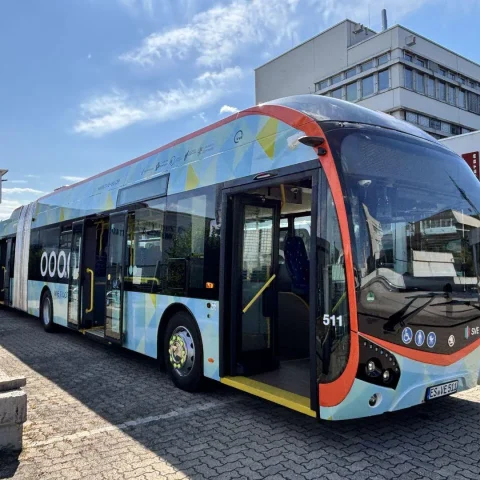
The first two of 52 battery-powered trolleybuses ordered by Esslingen am Neckar were delivered by the Škoda Group on 17 July 2026, launching the renewal and expansion of the city’s trolleybus fleet. The full order, signed in early 2025, is due to be completed by the end of the year. The first vehicles were recently presented to delegates of the Staedtischer Verkehrsbetrieb Esslingen am Neckar.
The order comprises ten 12-metre Škoda 32Tr trolleybuses and 42 18-metre Škoda 33Tr articulated trolleybuses. The 12-metre-long Škoda 32Tr vehicles are fitted with one traction motor and are supplied in a two-door version, whilst the 18-metre-long, twin-motor Škoda 33Tr articulated trolleybuses have been selected in a three-door version. All vehicles are fitted with battery packs for autonomous operation and will be able to travel up to 25 km without being connected to the overhead line.
Skoda trolleybuses with In Motion Charging for Esslingen
The batteries will be recharged gradually, using ‘In Motion Charging’ technology, on sections of the route equipped with overhead lines, thus avoiding the need for fast charging and prolonged stops at terminus stations. This will therefore allow for route extensions without being constrained by the overhead line network. It also enables flexible deployment of trolleybuses in the event of service disruptions, diversions, and on routes or sections without overhead lines. The vehicles are also fitted with energy recovery technology, which feeds some of the braking energy back into the batteries during braking – for example, when travelling downhill – thereby contributing to greater energy efficiency during operation.
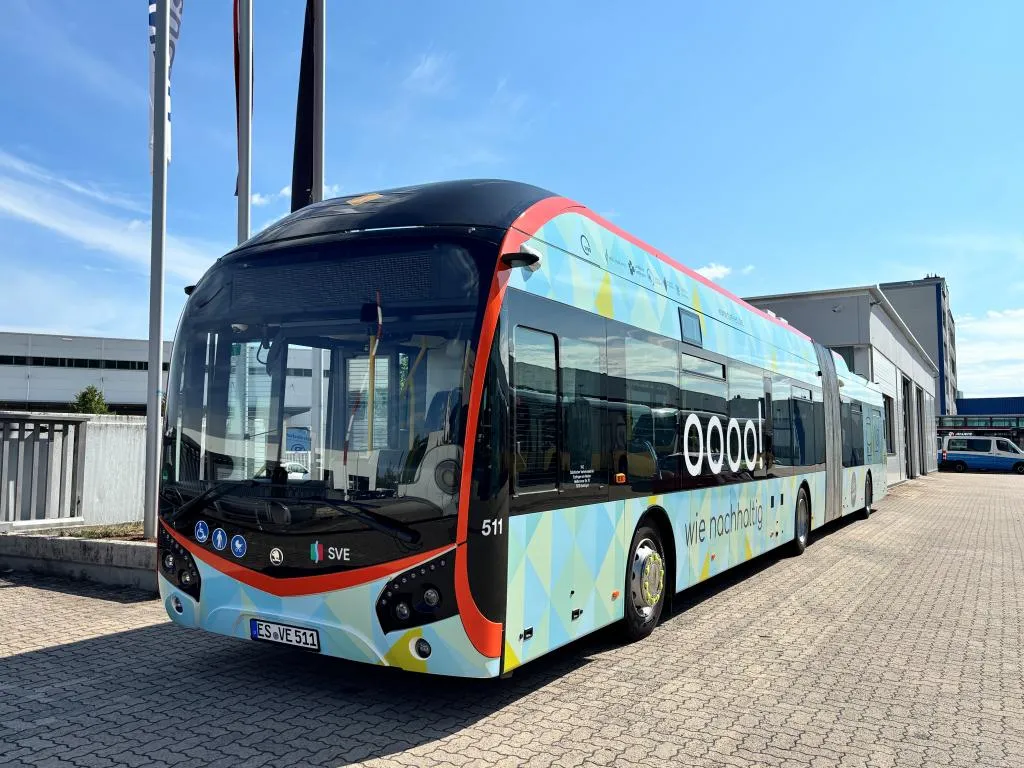
The contract also includes a comprehensive service package that guarantees the long-term operational reliability of the vehicles, as well as an option for the supply of a further nine trolleybuses of the same type.
Air conditioning is made in Esslingen
The new trolleybuses are also equipped with Eberspaecher AC135-230 roof-mounted air-conditioning systems, the company announced in a separate press release coming from the supplier. All 52 vehicles will feature the thermal management solution, which provides 30 kW of cooling and 35 kW of heating through a compact roof-mounted unit with a separate electric compressor. According to Eberspaecher, the low-profile design minimizes roof space requirements, allowing the integration of additional trolleybus equipment while maintaining high cooling performance.
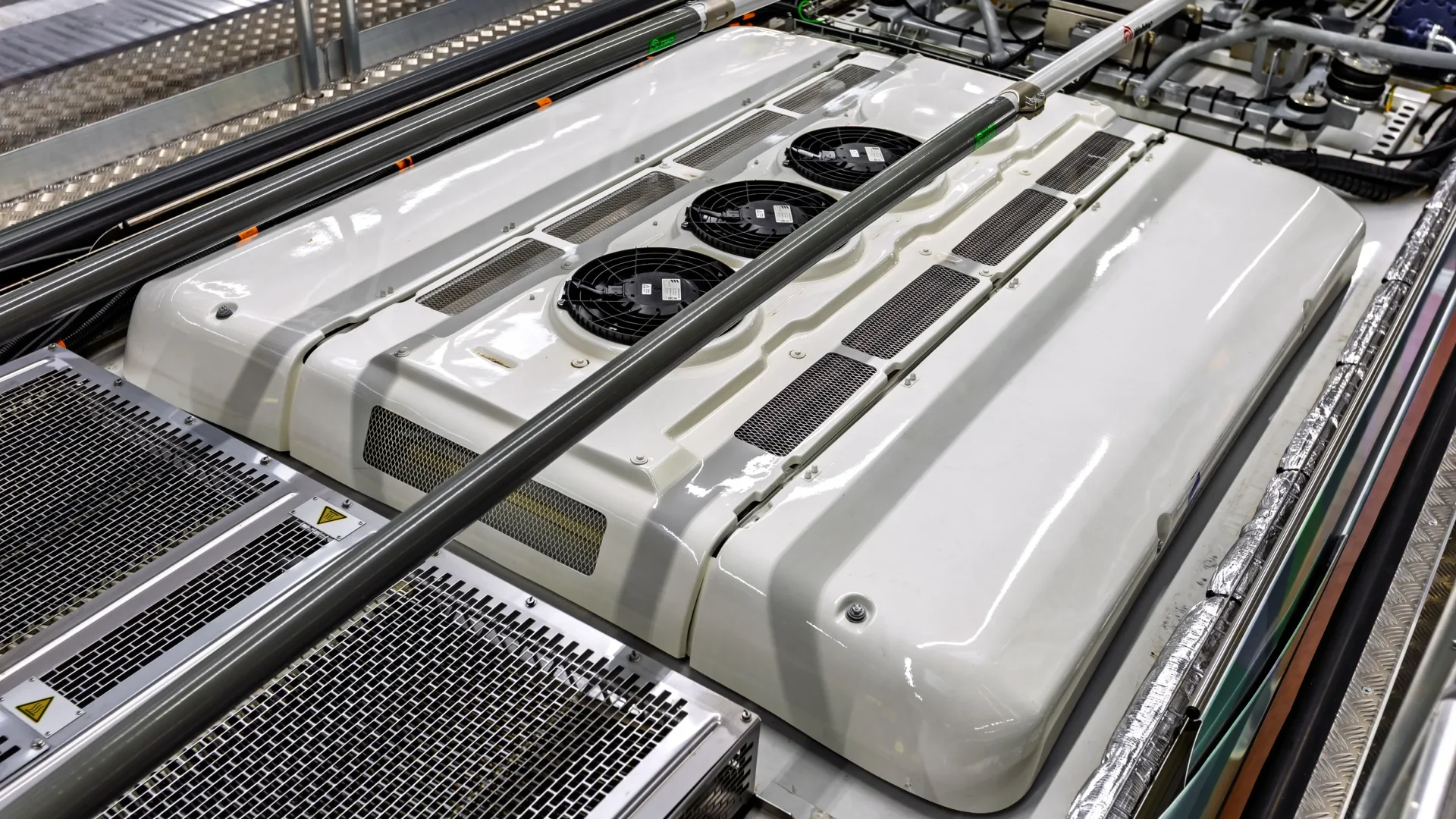
Eberspaecher, whose headquarters are located in Esslingen, said the systems are designed for medium and large electric city buses and are manufactured at its Bangalore plant before being customized in the Czech Republic. The supplier added that the climate control solution has been selected to support passenger comfort and operational reliability on the new battery trolleybuses operating both under overhead wires and in battery mode.
Esslingen towards zero emission public transport operations
Esslingen’s trolleybus network, which has been in operation since 1944 and now covers approximately 29 kilometres, is currently being expanded; extensions to the overhead line network are also planned.
Thanks to the use of electric traction and green energy supplied by Esslingen’s municipal utility company, public transport will not only be zero-emission at the point of use, but will also comply with environmental standards for the supply of the electricity used.
Esslingen is one of the towns that has long been developing electric public transport and is now moving towards a complete transition to zero-emission operations. The ‘100% Electromobility in Public Transport’ project aims to ensure that urban transport in Esslingen is fully electric by the end of 2026. The new trolleybuses will be key to achieving this goal.
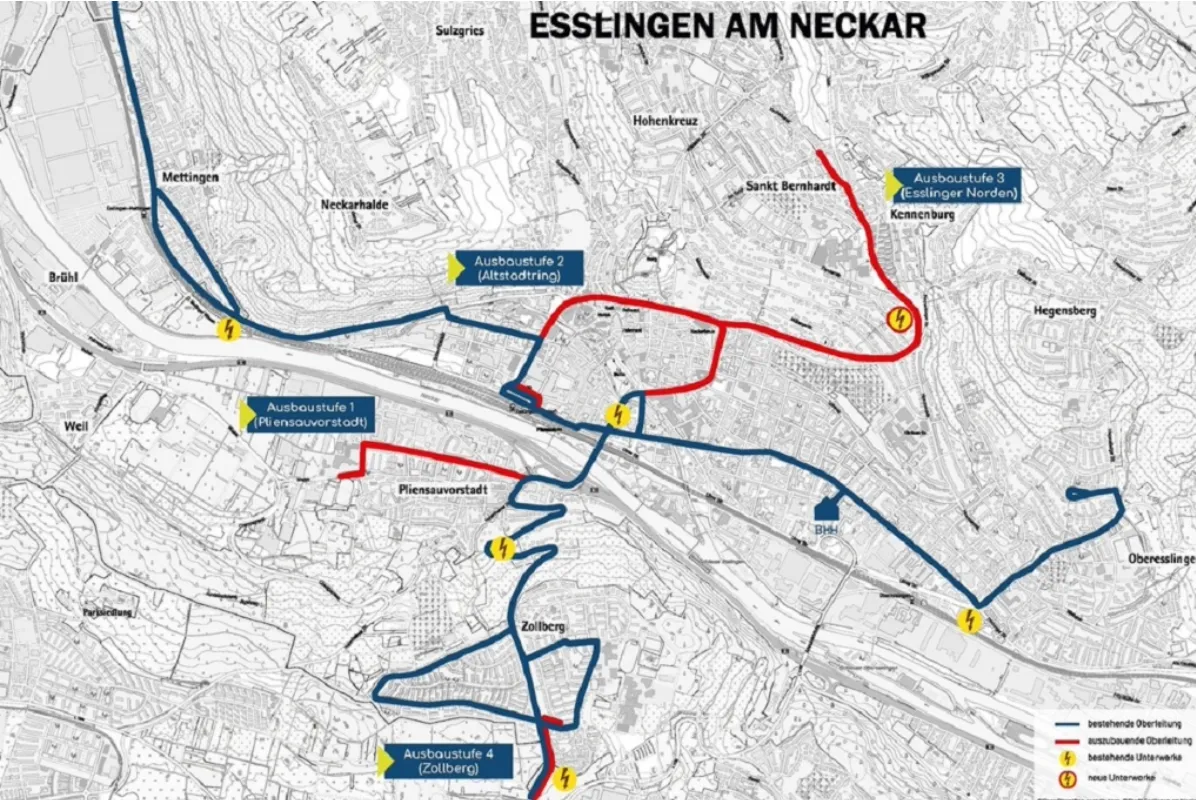
Extension of the overhead network in Esslingen: blue, Existing network: red newly built overhead section: | © Stadt Esslingen am Neckar
“The unveiling of the first trolleybuses for Esslingen marks an important milestone for us and confirms that the project is progressing according to plan. We are proud to be partnering with Esslingen City Council on one of Germany’s most cutting-edge projects in the field of zero-emission urban transport. The new battery-powered trolleybuses combine tried-and-tested electric traction technology with the flexibility to operate away from overhead lines and will offer passengers modern, reliable and comfortable transport,” says Karel Majer, Chairman of the Board of Directors of Škoda Electric at the Škoda Group.
In brief
- What has Škoda delivered to Esslingen? The manufacturer has delivered the first two of 52 battery-powered trolleybuses ordered by the German city, with all vehicles scheduled for delivery by the end of 2026.
- What vehicles are included in the order? The contract covers 10 Škoda 32Tr 12-metre trolleybuses and 42 articulated Škoda 33Tr 18-metre trolleybuses, all equipped with batteries for off-wire operation.
- What are the key technical features? The trolleybuses can operate up to 25 km without overhead wires, using In Motion Charging to recharge batteries while driving under catenary and regenerative braking to recover energy.
- How do the new trolleybuses fit into Esslingen’s plans? They will support the city’s “100% Electromobility in Public Transport” project, which targets fully electric urban public transport by the end of 2026.
“Esslingen is a project of great significance to us. It is not just about supplying modern vehicles, but about collaborating with a city that is committed to transforming its entire public transport system into a zero-emission system. We are proud that the Škoda Group can contribute to this transformation. At the same time, this project strengthens our solid position in the German market and demonstrates that our electric mobility solutions effectively meet the needs of cities aiming for sustainable transport,” says Jan Harder, President of the Škoda Group’s Western Region.
“With the new battery-powered trolleybuses, we are investing in modern, high-performance and climate-friendly public transport. Esslingen is thus demonstrating that sustainable mobility can be successfully combined with an attractive transport service for passengers,” says Matthias Klopfer, Mayor of Esslingen am Neckar.
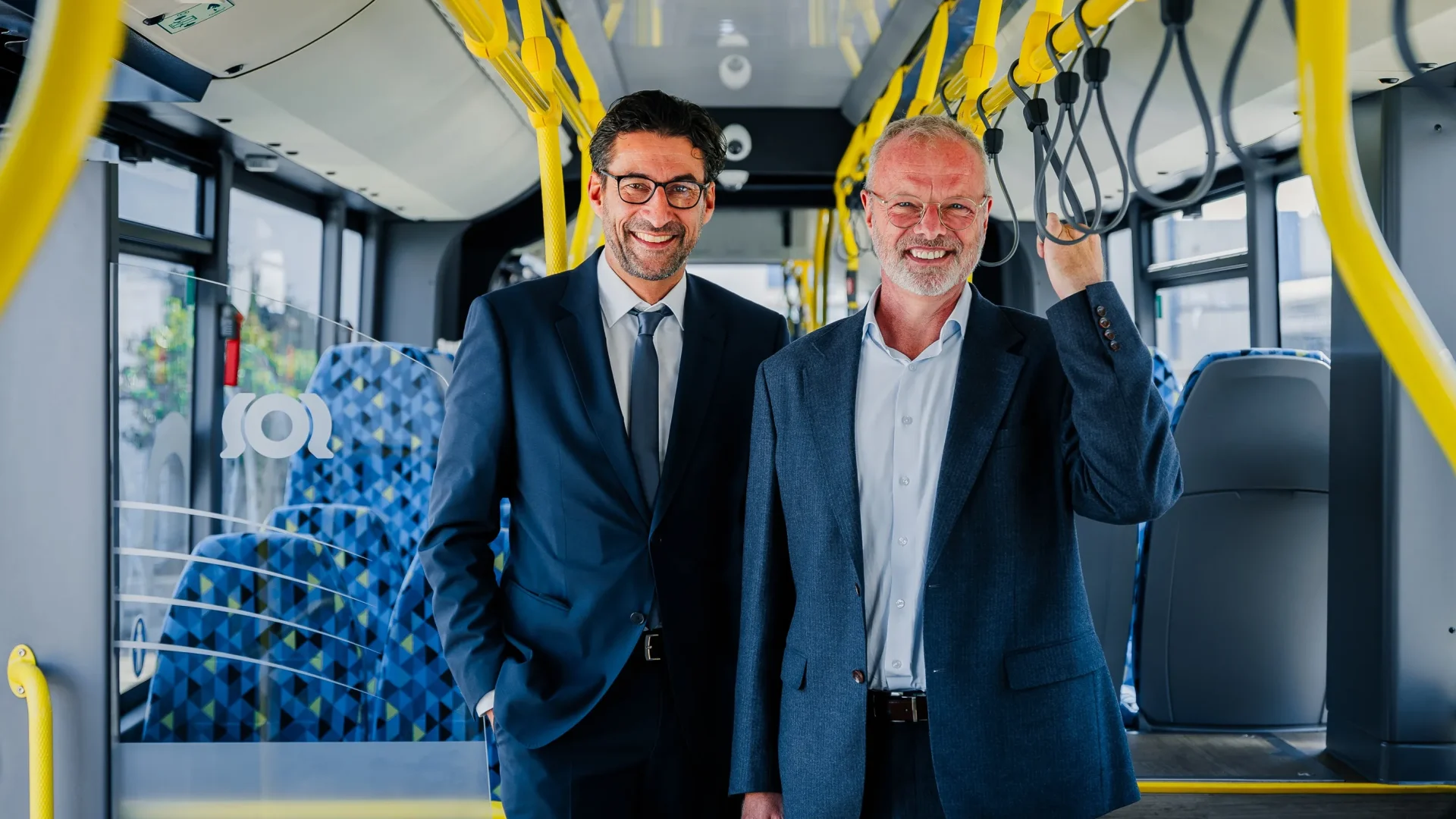
“The history of Eberspaecher began right here in Esslingen over 160 years ago. What continues to define us to this day is our innovative strength. It is the source of solutions that make mobility more comfortable, efficient, and sustainable. We are proud that our climate control technology is now on board the new trolleybuses in our hometown. This underscores how we are actively supporting the transformation of public transit with reliable thermal management solutions,” says Joerg Steins, CEO of the Eberspaecher Group.
with contribution by Stefano Alfano