Irizar hydrogen coach with Bosch 190 kW fuel-cell system faces test operation in Madrid
Bosch’s FCPM C190 fuel-cell system has entered passenger service testing in Madrid on an Irizar coach operated by Alsa. The trial represents the first customer project in the bus segment for Bosch’s new fuel cell system, according to the German supplier. The vehicle has already undergone testing and received the necessary approvals, and Alsa plans […]
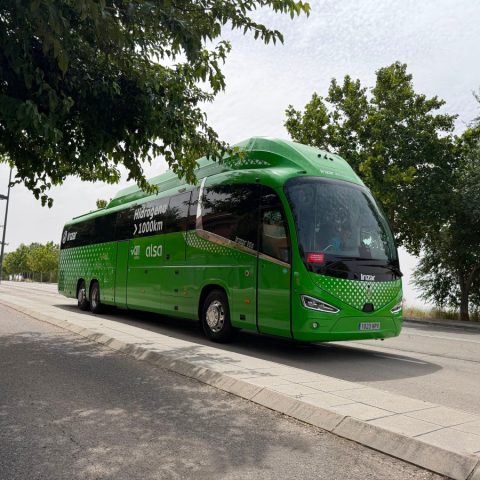
Bosch’s FCPM C190 fuel-cell system has entered passenger service testing in Madrid on an Irizar coach operated by Alsa.
The trial represents the first customer project in the bus segment for Bosch’s new fuel cell system, according to the German supplier. The vehicle has already undergone testing and received the necessary approvals, and Alsa plans to operate it for several weeks within Madrid’s public transport system.
The vehicle is the second generation of Irizar fuel cell coach i6S Efficient H2 FCEV, presented at the beginning of this summer. The first generation of the model was presented at Busworld Europe in 2023. Followingly, it was road tested on a 900 km mileage. Until the release of Bosch press note in late July, Irizar had kept confidential the name of the fuel cell module supplier.
According to Bosch, the test programme will include routes with longer daily operating distances. The vehicle is equipped with the company’s 190 kW FCPM C190 fuel cell power module and is specified for a range of more than 1,000 kilometres with hydrogen refuelling taking between 10 and 15 minutes.
Bosch FCPM C190 starts testing on an Irizar hydrogen bus
The FCPM C190 installed on the Irizar test coach uses a horizontal double-stack architecture and provides 190 kW of continuous output. Bosch describes the system as a compact fuel-cell power module intended for applications including buses.
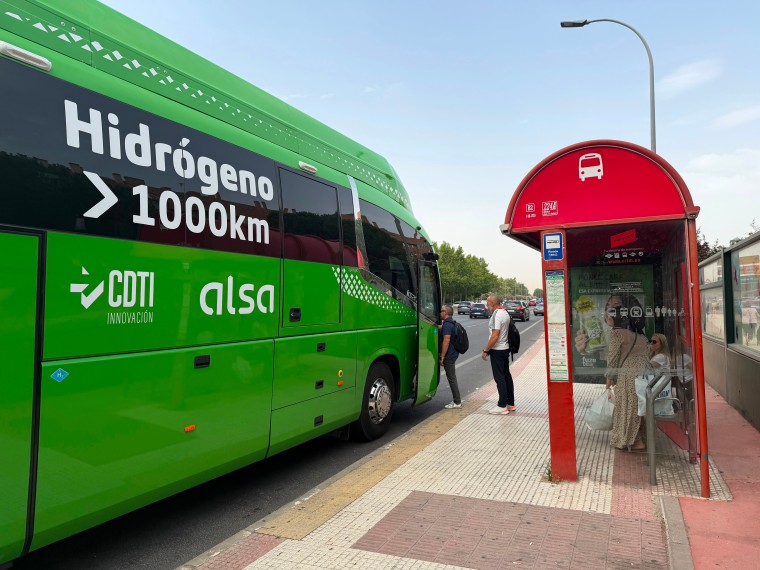
The company states that the hydrogen storage capacity installed on the test vehicle allows a range of more than 1,000 kilometres. Refuelling is specified at 10 to 15 minutes. Bosch says these specifications also allow the vehicle to be used in intercity operation.
The coach has been carrying passengers in Madrid for several weeks, according to Bosch. Following the testing and approval phase, operation under regular conditions will be used to assess the fuel-cell powertrain during passenger transport.
Alsa is responsible for operating the vehicle during the trial. Bosch did not provide details on the specific Madrid routes involved, the duration of individual duties, hydrogen storage capacity in kilograms or the battery specifications of the test bus.
Bosch fuel cell portfolio ranges from 100 to 300 kW
Alongside the 190 kW system being tested in Madrid, Bosch’s fuel cell power module portfolio includes two additional power ratings for different commercial vehicle applications.
The FCPM C100, presented at Mobility Move in Berlin in March 2026, has a continuous output of 100 kW and a flat configuration. Bosch identifies city buses as its intended application. At the other end of the range, the FCPM C300 is designed for heavy-duty coaches and trucks.
Bosch also states that it is developing hydrogen technologies beyond fuel-cell vehicle applications. Its activities include the Hybrion PEM electrolysis stack announced in 2025 and components for hydrogen internal-combustion engines, including port and direct injection technologies.
EU zero-emission bus requirements provide regulatory framework
Bosch places the Madrid trial within the regulatory framework governing new buses in the European Union. The company notes that EU rules require a 90% reduction in CO2 emissions from new city buses by 2030 compared with 2019 levels. Corresponding requirements for other bus categories apply from 2040.
In brief
- Which fuel cell system is being tested in Madrid?
The Irizar fuel cell coach uses Bosch’s FCPM C190, delivering 190 kW of continuous output from a horizontal double-stack system. - Who is operating the hydrogen coach?
Spanish bus operator Alsa is conducting the passenger trial in Madrid. - What range does Bosch specify for the test bus?
Bosch states that the available hydrogen storage allows a range of more than 1,000 kilometres. - How long does hydrogen refuelling take?
Bosch specifies a refuelling time of between 10 and 15 minutes.
Thomas Pauer, member of the Bosch Mobility sector board and president of Bosch Power Solutions, said: “The fuel cell is the perfect complement to battery-electric powertrains – even in bus operations. Fuel cells are especially well-suited for buses that travel longer distances every day and rarely have the opportunity to charge en route. With this trial, we can clearly demonstrate that Bosch’s fuel-cell technology is ready for the demands of large-scale deployment in passenger transport.”