LFP battery plant in Spain: Stellantis and CATL form a joint venture (production by end ’26)
Stellantis and CATL have announced a joint venture aimed at establishing large-scale LFP battery plant at Stellantis’ production site in Zaragoza, Spain. According to the partners, production is planned to start by end of 2026 and could reach up to 50 GWh capacity. The agreement is to invest up to €4.1 billion to form the aforementioned joint venture. Recently […]
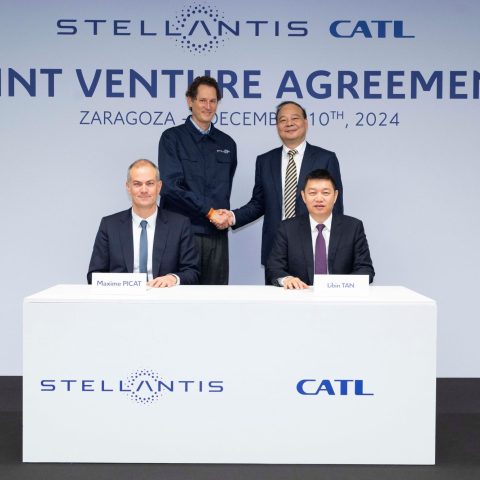
Stellantis and CATL have announced a joint venture aimed at establishing large-scale LFP battery plant at Stellantis’ production site in Zaragoza, Spain. According to the partners, production is planned to start by end of 2026 and could reach up to 50 GWh capacity. The agreement is to invest up to €4.1 billion to form the aforementioned joint venture.
Stellantis and CATL join forces
Back in November 2023, Stellantis and CATL signed a non-binding MOU for the local supply of LFP battery cells and modules for electric vehicle production in Europe and established a long-term collaboration on two strategic fronts: creating a bold technology roadmap to support Stellantis’ advanced battery electric vehicles (BEV) and identifying opportunities to further strengthen the battery value chain. In particular, CATL is already bringing state-of-the-art battery manufacturing technology to Europe through its two plants in Germany and Hungary, which are already operational.
“Stellantis is committed to a decarbonized future, embracing all available advanced battery technologies to bring competitive electric vehicle products to our customers,” said Stellantis Chairman John Elkann. “This important joint venture with our partner CATL will bring innovative battery production to a manufacturing site that is already a leader in clean and renewable energy, helping drive a 360-degree sustainable approach. I want to thank all stakeholders involved in making today’s announcement a reality, including the Spanish authorities for their continued support.”