Modena launches 12 Solaris hydrogen buses and new SETA refuelling infrastructure
Italian carrier SETA has introduced 12 Solaris Urbino 12 hydrogen buses in Modena alongside a new hydrogen storage and refuelling facility at its Strada Sant’Anna depot, as reported on Italian trade media (and our sister platform) Autobusweb. The project represents a total investment of €12 million, comprising €8.2 million from Italy’s PNRR recovery programme and […]
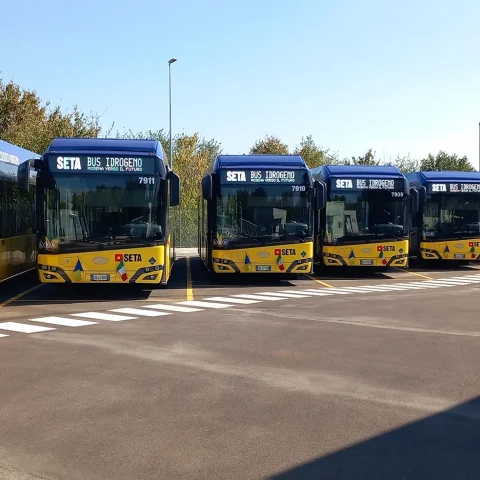
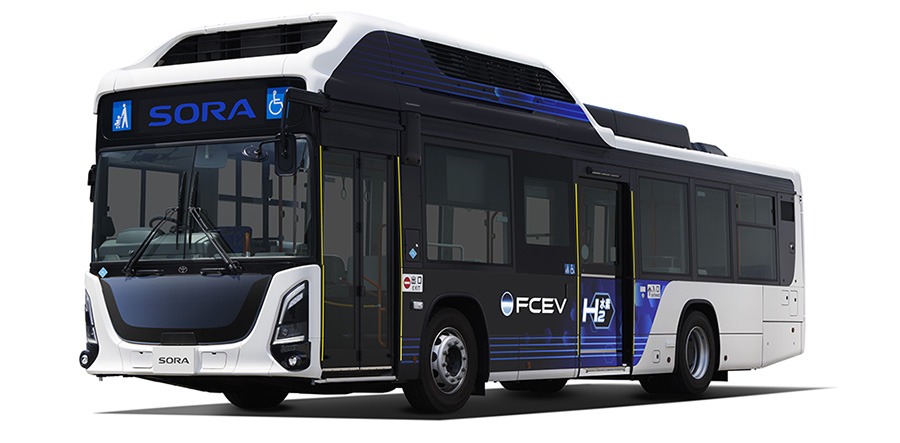
Italian carrier SETA has introduced 12 Solaris Urbino 12 hydrogen buses in Modena alongside a new hydrogen storage and refuelling facility at its Strada Sant’Anna depot, as reported on Italian trade media (and our sister platform) Autobusweb.
The project represents a total investment of €12 million, comprising €8.2 million from Italy’s PNRR recovery programme and €3.8 million in self-financing, according to SETA. The hydrogen buses and infrastructure were officially presented on 23 September at the operator’s Modena headquarters.
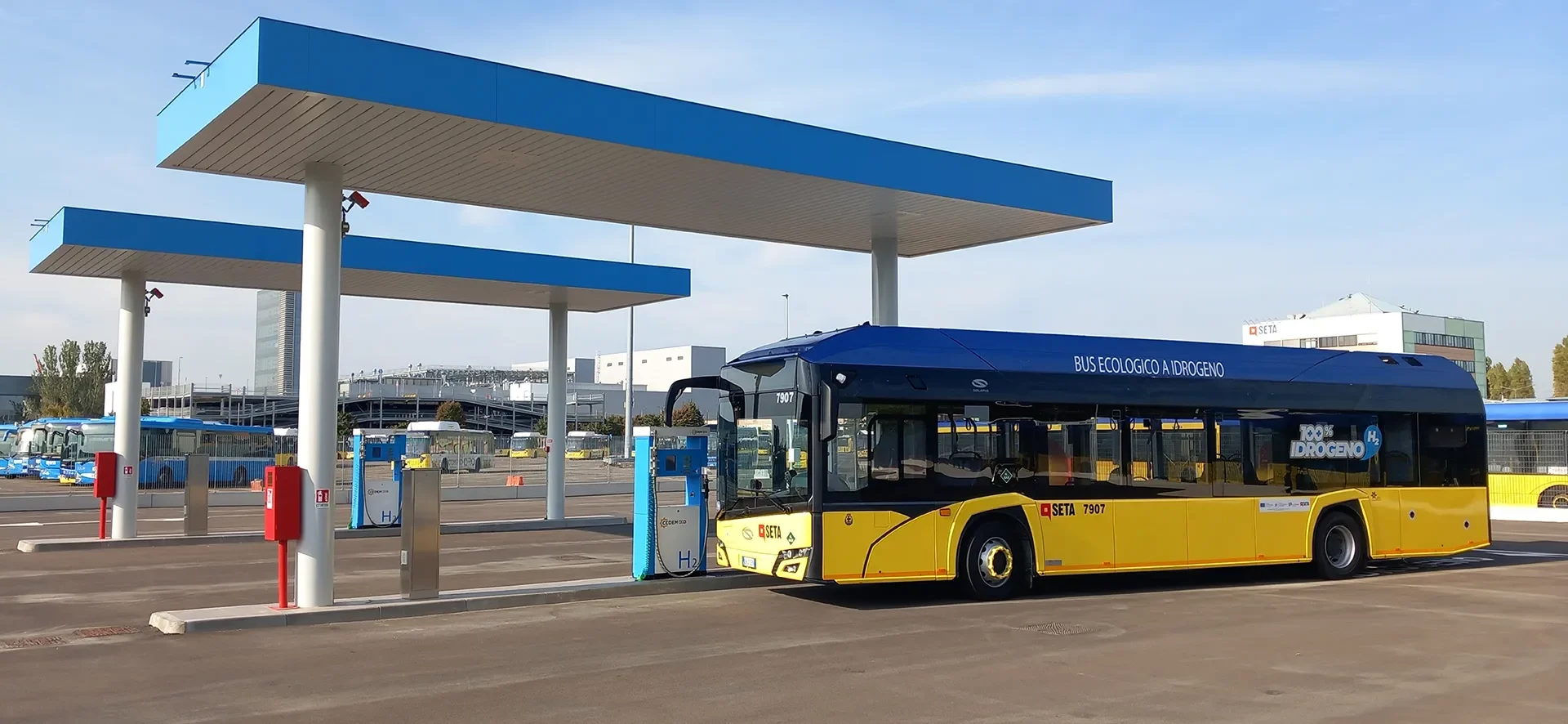
The 12 vehicles are Solaris Urbino 12 hydrogen models, the same model introduced by TPER in Bologna and Ferrara earlier in 2026. The same Solaris Urbino 12 hydrogen has been commissioned in Venice, and it’s no surprise that in 2025 Solaris held 50 per cent of the European fuel cell bus market in the last couple years. The Solaris Urbino 18 Hydrogen New Generation has just been awarded with the Sustainable Bus Award 2027.
At full operation, SETA says the 12-metre fuel cell buses will consume up to approximately 50 tonnes of hydrogen per year and cover around 660,000 kilometres annually.
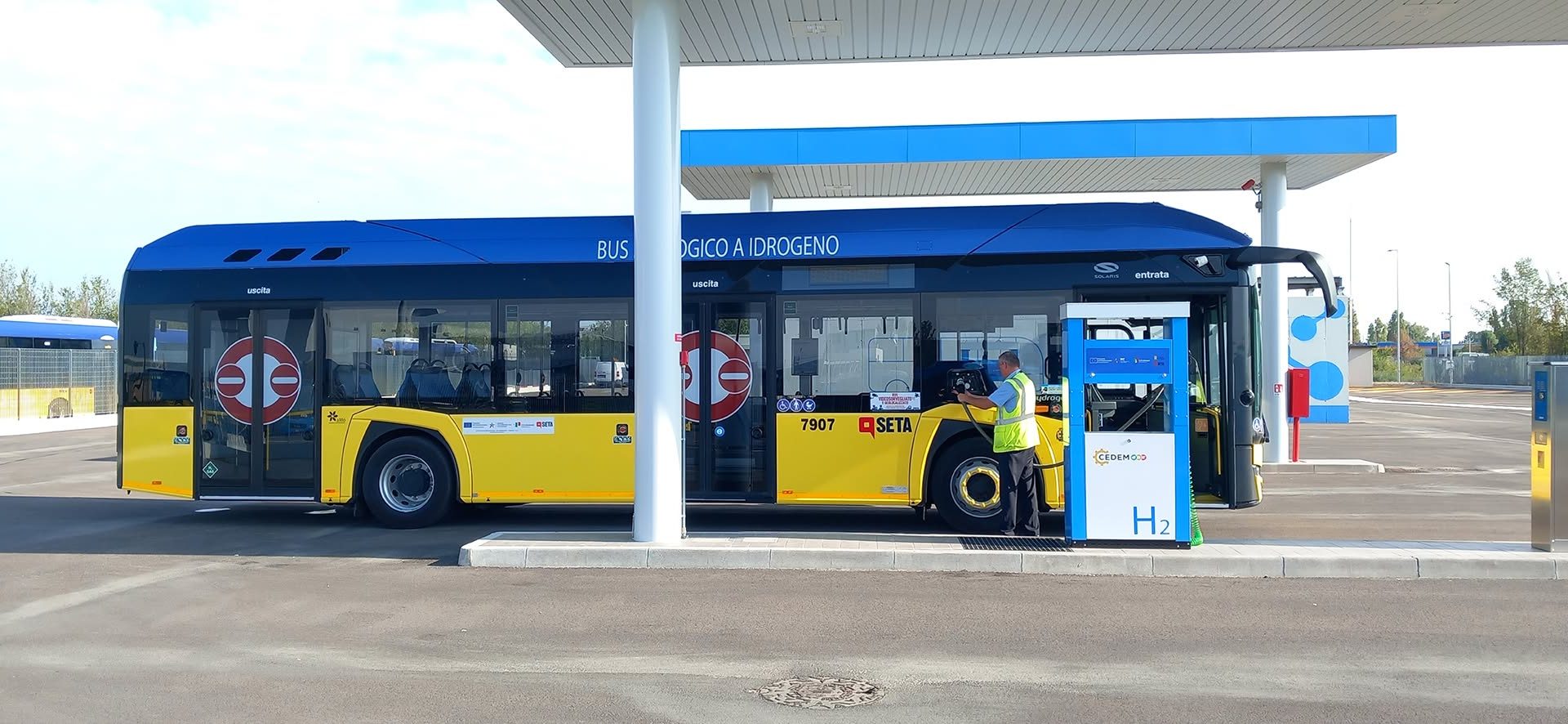
SETA opens hydrogen refuelling station at Modena bus depot
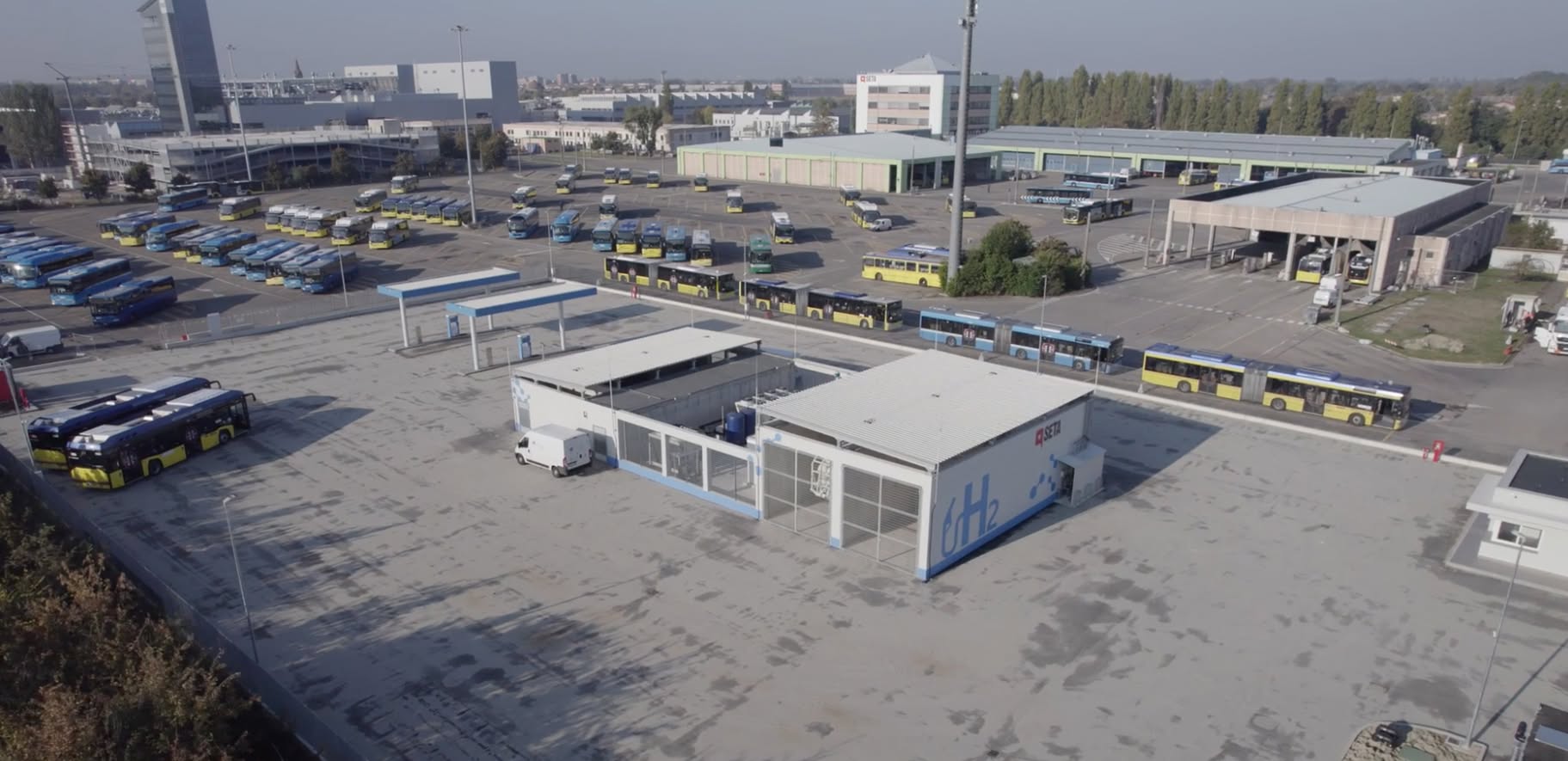
Alongside the vehicles, SETA has commissioned a hydrogen storage and refuelling facility within its Strada Sant’Anna depot.
According to SETA, the facility covers approximately 6,000 square metres and includes a technical area for hydrogen compression and storage, two refuelling points and an area dedicated to bus manoeuvring and parking.
Compressed hydrogen is transferred to the buses through two high-flow dispensers. The onboard tanks are filled at a maximum pressure of approximately 350 bar, while each bus requires around 10 to 15 minutes for refuelling.
SETA states that the facility incorporates systems for monitoring each operational phase as well as safety and energy-efficiency functions.
The plant was built by Modena-based consortium CEDEM, which specializes in the installation and commissioning of fuel distribution equipment and systems. Engineering was carried out by DBA Group in collaboration with Nord Progetti.
12 Solaris fuel cell buses enter service in Modena
The introduction of the Solaris buses forms part of SETA’s fleet renewal programme and the wider hydrogen programme underway in Modena.
According to SETA, the fuel cell buses provide operating range and expected service life comparable with conventional diesel vehicles. The operator also states that, compared with battery-electric buses, the vehicles offer more interior space, longer operating range, higher daily operating availability, particularly during winter, and shorter refuelling times.
The new buses and refuelling station were presented in the presence of SETA President Elisa Valeriani and CEO Riccardo Roat, Modena Mayor Massimo Mezzetti, aMo sole director Andrea Bosi, CEDEM President Marco Malagoli and representatives of the Municipality of Modena.
Hydrogen buses included in Modena Hydrogen Valley project
The hydrogen bus programme is also included among the initiatives forming the Hydrogen Valley of Modena project.
The programme is promoted by the Municipality of Modena with the participation of AESS – Agency for Energy and Sustainable Development, University of Modena and Reggio Emilia, Snam, Hera Group, aMo and SETA.
The project covers the production, distribution and use of renewable hydrogen in mobility as well as in the ceramics, mechanical, logistics and food sectors, together with related research and development activities.
aMo also invested approximately €600,000 of its own resources in construction of the dedicated access road to the hydrogen facility from Viale La Marmora, according to aMo sole director Andrea Bosi.
In brief
- How many hydrogen buses has SETA introduced in Modena?
SETA has received 12 Solaris Urbino 12 hydrogen fuel cell buses. - How much was invested in the project?
The total investment is €12 million, including €8.2 million from PNRR funding and €3.8 million in self-financing. - How large is the hydrogen refuelling facility?
The facility covers around 6,000 square metres and has two high-flow refuelling points. - How long does it take to refuel a bus?
SETA states that each hydrogen bus can be refuelled in approximately 10 to 15 minutes.
“SETA is proud to be among the first companies in Italy to introduce hydrogen as an energy carrier for public transport. The introduction of hydrogen as an energy carrier allows a further step in the technological and environmental renewal of our fleet, and will enable us to further increase the sustainability of the service provided. It is a demanding challenge, but we have undertaken it in the belief that it is an important technological innovation that can make the service we offer our users increasingly efficient, attractive and environmentally sustainable,” said Elisa Valeriani, President of SETA.