Hamburg, vhh.mobility inaugurates 6.6 MW charging depot with capacity for 60 buses
Hamburg’s operator vhh.mobility has officially opened a new electric bus depot in Norderstedt, designed to accommodate up to 60 buses and equipped with 49 charging points. vhh.mobility, the Verkehrsbetriebe Hamburg-Holstein public transport operator, has inaugurated its newly completed bus depot at Hans-Böckler-Ring in Norderstedt. The facility has been developed primarily for electric bus operations and […]
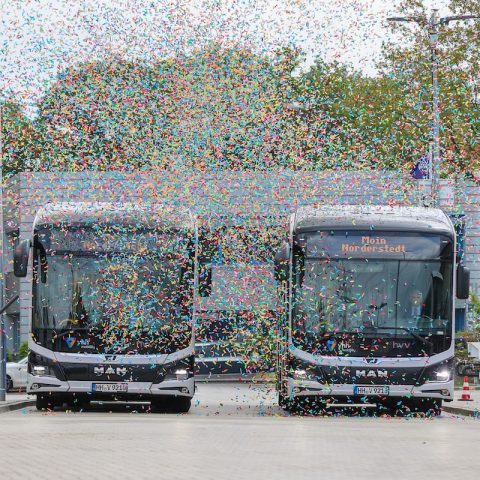
Hamburg’s operator vhh.mobility has officially opened a new electric bus depot in Norderstedt, designed to accommodate up to 60 buses and equipped with 49 charging points.
vhh.mobility, the Verkehrsbetriebe Hamburg-Holstein public transport operator, has inaugurated its newly completed bus depot at Hans-Böckler-Ring in Norderstedt. The facility has been developed primarily for electric bus operations and represents a further step in the company’s ongoing fleet electrification programme in the Hamburg metropolitan area.
The site covers approximately 11,326 square metres and provides parking capacity for around 60 buses. Central to the project is a dedicated charging infrastructure that will supply battery-electric buses with renewable electricity. According to the company, the depot is expected to enable annual CO₂ savings of up to 3,005 tonnes.
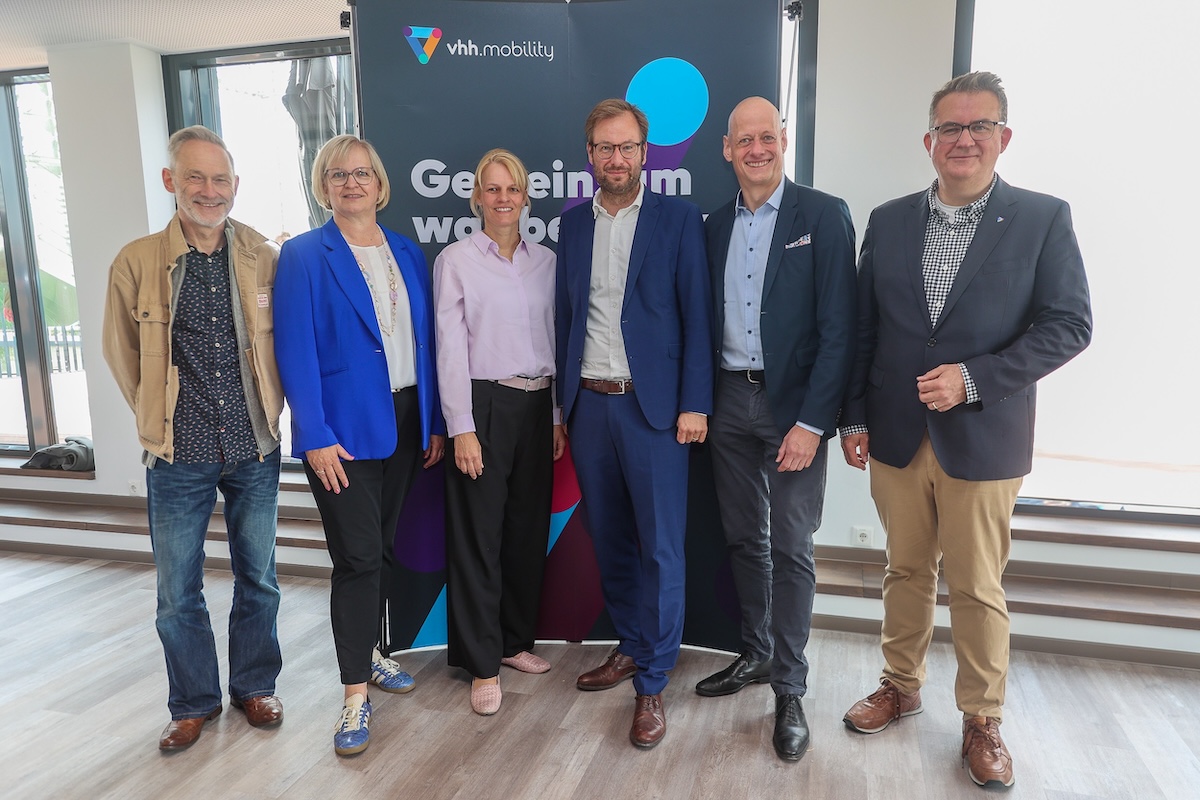
The Norderstedt project is part of a wider depot electrification programme at vhh.mobility, which is progressively equipping its facilities with charging infrastructure to support a fleet of around 300 electric buses currently in operation.
By 2028, 65 percent of buses operating in Norderstedt’s subnetwork 1/2 are expected to be electric. The new depot provides the necessary foundation for this. The current and tangible dependence on oil also makes it clear that, by switching to electric buses, we are investing not only in climate protection but also in future-proof and resilient mobility across the metropolitan region
Hendrik Schrenk, Deputy District Administrator of Segeberg District
vhh.mobility, new charging infrastructure with 49 charging points
Norderstedt is a city of around 80,000 inhabitants located immediately north of Hamburg and forms part of the Hamburg metropolitan region.
The charging system installed at the Norderstedt depot was supplied by Siemens and is based on a flex charging concept. The infrastructure comprises a total of 49 charging points, including 37 newly installed units, with an overall installed capacity of 6.6 MW.
Each charging point delivers up to 150 kW. The chargers are mounted on overhead support structures, while the power units are installed separately to optimise the use of available space within the depot. The system has been designed primarily for overnight charging operations.
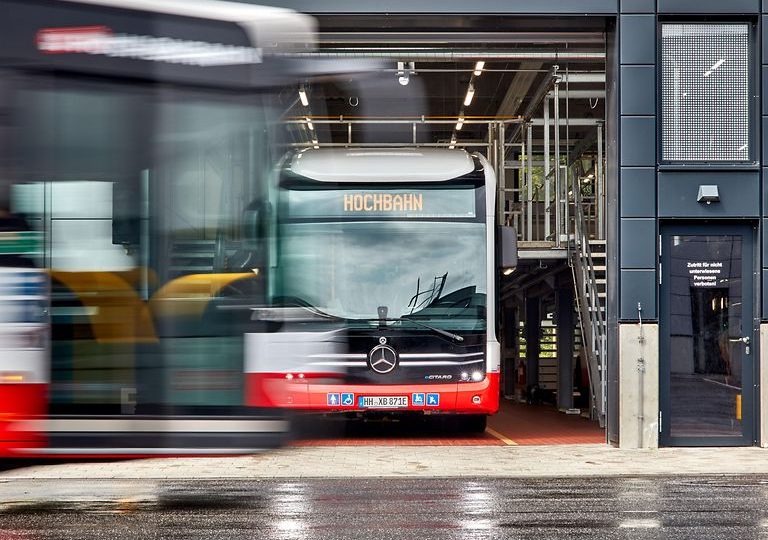
Electricity distribution is supported by a dedicated transformer station. The bus parking area has been configured specifically for electric vehicle operations, with 11 parking lanes allowing buses to be charged and prepared for daily service. A covered and landscaped structure protects the charging equipment while forming part of the overall depot design.
Renewable energy systems and maintenance facilities
The depot incorporates additional energy-related technologies, including a rooftop photovoltaic installation and a geothermal energy system serving the building. According to vhh.mobility, the facility can be operated on a carbon-neutral basis when supplied with renewable electricity.
The ground floor includes a washing and vehicle care lane as well as a workshop equipped for the maintenance and servicing of battery-electric buses.
Construction of the project was completed after approximately two years. During the redevelopment works, operations were temporarily transferred to the company’s “Beim Umspannwerk” location to ensure uninterrupted bus services.
The electric buses assigned to the new depot are scheduled to operate on routes 178, 278, 378, 478, 578, 192, 493, 193, 293, 393, 793, 796, 7141 and 196.
In brief
- What are the main features of the new Norderstedt e-bus depot? The facility can accommodate around 60 buses and includes 49 charging points, a 6.6 MW charging system, a dedicated transformer station, and maintenance facilities for electric buses.
- What charging infrastructure has been installed at the site? The depot features 49 charging points supplied by Siemens, with a total installed capacity of 6.6 MW and charging power of up to 150 kW per point for overnight depot charging.
- How has the depot been designed to support sustainable operations? The site combines electric bus charging infrastructure with a rooftop photovoltaic system, geothermal energy use, a dedicated transformer station and facilities for e-bus maintenance and servicing.
- What operational capacity does the Norderstedt depot provide? Covering 11,326 square metres, the depot can accommodate around 60 buses and will support electric services on several routes connecting Norderstedt and the wider Hamburg area.
“With the new electric bus depot, we are taking another important step in Norderstedt towards modern, climate-friendly mobility. People in our city want a reliable bus service – and one that is as environmentally friendly as possible. For me, the mobility of the future means intelligently connecting different transport options and providing genuine alternatives to the private car. Electric buses make an important contribution to this: they are quieter, produce no exhaust emissions and improve the quality of life in our city. The new e-bus depot therefore helps us make public transport more sustainable and further optimise Norderstedt’s environmental footprint,” said Katrin Schmieder, Mayor of Norderstedt.
“The new e-bus depot in Norderstedt is an excellent example of how we are jointly advancing modern mobility across regional borders in the metropolitan area. With forward-looking infrastructure and innovative technology, we are creating the conditions for efficient local public transport – in Hamburg and beyond. The close cooperation between Hamburg, Schleswig-Holstein and the municipal partners demonstrates how sustainable mobility can be successfully implemented in practice and how we can shape the transport transition together,” said Anjes Tjarks, Senator for Transport and Mobility Transition of the Free and Hanseatic City of Hamburg.
“By 2028, 65 percent of buses operating in Norderstedt’s subnetwork 1/2 are expected to be electric. The new depot provides the necessary foundation for this. The current and tangible dependence on oil also makes it clear that, by switching to electric buses, we are investing not only in climate protection but also in future-proof and resilient mobility across the metropolitan region,” said Hendrik Schrenk, Deputy District Administrator of Segeberg District.
“The opening of the new e-bus depot in Norderstedt marks an important milestone for vhh.mobility. With this facility, we are creating optimal conditions for operating our growing electric bus fleet while also investing in modern and attractive workplaces. My special thanks go to everyone involved in planning, construction, politics and administration who made this project possible through their joint efforts,” said Dr Lorenz Kasch, Managing Director of Verkehrsbetriebe Hamburg-Holstein GmbH (VHH).