225 buses still to deliver as Ebusco advances restructuring, technology development and prepares for a future return to the market
Ebusco reported an order book of 225 buses at the end of May while preparing a gradual return to new business and continuing discussions with strategic parties interested in its bus activities. The Dutch electric bus manufacturer enters the second half of 2026 in a different position from the one that characterized the company’s most […]
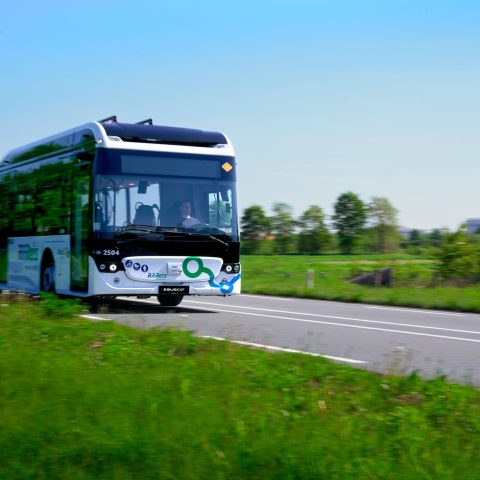
Ebusco reported an order book of 225 buses at the end of May while preparing a gradual return to new business and continuing discussions with strategic parties interested in its bus activities.
The Dutch electric bus manufacturer enters the second half of 2026 in a different position from the one that characterized the company’s most difficult period in late 2024 and early 2025. Deliveries remain the immediate priority, but management is also looking ahead to future tenders, ongoing technology development and the strategic review announced earlier this year concerning the bus division.
The picture emerging from a conversation with founder and Management Board member Peter Bijvelds at Mobco 2026 in Paris, combined with business and governance updates released by the company on June 16th, is that of a manufacturer still undergoing restructuring while seeking to reposition itself after years marked by production bottlenecks, customer claims, liquidity challenges and organizational changes.
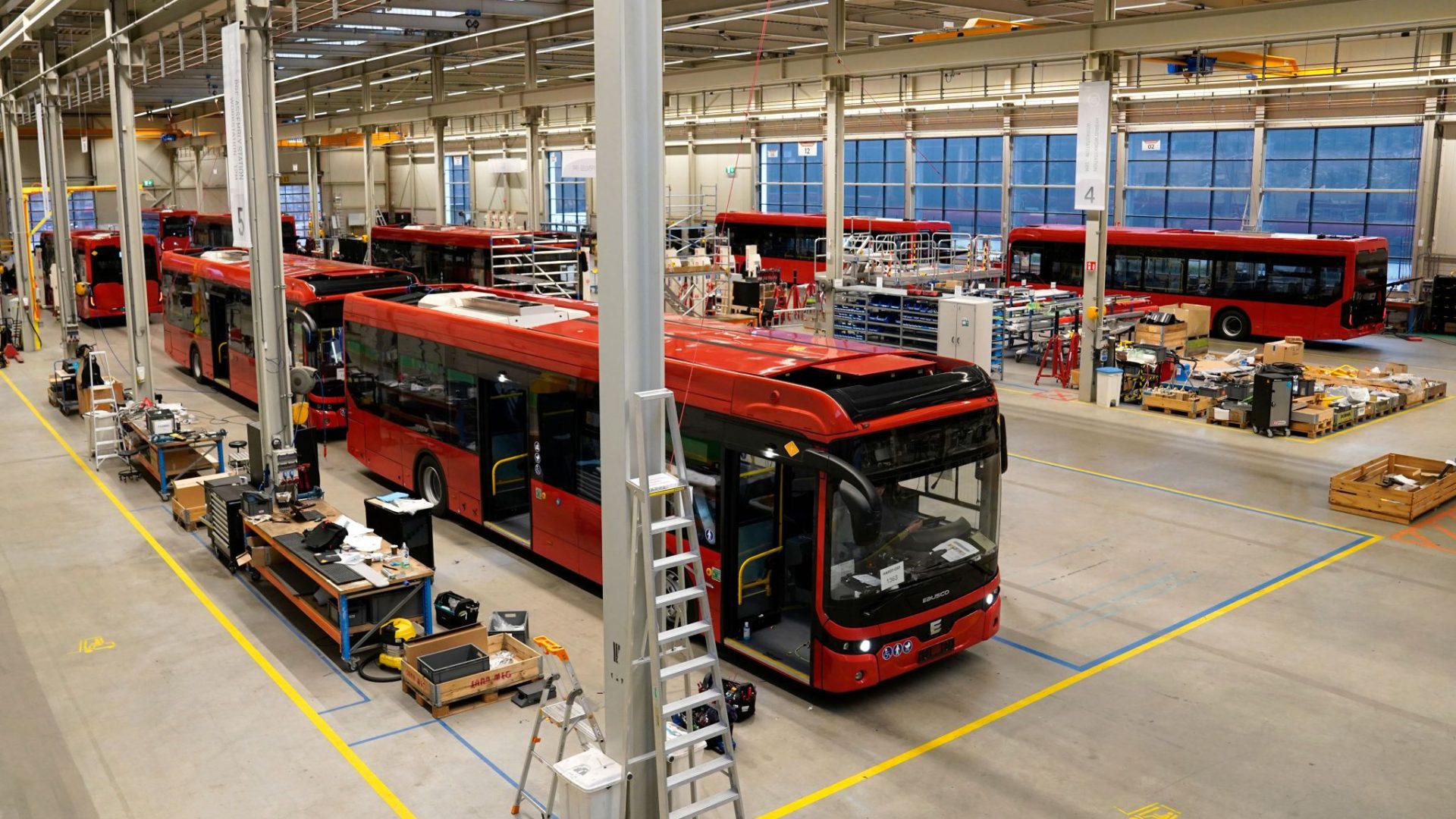
The current industrial model combines European and Chinese operations. Composite body components continue to be produced in Europe, while part of the assembly process is carried out in China before vehicles are completed at Ebusco facilities in Europe. The Rouen site in France remains part of the company’s long-term industrial footprint as a SKD facility where final assembly phases are carried out.
Ebusco focuses on completing remaining firm orders
According to a business update published on 16 June, Ebusco’s order book totaled 225 buses as of 31 May 2026, consisting of 107 firm orders and 118 call-off orders.
The company delivered 12 buses in the first five months of 2026 and stated that it is on track to deliver the remaining firm orders, the vast majority of which are weighted towards the second half of the year. These delivery expectations exclude 14 previously cancelled buses and any new orders.
Commercial activity has remained limited over the last eighteen months, with management prioritizing execution of existing commitments rather than securing new orders. The company has nevertheless resumed its presence at industry exhibitions and conferences as it gradually re-engages with the market.
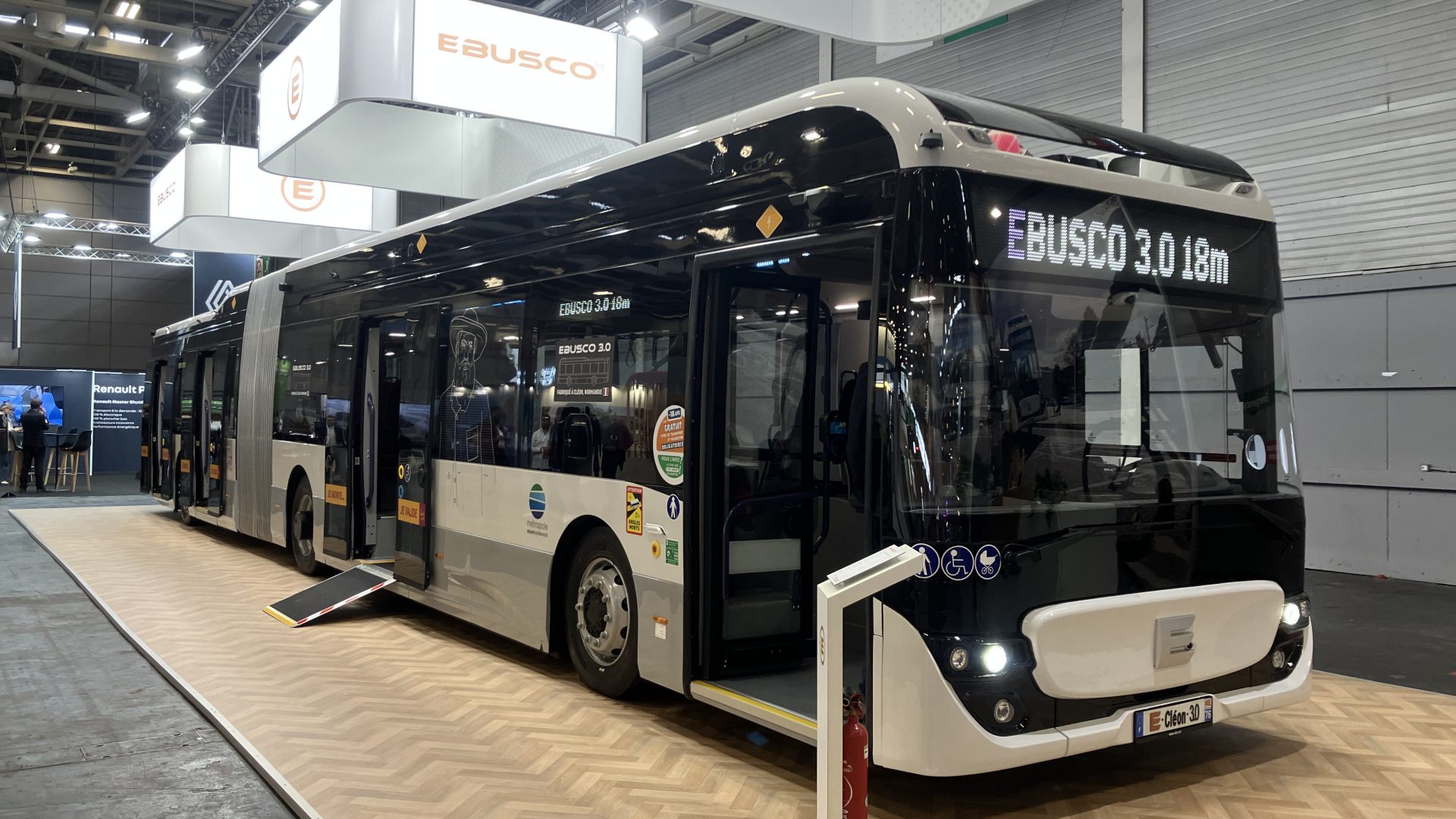
This phase follows a lengthy restructuring process. Ebusco’s turnaround plan involved a transition towards an OEM model based on outsourced manufacturing and assembly activities, alongside financial restructuring measures aimed at restoring operational stability after the company narrowly avoided insolvency in late 2024.
In a business update shared on 16th June, Ebusco reported that its cost base has been reduced by approximately 55 per cent compared with 2024 levels. Average monthly operational expenditures excluding material costs amounted to around €4.3 million in the first four months of 2026, compared with approximately €6.05 million during 2025. The company nevertheless stated that its liquidity and financial position remain constrained. The 16th June business update reads: “Ebusco’s current liquidity and financial position remain constrained, indicating the existence of a material uncertainty as to whether Ebusco is able to continue as a going concern”. According to Ebusco, this situation is largely linked to delays in the fulfillment of previously announced working-capital support measures.
The current industrial model combines European and Chinese operations. Composite body components continue to be produced in Europe, while part of the assembly process is carried out in China before vehicles are completed at Ebusco facilities in Europe. The Rouen site in France remains part of the company’s long-term industrial footprint as a SKD facility where final assembly phases are carried out.
Bijvelds described the current production approach as a mixed model in which high-value proprietary components, including carbon-fibre structures, remain European-made while assembly activities are performed through external partners.
Potrebbe interessarti
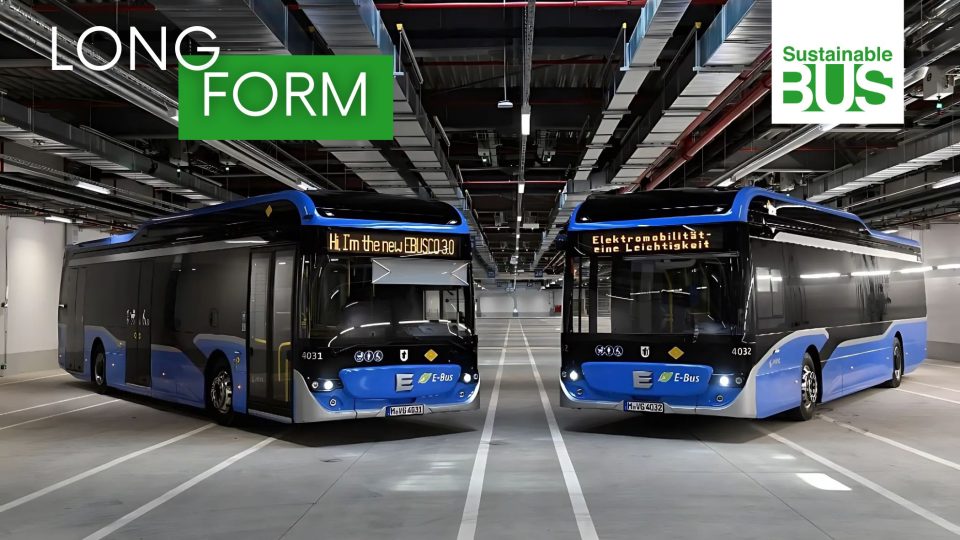
Ebusco, from revolutionary promises to the race for survival
Strategic discussions around the future of Ebusco bus business
One of the most significant developments for Ebusco in 2026 concerns the future ownership structure of the bus division.
When publishing its 2025 financial results in April 2026, the company confirmed that it was engaged in discussions with strategic parties regarding a potential transaction involving the bus business. The announcement followed reverse inquiries received by the company and the creation of a dedicated transaction committee at supervisory board level.
The strategic review remains ongoing. Ebusco stated on 16 June that multiple strategic parties continue to be engaged in discussions regarding a potential transaction. “The company continues to be in discussions with multiple strategic parties that have expressed a serious, but at this stage non-binding, interest to entertain a strategic transaction, in the form of purchasing a controlling stake in Ebusco’s bus operations or otherwise”, reads Ebusco’s note.
The company also confirmed that the Special Transaction Committee established in April 2026 remains responsible for evaluating strategic interest and other reverse inquiries. Any transaction that would constitute a significant change in the identity or character of the company would require prior approval from shareholders, being Ebusco listed at the stock exchange.
Ebusco financial context: where is the company standing?
The strategic review comes as Ebusco continues efforts to strengthen its financial position. According to the company’s 2025 results, revenues reached €76.6 million, compared with €10.7 million in 2024. Net loss decreased from €200.6 million to €71 million, while EBITDA loss improved to €56.4 million. During 2025 the company also completed the restructuring of more than €32 million of debt.
In the same business update, Ebusco reported that its cost base has been reduced by approximately 55 per cent compared with 2024 levels. Average monthly operational expenditures excluding material costs amounted to around €4.3 million in the first four months of 2026, compared with approximately €6.05 million during 2025.
In brief
- How large is Ebusco’s order book? As of 31 May 2026, Ebusco reported an order book of 225 buses, comprising 107 firm orders and 118 call-off orders. The company delivered 12 buses in the first five months of 2026.
- What is the status of the strategic review? Ebusco said multiple parties have expressed serious but non-binding interest in a potential transaction involving its bus operations, including the possible acquisition of a controlling stake.
- What is Ebusco’s current financial situation? Ebusco reported 2025 revenue of €76.6 million, a net loss of €71 million and a 55% reduction in its cost base compared with 2024. The company nevertheless stated that its liquidity remains constrained and that a material uncertainty exists regarding its ability to continue as a going concern.
- Is Ebusco pursuing new business opportunities? The company stated that it is looking in the future to selectively pursuing new tenders while prioritizing delivery of existing orders and operational execution.
The company nevertheless stated that its liquidity and financial position remain constrained. The 16th June business update reads: “Ebusco’s current liquidity and financial position remain constrained, indicating the existence of a material uncertainty as to whether Ebusco is able to continue as a going concern“.
According to Ebusco, this situation is largely linked to delays in the fulfillment of previously announced working-capital support measures.
Ebusco also reported progress on several financing initiatives, including a €27.4 million working-capital package announced in April, additional working-capital relief linked to the sale of certain parts to a Chinese contract manufacturing partner, and ongoing efforts to establish a Letter of Credit facility before the end of July 2026.
On 16 June, shareholders adopted all resolutions presented at Ebusco’s Annual General Meeting. Among the measures approved were the authorization for the Management Board to issue shares, grant rights to subscribe for shares and limit or exclude pre-emptive rights for a period of 18 months. Shareholders also approved an amendment to the company’s articles of association setting the authorized share capital at €25 million, divided into 500 million shares.
Technology development remains part of Ebusco’s roadmap
While production and financial recovery have dominated management attention, Ebusco stresses it has continued investing in technology development.
Bijvelds said the company remains active in autonomous driving projects and highlighted collaborations involving German transport operators, universities and research organizations. Development activities cover both software integration and vehicle-level implementation.
Autonomous driving is viewed internally as a long-term development area. Bijvelds pointed to driver shortages across European public transport markets and ongoing progress in artificial intelligence capabilities as factors supporting future deployment.
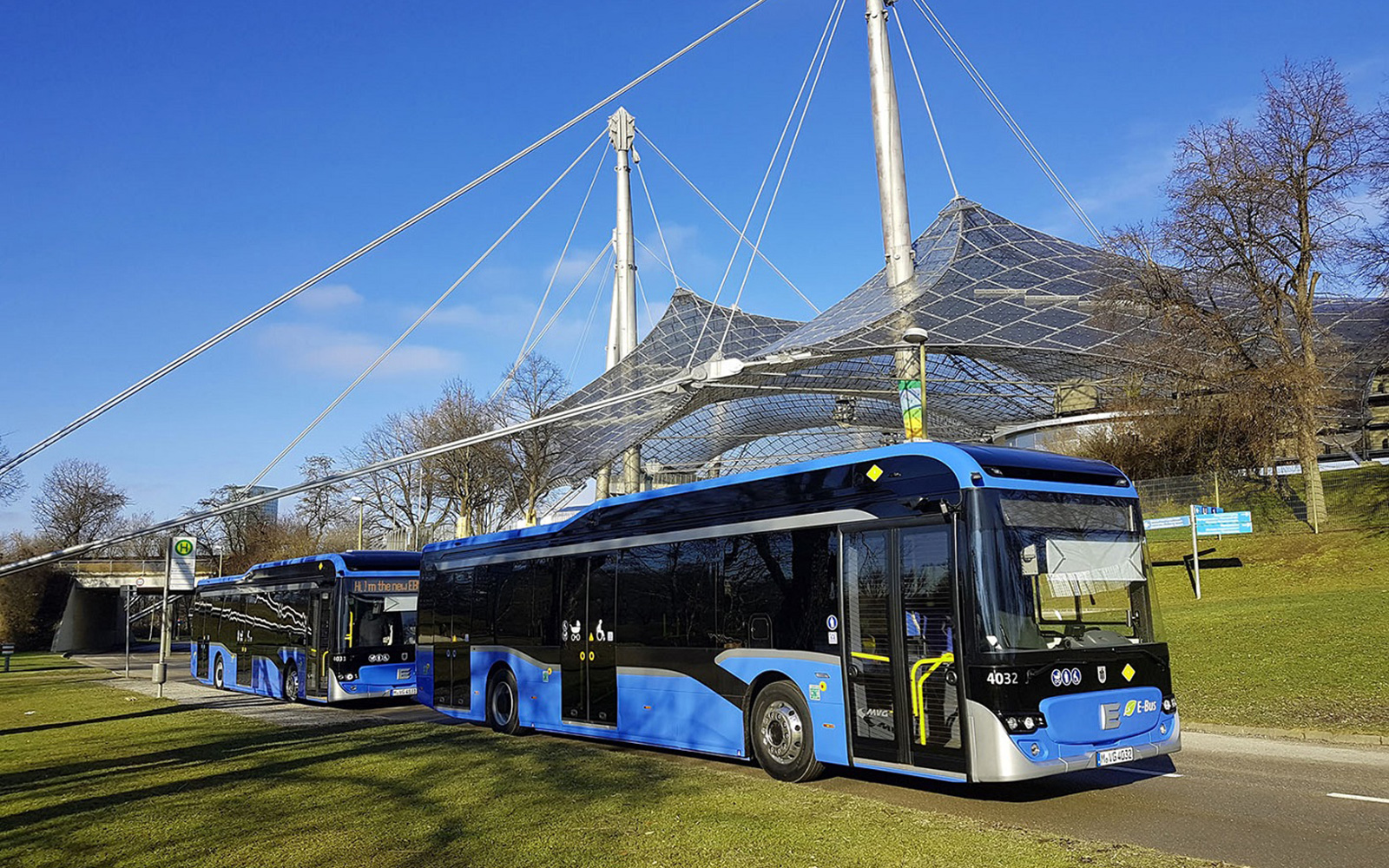
Among the projects currently involving Ebusco is Project MINGA (“Munich’s automated local transport with ridepooling, solo bus and bus platoons”), a research initiative presented in 2023 and funded by the German Federal Ministry of Transport under the Autonomous and Connected Driving in Public Transport programme. Within the project, Ebusco is working alongside Stadtwerke München (SWM), Karlsruhe Institute of Technology (KIT) and the FZI Research Center for Information Technology on the development of bus platooning technology. The concept involves two buses operating on the same route, with a second vehicle autonomously following a lead bus driven by a human operator through vehicle-to-vehicle communication, steering systems and onboard sensors.
According to the project partners, initial testing phases have already been completed, including autonomous steering trials and a first closed-loop platooning operation lasting approximately 80 seconds. Further testing activities are ongoing in Karlsruhe, focusing on vehicle-following performance, system calibration and environmental recognition capabilities.
Product development: Ebusco towards Low Entry 13.5 meter offer
Battery technology remains another major focus. Ebusco continues to work closely with Gotion, which became a shareholder following the 2024 recapitalization process.
Ebusco also stated that it aims to further develop its Energy Solutions business, which represented approximately 16 per cent of consolidated revenue in 2025, with support from strategic partner and shareholder Gotion.
Ebusco’s product roadmap continues to focus on lightweight construction through the use of composite materials.
According to Bijvelds, the company is working on additional certifications and vehicle variants, including developments related to Class II applications. Among the projects mentioned is a 13.5-metre Low Entry vehicle intended for regional services.
Rather than entering the conventional high-floor intercity segment, Ebusco is focusing on a configuration that combines accessibility with higher seating capacity while preserving the weight advantages associated with the company’s composite structure.