Milan’s ATM orders 110 Karsan electric buses, with first vehicle due in service by end-2027
Milan public transport operator ATM has awarded Karsan's Italian dealer Kmobility a contract worth more than €76 million for 110 Karsan e-ATA 12 electric buses.The award covers vehicles for Milan-based operator ATM and its subsidiary NET, with maintenance and battery replacement included in the total contract value. According to ATM’s announcement on 28 October, the first new vehicle is scheduled to enter service by the end of 2027.
Milan public transport operator ATM has awarded Karsan’s Italian dealer Kmobility a contract worth more than €76 million for 110 Karsan e-ATA 12 electric buses.
The award covers vehicles for Milan-based operator ATM and its subsidiary NET, with maintenance and battery replacement included in the total contract value. According to ATM’s announcement on 28 October, the first new vehicle is scheduled to enter service by the end of 2027.
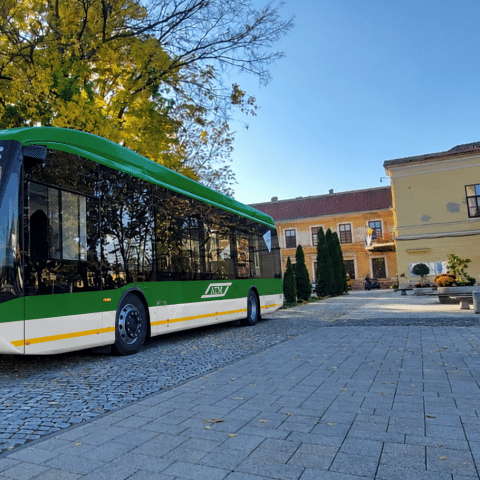
Illustrative image edited using AI to show a hypothetical ATM livery.
It is not an official rendering by ATM or the manufacturer.
The operator reports that more than 600 of the 1,200 buses operating in Milan are already electric, serving 40 routes across the city.
ATM’s procurement follows its plan to convert Milan’s whole bus fleet to electric operation by 2030, which already envisaged investment of more than €1.3 billion in vehicles and infrastructure in 2024. The operator launched the tender for 110 electric buses in March 2026, with an estimated value of €103.1 million including full-service maintenance. The specifications covered 80 three-door urban buses and 30 two-door suburban vehicles, all 12 metres long. In July, KMobility topped the provisional ranking ahead of BYD Europe, scoring 88.314 points against BYD’s 83.271 following the technical and financial evaluation of seven bids. Administrative verification was still underway at that stage.
Karsan’s previous Italian orders include 24 e-ATA 18 articulated electric buses for TPER in Bologna, awarded in 2022, with the first vehicles delivered in November 2023 and equipped for both plug-in and opportunity charging.
ATM orders 110 Karsan e-ATA 12 electric buses
The contract was awarded to KMOBILITY SpA, a Karsan dealer, and comprises 80 buses for ATM and 30 for NET. The initial delivery will consist of 34 vehicles: 22 for Milan and 12 for Monza, where NET operates.
All 110 vehicles will be Karsan e-ATA 12 battery-electric buses. ATM states that the vehicles offer a range of approximately 600 km under standard conditions, although its announcement does not specify the battery configuration or the conditions used to establish that figure.
In brief
- How many electric buses has ATM ordered? The contract covers 110 Karsan e-ATA 12 buses: 80 for ATM and 30 for its subsidiary NET.
- What is the contract value? More than €76 million, including vehicle supply, maintenance and battery replacement.
- When will the first bus enter service? The first vehicle is scheduled to enter service by the end of 2027.
- How many electric buses already operate in Milan? ATM reports more than 600 electric buses, representing half of the city’s 1,200-bus fleet.
The buses can accommodate up to 90 passengers and are fully accessible. Vehicles allocated to Milan will feature two wheelchair spaces.
Equipment includes onboard video surveillance connected in real time to ATM’s security control centre. Camera-based rear-view systems will replace conventional exterior mirrors.
ATM’s Full Electric programme goes ahead
The procurement forms part of ATM’s Full Electric programme, which targets the conversion of the entire Milan and Monza bus fleet, comprising more than 1,200 vehicles, to electric operation.
According to ATM, the programme involves a total investment of more than €1.3 billion, covering fleet renewal and infrastructure works.
Alongside the purchase of electric buses, the operator is adapting existing facilities and converting its San Donato, Sarca, Giambellino and Palmanova depots. The programme also includes the construction of new facilities designed for electric bus operations.