Under Dumarey’s umbrella, Mellor will produce vans powered with hydrogen combustion engines from 2026
Mellor is undergoing a major strategic shift following its late-2023 acquisition by Dumarey Group, who took over parent company WN VTech after it entered into administration. Under the new leadership, Mellor has refocused its priorities, discontinuing the Sigma range (launched in 2021 and strongly pushed also on central European markets) to concentrate on accessible vans. […]
Mellor is undergoing a major strategic shift following its late-2023 acquisition by Dumarey Group, who took over parent company WN VTech after it entered into administration. Under the new leadership, Mellor has refocused its priorities, discontinuing the Sigma range (launched in 2021 and strongly pushed also on central European markets) to concentrate on accessible vans.
The company is also scaling back its overseas expansion to strengthen its foothold in the UK market. Notably, Mellor will pause the development of battery-electric options, instead committing to diesel vehicles until 2026, when it plans to introduce hydrogen-powered internal combustion engine models.
Mellor undergoes a strategic shift
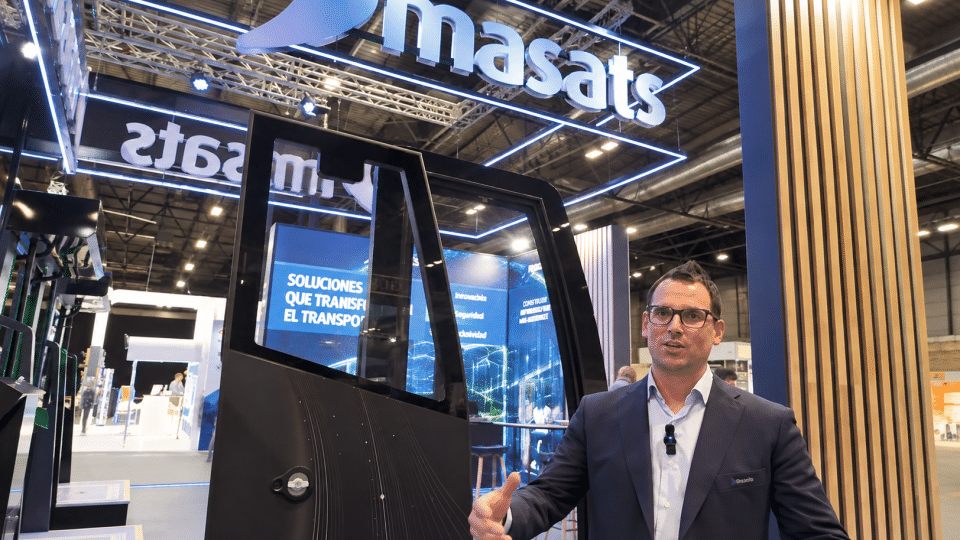
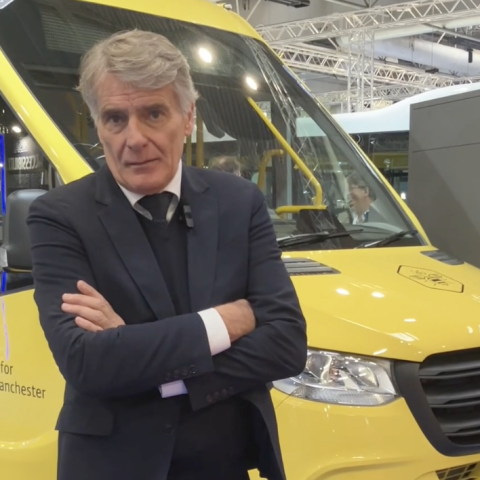
Following Mellor’s acquisition by the Dumarey Group in late 2023, the UK-based bus manufacturer has announced adjustments to its strategic direction. During a press conference at Euro Bus Expo, Mellor’s CEO John Randerson outlined a refined focus on core markets where the company already has an established presence, primarily within the UK, as well as an emphasis on accessible, lightweight bus production based on van conversion.
Mellor’s production plans aim to maintain stability, with a projected output of 650 to 700 buses annually over the next year.
Randerson explained that Mellor intends to concentrate on steady, incremental growth in existing markets, avoiding expansion that could stretch resources and emphasizing the importance of maintaining operational control and reducing the complexities and costs. In alignment with this UK-centered approach, Mellor plans to update its Strata LF range in the coming year, aiming to reduce vehicle weight by 120 kg, expand low-floor areas to enhance accessibility, and prepare the model for future hydrogen applications. And here peculiarities of Mellor strategy arise.
Transition to hydrogen-powered internal combustion engines
Mellor’s new owner, Guido Dumarey, has presented an alternative to the industry’s dominant focus on battery-electric solutions, advocating instead for hydrogen-powered internal combustion engines (ICEs).
According to Dumarey, Mellor will continue producing diesel vehicles until 2026, when they aim to introduce hydrogen ICE models. Dumarey has highlighted the limitations of fully electric buses, especially in terms of battery weight. “The weight of a battery can equal the weight of the people on the bus,” he noted, underscoring the potential for hydrogen ICE technology to offer zero emissions without the weight constraints that come with electric batteries. The only issue concerns the NOx emissions, whose amount need to be dramatically reduced in order to be labeled as zero emission solution.
Dumarey envisions hydrogen ICE technology to allow Mellor to offer zero-emission vehicles with a cost structure competitive to diesel. The main addition required for this setup, according to Dumarey, is the inclusion of 700-bar hydrogen tanks.