A new operating model for Limoges: trolleybuses and e-buses take centre stage in the “Moovéo” programme
Limoges (France) is planning, in collaboration with TCL (Société de Transports en Commun de Limoges), a comprehensive overhaul of its public transport system. The aim is to expand an electric-powered network comprising battery-electric buses and trolleybuses equipped with batteries and In Motion Charging (IMC) technology. Through this strategy, Limoges, which has operated a trolleybus network […]
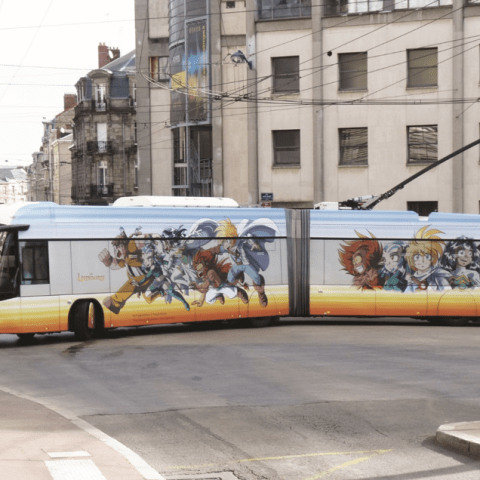
Limoges (France) is planning, in collaboration with TCL (Société de Transports en Commun de Limoges), a comprehensive overhaul of its public transport system. The aim is to expand an electric-powered network comprising battery-electric buses and trolleybuses equipped with batteries and In Motion Charging (IMC) technology. Through this strategy, Limoges, which has operated a trolleybus network since 1943, aims to further strengthen its position as a pioneer of electric urban transport in France.
The current trolleybus network consists of five lines with a total length of 32.5 kilometres, representing 21% of the entire network, and is one of the key strengths of public transport in Limoges. In 2025, trolleybuses recorded 6,629,808 passenger journeys, accounting for around 50% of all journeys made on the network and carrying nearly half of all passengers.
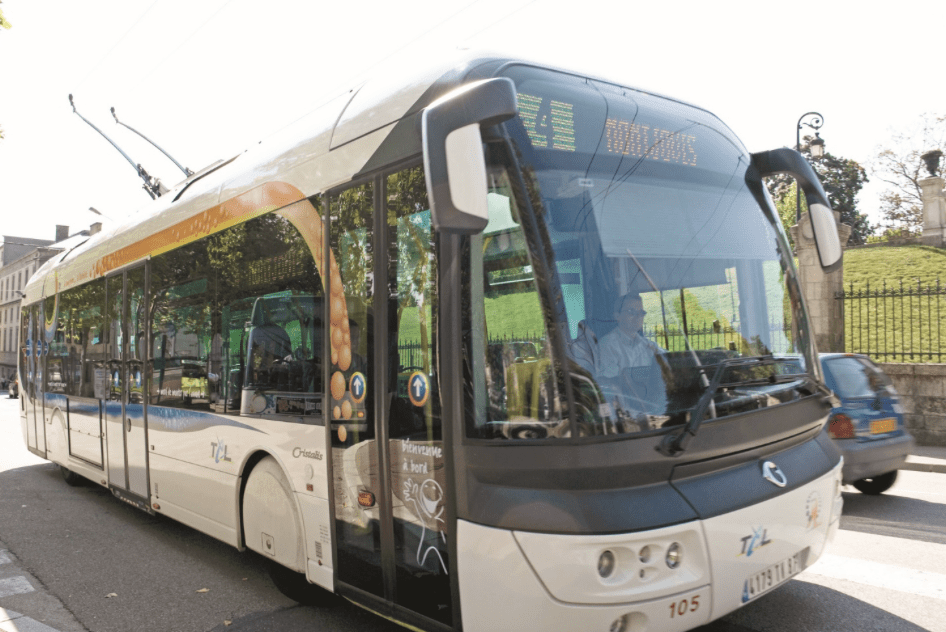
The trolleybus fleet currently comprises 38 vehicles, including 11 articulated 18-metre units. The fleet consists of 27 Irisbus Cristalis ETB12 trolleybuses, numbered 101–127 and built between 2006 and 2011; four Hess/Vossloh Kiepe articulated “Swisstrolley” trolleybuses, built in 2013 and numbered 901–904; and seven Iveco–Škoda Crealis articulated trolleybuses, numbered 911–917 and delivered between 2019 and 2022.
The planned transformation is based on a transport strategy developed by Limoges Métropole in 2018. The objective is to create a network centred on fast, high-frequency corridors, supported by improved interchange opportunities between routes.
The future network will adopt a hierarchical structure: alongside conventional bus services, battery-equipped trolleybuses will be deployed, while BHNS (“Bus à Haut Niveau de Service” – Bus Rapid Transit) routes will form the high-capacity backbone of the network.
Limoges, BHNS battery-electric bus routes
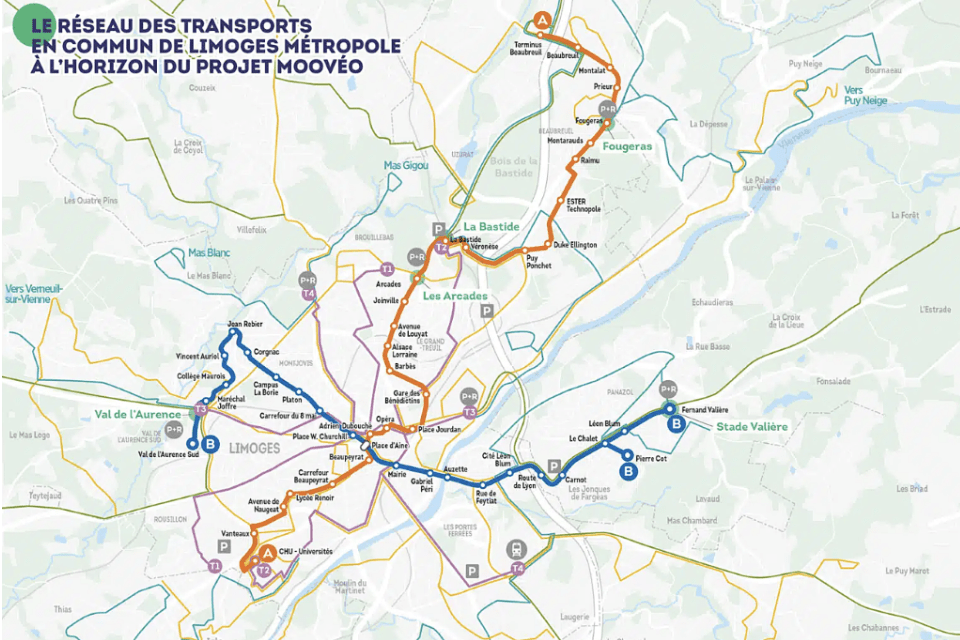
The BHNS programme, operating under the “Moovéo” brand, envisages the introduction of two high-capacity rapid bus routes by 2030.
Line A will connect Beaubreuil with the University Hospital, serving 28 stops along a route approximately 13.6 kilometres long. Line B will link Val de l’Aurence and Panazol on a route measuring just under 10 kilometres. The project includes dedicated bus lanes and traffic-signal priority measures, significantly reducing journey times. The two routes will intersect at Place d’Aine and at the beginning of Boulevard Gambetta.
Both lines are planned to operate at high frequencies throughout the day:
• Line A: every 6–9 minutes
• Line B: every 8–10 minutes
The two new BHNS routes, A and B, will be operated exclusively by battery-electric buses. These vehicles will be recharged using fast-charging systems installed at the route termini. A total fleet of 33 vehicles is planned.
The new trolleybus routes
The trolleybus network is set to be reorganised. It currently comprises five routes:
• Route 1: Route de Lyon – Porte de Louyat
• Route 2: Pierre Curie – La Bastide
• Route 4: Montjovis – Pôle Saint-Lazare
• Route 5: Jean Gagnant – Les Courrières / La Cornue
• Route 6: La Bastide 2 – Maréchal Juin
The project confirms the trolleybus system as the backbone of the network, reorganising it into four routes. New trolleybuses equipped with batteries and In Motion Charging (IMC) technology will be introduced. These vehicles will be capable of operating off-wire on both route extensions and sections not equipped with overhead infrastructure.
At the same time, parts of the existing overhead network in the historic city centre — including sections along the Route de Lyon corridor — are expected to be removed or simplified, while maintaining trolleybus operation through battery-powered running. The objective is to reduce infrastructure maintenance costs while preserving the benefits of electric traction.
The future battery-equipped trolleybus routes will be designated T1 to T4:
• T1: Porte de Louyat ↔ La Cornue
• T2: PEM Bastide ↔ University Hospital
• T3: PEM Casseaux ↔ Val de l’Aurence (Maréchal Juin)
• T4: PEM Beaublanc ↔ PEM Saint-Lazare
The new routes are designed to operate at higher frequencies and with improved coordination compared with the current network. Modern interchange hubs, known as PEMs (Pôles d’Échanges Multimodaux), will also be developed to facilitate transfers and reduce interchange times. A key element of the programme is the modernisation of infrastructure, including the upgrading of depot facilities and traction power substations.
Iveco Bus for Limoges
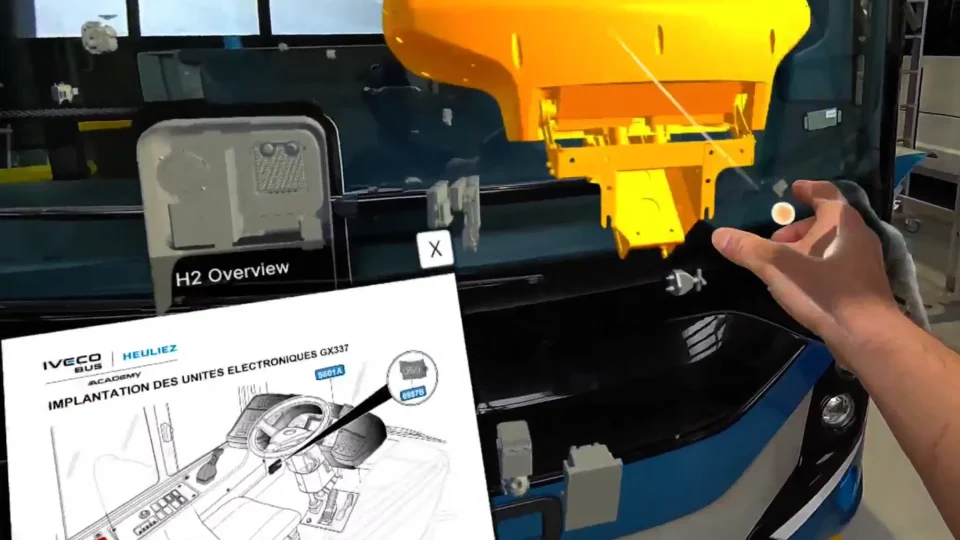
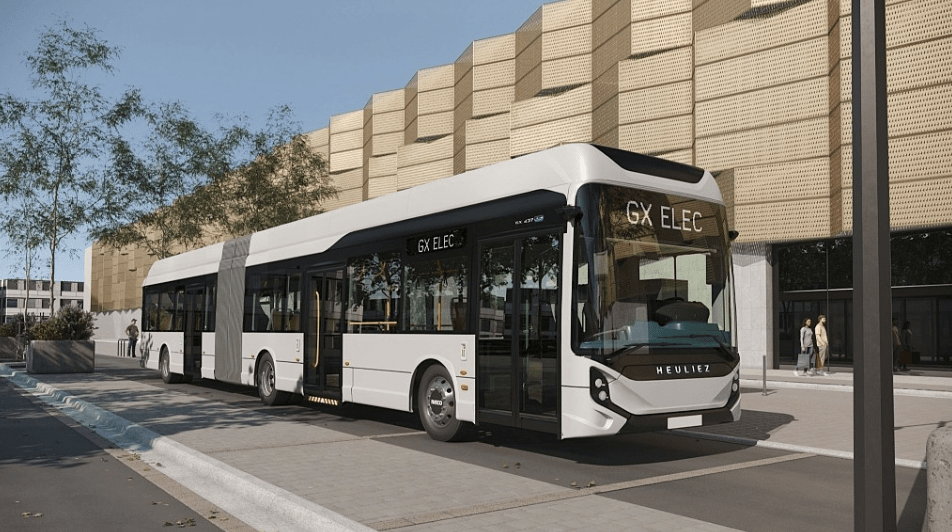
Iveco has been awarded two tenders for the supply of new vehicles for the future combined electric bus network. Through its French subsidiary Heuliez, Iveco Bus will supply between 20 and 45 Gx 437 Elec Linium articulated electric buses. The associated charging infrastructure will be supplied, installed and managed by Dalkia Electrotechnics, including the electrical systems, chargers and ABB E-mobility charging points.
The Gx 437 lec Linium articulated buses are equipped with high-capacity batteries and a roof-mounted pantograph for on-the-go charging, as well as two charging sockets at the depot. The vehicles will be able to accommodate more than 150 passengers, including 34 seated and two spaces for passengers with reduced mobility. In addition, 13 12-metre Gx 337 Elec battery-electric buses will be delivered, with an option to increase the order to a total of 40 vehicles. Deliveries are expected to begin in 2028 and continue over a four-year period.
by Stefano Alfano