Tallinn (Estonia) relaunches trolleybus operations with first new Skoda – SOR vehicles entering service
by Stefano Alfano Trolleybuses are back to Tallinn, the capital of Baltic republic of Estonia. From 1 July 2026, the first vehicles in the new trolleybus fleet began operating on routes 84 (Keskuse – Baltijaam / Station) and 85 (Mustamae – Baltijaam / Station). Following the presentation on 8 April 2026, which included an initial […]
by Stefano Alfano
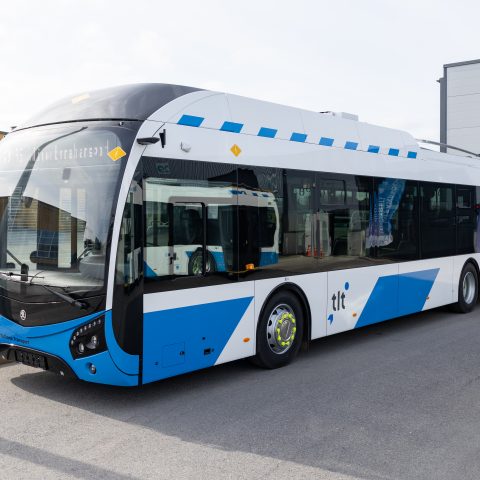
Trolleybuses are back to Tallinn, the capital of Baltic republic of Estonia. From 1 July 2026, the first vehicles in the new trolleybus fleet began operating on routes 84 (Keskuse – Baltijaam / Station) and 85 (Mustamae – Baltijaam / Station). Following the presentation on 8 April 2026, which included an initial test drive, deliveries of the first vehicles have begun.
The new trolleybuses will gradually resume service on the four routes. Following the first two routes, 84 and 85, from august 2026 the trolleybus service will be extended to routes 81 and 83, and they are also scheduled to operate on the former route 9 (now route 72), which was suspended in 2017, where approximately half the route will be covered in battery mode without overhead lines.
40 new trolleybuses running for Tallin
In total, there will be 40 new trolleybuses operating on the streets of Tallinn: twenty-two 18-metre Skoda 33Tr models and eighteen 12-metre Skoda 32Tr models. The manufacturer is Skoda, which supplies the electrical components, whilst the bodywork is fitted out by SOR. The propulsion system will be powered by modern, cost-effective electrical equipment based on IGBT components, complete with diagnostics and remote access to the vehicle’s systems.
The vehicles are equipped with high-capacity traction batteries, enabling them to travel up to 25 km without access to overhead lines. This allows greater flexibility for extending routes beyond the electrified network. The traction batteries are gradually recharged whilst travelling on sections of the route equipped with overhead lines, enabling the vehicles to combine conventional trolleybus operation with greater off-line range, thus allowing for potential route extensions without infrastructure. The Škoda 33Tr articulated trolleybuses will have two drive axles, providing better traction in winter conditions and improving the vehicle’s manoeuvrability.
A trolleybus contract worth over 50 million euros
The vehicles will be fitted with air conditioning, a fully low-floor design and modern information systems, including Wi-Fi connectivity. To facilitate quicker and easier boarding, they will be equipped with sliding doors and an electric ramp for passengers in wheelchairs and those with pushchairs.
The value of the contract, which includes comprehensive support and maintenance services and an option to supply a further 30 vehicles, exceeds 50 million euros. However, this option has not yet been exercised.
The service, which was temporarily suspended – comprising four lines – and the trolleybus network were the subject of a lengthy debate regarding whether or not to maintain them. Ultimately, the decision was taken to retain and expand the network, which had been launched in 1965, albeit with an entirely new fleet,
The Tallinn project also demonstrates the importance of integrating advanced vehicles with modernised infrastructure. The modernisation of the overhead contact line network ensures full compatibility with the new fleet and supports reliable long-term operation. This system-wide approach reflects the Škoda Group’s expertise not only as a vehicle manufacturer, but also as a provider of comprehensive electric mobility solutions.