Volvo Buses relaunches 9700 in Europe alongside BZR Electric and Marcopolo coach offer
Volvo Buses is bringing the Volvo 9700 back to the European market, with production already underway in Mexico and customer deliveries scheduled to begin in late 2026. The return of the 9700 adds a model to Volvo Buses’ current European coach portfolio, alongside the battery-electric Volvo BZR Electric CD, the Volvo B13R – Marcopolo Paradiso […]
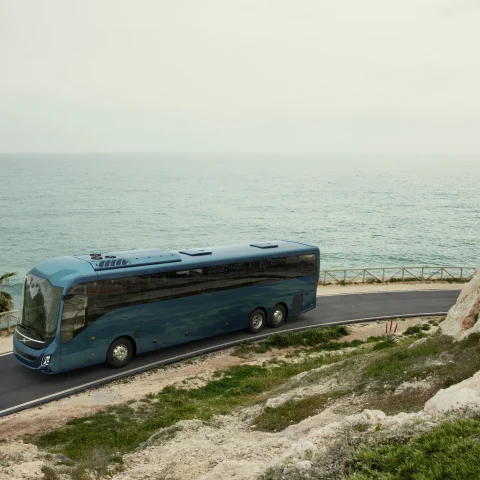
Volvo Buses is bringing the Volvo 9700 back to the European market, with production already underway in Mexico and customer deliveries scheduled to begin in late 2026.
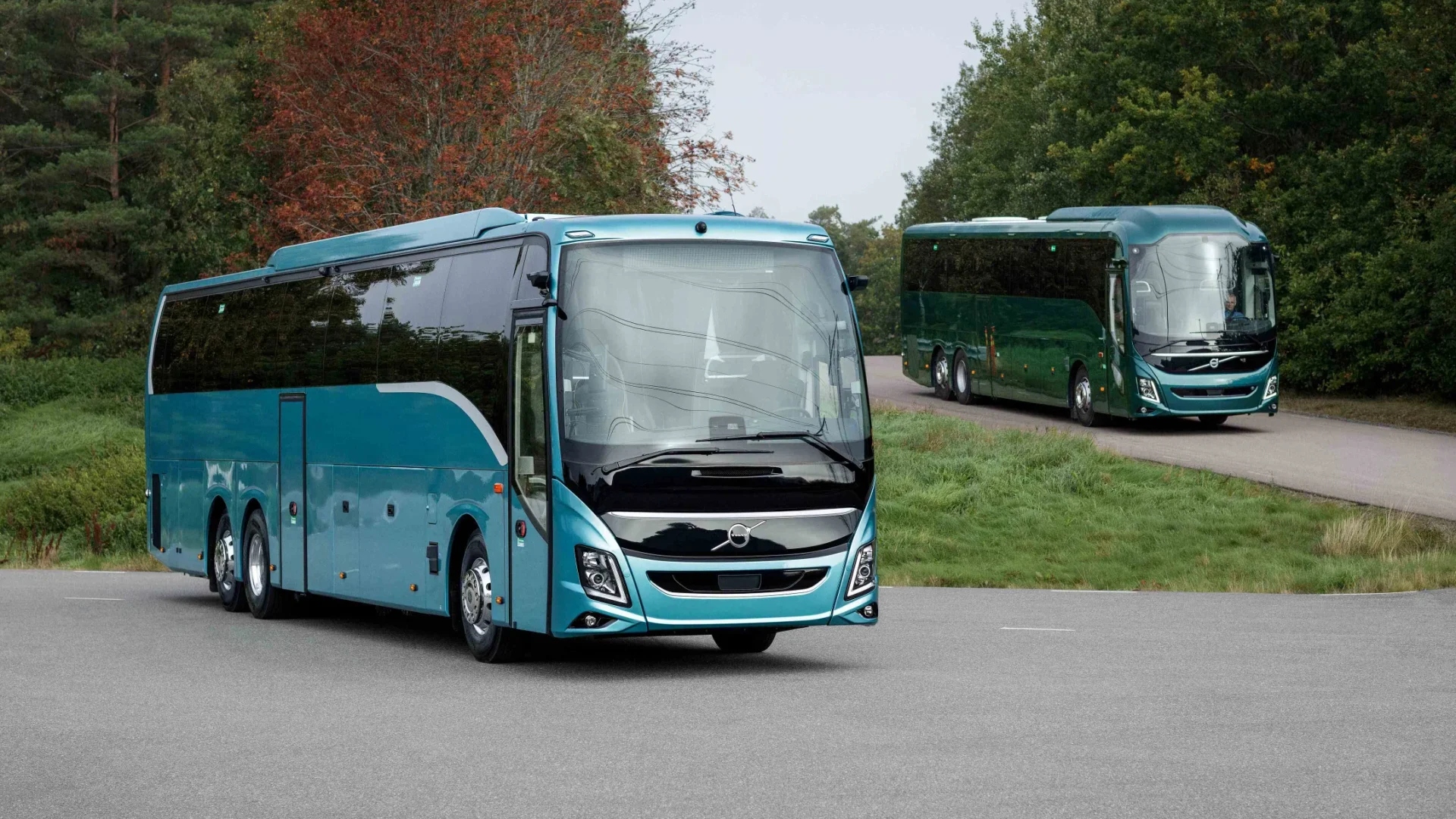
The return of the 9700 adds a model to Volvo Buses’ current European coach portfolio, alongside the battery-electric Volvo BZR Electric CD, the Volvo B13R – Marcopolo Paradiso G8 and the 9700 DD, the double-decker bodied in Finland by Carrus. According to Volvo Buses, the 9700 is intended for both long-distance line-haul and charter operations.
Production is taking place at Volvo Buses’ Tultitlán facility in Mexico. The manufacturer says the model will be available in three lengths, two axle configurations and with three power ratings for its 13-litre engine.
The European launch taking place today in Sweden follows Volvo Buses’ decision in 2023 to end production of complete buses and coaches in Europe and close its Wroclaw bodybuilding operation, shifting towards a model based on chassis production and cooperation with external bodybuilders. A subsequent plan involved Sunsundegui producing the 9700 and 9900 coach bodies, before the Spanish bodybuilder faced economical difficulties. In December 2024, it was announced that series production of the Volvo 9700 would be moved to Tultitlán, Mexico, with European deliveries planned for 2026.
Volvo 9700: three lengths and 420, 460 or 500 hp
The Volvo 9700 will be offered in 12.4-, 13.1- and 13.9-metre versions, with 4×2 and 6×2 configurations. Power comes from Volvo’s 13-litre engine, available with outputs of 420, 460 or 500 hp and coupled with the latest version of the manufacturer’s 12-speed I-Shift automated transmission.
According to Volvo Buses, the powertrain is compatible with HVO and biodiesel, including B100. Different seating layouts will be available according to vehicle length and operating requirements.
The model introduces a new generation of Independent Front Suspension as standard. Each front wheel can move independently, while the system is combined with Volvo Dynamic Steering. Volvo Buses states that the configuration provides increased directional stability at highway speeds, reduced sensitivity to crosswinds and fewer steering corrections. The suspension and steering arrangement also allows the use of a smaller steering wheel.
Passenger equipment includes different seating configurations and interior material options. Three-point seatbelts can be fitted throughout the coach, while ISOFIX anchor points, booster cushions and integrated rearward-facing child seats are available.
The Volvo 9700 is also equipped with Volvo’s driver assistance and safety systems. Volvo Buses has not provided further specifications concerning the individual ADAS functions in the release.
The start of production also confirms the timetable outlined by Thomas Nylund, Head of Europe at Volvo Buses, in an April 2025 interview with Sustainable Bus. At the time, Nylund said the transfer of coach production to Mexico was slightly behind Volvo’s initial roadmap but maintained a target of first customer deliveries by the end of 2026. He also identified the 9700 as Volvo’s long-haul touring product and said the range would initially restart with a limited number of variants, with possible expansion depending on customer demand.
Volvo coach range includes the BZR Electric CD
The 9700 will join two other coach products currently being introduced by Volvo Buses in Europe.
On the zero-emission side, Volvo introduced the BZR Electric coach chassis in September 2025, with battery configurations from 360 to 720 kWh and a stated range of up to 700 km under SORT 3 conditions. The chassis is available for coach applications with 4×2 or 6×2 configurations.
The Volvo BZR Electric CD combines the electric chassis with a Carrus Delta body. In Norway, 15 Volvo BZR Electric – CD coaches were ordered by six operators, with the vehicles specified for applications including tour and charter services, airport shuttles and cruise passenger transport. The first deliveries were scheduled for autumn 2026.
The industrial setup around Carrus Delta has also expanded through a long-term agreement with Valmet Automotive for serial production of Volvo coach bodies in Finland. Production at Valmet Automotive’s Uusikaupunki plant is scheduled to start in 2026 and covers bodies for diesel and fully electric vehicles.
Volvo – Marcopolo model is coming!
Volvo Buses is also adding the Volvo B13R – Marcopolo Paradiso G8 to its European range. The manufacturer says the order book for the model is growing in Southern Europe. The first unit with European homologation was showcased at FIAA in Madrid.
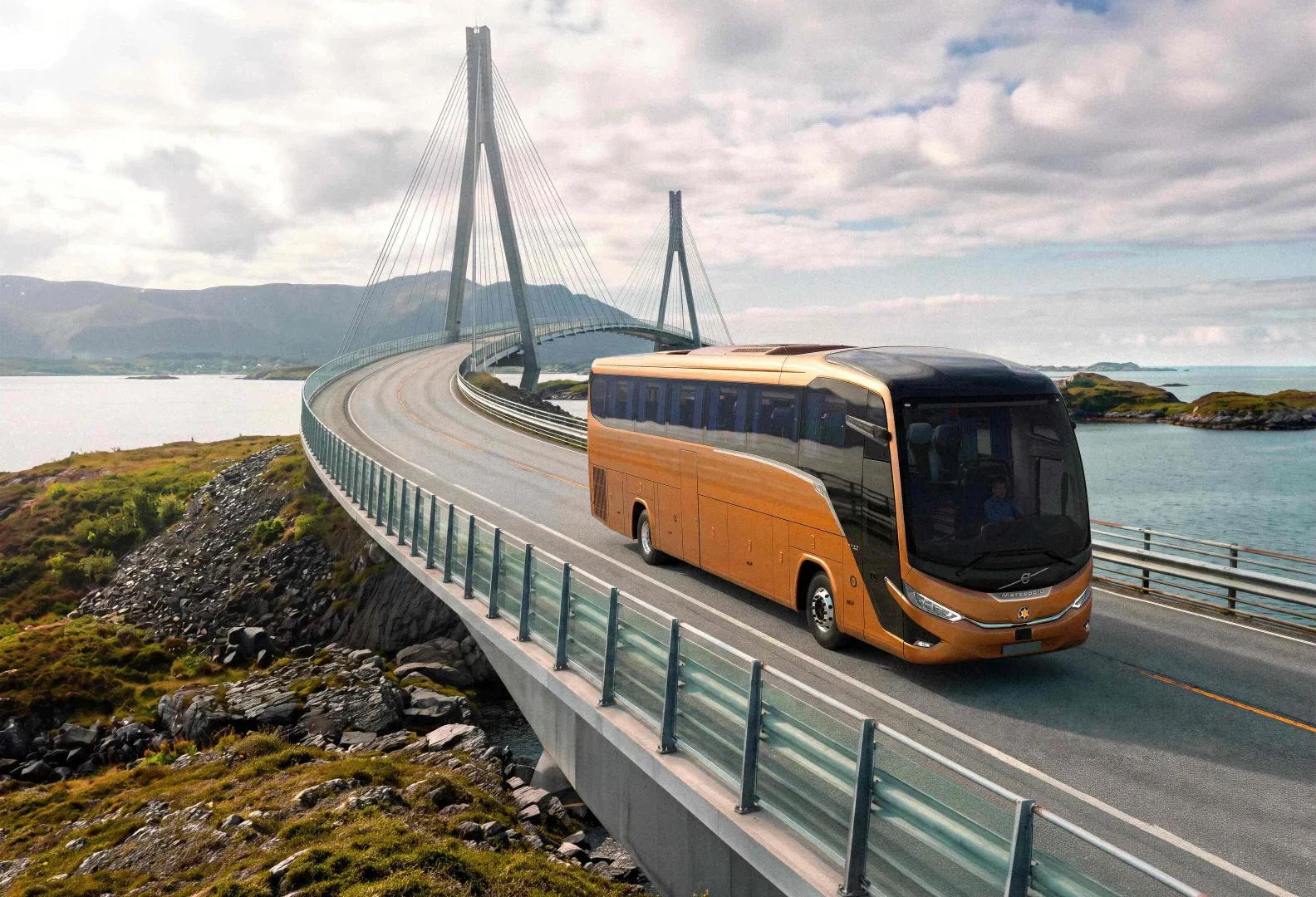
The partnership between Volvo Buses and Marcopolo covers the commercialization of complete coaches in Italy and France. The European Paradiso G8 1200 is based on the Volvo B13R chassis and is offered in 4×2 and 6×2 configurations, with Volvo Buses acting as the main contractor for sales and aftersales activities.
In brief
- When will the Volvo 9700 return to European customers?
Customer deliveries are scheduled to begin in late 2026. - Where is the Volvo 9700 produced?
Production is underway at Volvo Buses’ manufacturing facility in Tultitlán, Mexico. - Which engines will be available?
The 13-litre engine is offered with 420, 460 or 500 hp and a 12-speed I-Shift automated transmission. - Which other coaches are included in Volvo’s European offer?
Volvo identifies the BZR Electric CD and the B13R – Marcopolo Paradiso G8 alongside the 9700.
“We are determined to grow in the European coach segment with an attractive and competitive range”, said Anna Westerberg, President Volvo Buses. “Customers demand solutions that combine passenger comfort with safety, efficiency and reliable support throughout the vehicle’s lifetime. Our expanded offer is designed around those priorities.”
“We are pleased to bring the Volvo 9700 back to Europe. It is a coach that has earned a strong reputation among operators, drivers and passengers for many years,” said Thomas Nylund, Head of Europe at Volvo Buses. “With improved ride comfort, advanced safety features and excellent fuel efficiency, the Volvo 9700 is well suited for today’s demanding coach operations.”