What we have seen at FIAA 2026: buses, coaches and new launches from Madrid
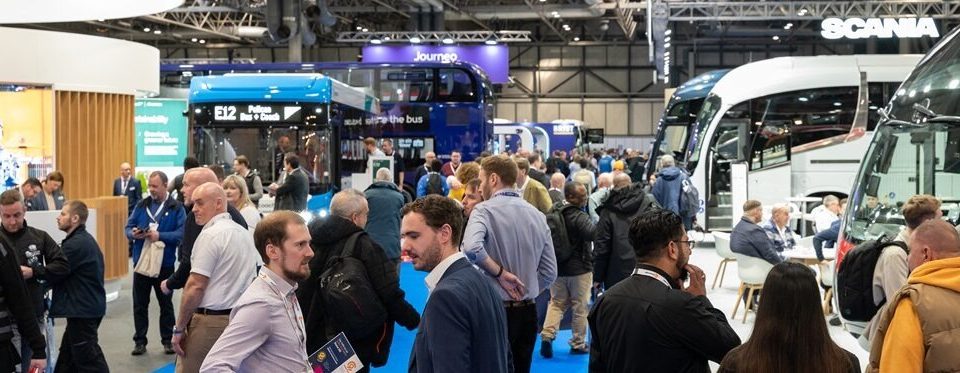
The 2026 edition of FIAA in Madrid was held last week. The show brought a series of new bus and coach products, including the 15-metre Irizar i3 electric, the European-homologated Marcopolo–Volvo Paradiso G8, the Iveco Bus eFlexy and a new 13-metre BYD–Castrosua Low Entry, while Farizon and Zeroid made their first appearances at the Spanish […]
The 2026 edition of FIAA in Madrid was held last week. The show brought a series of new bus and coach products, including the 15-metre Irizar i3 electric, the European-homologated Marcopolo–Volvo Paradiso G8, the Iveco Bus eFlexy and a new 13-metre BYD–Castrosua Low Entry, while Farizon and Zeroid made their first appearances at the Spanish exhibition.
The exhibition also provided the setting for the Sustainable Bus Awards 2027, presented in Madrid on 23 September. The Solaris Urbino 18 Hydrogen New Generation received the Urban award, the battery-electric BYD B12.b HF won the Intercity category and the Irizar i6S Efficient Scania PHEV received the Coach award. The three models therefore represented fuel-cell electric, battery-electric and plug-in hybrid technologies respectively among this year’s winners.
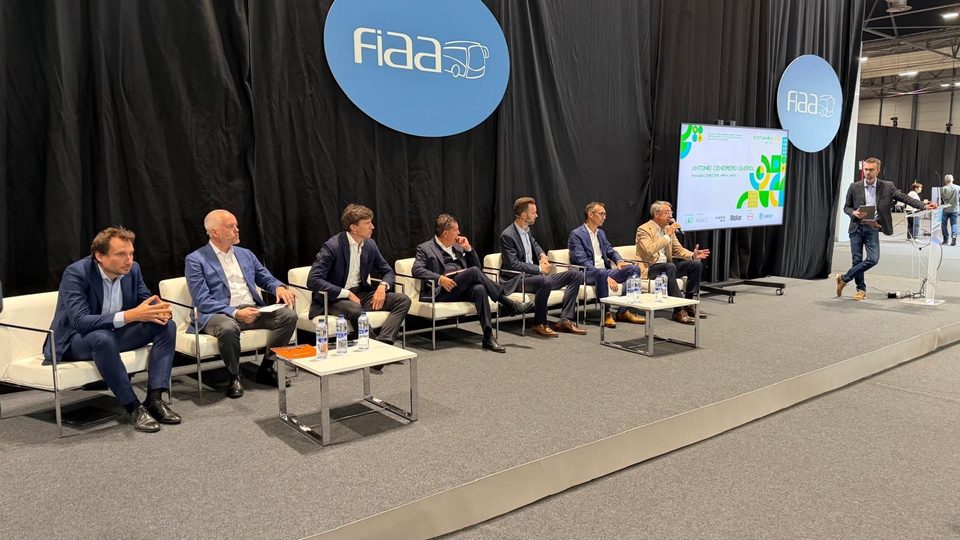
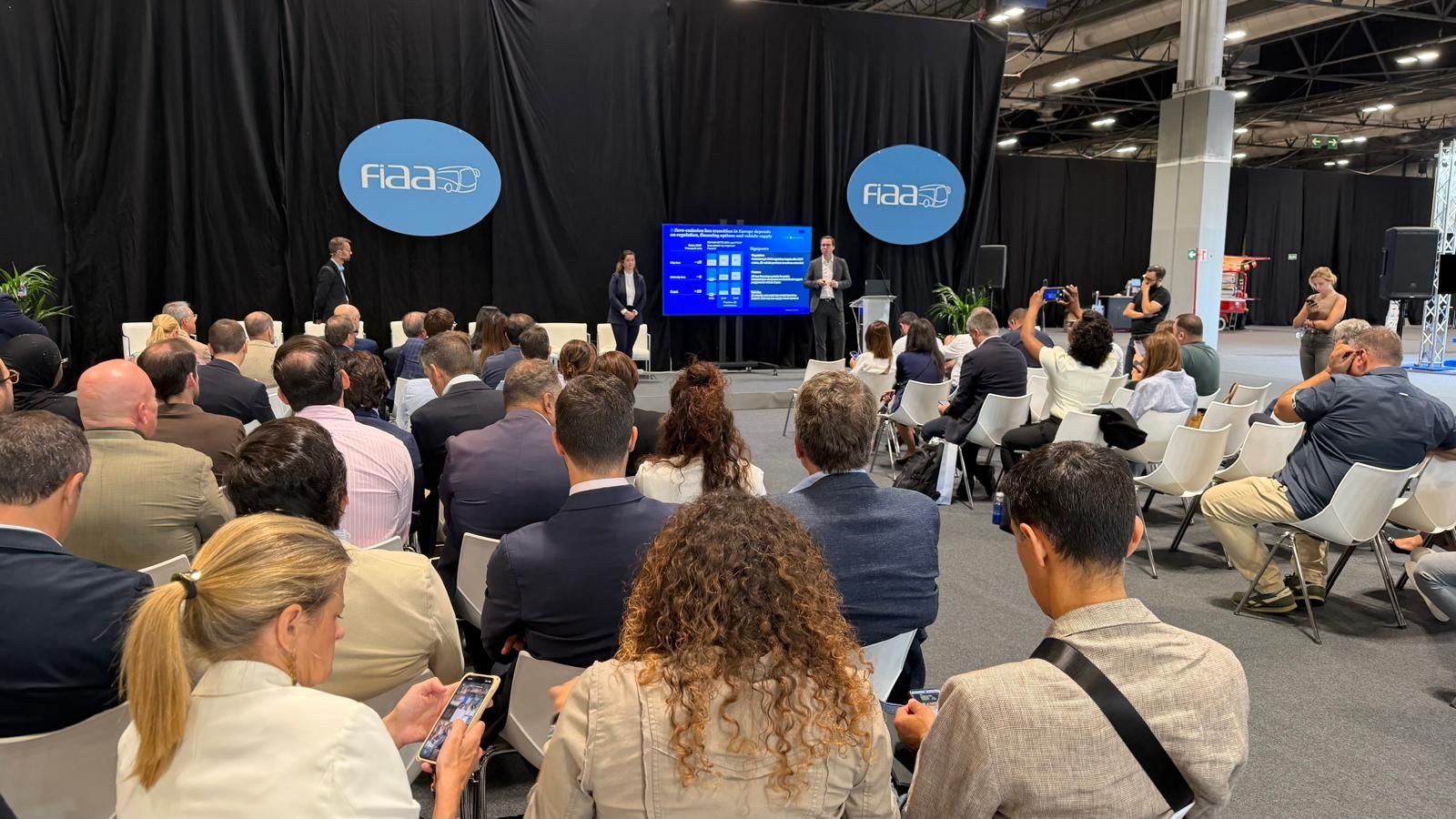
FIAA also hosted a stop of the Sustainable Bus Tour 2026, bringing manufacturers, suppliers, operators and industry experts together for a discussion on partnerships, investment and new business models in the zero-emission bus transition.
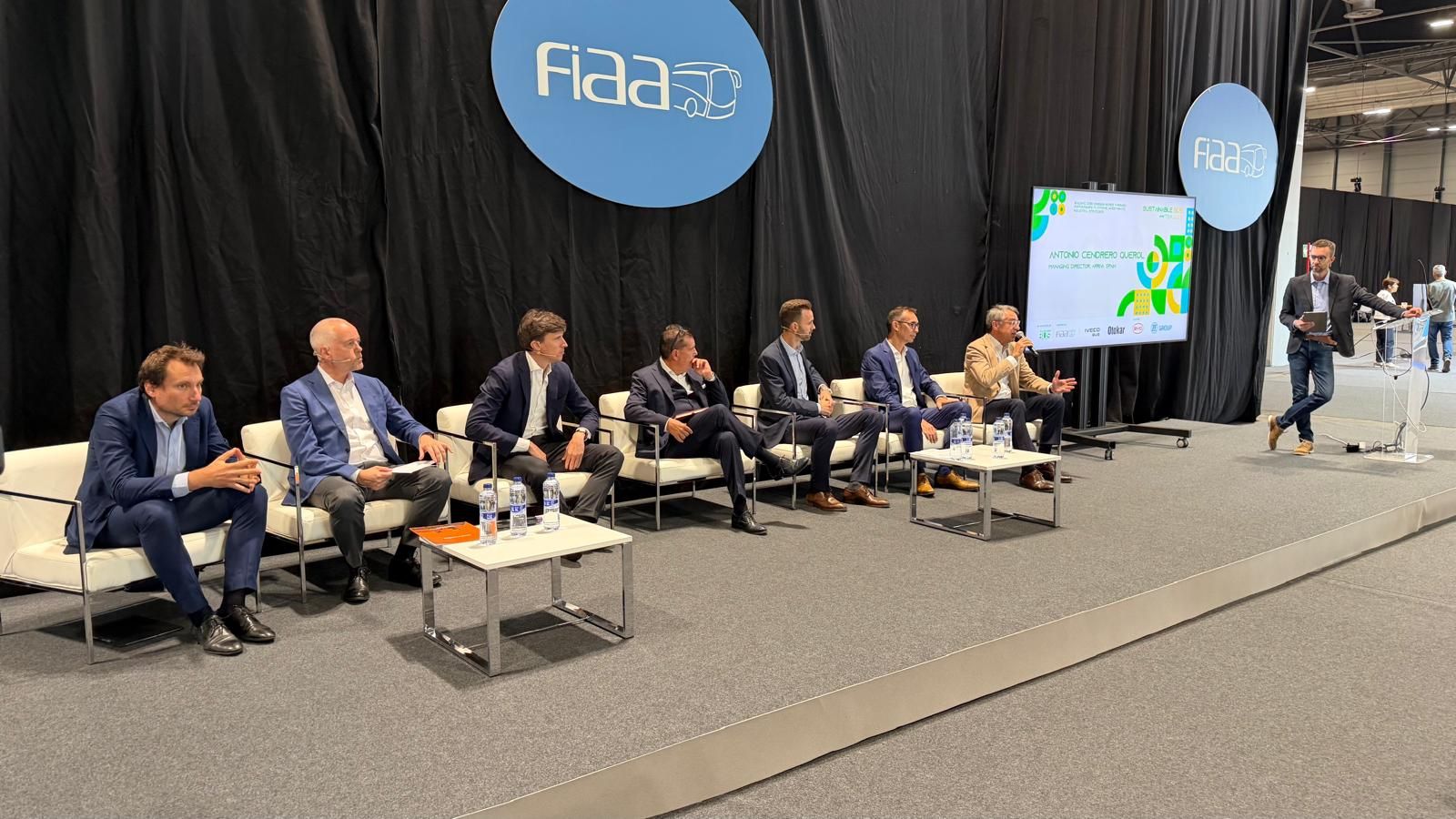
McKinsey & Company’s Dr. Lena Bell and Dr. Tobias Schneiderbauer presented analysis on the competitive landscape for bus manufacturers and the role of autonomous driving, while the operator perspective was represented by Ian Livesey of Moventis, Francesco Romagnoli of ANAV and Antonio Cendrero Querol of Arriva Spain, with a focus on funding and the growing involvement of operators in batteries, charging and energy management.
The manufacturing and supply side included Marco Zanchetta of IVECO BUS, Stéphane Espinasse of BYD Europe, Umberto Mauri of Otokar Europe and Fabian Schumacher of ZF Group, with the discussion also addressing partnerships, local content and the evolving European regulatory framework.
Here is a manufacturer-by-manufacturer overview of what we saw at the show.
FIAA 2026, manufacturer by manufacturer
Anadolu Isuzu
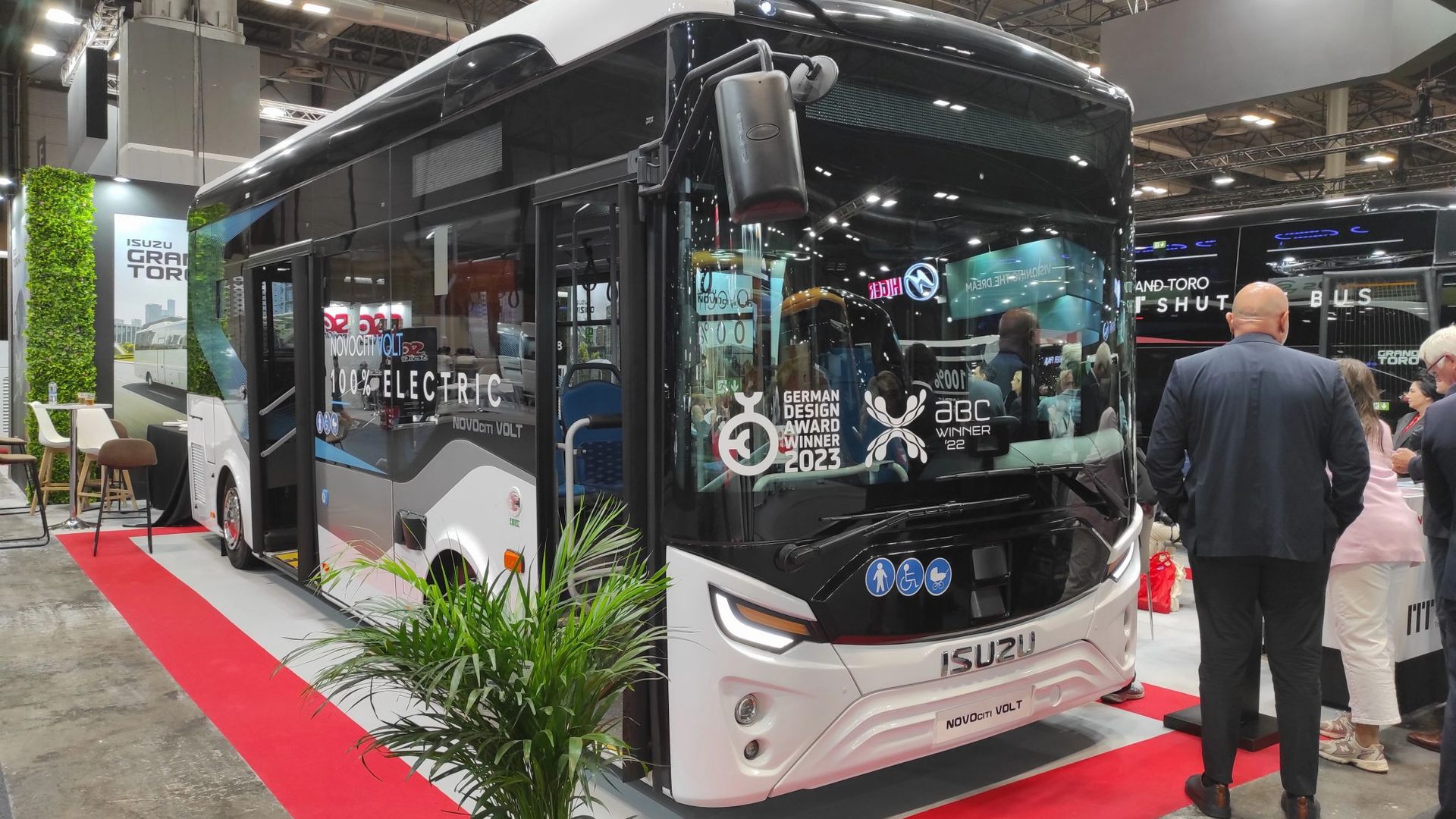
Three buses are on display: the Kendo in hybrid configuration, a new product, the conventionally powered Grand Toro diesel coach, fitted with a Cummins engine and presented in black, and the white NovoCiti Volt, a battery-electric model designed for urban and intercity operations.
BYD
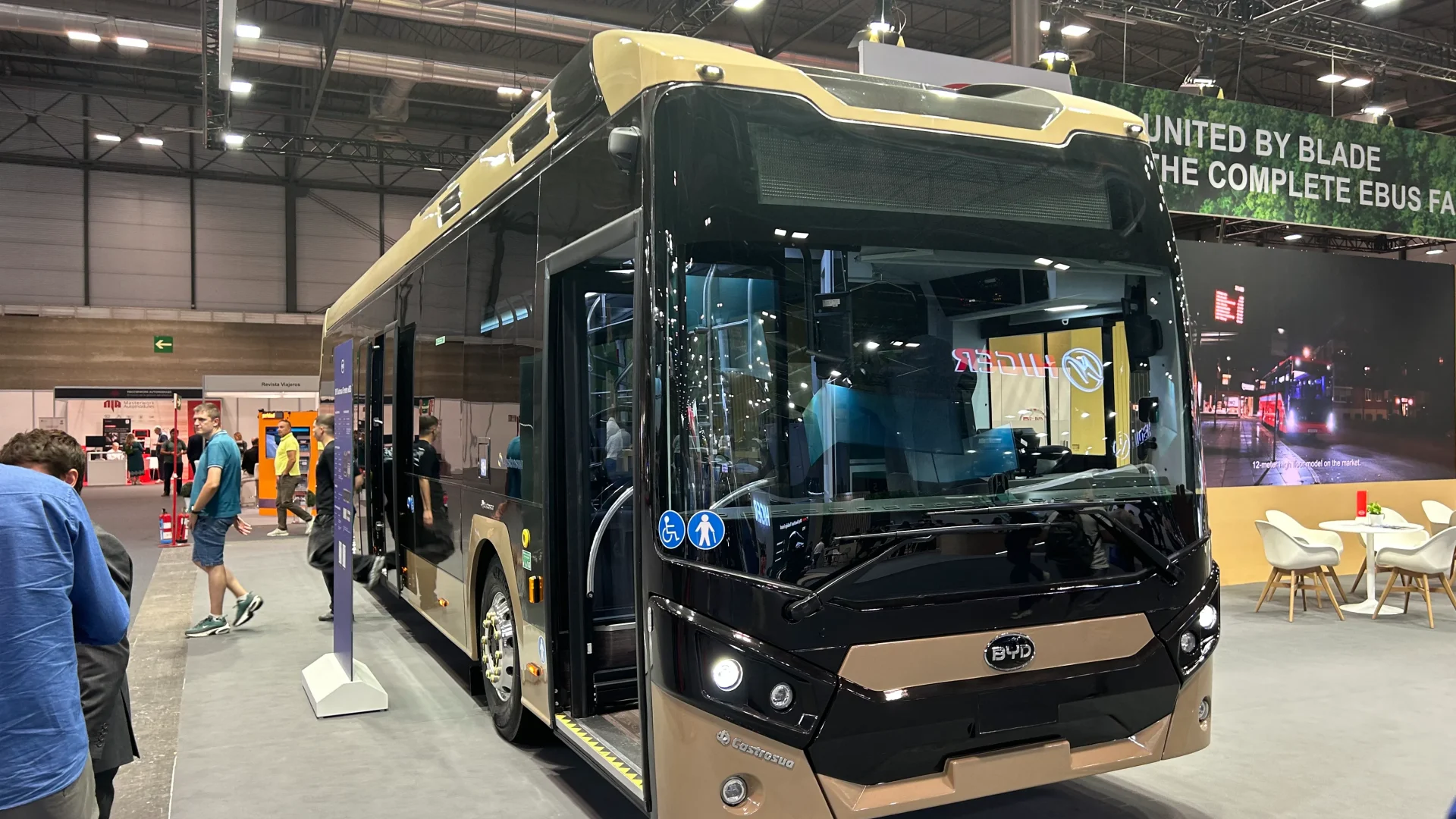
Building on a partnership that has been in place for several years, BYD and Castrosua developed and presented at FIAA a 13-metre Low Entry bus that can be registered as either Class I or Class II. With capacity for up to 55 passengers, the vehicle features a 560 kWh battery and charging options ranging from conventional CCS2 to pantograph charging, as well as so-called “double-gun” plug-in charging, which allows simultaneous charging through two charging ports for a maximum power of 384 kW. The vehicle displayed in Madrid is fitted with Fainsa seats, while the declared outputs for the air-conditioning and heating systems are 38 and 47 kW respectively.
Also completing the stand was the BYD B12.b HF, the battery-electric Class II high-floor model featuring Blade batteries integrated into the chassis, which was launched on the market at the end of 2025. The model was also named winner of the Sustainable Bus Award 2027 in the Intercity category.
Daimler Buses
Daimler Buses opened the manufacturers’ press conference programme with six buses on display. Alejandro Alcalde, CEO and General Manager of Daimler Buses Spain, highlighted the current strength of the domestic market and said the company has already registered 900 units in 2026, corresponding to a market share of more than 20%.
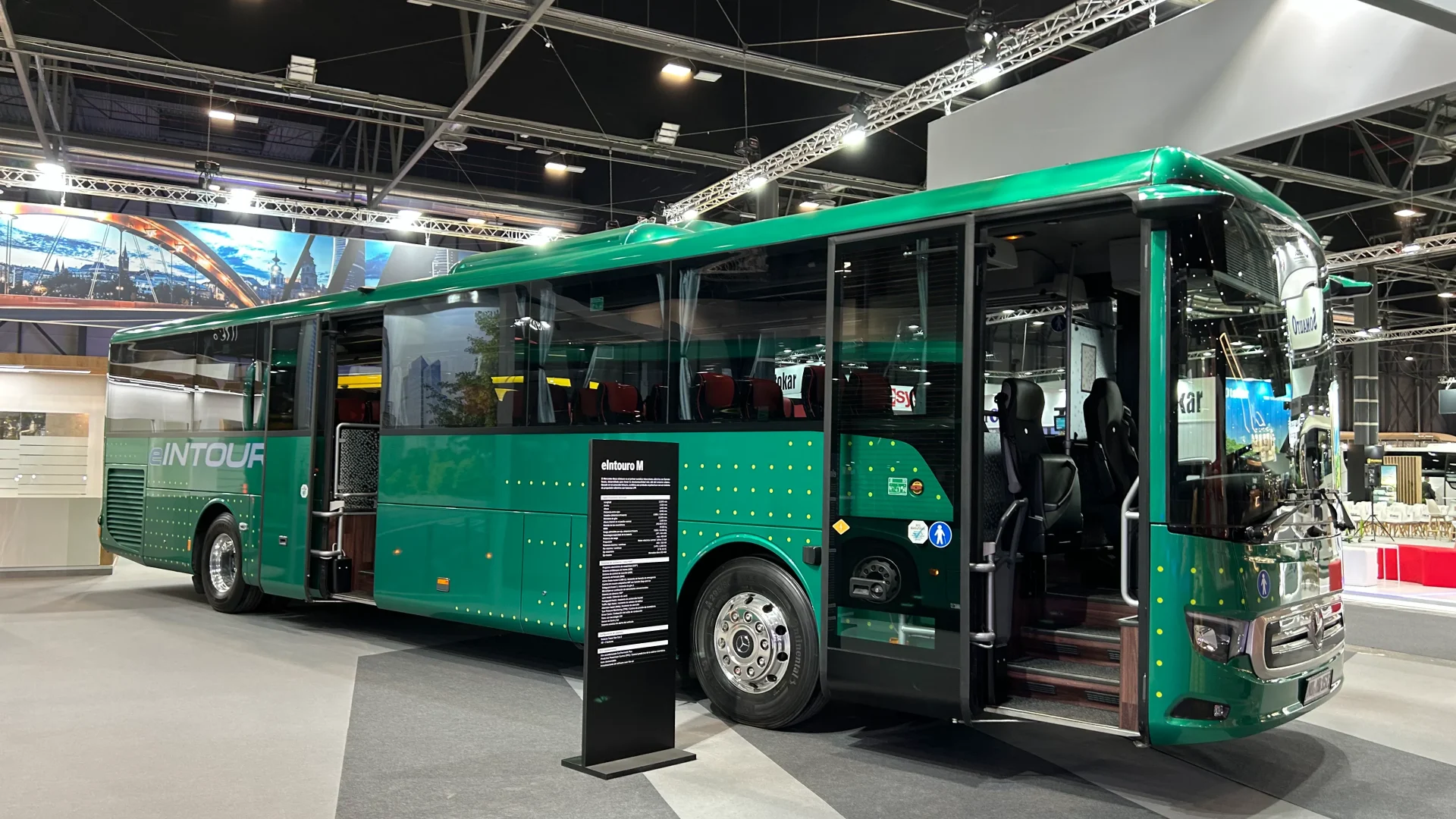
Of the six vehicles on display, two are battery-electric: the urban eCitaro and the Class II eIntouro, both presented in green. They are joined by three conventionally powered Setra models in red: the MultiClass hybrid for intercity operations and the ComfortClass and TopClass for coach applications. Completing the line-up is the Mercedes-Benz Tourismo in Safety Coach configuration.
Farizon
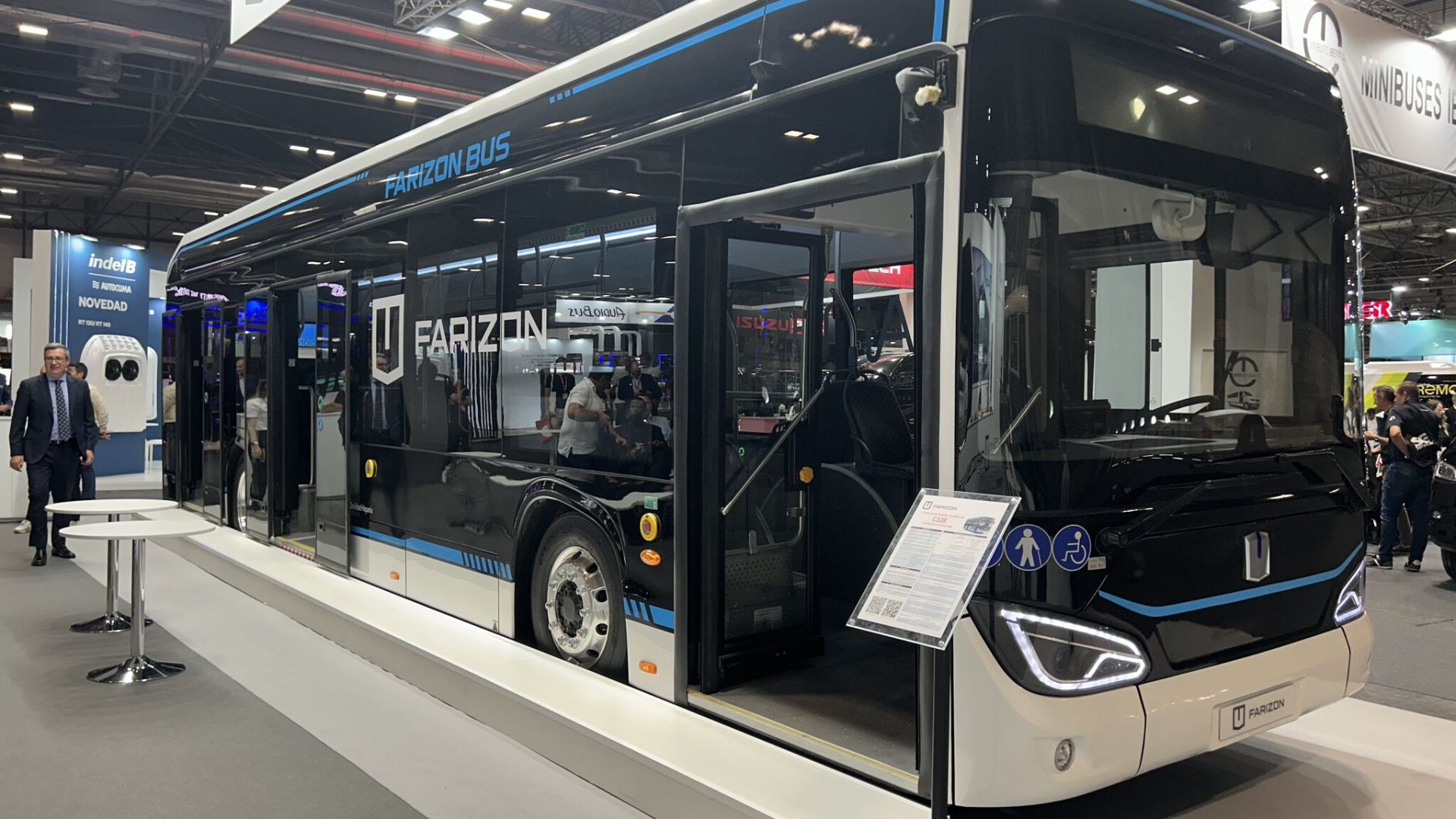
Farizon, a Geely Group brand, brought the C12E to Madrid, a 12-metre fully low-floor electric city bus developed for the European market. Curiously, the model name is identical to that of a King Long electric Class I bus. The vehicle measures 12,000 mm in length, 2,550 mm in width and 3,225 mm in height, with a 5,800 mm wheelbase, front and rear overhangs of 2,750 and 3,450 mm respectively, and a minimum ground clearance of 130 mm. Total capacity reaches around 90 passengers, depending on the selected configuration, with a standard layout comprising 27 seats, two folding seats and the driver’s seat. Accessibility equipment includes a manual ramp, with an electric ramp available as an option.
The CATL LFP batteries have a capacity of 422 kWh, with 466 and 512 kWh options, and are divided into 12 packs. DC charging is provided through the CCS2 standard. The electric powertrain delivers 215 kW nominal and 350 kW peak power, with nominal and maximum torque of 1,200 and 2,800 Nm respectively.
A 13-metre Low Entry version for suburban applications is also scheduled to become available in early 2027.
Ferqui
Among the Spanish bodybuilders exhibiting at FIAA was Ferqui, which unveiled the new eSenda in Madrid together with Zeroid. The fully electric midibus is based on the Zeroid Force platform.
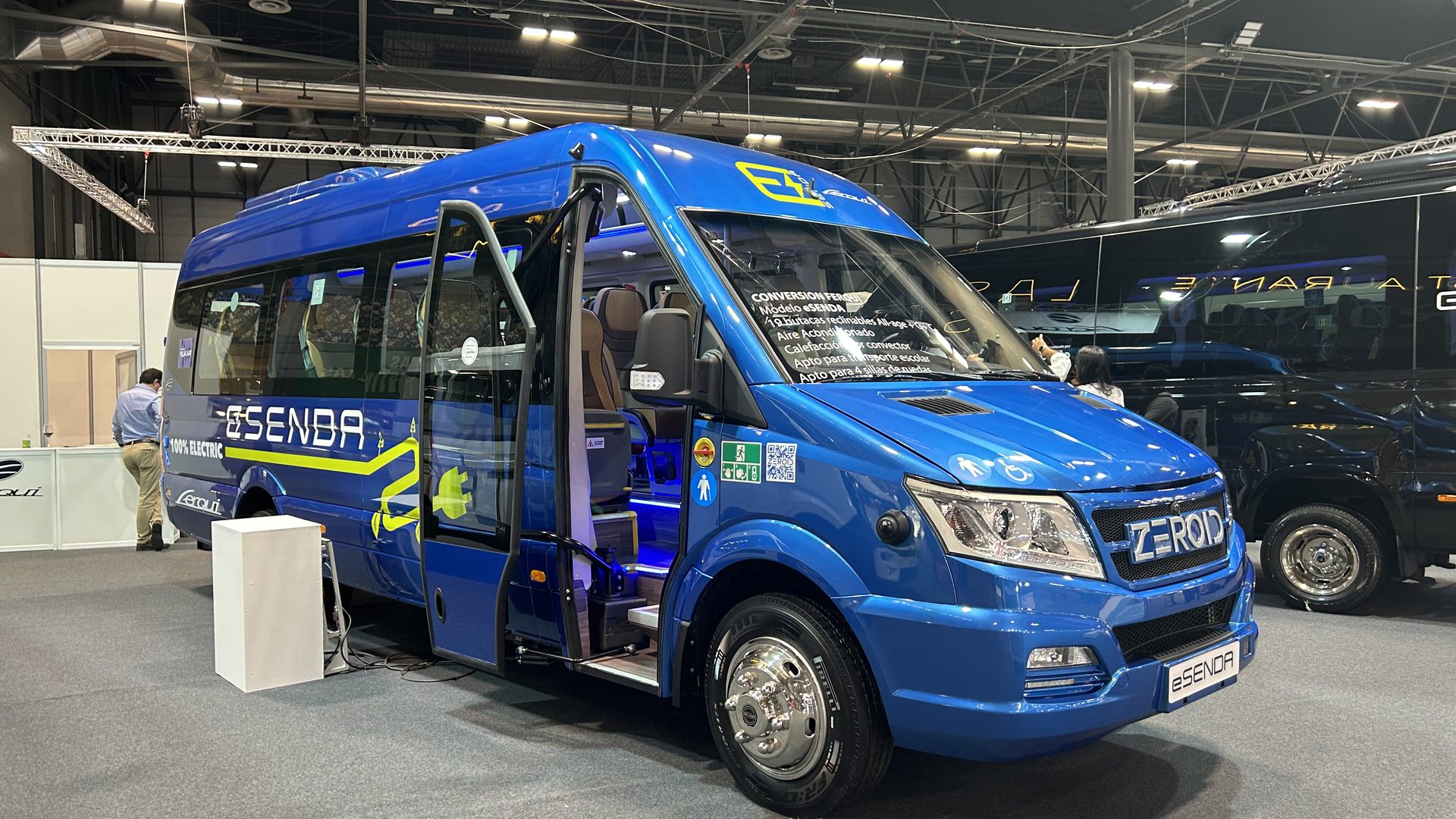
The vehicle is 7.49 metres long and can carry 19 passengers. The version displayed has been developed for different operating profiles, ranging from urban and interurban transport to shuttle services. Overhead luggage racks are also fitted.
The battery has a capacity of 120 kWh, while maximum power output is 150 kW.
Alongside the eSenda, Ferqui exhibited three conventionally powered minibuses based on the Mercedes-Benz Sprinter (Sunlife), Renault Master (Cité) and Iveco Daily (Dino). At FIAA, Ferqui also signed a dealership agreement for the Sunlife with Marin Ayala, which also distributes Temsa in Spain.
Higer
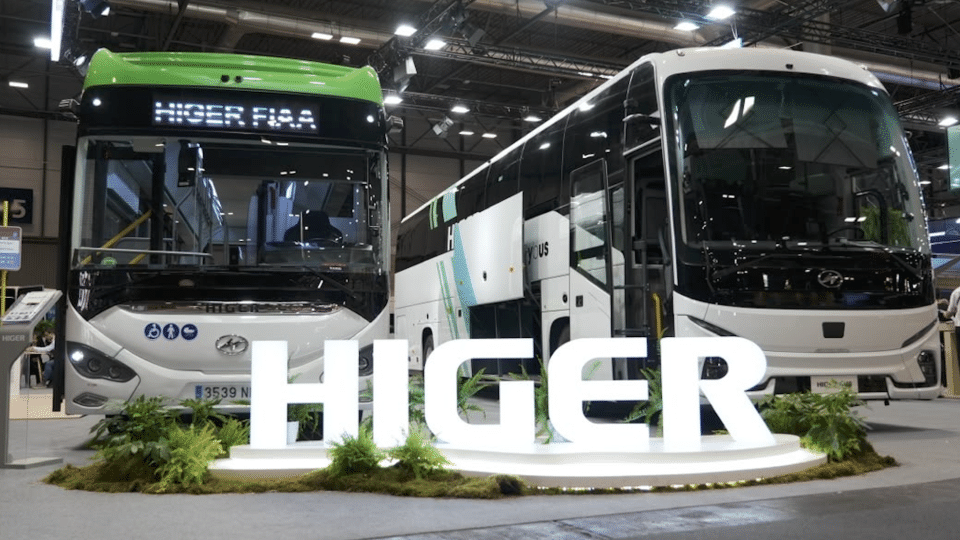
At the Higer Bus Company stand, alongside an electric chassis, is a revised version of the Fencer, now called F6 Integral EV. The vehicle was historically developed jointly with Scania, but this version has been developed entirely by Higer. It is a battery-electric, high-floor Class II model.
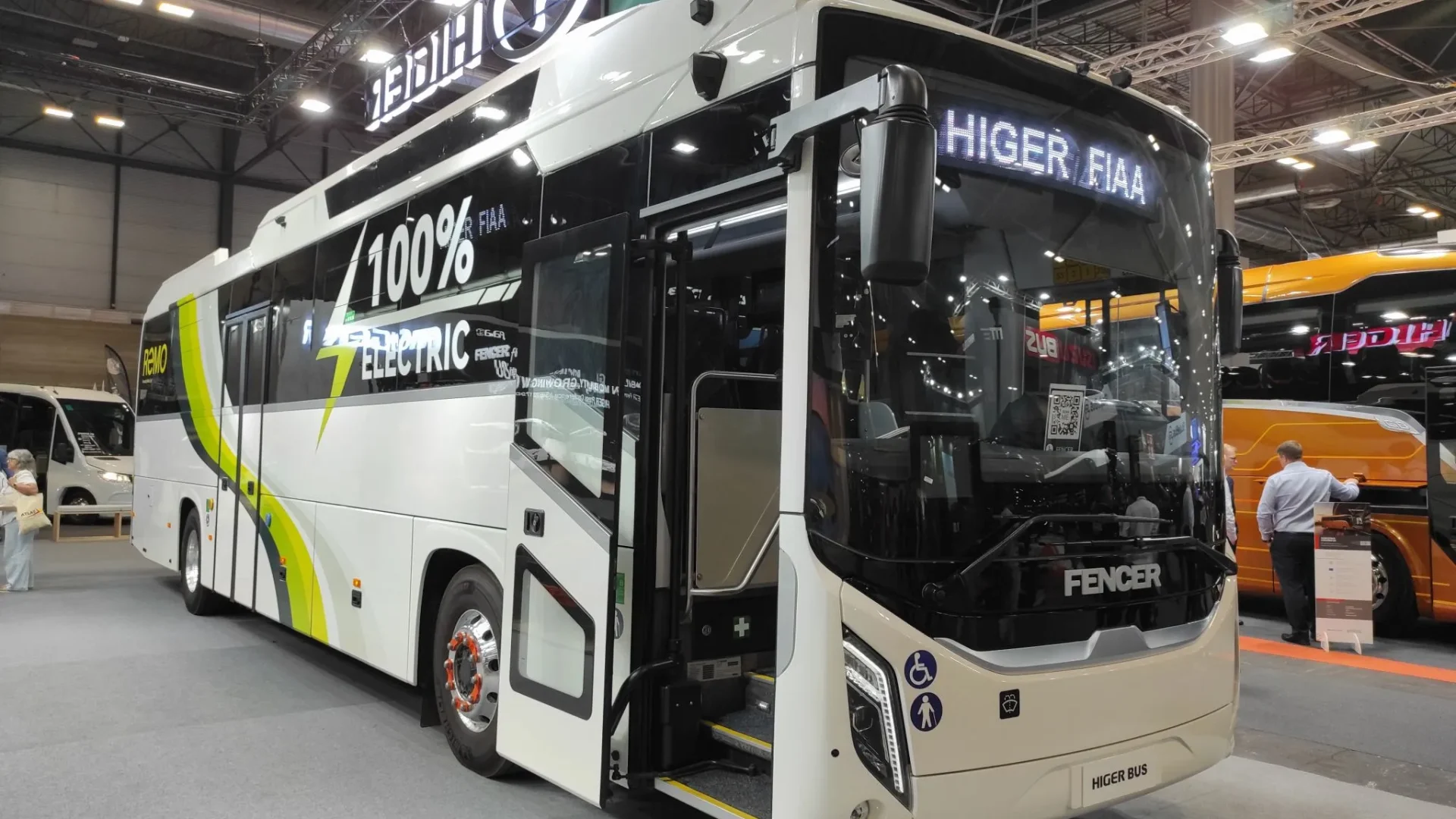
Alongside the intercity model and chassis, Higer is displaying two vehicles developed entirely in-house: the Azure urban bus, just under nine metres long, and the V13, a 13-metre conventionally powered coach belonging to the new “V Series” coach range.
Indcar
“We want to become Europe’s largest minibus manufacturer, and we are on the right path to achieving that,” said Indcar CEO Gaël Queralt at FIAA.
The company is no longer working only with Iveco. Following the acquisition of CarBusNet, Indcar is also cooperating with Daimler, bodying minibuses on Mercedes-Benz Sprinter chassis. The result includes the Spica and Shaula. Also on display are the compact Wing coach, based on the Iveco Daily chassis, and the battery-electric urban e-Moby.
In Spain, Indcar is by far the country’s largest bodybuilder. Outside its domestic market, Italy is the company’s largest market, accounting for 45% of its business, followed by France at 18%. Spain represents 24%.
Irizar
The Basque manufacturer has brought four buses to the Spanish capital: two battery-electric vehicles and two conventionally powered diesel models.
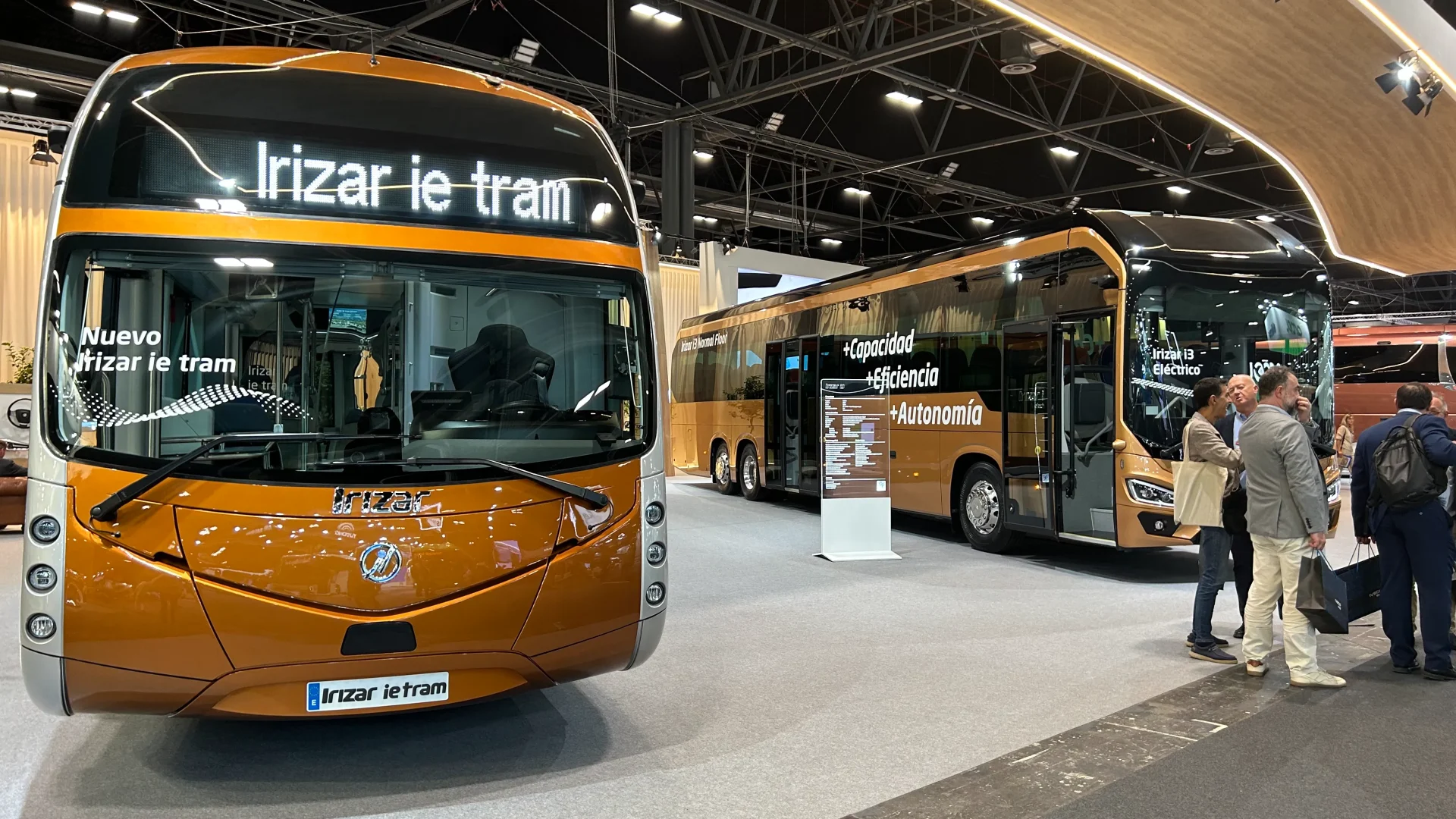
Irizar e-mobility continues its product development activities, having introduced the new generation of the ie tram efficient only a few months ago. The company has also developed the Class II high-floor i3 NF (Normal Floor), displayed (after announcements) in Madrid in its 15-metre, three-axle version following the introduction of the standard 13-metre model.
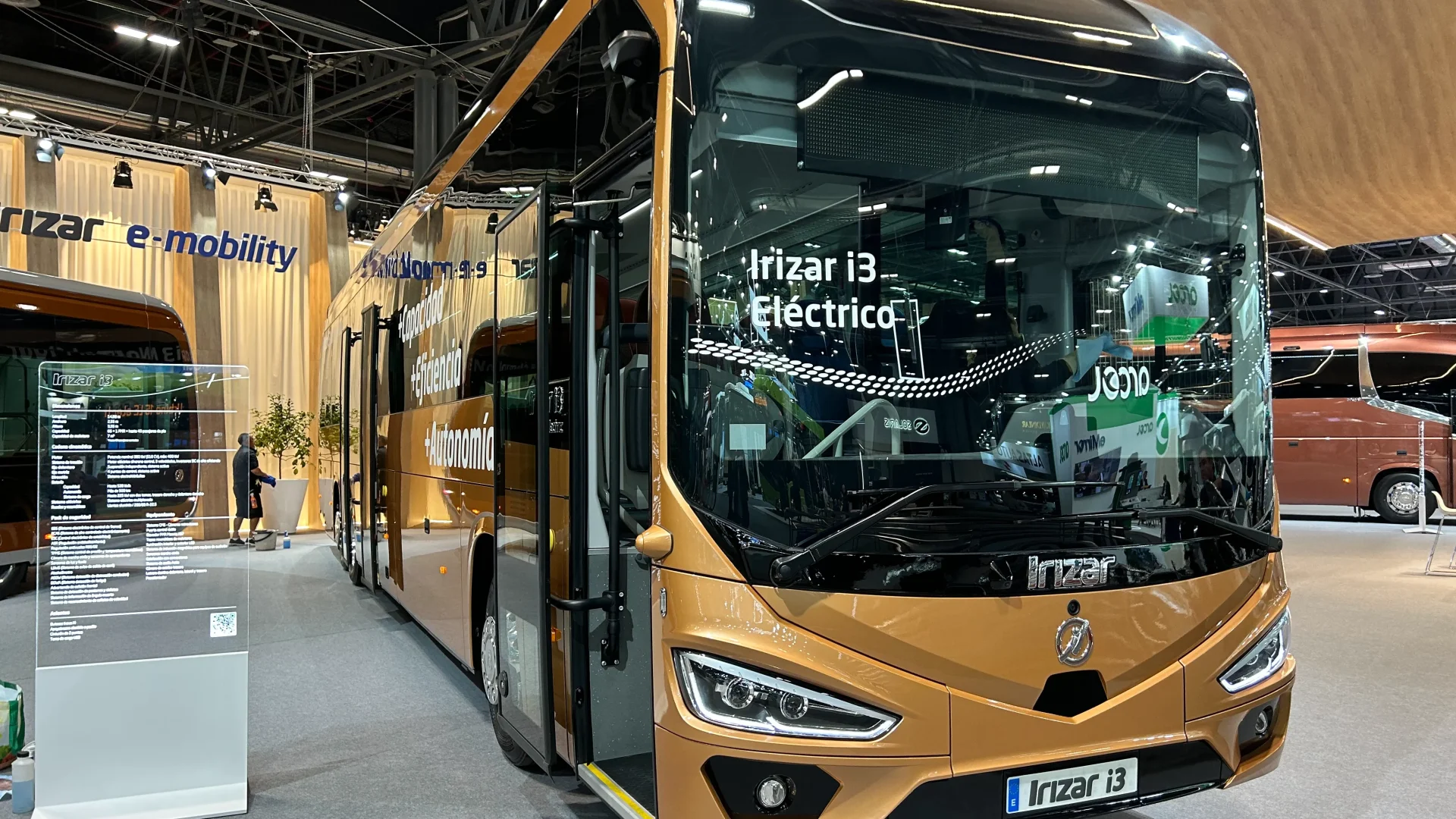
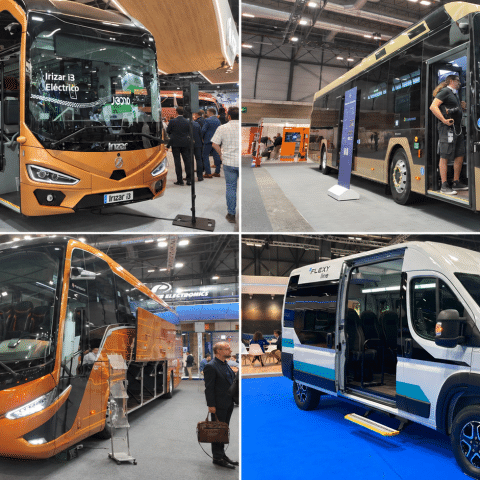
The 15-metre Irizar i3 electric offers capacity for up to 65 seated passengers plus one passenger with reduced mobility and up to 40 standing passengers, together with 7 cubic metres of luggage capacity. The driveline features a centrally mounted synchronous electric motor delivering 380 kW nominal and 400 kW peak power, coupled with a three-speed gearbox and a high-efficiency silicon-carbide inverter. Battery capacity reaches 528 kWh.
The equipment includes a double centre door, a Masats KS7 lift, LED interior and exterior lighting, a magnetic induction loop for hearing aids, convector heating, an Actia audio system and a pre-heater. Inova i4 seats are fitted with aisle-side armrests, two-point seat belts and USB ports.
Alongside the two electric vehicles, finished in a light bronze livery, Irizar is displaying its flagship i8 coach in dark bronze, together with the i6S.
Iveco Bus
“A new step in our journey towards the electrification of the range,” is how Giorgio Zino, Vice President Sales Operations Europe at Iveco Bus, described the new model brought to FIAA.
The new vehicle is called eFlexy: a minibus, or more precisely an electric van based on a Ducato chassis and converted by Olmedo. At less than six metres long, the vehicle is designed for Demand Responsive Transport (DRT) and urban services. Deliveries are scheduled to begin in the first quarter of 2027.
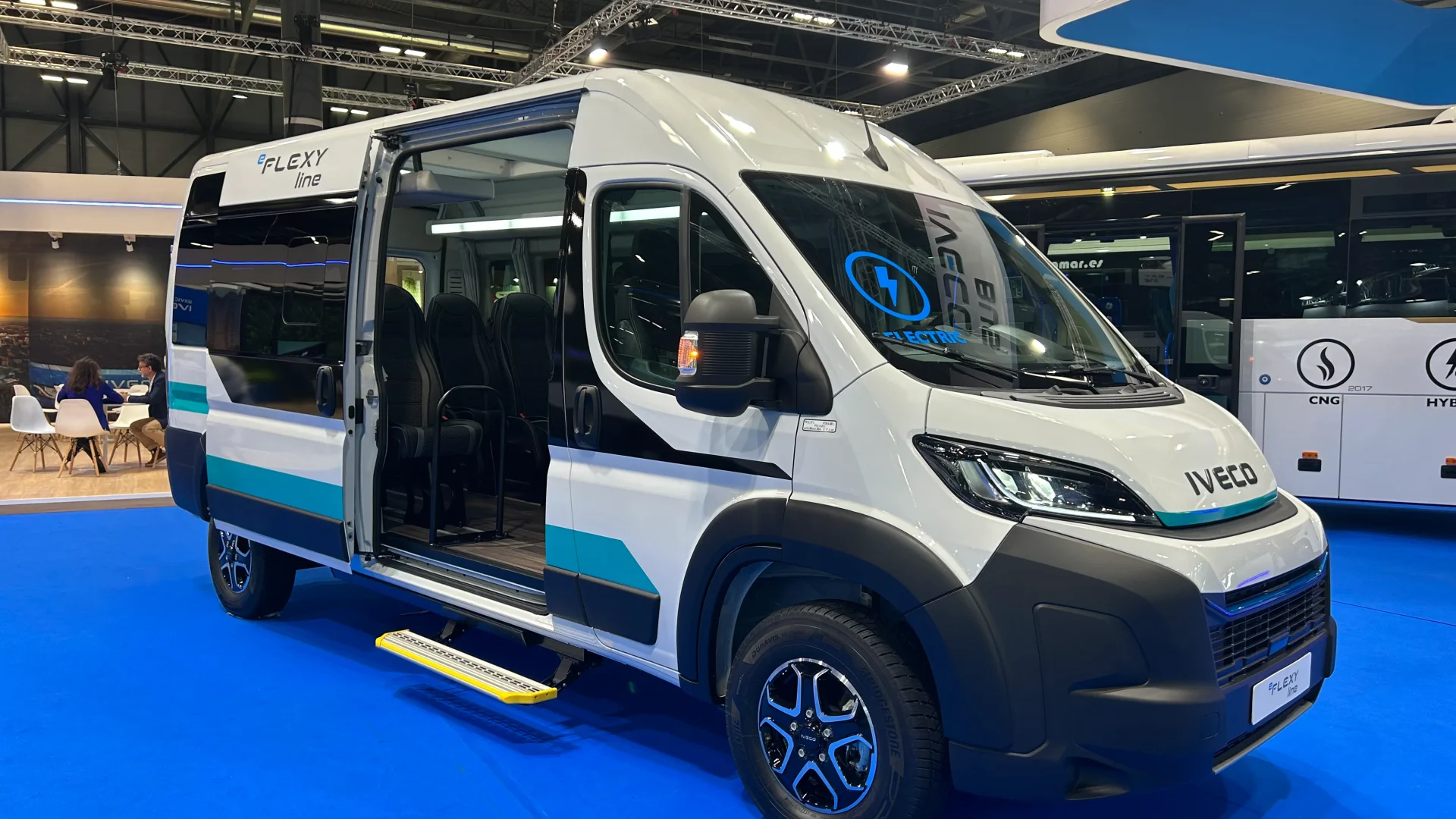
The model displayed at FIAA can accommodate up to 13 passengers in addition to the driver and features a continuous flat floor, a retractable rear hydraulic lift installed beneath the floor and 3 cubic metres of luggage space. The eFlexy City, meanwhile, can accommodate up to 17 passengers and is equipped with a 1,200 mm-wide side door.
Both versions share the same driveline, comprising a 205 kW electric motor and 110 kWh batteries, with a stated range of more than 300 km. Charging is available in AC at up to 22 kW or DC at up to 150 kW. Three driving modes and four regenerative braking levels are available.
Five other familiar models complete the stand: one Evadys, two Crossways, including a battery-electric version, one eDaily and one G-Way.
Karsan
Karsan has brought three battery-electric buses to the show. The first is the six-metre e-Jest, followed by the eight-metre e-Atak: according to Karsan, these have been Europe’s best-selling minibus and midibus respectively over the past five years. Also on display is the 12-metre e-Ata in Low Entry configuration, suitable for intercity services.
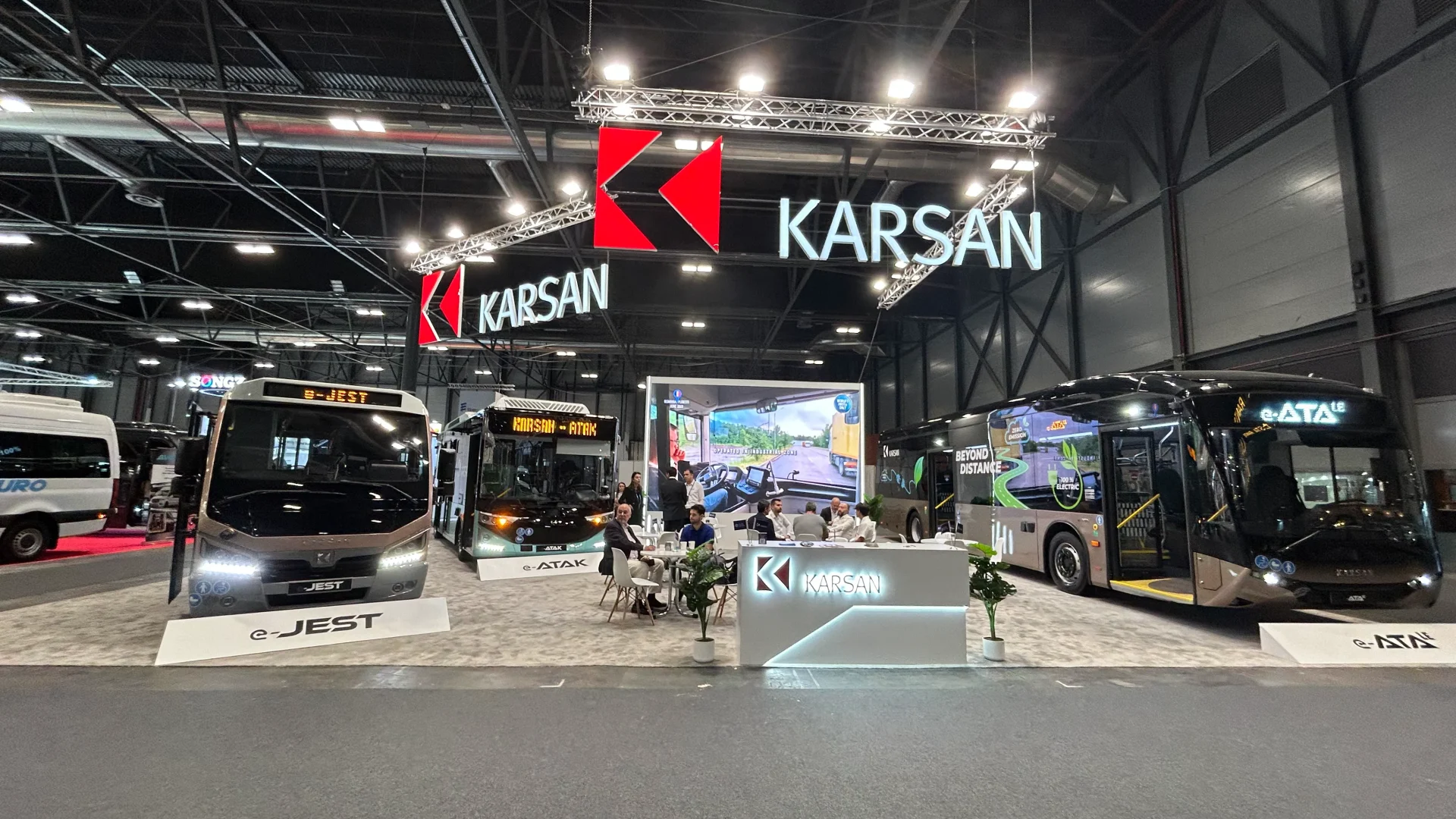
A major development is on the way, although it concerns strategy rather than a new product. Starting this autumn, following a transition of the top management, the Bursa-based manufacturer will begin offering diesel buses in Europe, including Italy, starting with the eight-metre Atak.
Karsan currently has more than 2,500 electric buses operating worldwide, across 28 countries on three continents. In the first half of 2026, the manufacturer reported a 6.8% share of the European market, placing it seventh among manufacturers.
Marcopolo – Volvo
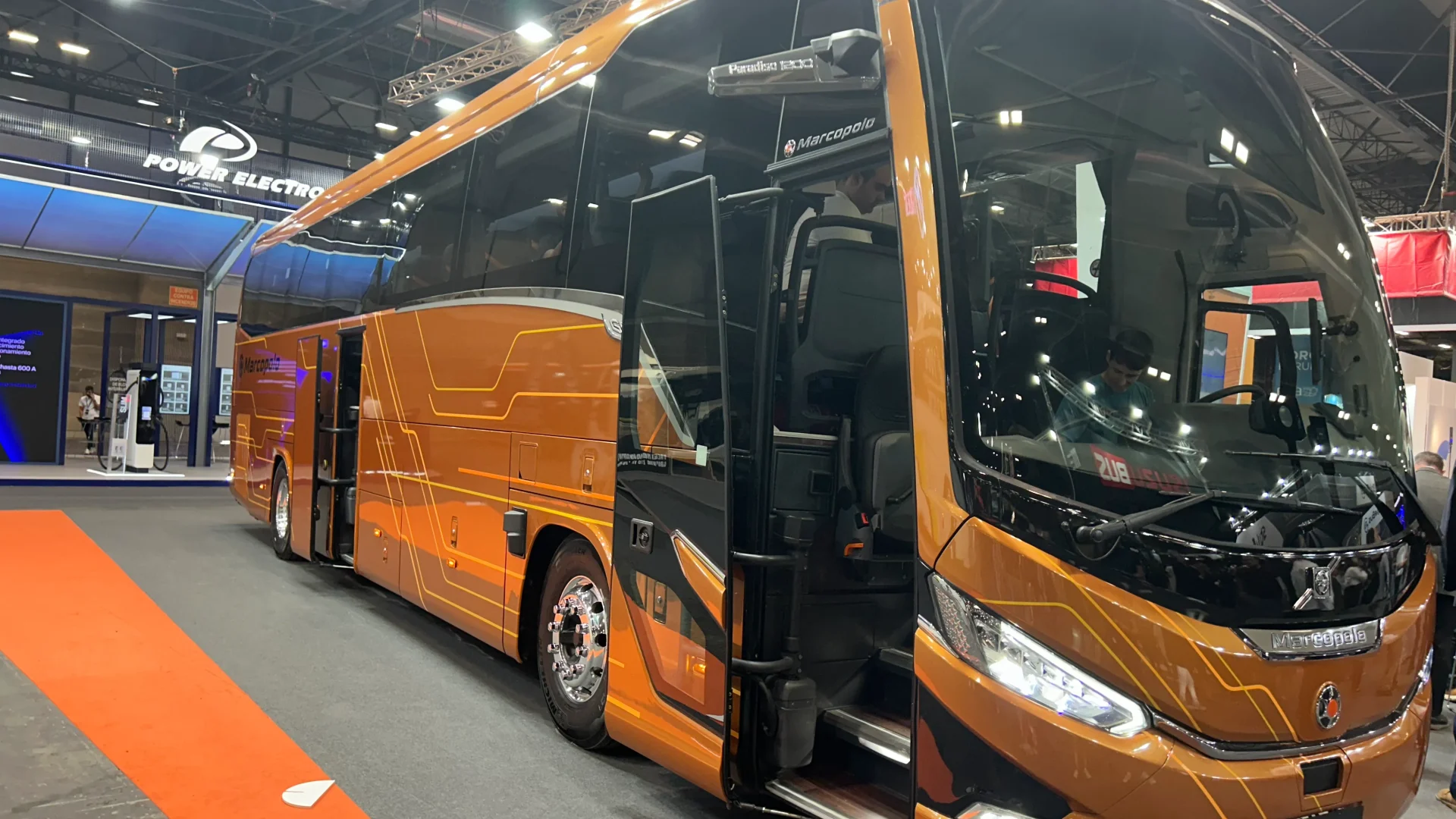
After months of anticipations, it has finally arrived. At FIAA 2026, Marcopolo and Volvo Buses have launched the European-homologated version of the Paradiso G8 coach.
The vehicle displayed in Madrid is 13 metres long, while a 12.40-metre version will also be offered. First markets: Italy and France. The model will also be present at IBE in Rimini in November.
Otokar
Otokar has been attending the event alongside its long-standing dealer Somauto.
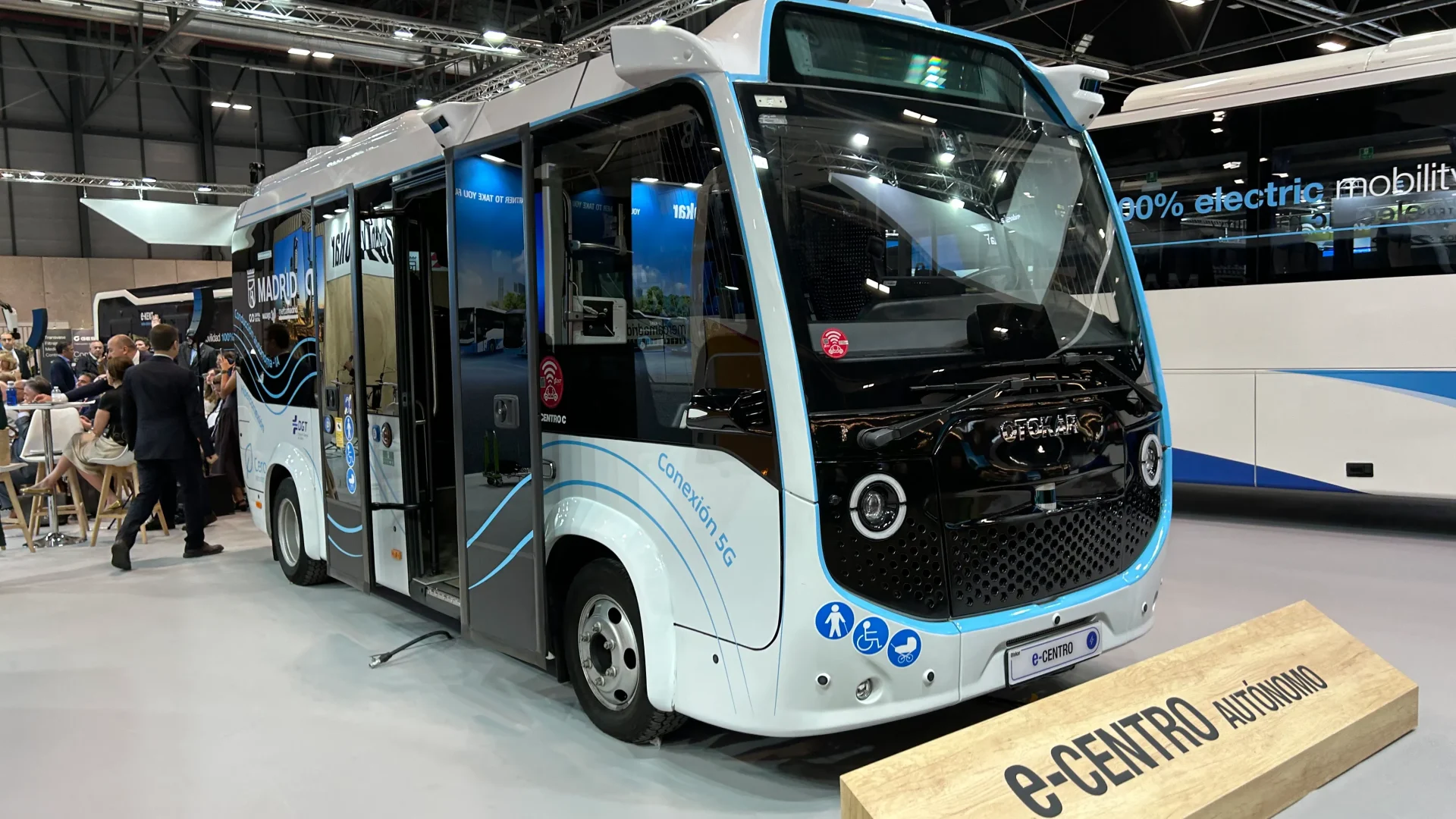
Five buses are on display, starting with the six-metre electric and autonomous Autonomous eCentro, just deployed in Austria in a Postbus-backed pilot. The battery-electric line-up also includes the Class I eKent and Class II e-Territo. Completing the display are the Navigo and Ulyso coaches.
Pagliani – Zonson
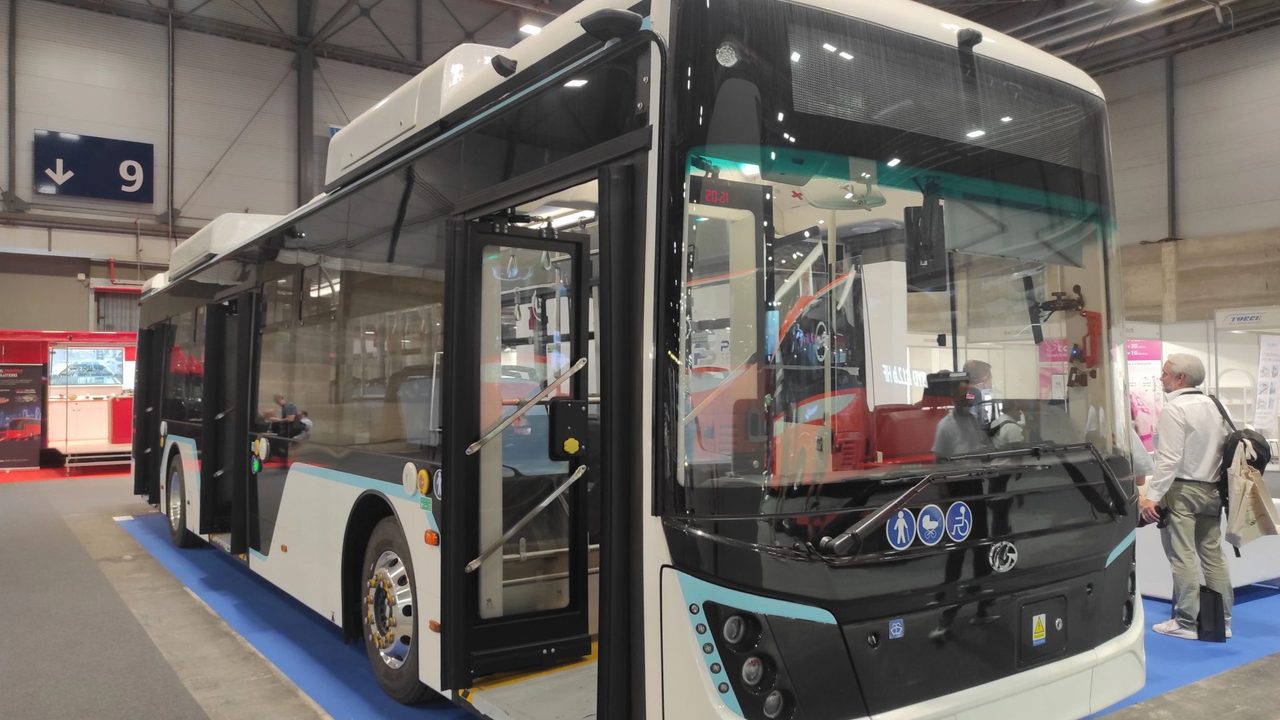
Not only Italy, but Spain as well: Pagliani Service is also targeting the Iberian bus market and is attending FIAA with the Zonson, a 12-metre low-floor battery-electric bus.
Pagliani is the official dealer for Chinese manufacturer Zonson Granton.
The Zonson City Joy 12 is a 12-metre battery-electric low-floor bus. Pagliani is the official dealer for the Chinese manufacturer, which is part of Chinese IT conglomerate ZTE. The first vehicles delivered in Italy were purchased several years ago by Cavourese and deployed on former GTT services in Turin.
More recently, Pagliani, in a temporary consortium with Basco, secured a number of qualifications in the latest Consip tender covering 600 electric buses, which was reported by Autobusweb.
Solaris
Solaris Bus & Coach is almost at home in Madrid: the Polish manufacturer is part of Spanish group CAF and has been active in the Iberian market since 2010, where it has delivered more than 1,000 vehicles. Solaris has also been awarded the Sustainable Bus Award 2027 in the city category with its Solaris Urbino fuel cell new generation.
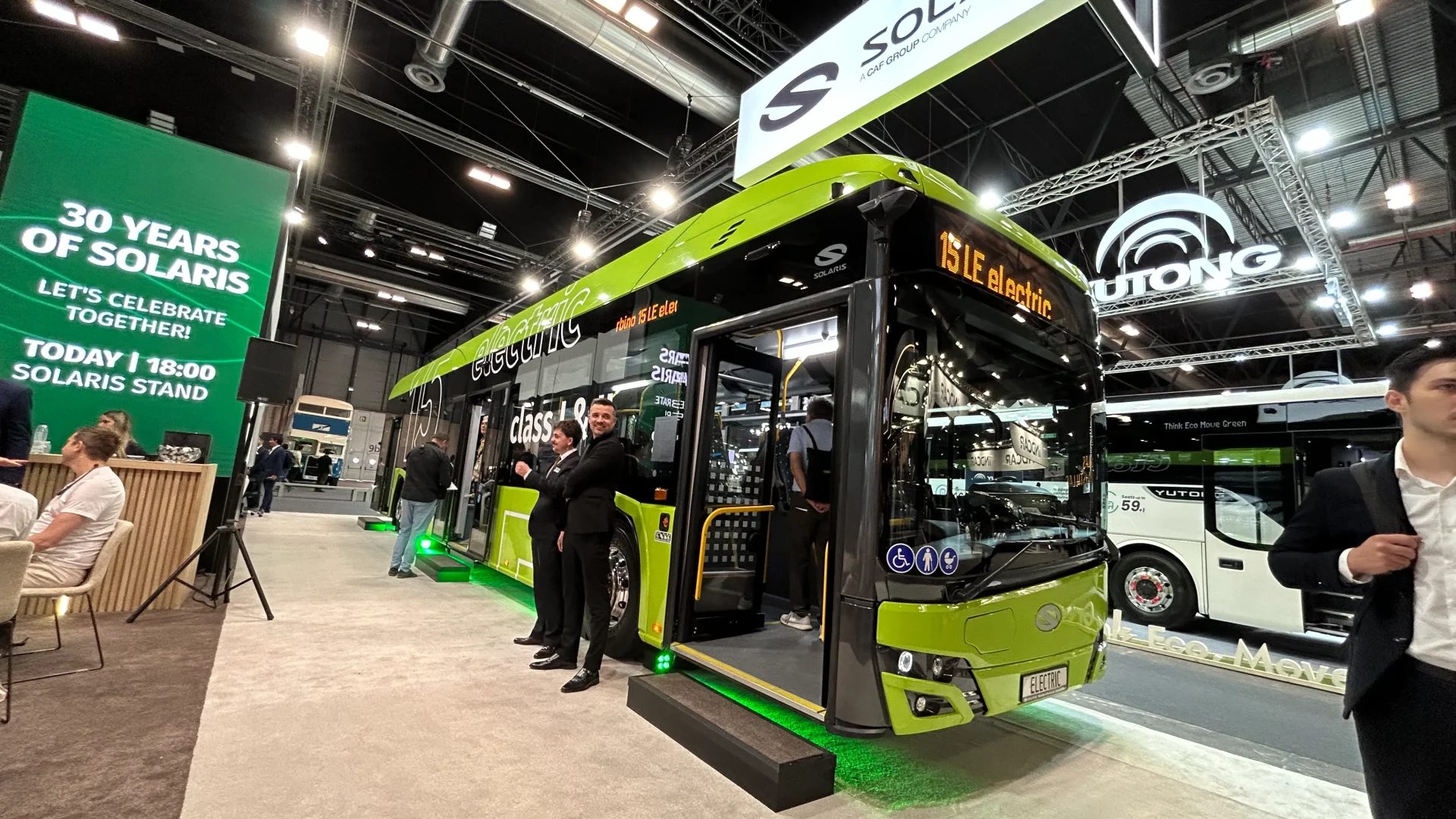
For FIAA, Solaris has focused on a single vehicle: the Urbino 15 LE three-axle bus, presented in a bright acid-green livery. The “15” refers to its length in metres, while LE stands for Low Entry. The e-bus, which can also be registered as a Class II vehicle, is not a new model, but now incorporates the manufacturer’s new modular platform for electric buses.
The group was not able to bring to Madrid the new zero-emission intercity model originally expected by the end of 2026. The launch is now scheduled for the first half of 2027.
In the meantime, Solaris has started an industrial expansion programme. In Środa Wielkopolska, around 35 kilometres southeast of Poznań, the manufacturer has converted an existing site and opened a new final assembly facility alongside its Bolechowo plant. The new facility adds production capacity of around 500 buses per year, bringing installed capacity towards 2,000 units annually.
Solaris has also acquired a 47-hectare site in Środa Wielkopolska, where an additional plant is planned. The facility will also be dedicated to intercity buses and is scheduled to become operational in 2029.
Expansion outside Europe is proceeding in parallel. Solaris has already started handling its first orders in North America, covering the United States and Canada. On October 4, at APTA EXPO in Chicago, organized by the American Public Transportation Association, the manufacturer will present the version of the Urbino developed specifically for the North American market.
Temsa
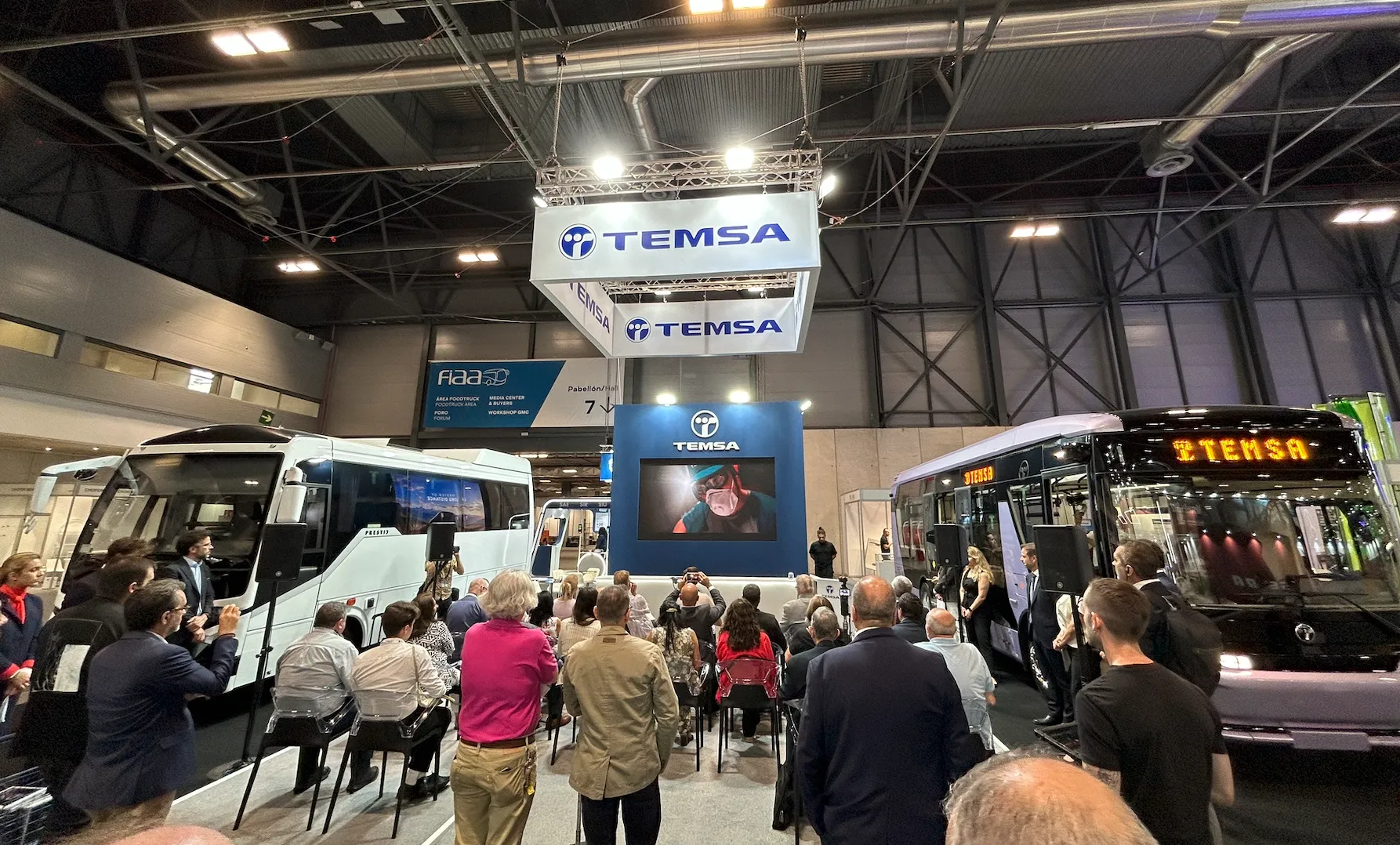
Temsa has chosen two compact vehicles for the 2026 edition of FIAA. The first is the new generation of the Prestij, the manufacturer’s compact coach, which has undergone an extensive redesign for the Class III segment.
The second is Temsa’s latest electric model, the battery-electric Avenue Neo 9e, which the manufacturer describes as a “game changer”.
Unvi
Unvi presented the new Unvi XL, a coach body developed on the Mercedes OC 500 RF chassis. According to information provided by the company, the vehicle displayed is the first unit of the new range intended for left-hand-drive markets.
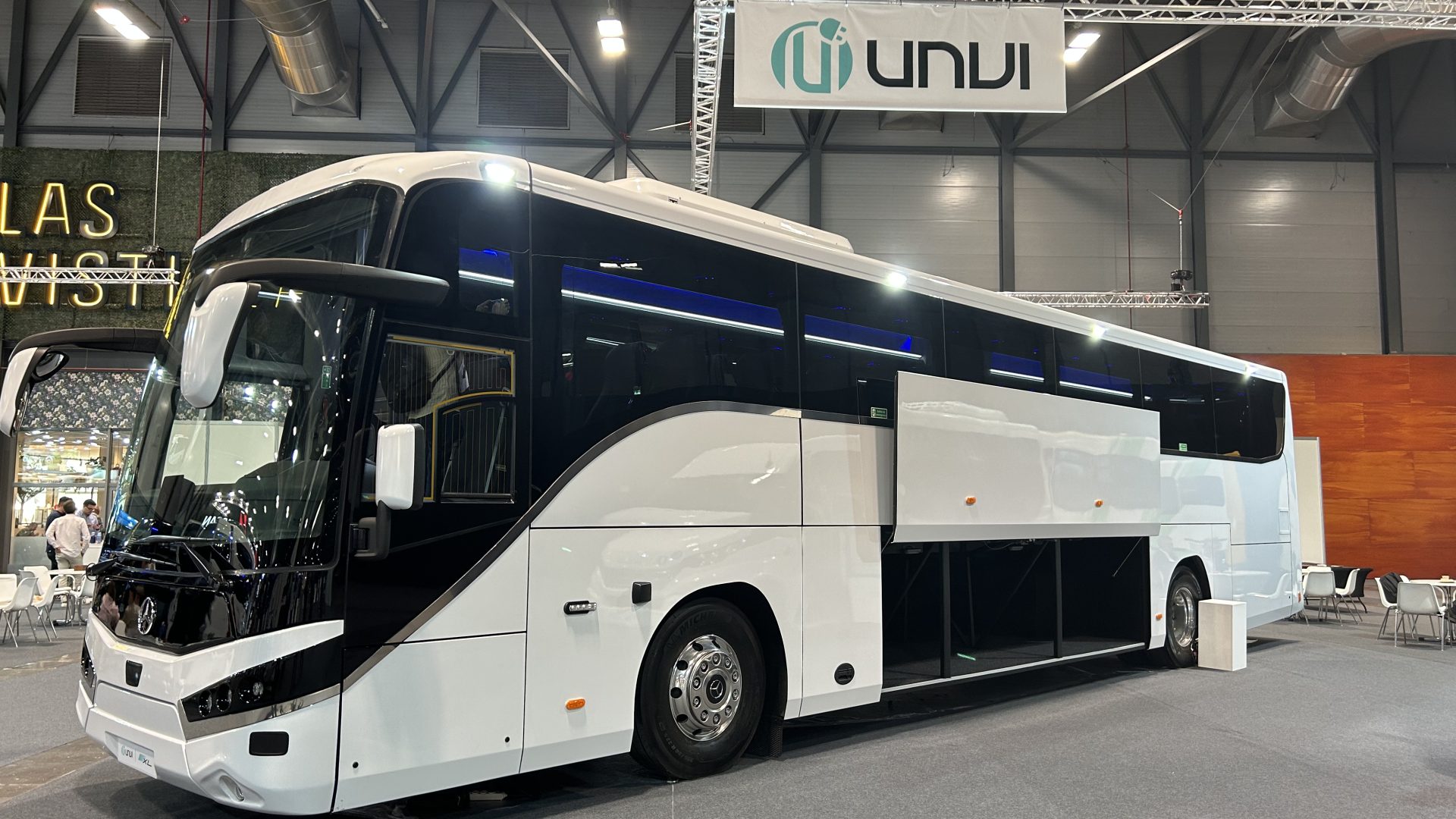
The project expands a programme initially launched for the UK market, where Unvi developed a version on a Volvo chassis that has already been homologated, with the first units now entering the delivery phase. The range includes two- and three-axle configurations: a 12.8-metre version has been developed for the UK market, while variants measuring around 13 metres and a three-axle configuration called XXL are also planned.
Depending on the specification, capacity reaches 59 passengers in the version without a toilet and wheelchair access, while other configurations offer 53 seats.
Yutong
Yutong Bus & Coach was also attending FIAA, with Spain representing one of its key European markets.
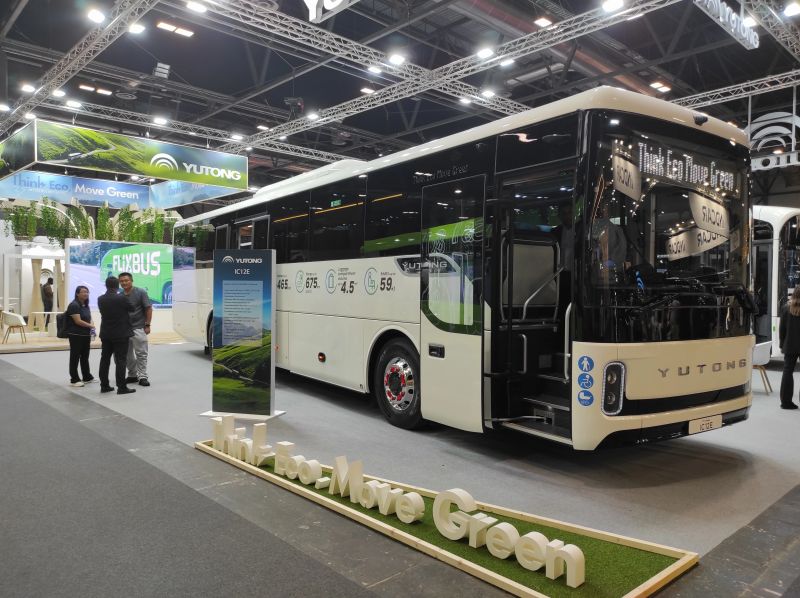
On display is the IC12E, the Zhengzhou-based manufacturer’s battery-electric Class II model. Yutong has also brought an electric coach from its T series and a battery-electric urban bus from the U range to its stand.
Zeroid
Zeroid is Spanish brand of 100% electric vehicles launched by QEV Technologies as part of the reindustrialisation project involving the former Nissan plants in the Barcelona area, was also present at FIAA.
The main new product at the show was the Force Central Low Entry, making its world premiere. The M3 electric platform has been developed specifically to simplify the construction of low-floor buses by bodybuilders.
The new Force is available with 135 and 170 kWh battery configurations. With the larger battery, Zeroid states a range of up to 352 km according to the SORT cycle. Maximum permissible weight increases to seven tonnes and, thanks to the rear axle configuration, the platform can accommodate layouts for up to 30 passengers.
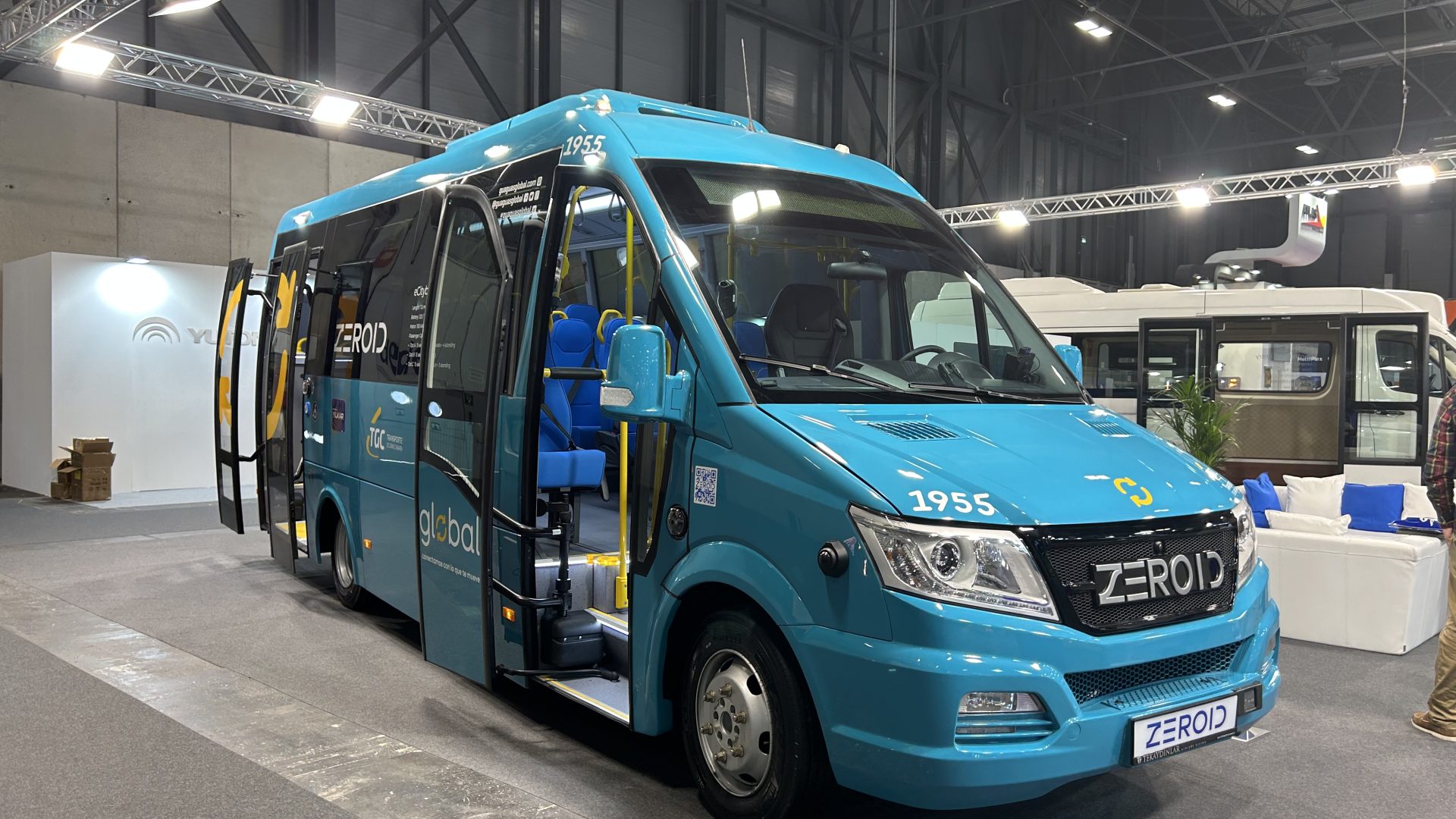
Alongside the Force Central Low Entry, Zeroid also exhibited the eCitybus+, built on the Force chassis-cab platform with bodywork and interiors supplied by Tekaydinlar.
The vehicle displayed at FIAA is intended for GLOBAL, an operator based in Gran Canaria. Its configuration comprises 15 seated and seven standing passengers, for a total capacity of 22 passengers in addition to the driver. The 140 kWh battery provides a stated range of up to 309 km according to the SORT cycle, while the electric motor delivers a maximum output of 150 kW.
Zeroid technology was also featured outside the company’s own stand. The Force platform underpins the eSENDA developed together with Ferqui, a 7.49-metre midibus offering 19 passenger seats and a stated SORT range of up to 325 km with the 140 kWh battery configuration.