First Bus scales smart EV charging technology across Caledonia depot in Glasgow
First Bus has expanded Optimo Energy’s charging management technology from 34 to 172 charging outlets at its Caledonia depot in Glasgow following an initial trial announced in May 2026. The deployment covers Caledonia, one of the UK’s largest bus depots, and is designed to coordinate electric bus charging requirements with the site’s available grid capacity […]
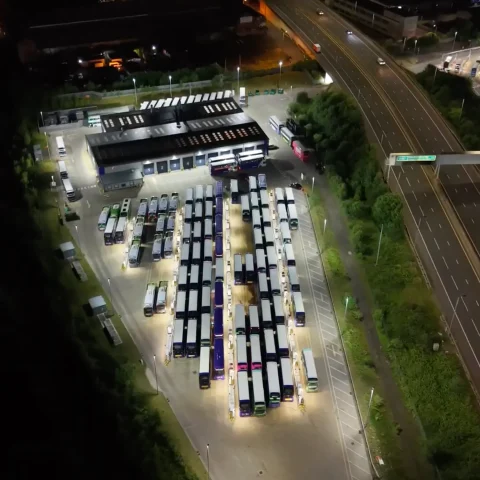
First Bus has expanded Optimo Energy’s charging management technology from 34 to 172 charging outlets at its Caledonia depot in Glasgow following an initial trial announced in May 2026.
The deployment covers Caledonia, one of the UK’s largest bus depots, and is designed to coordinate electric bus charging requirements with the site’s available grid capacity and participation in electricity flexibility markets.
According to First Bus, the initial trial was set up to test whether charging demand could be managed while maintaining the operational requirement for buses to be sufficiently charged and available for service. Following the trial, the operator has extended the technology across the depot.
The project is being delivered with energy management and flexibility technology specialist Optimo Energy.
First Bus manages a potential 12 MW charging load
Caledonia has a potential charging load of 12 MW operating through a 5 MW grid connection, according to First Bus.
Optimo Energy’s platform combines energy management, fleet requirements and energy market optimisation. The system forecasts the energy required by vehicles and dynamically determines when individual charging loads are activated.
Vehicle readiness is maintained as the priority within the charging schedule. Once operational energy requirements have been secured, the remaining flexible charging demand can be adjusted according to electricity prices and grid requirements.
First Bus states that the system allows charging demand to be increased during periods when excess renewable electricity is available, including wind generation in Scotland, and reduced during peak periods.
The technology also provides access to energy flexibility markets through the depot’s existing charging and electrical infrastructure.
Earlier in 2026, First Bus says it became the first UK bus operator to enrol an electric depot in the National Grid balancing mechanism, according to the operator. The mechanism is used to balance electricity supply and demand shortly before electricity delivery.
The expanded Optimo Energy installation allows First Bus to continue managing charging requirements while selling surplus energy back to the electricity grid.
First Bus expands energy management
The Caledonia project forms part of First Bus’ investment in electric fleet and depot infrastructure.
First Bus states that it currently operates more than 1,500 zero-emission buses, representing approximately one quarter of its fleet. The company has committed to operating a fully zero-emission commercial bus fleet by 2035.
The operator has developed 20 electric depots across the UK, with several additional sites scheduled for completion by the end of 2026.
Optimo Energy specialises in energy management and flexibility technology for electric fleets, with its systems designed to coordinate vehicle charging demand with fleet operating requirements and energy market participation.
In brief
- How many charging outlets are covered at First Bus’ Caledonia depot?
The Optimo Energy deployment has expanded from 34 to 172 charging outlets. - What is the depot’s charging and grid capacity?
Caledonia has a potential 12 MW charging load within a 5 MW grid connection. - How does the system manage bus charging?
It forecasts vehicle energy requirements and dynamically schedules charging, with vehicle readiness taking priority. - How many zero-emission buses does First Bus operate?
First Bus reports more than 1,500 zero-emission buses, approximately one quarter of its fleet.
Isabel McAllister, Chief Sustainability Officer at First Bus, said: “We’ve invested significantly in our electric depot infrastructure, so want to ensure we’re using that infrastructure as intelligently as possible. One of the challenges we face is making sure we have enough power to provide a reliable service for customers whilst also continuing to provide surplus energy to the grid. Optimo resolves that challenge for us.”
Daniel Homoki-Farkas, CEO & co-founder of Optimo Energy, said: “We’re delighted to be expanding our work with First Bus at Caledonia following the success of the initial trial. This next phase is an important opportunity to demonstrate at scale that energy flexibility and the operational demands of a major electric fleet can go hand in hand. Working closely with the First Bus team, we’re showing how intelligent management of charging can protect vehicle readiness while unlocking greater value from existing energy and charging infrastructure. We believe this approach has significant potential as electric fleets continue to grow.”