Daimler Buses and Flix test battery-electric coach demonstrator with 500+ km range target
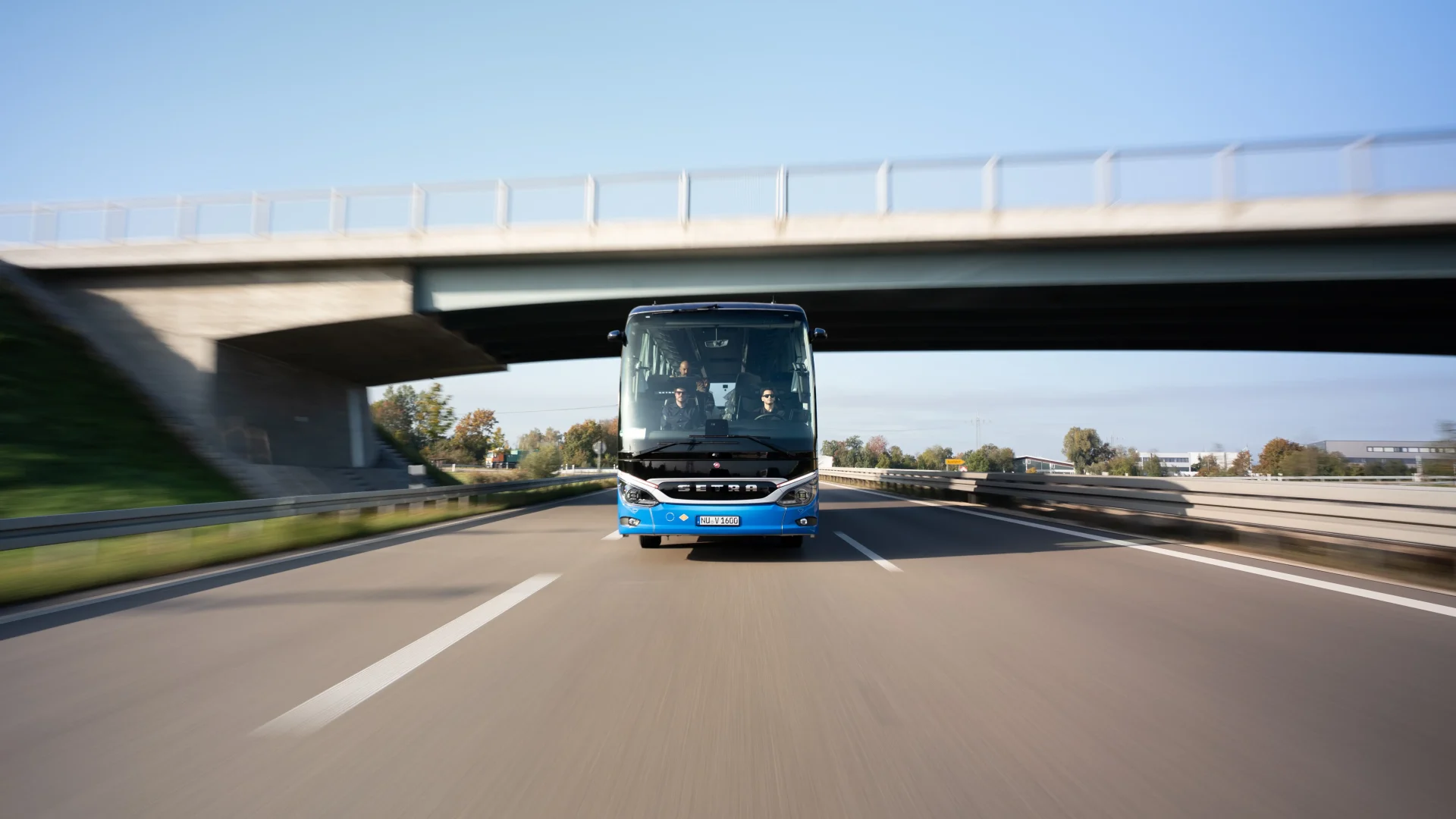
Daimler Buses and its research partners have carried out a joint test drive of the ELCH battery-electric coach technology demonstrator in Neu-Ulm, Germany, as part of a publicly funded development project targeting a driving range of more than 500 kilometres. The test drive took place in early October during the final in-person consortium meeting of […]
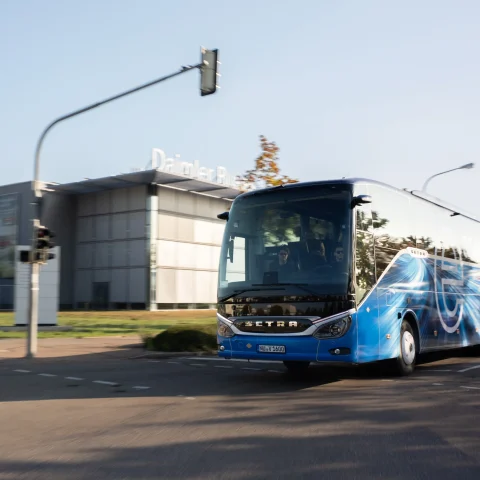
Daimler Buses and its research partners have carried out a joint test drive of the ELCH battery-electric coach technology demonstrator in Neu-Ulm, Germany, as part of a publicly funded development project targeting a driving range of more than 500 kilometres.
The test drive took place in early October during the final in-person consortium meeting of the ELCH (Electrified Coach) project, according to a press release issued by Daimler Truck. The project, funded by the German Federal Ministry for Economic Affairs and Energy, is scheduled to continue until the end of 2026.
The initiative brings together Daimler Buses, German research institutions and long-distance transport operator Flix SE. Its objective is to develop and validate a market-ready battery-electric coach concept, covering propulsion technology, batteries, energy consumption, aerodynamics, lightweight construction and economic viability.
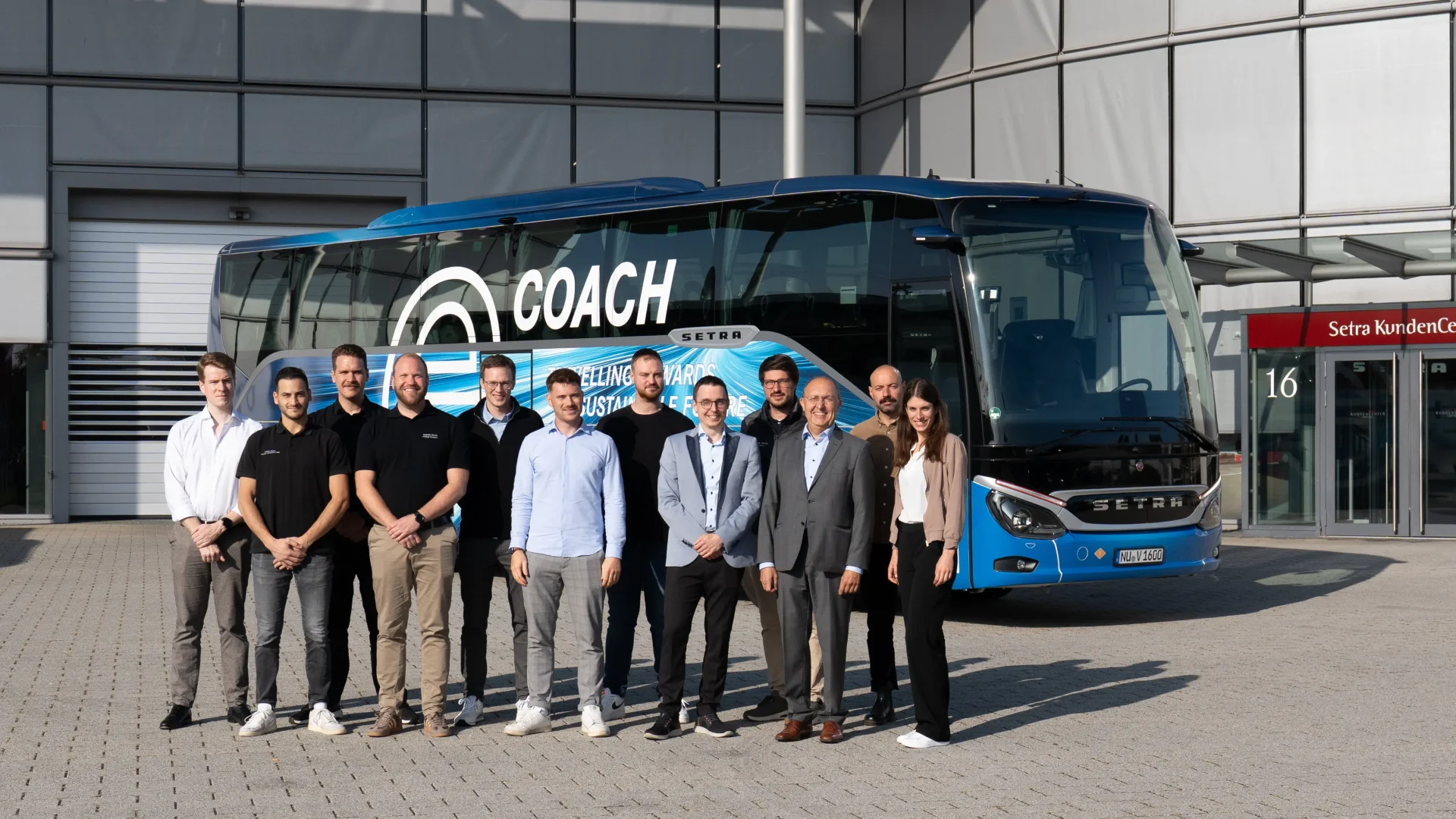
Daimler Buses aims to introduce battery-electric coaches by the end of the decade, with the findings from ELCH contributing to the development of future vehicle concepts.
The ELCH project was launched in 2022, with the objective of developing a modular electric drivetrain and two demonstration vehicles for testing under real operating conditions. The programme was established as part of Daimler Buses’ plans to offer battery-electric coaches under the Mercedes-Benz and Setra brands by 2030. The manufacturer is also developing hydrogen-based solutions for long-distance applications: in September 2025, Setra began testing its H2 Coach technology demonstrator, a 13.9-metre S 517 HD equipped with a cellcentric fuel cell system rated at up to 300 kW and a stated range of at least 800 kilometres.
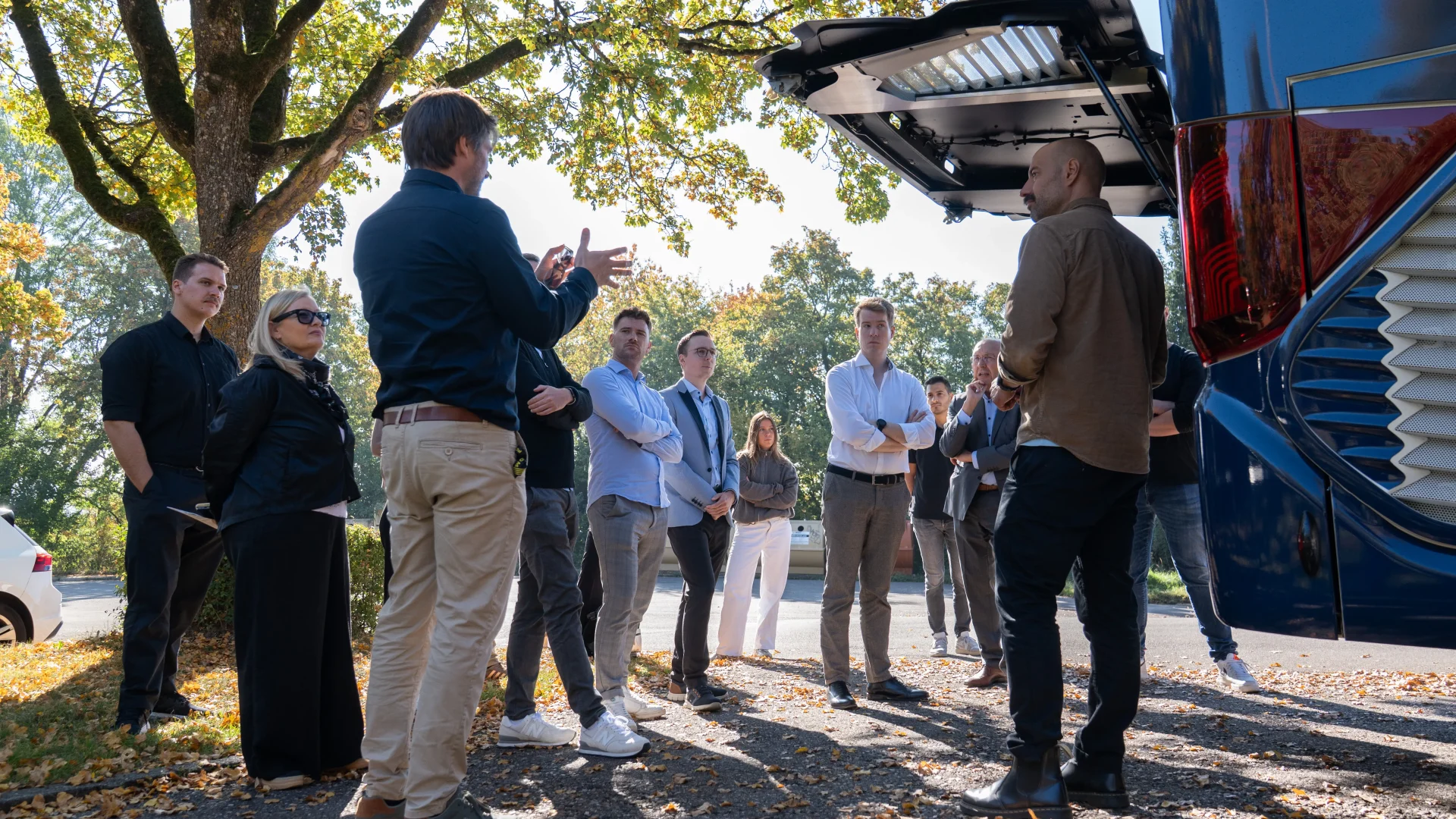
Daimler Buses ELCH project nears completion
The ELCH project focuses on the development and validation of a battery-electric coach concept designed for long-distance transport operations.
According to Daimler Truck, the technology demonstrator has been developed with a target driving range exceeding 500 kilometres. The manufacturer has not disclosed the vehicle’s battery capacity, charging power, energy consumption figures or measured range during the latest test drive.
The joint drive in Neu-Ulm was conducted to test and validate the technical concepts under practical conditions. The consortium meeting also provided an opportunity to review the development activities completed to date and coordinate the remaining work before the project’s scheduled conclusion at the end of 2026.
The development programme covers several aspects of vehicle engineering beyond the electric drivetrain, including aerodynamic efficiency, vehicle weight, operating strategies and economic performance.
KIT, RPTU, Mannheim University and Flix involved
The ELCH consortium is coordinated by Daimler Buses and includes the Karlsruhe Institute of Technology (KIT), the University of Mannheim, the University of Kaiserslautern-Landau (RPTU) and Flix SE. The partners are responsible for different research activities covering vehicle engineering, operational optimisation and economic analysis.
At KIT, the Institute for Information Processing Technology (ITIV) is working on vehicle data analysis and processing, with a focus on optimising the electric coach’s operating strategy.
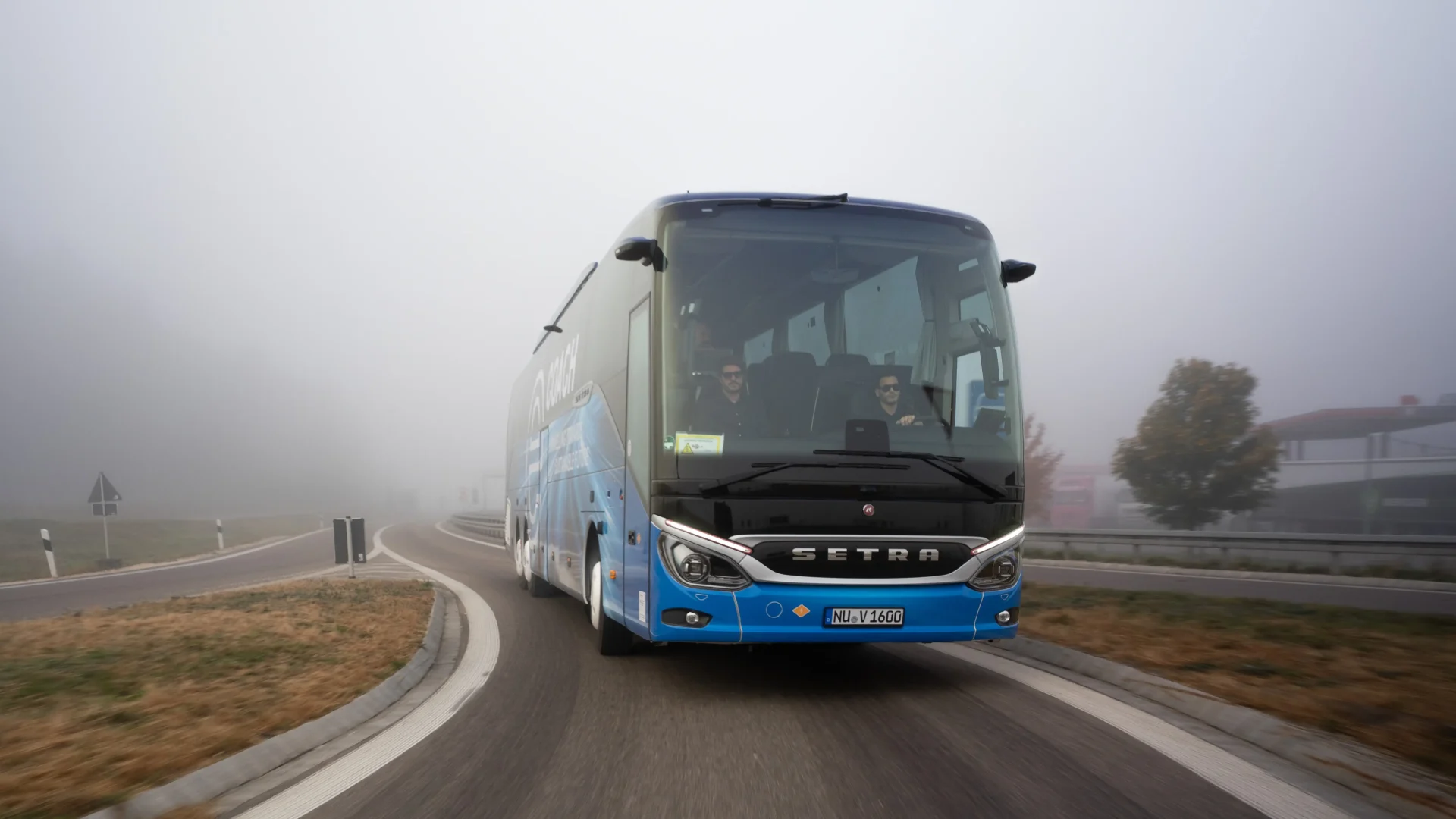
Researchers at RPTU, represented by the iMAD and SAM institutes, are investigating lightweight construction and aerodynamic improvements, with particular attention to vehicle energy consumption and driving range.
The University of Mannheim, through MISES, is assessing the economic viability of battery-electric coach concepts under different operating profiles, including their competitiveness.
Flix SE is contributing operational and deployment data from long-distance coach services, alongside support for the development of representative application scenarios and driving cycles.
According to Daimler Truck, the consortium is examining the technical, economic and operational requirements for the use of battery-electric coaches in long-distance transport.
Daimler Buses targets battery-electric coaches by the end of the decade
The ELCH project forms part of Daimler Buses’ development activities in the battery-electric coach segment.
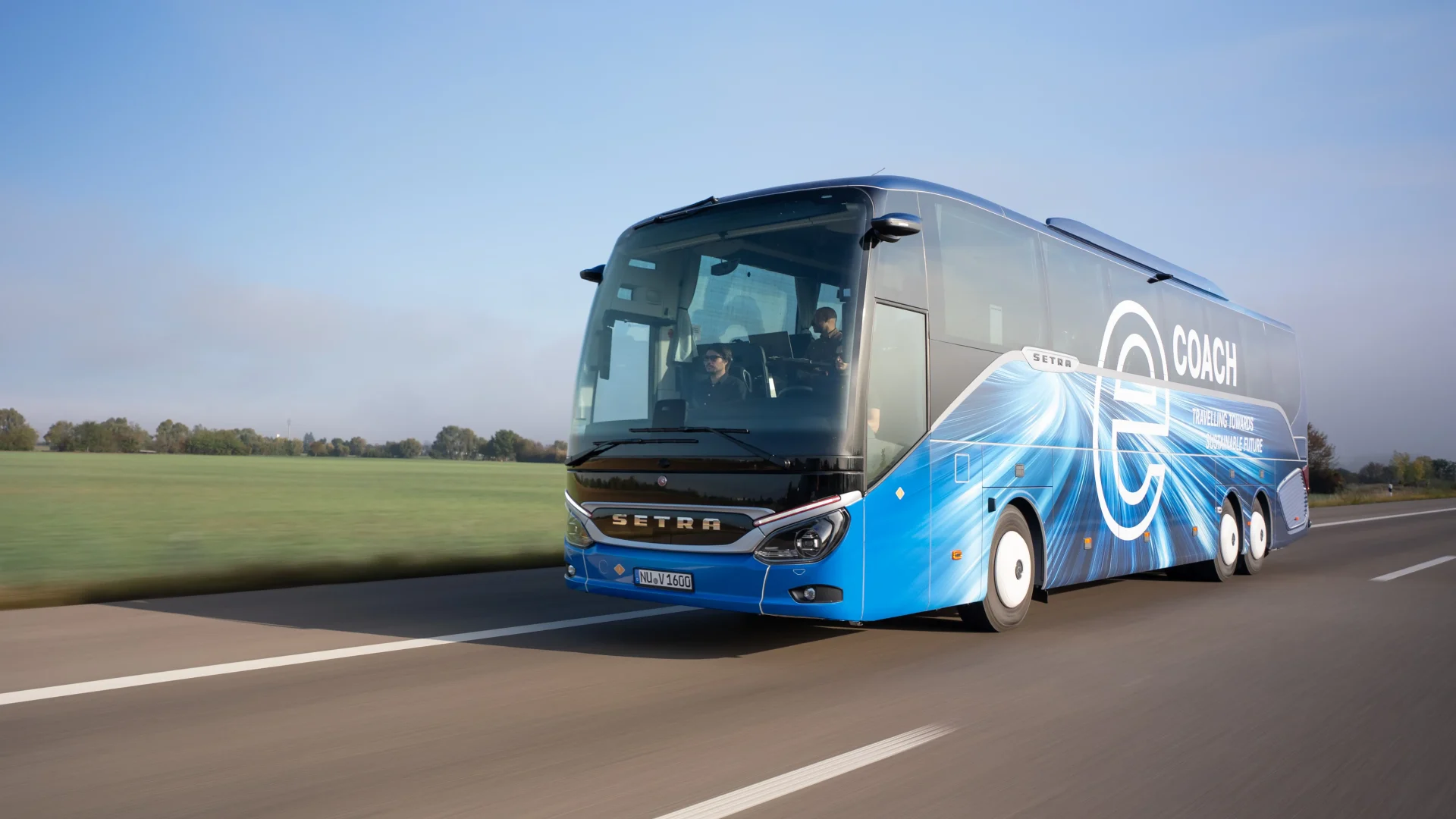
The manufacturer has confirmed its objective of offering battery-electric coaches by the end of the decade, with the research findings from ELCH contributing to future vehicle concepts and technologies.
The current project is scheduled to conclude at the end of 2026. Daimler Truck has not announced a production timetable, commercial specifications or launch date for a coach directly derived from the ELCH demonstrator.
In brief
- What is the ELCH project? A publicly funded research project coordinated by Daimler Buses to develop and validate a battery-electric coach concept.
- What driving range is targeted? The technology demonstrator is designed for more than 500 kilometres of range.
- Which partners are involved? Daimler Buses, KIT, the University of Mannheim, RPTU and Flix SE.
- When will the project be completed? ELCH is scheduled to conclude at the end of 2026, while Daimler Buses aims to offer battery-electric coaches by the end of the decade.