DB-led consortium targets three-month approval process for autonomous shuttles in Germany
A German consortium involving transport operators, technology companies and public authorities is preparing a standardized approval process aimed at enabling operating-area authorization for autonomous public transport vehicles within around three months. Deutsche Bahn says the project will reproduce the complete process for obtaining an operating-area approval, using the HOLON urban autonomous shuttle and real operating […]
A German consortium involving transport operators, technology companies and public authorities is preparing a standardized approval process aimed at enabling operating-area authorization for autonomous public transport vehicles within around three months.
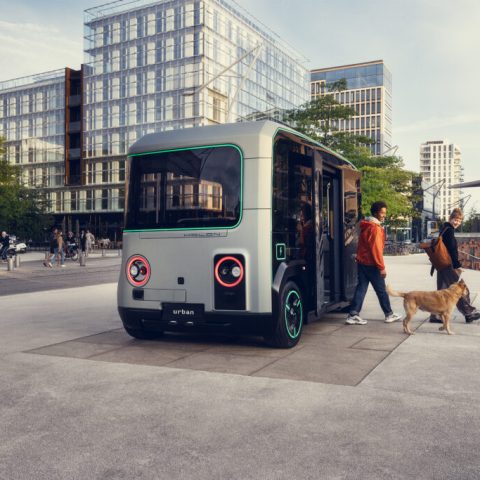
Deutsche Bahn says the project will reproduce the complete process for obtaining an operating-area approval, using the HOLON urban autonomous shuttle and real operating areas in Hesse and Bavaria. The initiative is scheduled to start in October 2026 and run until summer 2027.
According to Deutsche Bahn, the work is intended to establish the technical descriptions, documentation, procedures and formal requirements needed by operators and authorities when autonomous vehicles without onboard safety personnel become available for deployment.
The consortium includes DB Regio, Rhein-Main-Verkehrsverbund (RMV), Münchner Verkehrs- und Tarifverbund (MVV), the German Federal Motor Transport Authority (KBA), Landesbaudirektion Bayern München, Hessen Mobil, DEKRA, HOLON, Mobileye, the Association of German Transport Companies (VDV), UnternehmerTUM with MCube Consulting and RÖDL Beratungsgesellschaft.
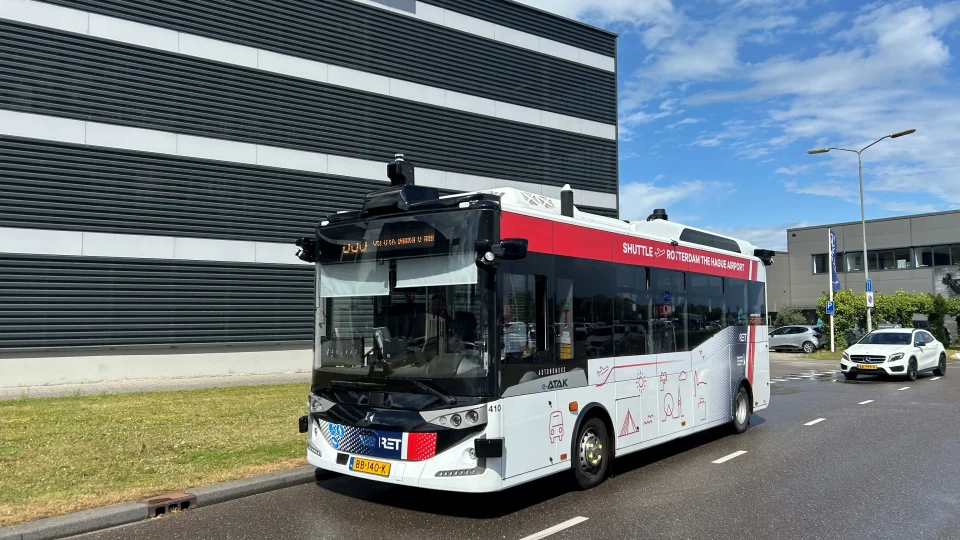
HOLON urban to be used for autonomous shuttle approval process
The project addresses the second of two approval stages required for driverless operation in Germany. The first is vehicle type approval, a process that, according to Deutsche Bahn, has not yet been completed in full for an autonomous vehicle.
The second stage is the operating-area approval issued by the competent authorities of the German federal states. This authorization defines the road network on which a vehicle can operate without a driver according to the capabilities of its automated driving system. The authorized area could cover a city, a district or a larger road network.
Deutsche Bahn states that the partners will develop common foundations for this process, including standardized information for operators and authorities and requirements for the documentation submitted as part of an application.
A central element will be the relationship between the vehicle’s Operational Design Domain (ODD) and the characteristics of the proposed operating area. Authorities have to verify whether parameters covered by the vehicle’s defined operating capabilities correspond with the actual road infrastructure. Deutsche Bahn lists road widths, curve radii and road surfaces among the parameters involved.
Future operating areas could extend across several thousand kilometres of road network, according to Deutsche Bahn. The project will therefore develop an automated process for matching vehicle capabilities with real road infrastructure data.
Hesse and Bavaria operating areas to provide real infrastructure data
The work programme comprises four main stages. The partners will first standardize the description of vehicle capabilities required for type approval, using the HOLON urban as the reference vehicle.
Two operating areas will then be described in detail, one in Hesse and one in Bavaria. Their real road infrastructure data will subsequently be matched automatically against the vehicle capabilities.
The final stage will reproduce a complete authorization procedure, including an assessment by a technical service and the preparation of an authority decision. Deutsche Bahn specifies that the exercise will not result in a legally binding authorization.
Between October 2026 and summer 2027, the consortium will also work on approval forms, procedural steps and formal requirements for submitted documents. The resulting framework is intended to define which information transport operators need to provide and the structure in which it has to be submitted.
For the vehicle side, the project will also address repeatability between different regions, with the same vehicle description used within operating-area procedures in different parts of Germany.
Deutsche Bahn states that the results are intended to feed directly into future authorization procedures in Hesse and Bavaria. The stated target is to establish the conditions for completing an operating-area approval in approximately three months.
In brief
- What is the target approval time?
The consortium aims to establish conditions for an operating-area approval process lasting around three months. - Which autonomous vehicle will be used?
The project will use the HOLON urban as the reference vehicle for describing vehicle capabilities and testing the procedure. - Where will the process be tested?
Two real operating areas will be used, one in Hesse and one in Bavaria. - When will the project run?
Deutsche Bahn says the project will start in October 2026 and continue until summer 2027.