Scania – Castrosua intercity e-bus presented to Spanish customers
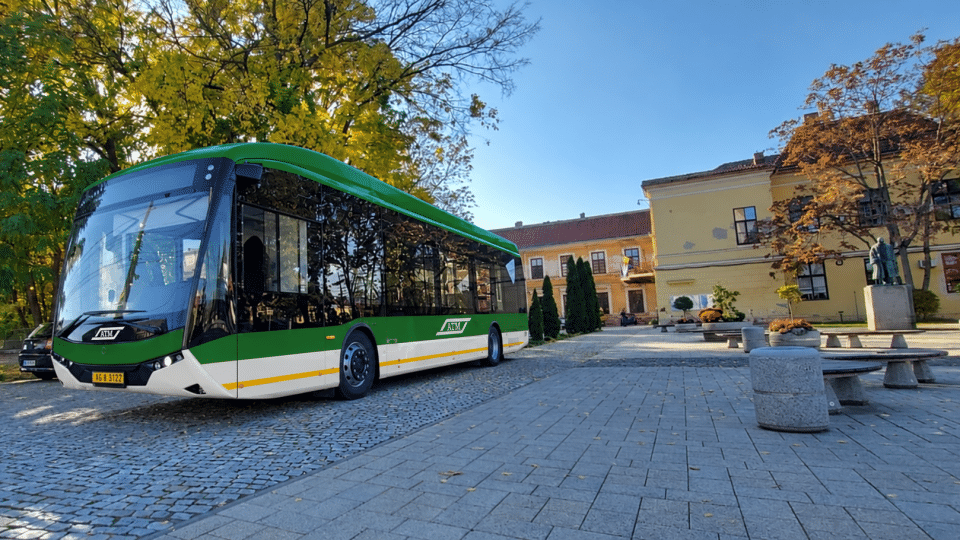
Scania BEV Low Entry Class II bus made in cooperation with Castrosua (on 75CS body) is ready for the Spanish market. Following the presentation held at Busworld 2023, the vehicles was showcased in Spain during an event with customers and media at the Swedish brand's facilities in Torrejón de Ardoz (Madrid).

Scania BEV Low Entry Class II bus made in cooperation with Castrosua (on 75CS body) is ready for the Spanish market. Following the presentation held at Busworld 2023, the vehicles was showcased in Spain during an event with customers and media at the Swedish brand’s facilities in Torrejón de Ardoz (Madrid).
75CS is the bodywork launched by Castrosua on its 75th anniversary. It represents the second product focusing on electromobility, following the launch of Nelec for urban transport (the latter is the one adopted by BYD for its 12-meter e-bus headed to the Spanish market).
Scania – Castrosua electric bus on the market
The vehicle features a continuous power output of 250 kW at 1,750 rpm. Batteries are designed and produced in cooperation with Northvolt at Scania’s battery factory in Södertälje, Sweden. The batteries are fast-charging, Scania states, with a full charge in 150 minutes, more sustainable and with a lifetime of 1.5 million kms.
“Scania’s quality and reliability are reflected in this new chassis. We know that the Scania BEV Class II is a very competitive product that will help our customers in their business in a very efficient way in their various applications. We are very pleased to be able to show it directly to our customers and the media so that they can see first-hand all the features and services we can offer them,” states Alberto Linares, sales director for buses, engines and sustainability at Scania Ibérica.
Beatriz Castro, CEO of Castrosua Group, reportedly stated: “Tbe 75CS is the result of our constant innovation, offering our customers on this occasion a unique intercity electromobility solution. This vehicle reflects our commitment to excellence and sustainability, highlighting from its design, new processes, materials and a different proposal, but without losing Castrosua’s hallmarks such as accessibility, ergonomics and eco-sustainable solutions. 75CS has been designed not only for the comfort of the user during the journey, but also for the operator in the day-to-day running of a farm”.