Tenix expands electric bus charging management operations with contracts in Belgium, Germany and the Nordics
Norwegian charging management specialist Tenix has announced three agreements in September 2026 with public transport operators LETEC, Boreal and Göttinger Verkehrsbetriebe (GöVB), marking its entry into Belgium and Germany while expanding its activities in the Nordic market. The contracts cover different stages of electric bus fleet electrification, from the progressive deployment of charging management across […]
Norwegian charging management specialist Tenix has announced three agreements in September 2026 with public transport operators LETEC, Boreal and Göttinger Verkehrsbetriebe (GöVB), marking its entry into Belgium and Germany while expanding its activities in the Nordic market.
The contracts cover different stages of electric bus fleet electrification, from the progressive deployment of charging management across 17 depots in Wallonia to the consolidation of Boreal’s electric bus charging operations in Norway and Sweden. In Germany, Tenix will provide its Tenix Charge platform for GöVB’s existing charging infrastructure, initially covering 40 electric buses and subsequently expanding to 102 vehicles.
According to Tenix, which announced the agreements between 8 and 25 September, the Belgian and German programmes alone concern 502 electric buses, including vehicles scheduled to enter service in the coming years.
Tenix, previously known as Saga Tenix, has expanded in the last few years its activities through appointments in Sweden and the UK and Ireland. The company received research funding from the Research Council of Norway in 2021 and secured NOK 10 million from Newday in 2023. Torbjørn G. Krøvel was appointed executive chairman in 2022 and currently serves as CEO.
Tenix enters Belgium with LETEC
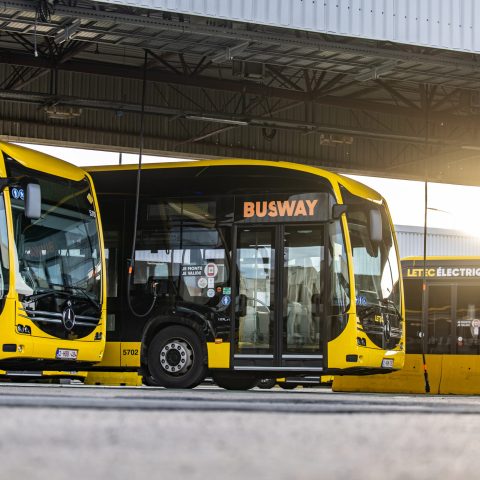
The first agreement, announced on 8 September, concerns Belgian public transport operator LETEC, which has selected Tenix Charge to manage charging operations across 17 depots in Wallonia, supporting an electrification programme involving 400 electric buses through 2030.
The rollout begins at the Robermont and Tilleur depots, before progressively extending to the remaining facilities. The project includes smart charging and energy management functions, together with integration into LETEC’s route management systems and SAP environment.
Tenix Charge uses vehicle schedules, available depot power capacity and electricity prices to determine charging requirements. The platform is hardware-agnostic and can communicate with charging equipment from different manufacturers.
The Norwegian company is delivering the project in partnership with Swiss digital solutions provider Softcom Technologies, which will support implementation and integration across the depot network.
Germany: GöVB selects Tenix Charge
A second market entry followed on 25 September, when Tenix announced a five-year agreement with Göttinger Verkehrsbetriebe (GöVB), the municipal public transport operator serving Göttingen and the neighbouring municipalities of Rosdorf and Bovenden.
The contract covers charging management for 40 electric buses from 2027, with the licensed fleet size progressively increasing to 102 vehicles as electrification advances. The carrier’s programme also includes a €60 million electric bus depot project in Göttingen, designed to accommodate around 100 electric buses and scheduled to open in 2031.
The system will connect to the operator’s existing charging infrastructure, including standard and duo charging canopies and mobile chargers, without requiring new charging hardware.
According to Tenix, the platform meets GöVB’s requirements for the VDV 463 and VDV 261 interfaces, while charging infrastructure monitoring and control will be handled through the Open Charge Point Protocol (OCPP).
Implementation will be supported by Peak Mobility GmbH, formerly PSI Transcom GmbH.
GöVB operates a 275-kilometre network comprising 21 daytime and ten night routes, carrying approximately 16 million passengers annually. Its electrification programme also includes a new electric bus depot, with construction scheduled to begin in 2029 and commissioning expected in 2031.
Boreal consolidates electric bus charging management
Between the two market-entry announcements, on 17 September, Tenix disclosed a further agreement with Nordic mobility operator Boreal.
The contract provides for the consolidation of charging management for Boreal’s entire electric bus fleet onto Tenix Charge, covering the group’s three bus companies and operations in Norway and Sweden.
The initial agreement runs for three years and includes options for expansion and extension.
According to Tenix, Boreal is already recording energy cost savings at depots characterised by different electricity prices and grid connection conditions, although no quantified results were disclosed.
The platform calculates the battery charge level required for each vehicle’s next scheduled assignment, rather than systematically charging every bus to 100 percent. Charging sessions are managed according to route schedules, available electrical capacity and real-time electricity prices.
The system also provides real-time information on charging status, allowing operational personnel to adjust charging priorities or reallocate vehicles when necessary.
Across the three September agreements, Tenix Charge will be deployed in different operating environments, involving new electric bus fleets, existing charging infrastructure and multi-depot operations. The contracts also have different implementation timelines, with LETEC’s programme extending to 2030, GöVB’s five-year agreement starting with 40 buses in 2027 and Boreal’s initial contract running for three years.
In brief
- Which new European markets has Tenix entered?
Belgium and Germany, through agreements with LETEC and GöVB announced in September 2026. - How many electric buses are covered by the LETEC and GöVB programmes?
The two programmes cover 502 electric buses: 400 in Wallonia and 102 in Göttingen. - What is the scope of the Boreal agreement?
Boreal will consolidate charging management for its entire electric bus fleet in Norway and Sweden onto Tenix Charge. - Which technical interfaces are specified for the German project?
GöVB requires VDV 463 and VDV 261 interfaces, together with OCPP for charging infrastructure monitoring and control.
Commenting on the Belgian agreement, Christophe Leurident, Executive Committee Member for Operational Strategy, Innovation and Mobility at LETEC, stated: “LETEC needs a charge management system capable of evolving alongside its electrification programme, addressing the many operational challenges of managing an electric fleet from day one, and usable by its teams within the tools they already have. We are confident in our choice: Tenix has demonstrated solid experience deploying similar programmes at scale.”
Regarding Boreal’s decision, August Rist, Head of Green Energy at Boreal, said: “Through technology, sustainable solutions and continuous improvement, we are strengthening operational reliability, reducing energy costs and providing our operational teams with better tools and decision support for their daily work. That is why we have chosen to consolidate our entire bus operation onto Tenix Charge.”
Michael Neugebauer, CEO of Göttinger Verkehrsbetriebe GmbH, commented: “As we continue to electrify our bus operation, it is important that the systems supporting it can grow with us. We wanted a solution that works with the infrastructure we already have, while giving us better control and insight into charging as the fleet expands. Tenix Charge gives us that foundation for the next stage of our electrification journey.”
Tenix CEO Torbjørn G. Krøvel said of the German agreement: “Germany is an important market for us, and we are proud that our first German customer is an operator with a clear long-term electrification programme. We bring experience from some of the most demanding electric bus operations in the Nordics, but the starting point is always the operator’s own needs and infrastructure”.